Axell
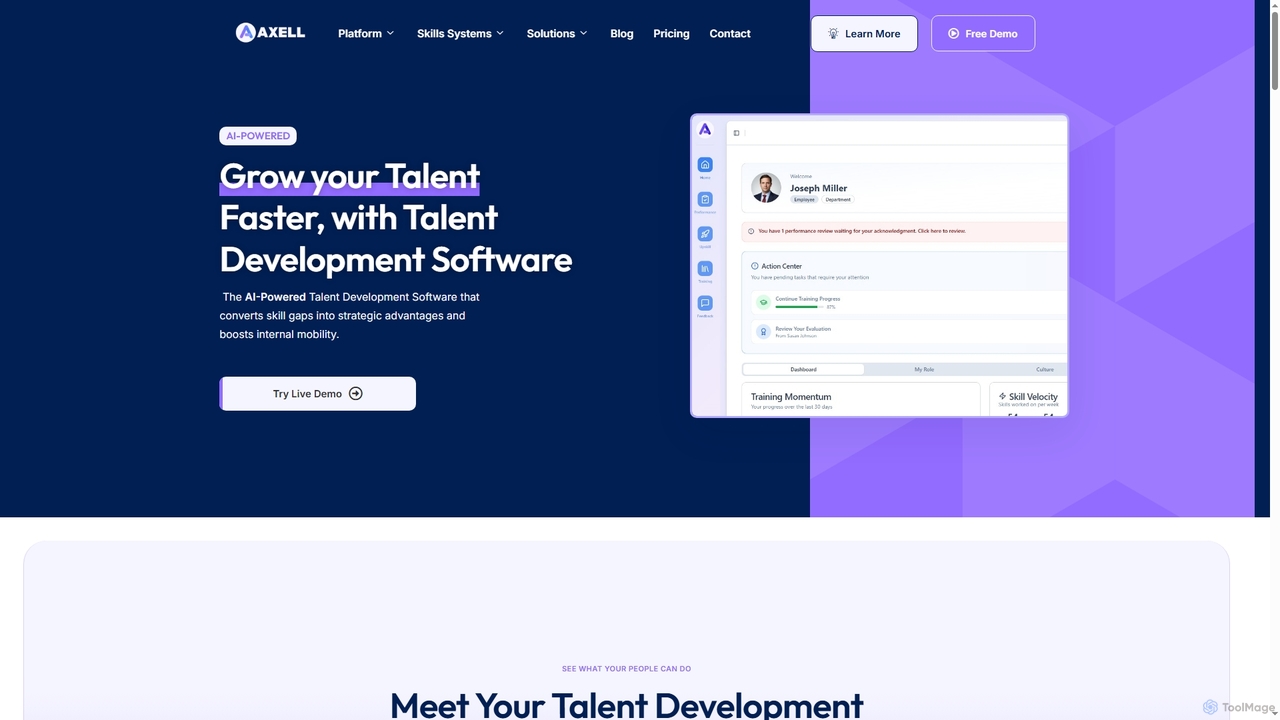
Axell is an AI-powered talent development software designed to transform skill gaps into strategic advantages. It automates performance …
Axell is an AI-powered talent development software designed to transform skill gaps into strategic advantages. It automates performance reviews, personalizes training, and clarifies career paths, significantly boosting internal mobility and aligning talent strategy with business objectives.
About Workforce Planning
Workforce Planning tools are AI-powered solutions that optimize human capital management by predicting future staffing needs and analyzing skill gaps. These tools leverage machine learning and predictive analytics to provide data-driven insights into talent allocation, demand forecasting, and strategic workforce development. They enable organizations to enhance operational efficiency, reduce labor costs, and ensure the right talent is available at the right time for business objectives.
Core Features
- Demand Forecasting: Predict future staffing requirements based on business trends and operational data.
- Skill Gap Analysis: Identify current and future skill deficiencies across the organization.
- Talent Optimization: Match employees to projects and roles based on skills, availability, and development goals.
- Scenario Planning: Model various workforce strategies to assess impacts on budget, productivity, and talent availability.
- Succession Planning: Identify and prepare high-potential employees for critical future leadership roles.
Use Cases
Workforce Planning tools are crucial for large enterprises managing complex operations, such as retail chains preparing for seasonal demand surges or manufacturing firms adapting to new production technologies. They also support healthcare providers in optimizing shift schedules to meet patient needs while managing staff availability and compliance.
How to Choose
When selecting a Workforce Planning tool, consider its integration capabilities with existing HRIS/ERP systems, the accuracy of its predictive models, and its scalability to match your organization's size and growth. Evaluate the user interface for ease of adoption and ensure it offers customization options for industry-specific planning challenges and regulatory requirements.
Workforce PlanningUse Cases
Optimizing Seasonal Staffing for Retail
A retail operations manager uses AI workforce planning to accurately forecast staffing needs for peak seasons like holidays. By analyzing historical sales data, foot traffic, and promotional calendars, the tool predicts hourly demand, allowing the manager to optimize part-time hiring and shift scheduling, reducing overtime costs by 15% and improving customer service.
Identifying Future Skill Gaps in Tech
A CTO at a growing tech company leverages workforce planning AI to identify emerging skill requirements for upcoming product roadmaps. The tool analyzes project plans, industry trends, and current employee skill sets, highlighting critical gaps in areas like AI development or cybersecurity, enabling proactive training programs and targeted recruitment strategies.
Strategic Talent Allocation for Consulting Firms
A project manager in a consulting firm utilizes workforce planning tools to allocate consultants to client projects. The AI matches consultant skills, experience, and availability with project requirements and deadlines, ensuring optimal team composition, maximizing billable hours, and improving project delivery success rates by 10%.
Proactive Employee Retention in Healthcare
An HR director in a hospital system employs AI workforce planning to predict potential employee turnover. By analyzing factors like workload, shift patterns, and compensation data, the tool identifies at-risk departments or roles, allowing HR to implement targeted retention strategies, such as flexible scheduling or professional development, reducing attrition by 5%.
Developing Leadership Succession Plans
A corporate HR executive uses workforce planning AI to develop robust succession plans for key leadership positions. The tool assesses employee performance, potential, and readiness for promotion, identifying a pipeline of future leaders and guiding personalized development plans to ensure business continuity and smooth transitions.
Workforce Cost Optimization for Manufacturing
A finance manager in a manufacturing plant uses AI workforce planning to model labor costs under various production scenarios. The tool simulates the impact of different shift structures, automation levels, and hiring plans on overall operational expenses, helping the company optimize its workforce budget and achieve a 7% reduction in labor overheads.