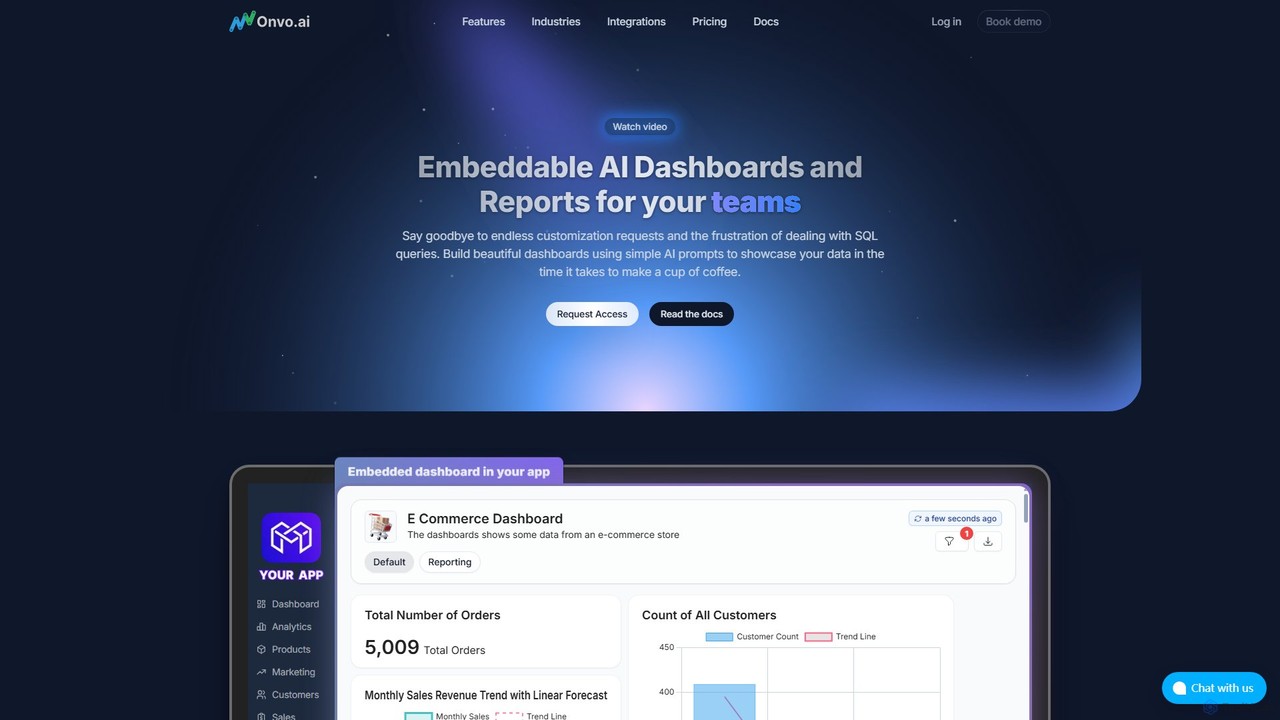
asymmetricdata is an AI-powered business intelligence platform designed to uncover hidden insights and competitive advantages from complex datasets. It leverages advanced algorithms to analyze market trends, customer behavior, and competitor strategies, providing businesses with actionable intelligence to make smarter, data-driven decisions and gain a significant edge.
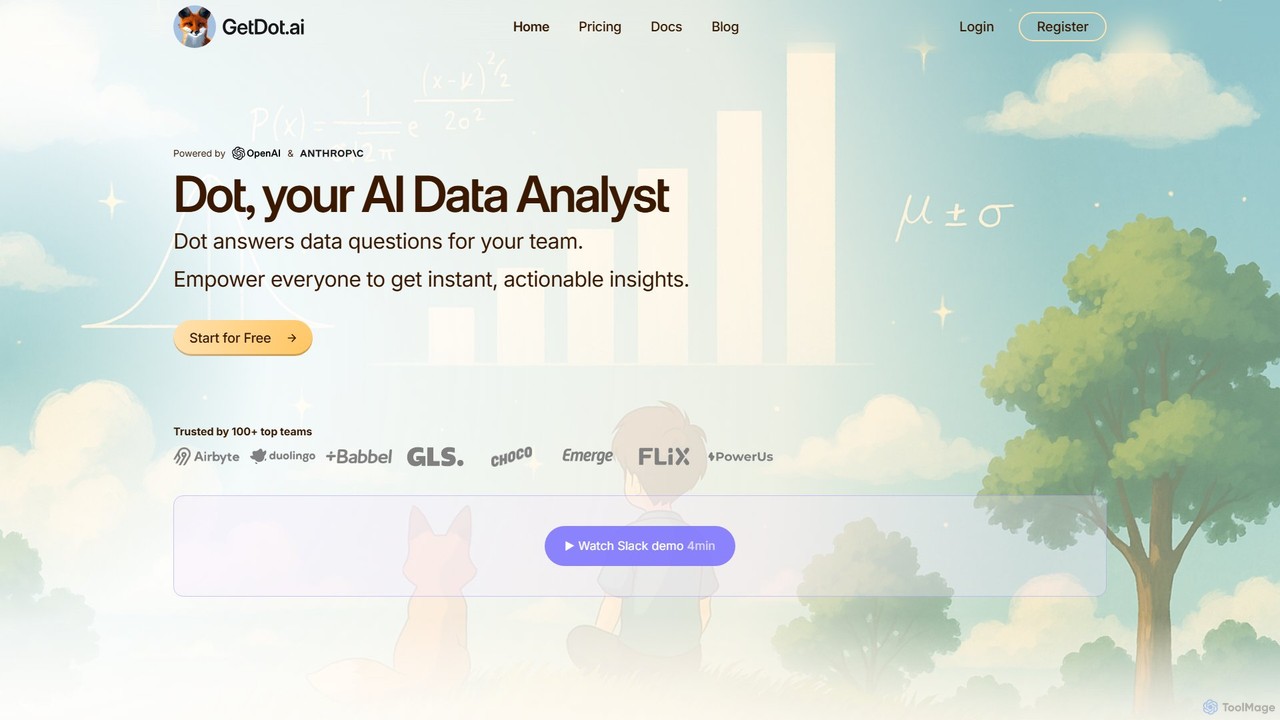
getdot is an AI Data Analyst designed for businesses. It instantly answers data questions in natural language, automatically generates reports, and performs deep analysis. Seamlessly integrating with Slack and Teams, it empowers entire teams to easily access reliable data insights for smarter decision-making.
Product overview
asymmetricdata Product overview
asymmetricdata is an AI-powered business intelligence platform designed to uncover hidden insights and competitive advantages from complex datasets. It leverages advanced algorithms to analyze market trends, customer behavior, and competitor strategies, providing businesses with actionable intelligence to make smarter, data-driven decisions and gain a significant edge.

getdot Product overview
getdot is an AI Data Analyst designed for businesses. It instantly answers data questions in natural language, automatically generates reports, and performs deep analysis. Seamlessly integrating with Slack and Teams, it empowers entire teams to easily access reliable data insights for smarter decision-making.
Detailed feature comparison
| Feature | asymmetricdata | getdot |
|---|---|---|
| Primary category | Business Intelligence | Data Analysis |
| Added | 2025-08-07 | 2025-08-16 |
| Pricing | Freemium | Paid |
| Official website | asymmetricdata.io | www.getdot.ai |
| Product type | Website | Website |
| Performance data | ||
| User rating | Not verified | Not verified |
| Comments | 0 | 0 |
| Monthly visits | 550 | 9.3K |
| Monthly growth | -49% | 9.3% |
| Favorites | 119 | 136 |
| Details | View details | View details |
asymmetricdata vs getdot monthly traffic
Compare asymmetricdata and getdot by monthly reach, traffic trend, visit depth, top regions, and acquisition sources.
How to interpret the traffic data
In the asymmetricdata vs getdot monthly traffic comparison, asymmetricdata currently shows 550 visits and getdot shows 9.3K; getdot has about 16.9 times the visible traffic of asymmetricdata, an absolute difference of about 8.8K visits. This reflects visible reach, not feature quality or paid users.
Both tools provide verified traffic details, so monthly trends, visit depth, regions, and acquisition sources can be compared on the same basis.
asymmetricdata monthly traffic:
Latest traffic
Monthly traffic trend
- 2025/9: 322 Monthly visits
- 2026/1: 785 Monthly visits
- 2026/2: 309 Monthly visits
- 2026/3: 956 Monthly visits
- 2026/4: 1.1K Monthly visits
- 2026/5: 550 Monthly visits
Top regions
Top 5 countries/regions
| Country/region | Percentage | Traffic |
|---|---|---|
| 🇺🇸United States | 80.49% | 443 |
| 🇮🇹Italy | 19.51% | 107 |
Search keywords
getdot monthly traffic:
Latest traffic
Monthly traffic trend
- 2025/9: 15.6K Monthly visits
- 2026/1: 12.8K Monthly visits
- 2026/2: 18.5K Monthly visits
- 2026/3: 10.6K Monthly visits
- 2026/4: 8.5K Monthly visits
- 2026/5: 9.3K Monthly visits
Top regions
Top 5 countries/regions
| Country/region | Percentage | Traffic |
|---|---|---|
| 🇳🇬Nigeria | 37.48% | 3.5K |
| 🇺🇸United States | 27.62% | 2.6K |
| 🇮🇳India | 19.98% | 1.9K |
| 🇻🇳Vietnam | 10.28% | 957 |
| 🇩🇪Germany | 4.64% | 432 |
Search keywords
Usage comparison
Compare the core capabilities of asymmetricdata and getdot
asymmetricdata Core features
getdot Core features
Use cases
asymmetricdata Use cases
getdot Use cases
asymmetricdata vs getdot:In-depth comparison and selection guidance
First decide whether the products solve the same kind of need
This in-depth asymmetricdata vs getdot comparison uses only the product records, taxonomy, audience, traffic, and community signals available on this page. asymmetricdata is primarily listed under “Business Intelligence”, while getdot is primarily listed under “Data Analysis”, so the first decision is whether your actual task matches their recorded scope.
The structured fields currently show these decision-relevant differences: Primary category (asymmetricdata: Business Intelligence; getdot: Data Analysis); Pricing (asymmetricdata: Freemium; getdot: Paid); Monthly visits (asymmetricdata: 550; getdot: 9.3K); Monthly growth (asymmetricdata: -49%; getdot: 9.3%); Favorites (asymmetricdata: 119; getdot: 136). These facts are more useful for selection than brand visibility alone.
What market visibility and monthly traffic mean
In the asymmetricdata vs getdot monthly traffic comparison, asymmetricdata currently shows 550 visits and getdot shows 9.3K; getdot has about 16.9 times the visible traffic of asymmetricdata, an absolute difference of about 8.8K visits. This reflects visible reach, not feature quality or paid users.
Both tools provide verified traffic details, so monthly trends, visit depth, regions, and acquisition sources can be compared on the same basis.
If public market visibility is an important first-pass criterion, investigate getdot first. The final choice should still follow taxonomy, use case, and a real trial because higher traffic does not prove broader capabilities or better workflow fit.
Product positioning, use cases, and roles
asymmetricdata and getdot currently overlap in shared categories: Business Intelligence and Automation; shared tags: business intelligence, data analysis, and data visualization. This can place both on the same shortlist, but it does not prove equal implementation, depth, or cost.
asymmetricdata's unique categories/tags are Investment Analysis, Market Research, anomaly detection, big data, competitive intelligence, market research, predictive analytics, and SaaS; getdot's are Data Analysis, AI agent, automated reporting, enterprise AI, natural language query, Slack integration, and teams integration. These unique fields are the strongest differentiators: validate the product whose recorded scope matches the task instead of following traffic alone.
What ratings, comments, and favorites can tell you
asymmetricdata has no verified rating, 0 comments, 119 favorites, and 107 likes;getdot has no verified rating, 0 comments, 136 favorites, and 136 likes。
Neither product has enough rating or comment samples for a credible reputation ranking.
Selection guidance by actual need
When to evaluate asymmetricdata first
Put asymmetricdata on the priority trial list when the task aligns with “Business Intelligence” and especially Investment Analysis, Market Research, anomaly detection, big data, competitive intelligence, and market research. This follows recorded positioning and does not imply unlisted capabilities are absent.
asymmetricdata also currently records: pricing is freemium, product type is website, 550 verified monthly visits, no verified user rating. Verify any hard requirement around price, platform, or reach before trial, and do not let sparse review data substitute for testing.
When to evaluate getdot first
Put getdot on the priority trial list when the task aligns with “Data Analysis” and especially Data Analysis, AI agent, automated reporting, enterprise AI, natural language query, and Slack integration. This follows recorded positioning and does not imply unlisted capabilities are absent.
getdot also currently records: pricing is paid, product type is website, 9.3K verified monthly visits, no verified user rating. Verify any hard requirement around price, platform, or reach before trial, and do not let sparse review data substitute for testing.
How to validate the recommendation before deciding
The available data describes positioning, public visibility, and community signals, but it cannot prove output quality, speed, integration effort, privacy, or long-term cost in your workflow. Before deciding, run the same representative tasks in asymmetricdata and getdot, then record completion time, accuracy, manual corrections, and the real paid threshold. A like-for-like trial turns this comparison into a defensible adoption decision.
Comparison FAQ
How should I choose between asymmetricdata and getdot?
Where does this comparison data come from?
What do unknown fields mean?
Related AI tools

getharmoni
getharmoni is an AI-powered data platform designed for market research and consumer insights. It automates the harmonization of complex data from various sources, such as surveys and business systems, creating a single source of truth. This enables users to analyze, visualize, and generate stories from their data with unprecedented speed and ease.
Business Intelligence
prisms.ai
Prisms.ai is an AI-powered data analytics and visualization platform that transforms complex data into clear, interactive dashboards. It allows users to ask questions in natural language and receive instant, AI-generated insights, charts, and reports, making data-driven decision-making accessible to everyone in an organization.
Business Intelligence
datarc
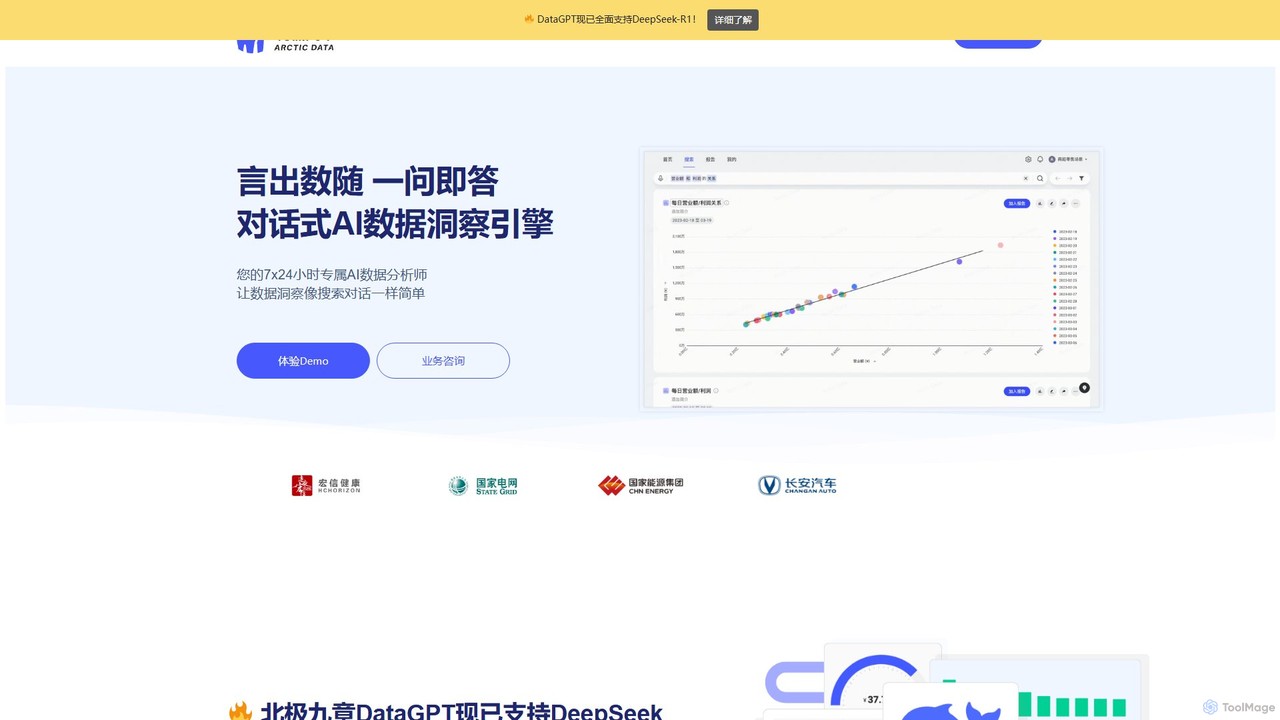
datarc is an enterprise-grade AI data insight engine, also known as DataGPT, that enables users to analyze big data using natural language. Through a conversational interface, it integrates large language models with proprietary expert systems to deliver accurate, reliable, and deep data insights without requiring technical expertise. It's designed for various industries to democratize data analysis and accelerate data-driven decision-making.
Business Intelligence
Defog.ai
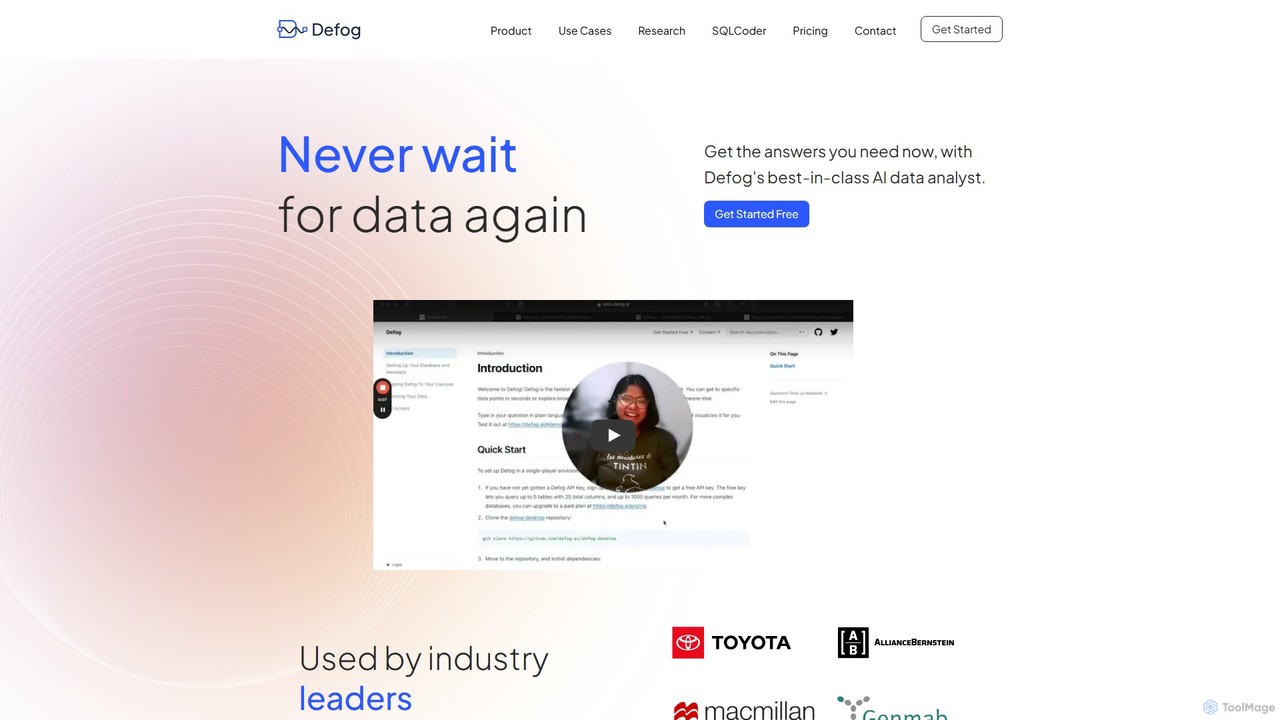
Defog.ai is an enterprise-grade AI data analyst that translates natural language questions into accurate SQL queries. Powered by its own state-of-the-art open-source model, SQLCoder, it enables teams to get instant data insights securely and efficiently, connecting to various databases and data sources.
Database
ReByte
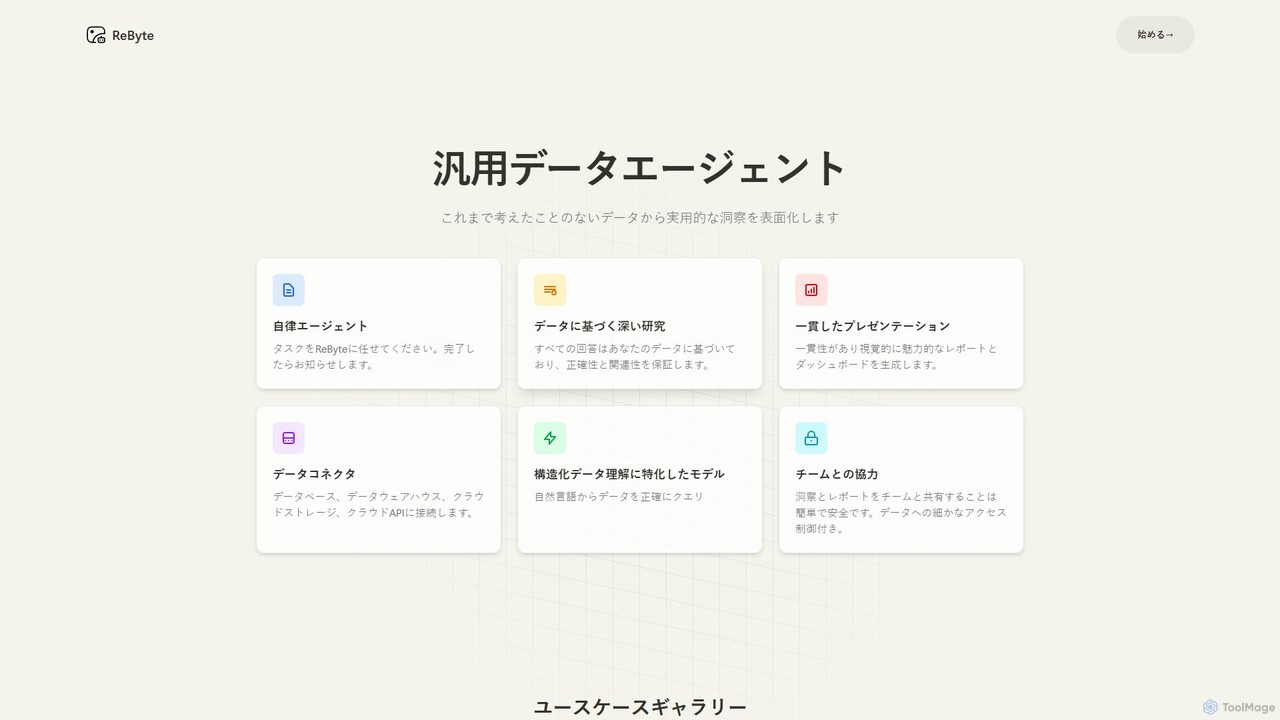
ReByte is an autonomous AI data agent that connects to your data sources, understands natural language queries, and performs complex research and analysis. It automates the entire data workflow, from collection to generating insightful reports and interactive dashboards, making data science accessible to everyone.
Business Intelligence
Shape
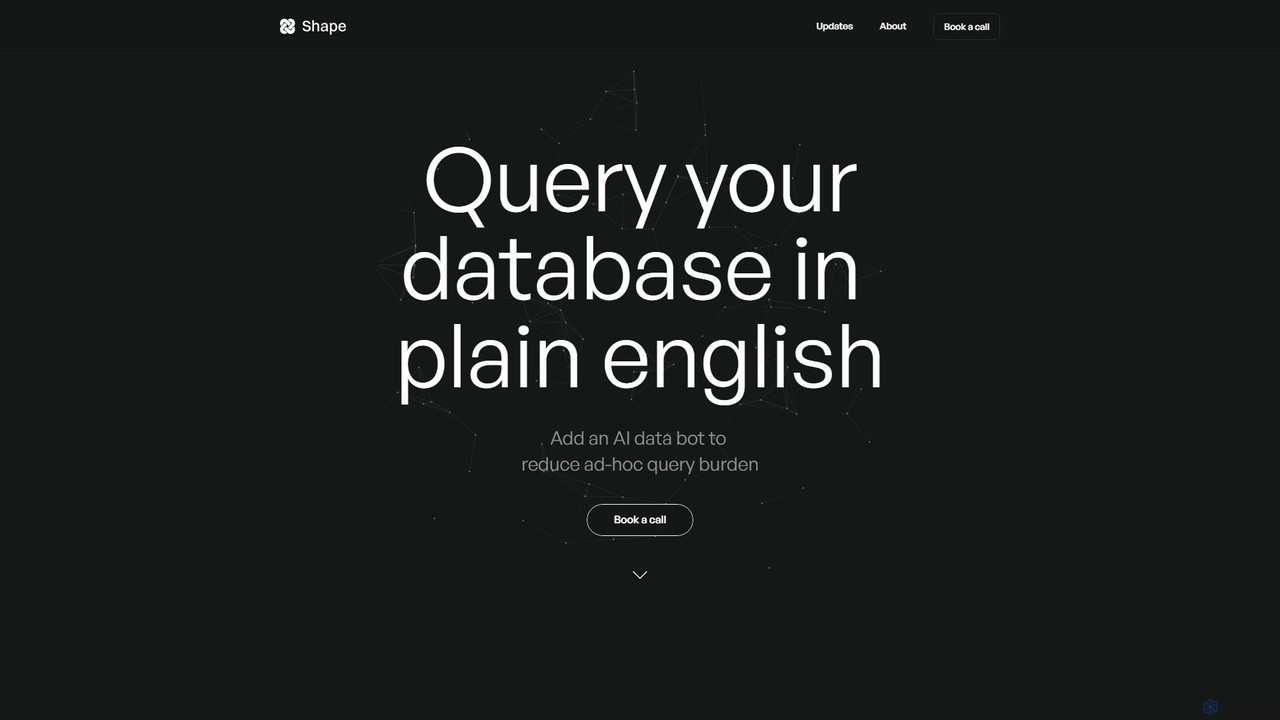
Shape is an AI-powered data analyst that allows teams to query their databases using plain English. It connects to your existing data stack and enables non-technical users to get instant answers to complex data questions through integrations like Slack and Microsoft Teams. By translating natural language into advanced SQL, Shape provides nuanced answers, automated visualizations, and frees up data analysts from ad-hoc query burdens, making data accessible to everyone in the organization.
Api
Data on Demand
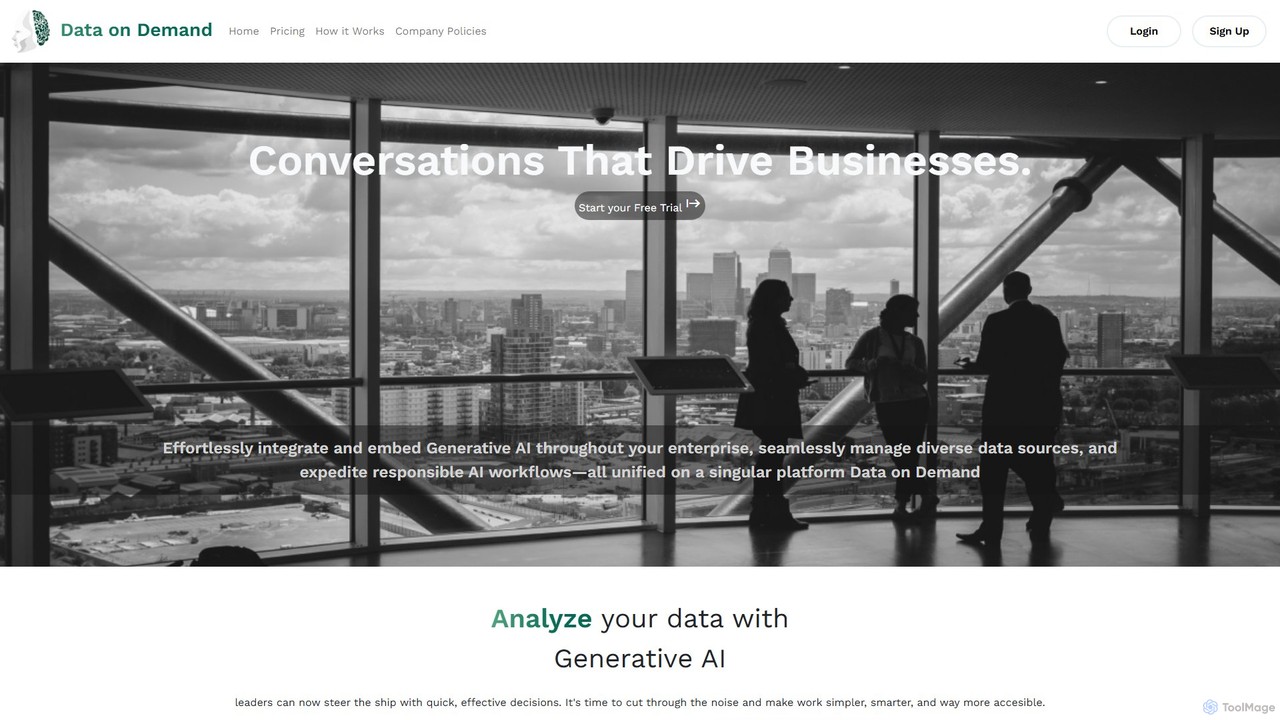
Data on Demand (DoD) is a conversational AI platform designed for enterprises. It enables users to interact with their business data through natural language, allowing them to extract insights, generate visualizations, and receive actionable recommendations without relying on IT or data analysts. It integrates with diverse data sources to accelerate responsible and informed decision-making.
Business Intelligence
Textify Analytics
Textify Analytics is an AI-powered data analysis platform that transforms raw text and numerical data into actionable insights. Designed for students, analysts, and businesses, it offers intuitive tools for market research, recruiting intelligence, and data-driven decision-making, supported by a vast database of charts and analytics.
Analytics
alta
alta is an AI-powered business intelligence platform that transforms complex data into clear, actionable insights. Ask questions in natural language, get instant visualizations, and uncover future trends without writing a single line of code. It's data analysis, democratized for your entire team.
Data Analysis
ThoughtSpot
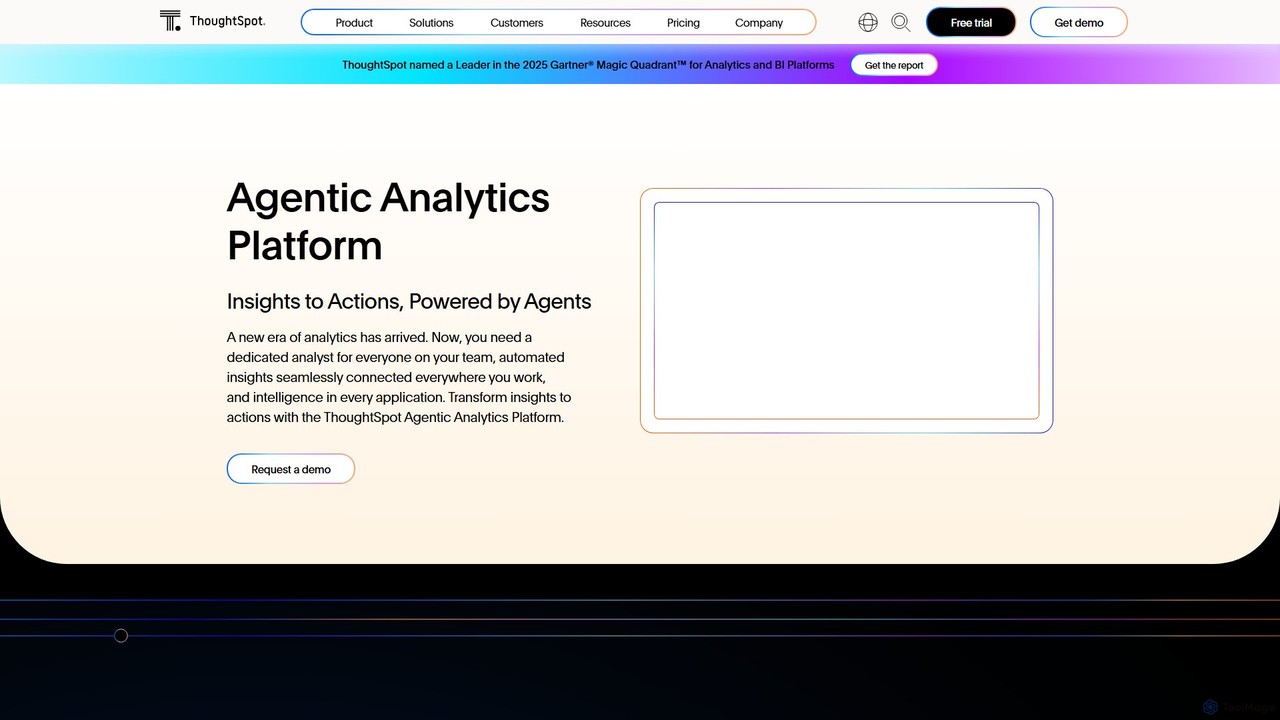
ThoughtSpot is an AI-powered Agentic Analytics platform that enables anyone to get granular, data-driven insights using natural language search. It features AI agents, interactive dashboards, and embedded analytics to democratize data and accelerate decision-making across enterprises.
Business Intelligence
camelAI
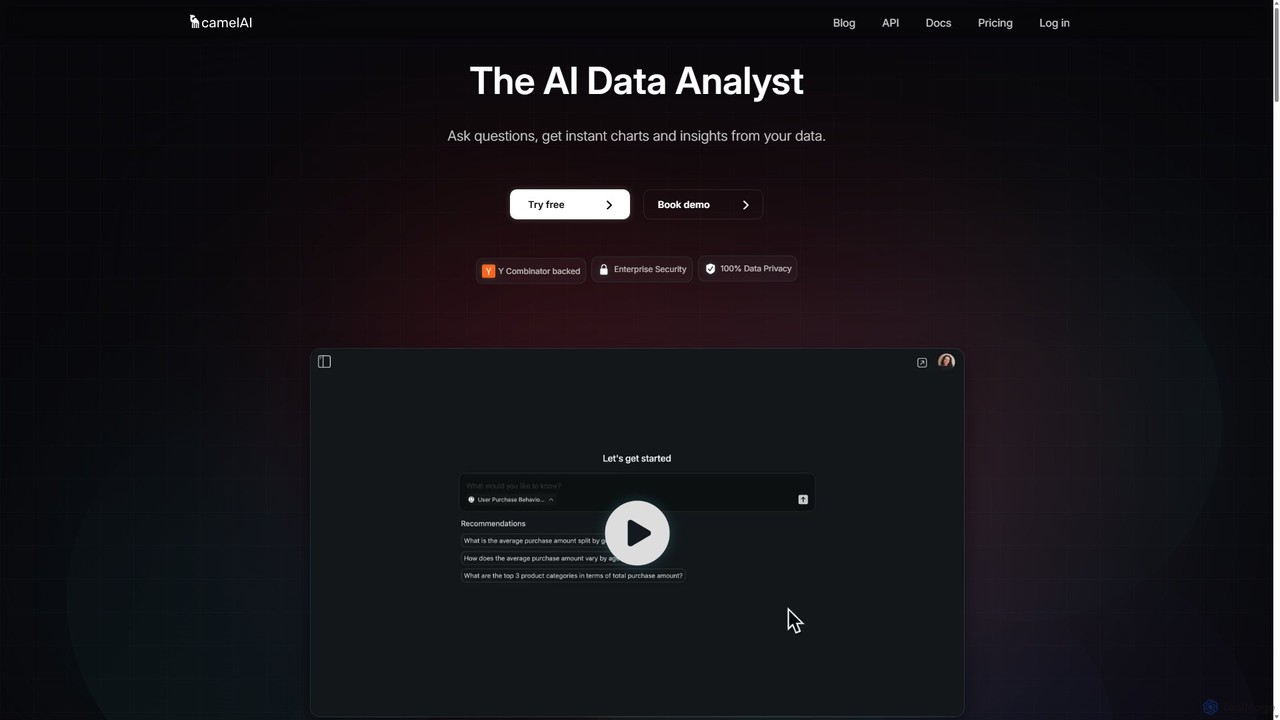
camelAI is an AI-powered data analysis platform that enables users to query their databases using natural language. It eliminates the need for SQL, providing instant answers with interactive charts and tables, making data-driven decision-making accessible to everyone in an organization.
Business Intelligence
BYOB
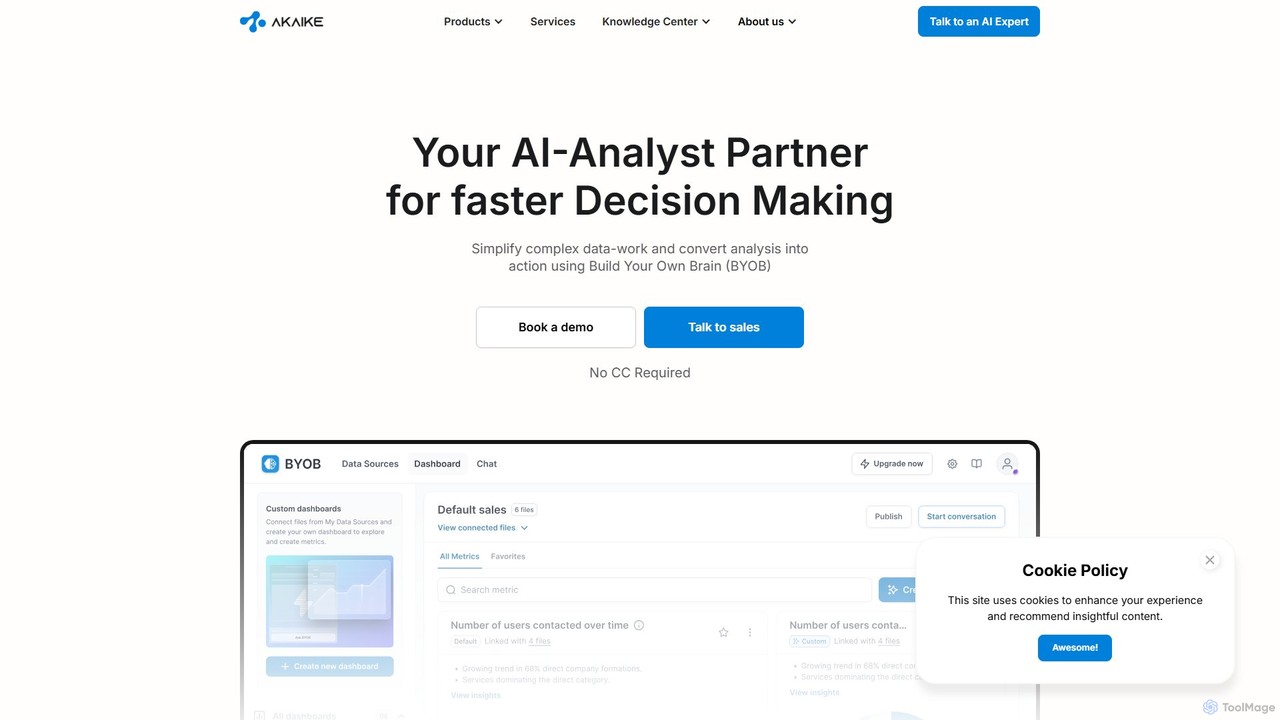
BYOB (Build Your Own Brain) by Akaike is an enterprise-grade AI analyst platform that transforms complex data into actionable insights. It connects to multiple data sources, both structured and unstructured, allowing teams to make faster, data-driven decisions through a conversational chat interface. BYOB provides proactive analytics and seamlessly integrates into existing workflows, empowering departments like finance, marketing, and sales without needing to expand the data team.
Business Intelligence
Quills
Quills is an AI-powered business intelligence assistant that enables users to interact with their data through natural language. It connects to databases and files (CSV, Excel, PDF), automatically generates SQL queries from plain English questions, creates insightful visualizations, and integrates seamlessly with platforms like Slack to accelerate data-driven decision-making for teams.
Business Intelligence
BoostKPI
BoostKPI is a privacy-first AI data analyst platform, powered by its AI assistant, ADA. It automates anomaly detection, root cause analysis, and data visualization, enabling businesses to quickly uncover actionable insights from their data. By connecting to various data warehouses or accepting file uploads, BoostKPI transforms complex datasets into clear reports, heatmaps, and drill-down analyses, making data-driven decision-making faster and more accessible for teams of all sizes.
Business Intelligence
Onvo AI
Onvo AI is a powerful platform for building and embedding AI-driven dashboards and reports directly into your applications. It replaces complex SQL queries with simple natural language prompts, allowing both technical and non-technical users to create stunning data visualizations effortlessly. This solution saves significant engineering resources and empowers your teams and customers with secure, self-service analytics.
Business Intelligence