ToolMage
Sign in

AI TOOL COMPARISON

Bifrost vs Superflex

What is the difference, and which fits your workflow? Compare features, usage, pricing models and traffic side by side.

Jump to key differences

Product overview

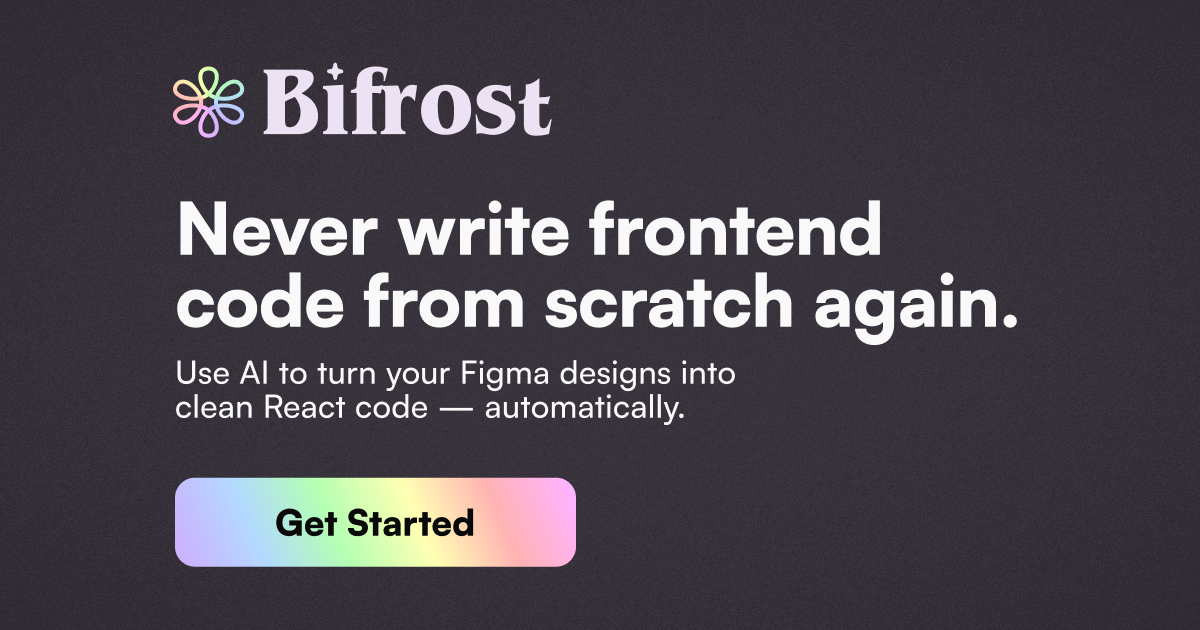
Bifrost Product overview

Bifrost is an AI-powered tool that automatically converts Figma designs into clean, production-ready React code. It streamlines the design-to-development workflow, saving significant engineering time and empowering teams to build and iterate on UIs faster than ever before.

Preview

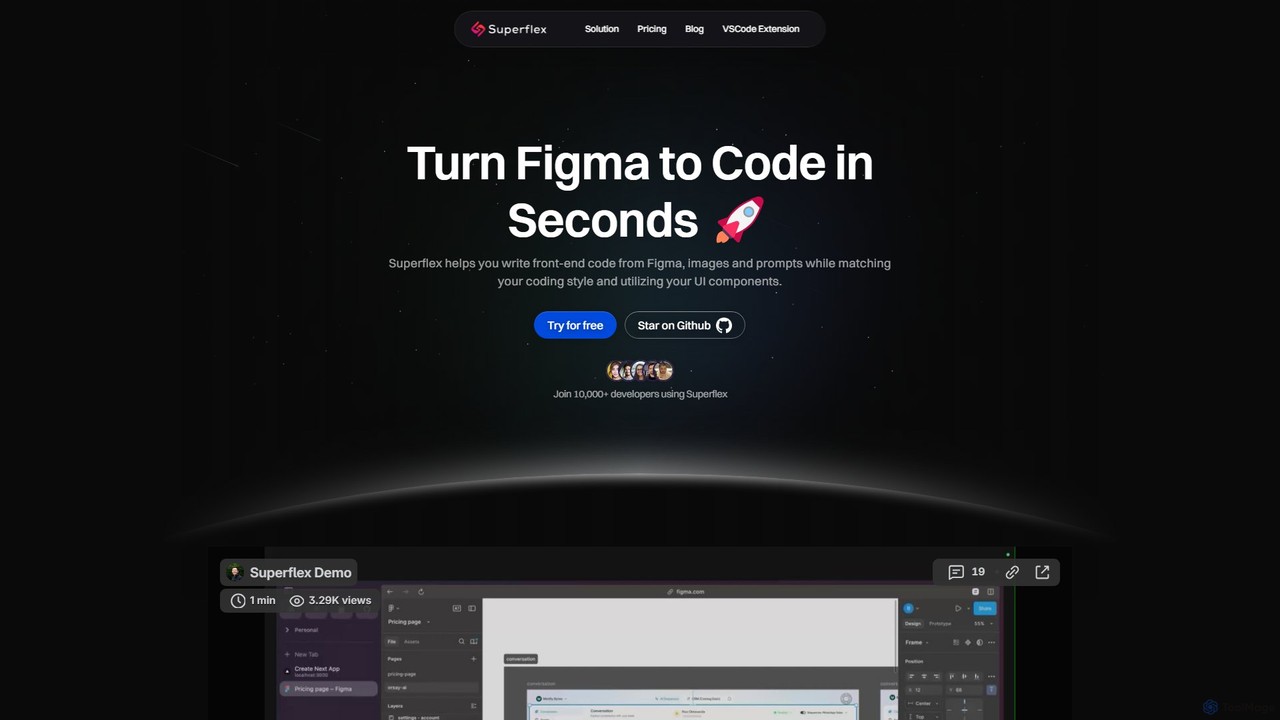
Superflex Product overview

Superflex is an AI-powered tool that transforms Figma designs, images, and text prompts into production-ready front-end code in seconds. It accelerates development by analyzing your existing codebase to reuse UI components and adapting to your unique coding style. Ideal for developers and teams looking to boost productivity and bridge the gap between design and implementation.

Preview

Quick facts

Compare product focus, pricing models and audiences. Highlighted rows indicate different listed information; unknown pricing does not mean free.

Bifrost VS Superflex — Quick facts
Quick factsBifrostSuperflex
Pricing modelFreemiumFreemium
Product typeWebWeb
Primary focusDesign To CodeDesign To Code
Audience and rolesNo data availableNo data available
CategoriesDesign To Code · Low Code No Code · Developer ToolsDesign To Code · Code Generation · Developer Tools
AddedAug 14, 2025Aug 7, 2025
UpdatedNov 19, 2026Nov 19, 2026

Features, usage and use cases

Explore the listed product descriptions, features and workflows. Taxonomy labels alone are not feature evaluations.

Bifrost

Bifrost is a cutting-edge AI tool designed to bridge the gap between design and development by automatically converting Figma designs into high-quality, clean React code. It fundamentally changes the frontend development process, eliminating the need to write UI code from scratch. This allows engineering teams to focus on complex business logic and features that drive value, while designers are empowered to create and update screens with the confidence that their vision will be perfectly translated into the final product. Bifrost is built for developers and is praised for producing code that is not only functional but also maintainable and scalable, making it a beloved tool in modern development workflows.

How to use Bifrost

Using Bifrost is a straightforward process designed for seamless integration into your existing workflow:

  1. Connect to Figma: Start by securely connecting your Figma account to the Bifrost platform.
  2. Select Your Design: Navigate to your Figma files and choose the specific frame, component, or entire screen you wish to convert.
  3. Initiate AI Conversion: With a single click, Bifrost's AI engine analyzes your design. It intelligently identifies layout, styling, assets, and component structures.
  4. Generate Code: The tool generates clean, semantic, and production-ready React code (including TypeScript support for type safety). The code mirrors the component hierarchy and properties defined in Figma.
  5. Integrate and Customize: Copy the generated code into your project's codebase. The code is designed to be easily readable and customizable, so you can add your own business logic and state management.
  6. Iterate with Ease: When design changes occur in Figma, simply use Bifrost to pull the updates. The tool intelligently merges the new design changes with your existing component, preserving any custom logic you've already implemented.

Core Features of Bifrost

  • AI-Powered Figma to React Conversion: Automatically translates Figma designs, including complex layouts and auto-layout rules, into clean React components.
  • Production-Quality Code: Generates readable, maintainable, and type-safe (TypeScript) code that developers can easily work with and extend.
  • Iterative Design Sync: Allows developers to pull new design changes from Figma into existing, generated components without overwriting custom-added logic.
  • Component-Based Architecture: Intelligently recognizes reusable elements in your design and creates corresponding React components with props derived from Figma properties.
  • Support for Modern Development: Creates components that are ready for conditional rendering and use default props directly from the Figma design, streamlining the creation of dynamic UIs.
  • Full-Screen and Flow Generation: Capable of converting entire screens and user flows, not just individual components, accelerating the development of new features from 0 to 1.
  • Seamless Integration with Existing Codebases: Can work alongside your manually written components, using them when available and generating new ones when needed.

Use Cases for Bifrost

Bifrost is versatile and supports every stage of the development lifecycle:

  • Laying the Foundation (0 → 1): For new projects, generate an entire component library and all initial screens from a Figma design system, creating a solid, consistent foundation in record time.
  • Scaling with Finesse (1 → 10): When adding new features to an existing application, use Bifrost to generate the UI for new screens, allowing engineers to focus entirely on implementing the underlying functionality.
  • Effortless Iteration (10 → 100): For mature products, easily update UI elements across the application to reflect design system changes. A one-click sync pulls changes from Figma, ensuring design consistency without manual refactoring.
  • Rapid Prototyping: Quickly transform static Figma mockups into interactive React prototypes for user testing, stakeholder demos, or proof-of-concept validation.

Advantages of Bifrost

Bifrost offers significant advantages for design and engineering teams:

  • Massive Time Savings: Drastically cuts down on engineering hours spent on repetitive UI coding, accelerating product delivery.
  • Empowered Designers: Enables designers to see their work come to life instantly and make updates without creating complex handoff documentation or fearing implementation errors.
  • Improved Collaboration: Acts as a single source of truth, reducing friction and miscommunication between designers and developers.
  • Code Consistency and Quality: Enforces design system consistency and produces high-quality, standardized code across the entire team.
  • Focus on High-Value Tasks: Frees up developers from pixel-pushing to concentrate on building core features, improving performance, and solving complex technical challenges.

Pricing and Plans

Bifrost's specific pricing plans are not publicly listed on the main page. The platform encourages users to 'Get Started', which typically indicates a free trial, a freemium tier, or a customized enterprise plan. For the most accurate and up-to-date information on pricing, it is recommended to visit the official Bifrost website and sign up or contact their team directly.

Superflex

Superflex is a cutting-edge AI tool designed to revolutionize the front-end development workflow. It empowers developers and teams to convert design assets into high-quality, production-ready code with remarkable speed and accuracy. By taking inputs directly from Figma, images, or even simple text prompts, Superflex eliminates the tedious and time-consuming process of manually translating visual designs into functional user interfaces. It's built for professional developers who want to accelerate their workflow, reduce boilerplate code, and focus on building complex application logic.

The platform's intelligence lies in its ability to understand and adapt to your existing project. Superflex analyzes your codebase to identify and utilize your custom UI components, ensuring that the generated code is consistent with your design system and architectural patterns. This adaptability makes it a powerful ally in maintaining code quality and scalability, preventing the 'spaghetti code' that can arise from inconsistent development practices.

How to use Superflex

Using Superflex is a straightforward process designed to integrate seamlessly into a developer's existing workflow:

  1. Provide an Input: Start by connecting your Figma account to import designs directly. Alternatively, you can upload a screenshot or image of a UI, or simply describe the component you want to build using a text prompt.
  2. Codebase Integration: For optimal results, allow Superflex to analyze your project's repository. This enables the AI to learn your coding style, component structure (e.g., React, Next.js), and styling conventions (e.g., Tailwind CSS, Styled Components).
  3. Generate Code: With the input and context, Superflex generates the corresponding front-end code in seconds. The output is not just a generic snippet but is tailored to your project's specific needs.
  4. Review and Integrate: The generated code can be reviewed and copied directly into your project. With the VSCode extension, this process is even more streamlined, allowing you to generate and insert code without leaving your editor.
  5. Iterate and Refine: Use the generated code as a solid foundation. Since it matches your style, you can confidently make edits and build upon it to add complex functionality.

Core Features of Superflex

  • Multi-Source Input: Converts designs from Figma, images, and text prompts into code.
  • Codebase-Aware Generation: Analyzes your existing code to reuse your UI components and libraries.
  • Coding Style Adaptation: Matches your formatting, naming conventions, and architectural patterns (e.g., React, Next.js, Svelte).
  • Production-Ready Output: Generates clean, maintainable, and responsive HTML, CSS, and JavaScript code.
  • VSCode Extension: Provides a seamless in-editor experience for maximum productivity.
  • Team Collaboration: Offers team plans with centralized billing, shared access, and priority support to boost an entire team's velocity.
  • Zero Data Retention Policy: The Team Plan ensures your proprietary code is never stored, providing enhanced security and confidentiality.

Use Cases for Superflex

Superflex is versatile and can be applied in various scenarios to enhance front-end development:

  • Rapid Prototyping: Quickly transform wireframes or high-fidelity mockups into interactive web prototypes.
  • Component Creation: Generate individual UI components like buttons, cards, and forms from a Figma design layer or an image.
  • Landing Page Development: Build entire landing pages or marketing sites from a complete design file in minutes.
  • Design System Implementation: Accelerate the process of building a component library based on an established design system in Figma.
  • Modernizing Legacy UIs: Take screenshots of old interfaces and generate modern, responsive code using new frameworks.

Advantages of Superflex

The primary advantage of Superflex is a massive boost in development speed, with claims of up to an 80% increase in front-end velocity. It bridges the often-problematic gap between design and development, ensuring high fidelity to the original design. By automating the creation of UI code, it frees up developers to concentrate on more complex tasks like state management, API integration, and business logic. The code's consistency and adherence to project standards also lead to a more maintainable and scalable codebase over time.

Pricing and Plans

Superflex offers a tiered pricing structure to suit different needs:

  • Free Plan: Ideal for individuals and hobbyists. Includes 1 project, 15 premium requests/month, and 100 basic requests/month. It supports image and prompt-to-code but requires a paid plan for Figma integration.
  • Individual Pro Plan ($19/month, billed yearly): The most popular choice for professionals. Includes Figma integration, unlimited projects, 250 premium requests/month, unlimited basic requests, and priority email support.
  • Team Plan ($199/month, billed yearly): Designed for teams and organizations. Includes 5 licenses (with an option to add more), advanced Figma-to-code generation, unlimited premium requests, priority Slack support, centralized billing, and a zero data retention policy for maximum security.

All paid plans come with a 30-day money-back guarantee.

Positioning

Their taxonomy shows where the products overlap and where each one has a more distinct focus. Unknown fields are shown explicitly and are never filled with assumptions.

Categories

Shared
Design To CodeDeveloper Tools
Only Bifrost
Low Code No Code
Only Superflex
Code Generation

Tags

Shared
design to codedeveloper toolfigma to codefrontend developmentreact
Only Bifrost
automationlow-codetypescriptui generation
Only Superflex
ai code generatorNextJSUI componentsvscode extension

Audience and roles

Shared
No listed items
Only Bifrost
No listed items
Only Superflex
No listed items

Traffic comparison

Traffic is shown on the same scale so differences in market visibility are not visually understated.

How to interpret the traffic data

Both charts share the same months and vertical scale. Each tool identifies its latest reporting month; missing months are left blank, not counted as zero. Regional and source visit counts are estimates calculated from the reported shares.

Bifrost

No data available

Superflex monthly traffic:

Latest traffic · 2026-05

Monthly visits
3K
Avg. visit duration
0:10
Pages per visit
1.67
Bounce rate
39%
Data updated 2026-06-15

Monthly traffic trend

  • 2025-09: 10.5K
  • 2026-01: 14.6K
  • 2026-02: 9.5K
  • 2026-03: 9.9K
  • 2026-04: 7.5K
  • 2026-05: 3K

Top regions

Top 5 countries/regions
Country/regionPercentageEstimated visits
🇺🇸United States38.91%1.2K
🇩🇪Germany23.11%687
🇮🇳India15.91%473
🇵🇰Pakistan13.99%416
🇮🇩Indonesia8.08%240

Search keywords

all html <input> typesbest ai for codingfigma sitessuperflexxhr

Community signals

Ratings, comments, favorites, and likes are community signals—not a substitute for product fit.

Bifrost

Rating
No data available
Comments
0
Favorites
173
Likes
184

Superflex

Rating
No data available
Comments
0
Favorites
187
Likes
170

Bifrost vs Superflex · Comparison FAQ

What do Bifrost and Superflex have in common?
Both tools are listed under Design To Code、Developer Tools. These categories indicate overlapping use cases; compare their detailed descriptions for workflows, capabilities and limitations.
Are Bifrost and Superflex free?
Listed pricing models: Bifrost — Freemium; Superflex — Freemium. Missing pricing is not proof of a free plan, and freemium does not mean every feature is free. Check official sites for current plans, limits and trials.
How should I choose between Bifrost and Superflex?
The primary listed category is Design To Code for Bifrost, and Design To Code for Superflex. Compare features, steps and use cases, then verify pricing, data permissions and deployment needs. This page does not include hands-on testing and does not declare a winner from traffic or tags.

Sources and comparison methodology

This page is assembled from ToolMage product listings, taxonomy, traffic statistics and on-site user feedback. It is not a hands-on test or an independent review.
  • Feature and plan descriptions reflect information in the listings, not real-time guarantees. Verify pricing, quotas, availability and privacy terms on the official sites.
  • Traffic uses the reporting months shown. Missing statistics do not mean zero visits, and different periods do not establish growth or superiority. Regional and source visit counts are estimates based on shares.
  • Different tags indicate differences in the listings, not proof that the other product lacks a capability. Ratings, favorites and visits are not used to declare a winner.

Related comparisons