ToolMage
Sign in

AI TOOL COMPARISON

Blaze vs Retool

What is the difference, and which fits your workflow? Compare features, usage, pricing models and traffic side by side.

Jump to key differences

Product overview

Blaze Product overview

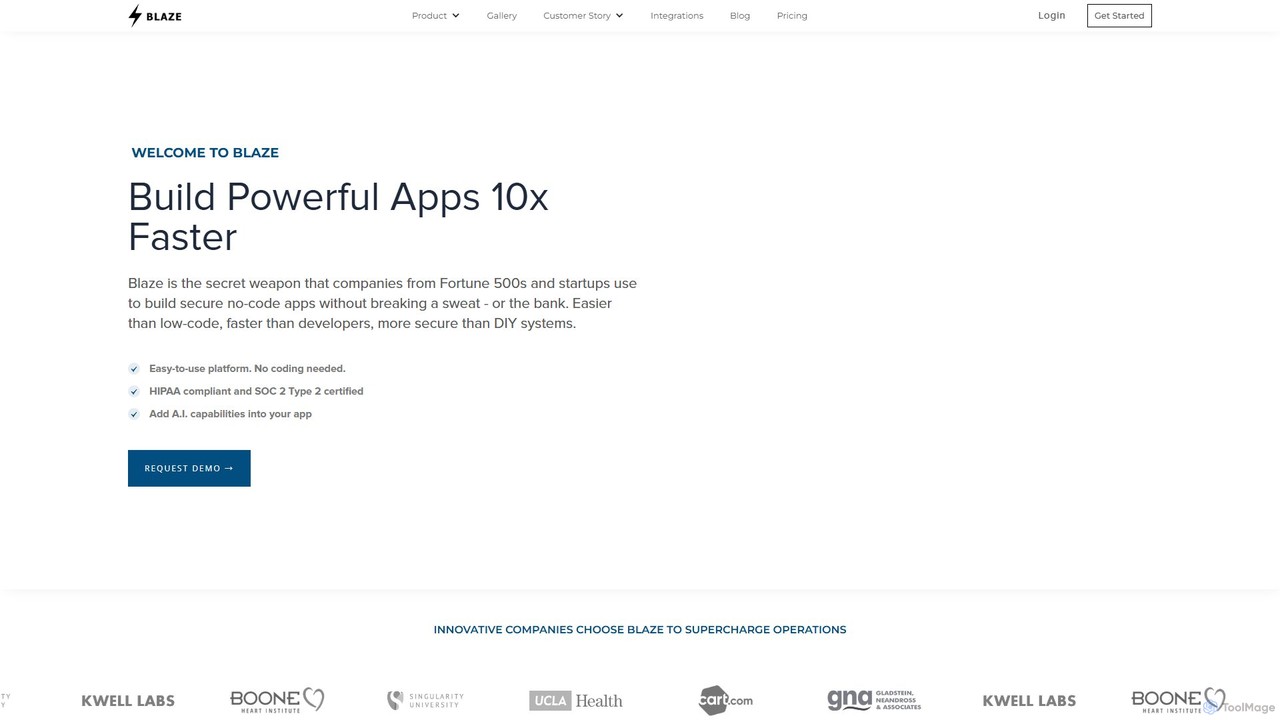
Blaze is a powerful all-in-one no-code platform for building custom web applications, internal tools, and customer portals. It empowers both non-technical and technical users to create complex, secure, and scalable software with a drag-and-drop interface, seamless API integration, and built-in AI capabilities. Blaze is particularly strong in regulated industries like healthcare, offering SOC 2 Type 2 and HIPAA compliance.

Preview

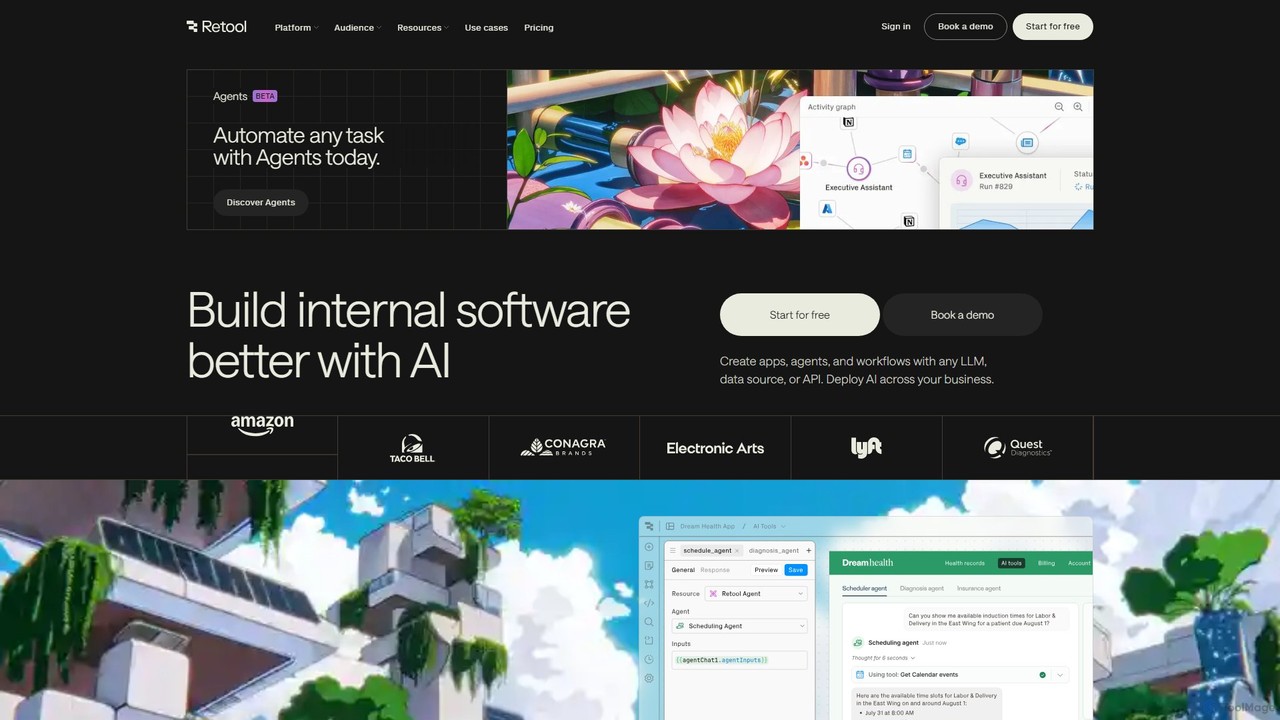
Retool Product overview

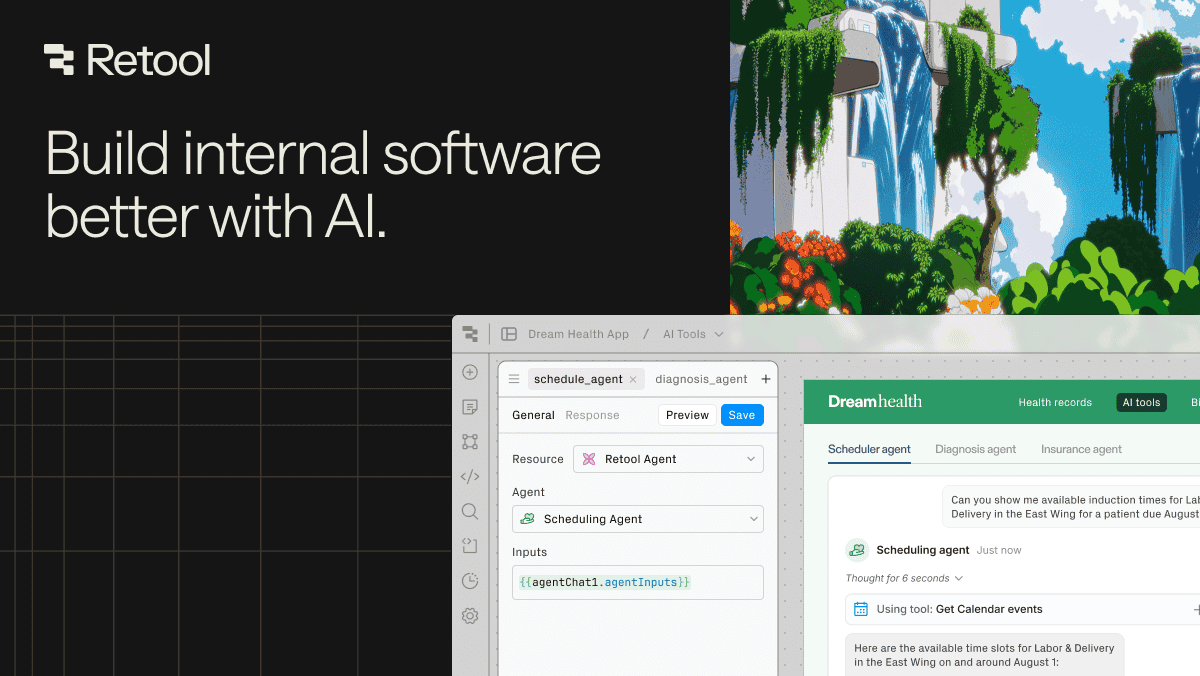
Retool is an AI-powered development platform for building internal software, applications, and automated workflows with exceptional speed. It enables developers and teams to create custom tools like admin panels, dashboards, and CRMs by connecting to any database or API, using a combination of visual building, code, and AI agents.

Preview

Quick facts

Compare product focus, pricing models and audiences. Highlighted rows indicate different listed information; unknown pricing does not mean free.

Blaze VS Retool — Quick facts
Quick factsBlazeRetool
Pricing modelPaidFreemium
Product typeWebWeb
Primary focusCrmInternal Tools
Audience and rolesNo data availableNo data available
CategoriesCrm · No Code · Practice Management · Workflow AutomationInternal Tools · Low Code No Code · Workflow Automation
AddedAug 12, 2025Aug 8, 2025
UpdatedNov 19, 2026Nov 19, 2026

Features, usage and use cases

Explore the listed product descriptions, features and workflows. Taxonomy labels alone are not feature evaluations.

Blaze

Blaze is a comprehensive no-code/low-code platform designed to supercharge business operations by enabling anyone to build powerful, custom applications without writing a single line of code. It bridges the gap between the ease of no-code and the power of low-code, providing an intuitive yet robust environment for creating everything from internal tools and custom CRMs to complex patient management systems and customer portals. Blaze is built with security at its core, holding SOC 2 Type 2 certification and being HIPAA-compliant, making it a trusted choice for innovative companies, including those in highly regulated sectors like healthcare and finance.

The platform's mission is to democratize software development, allowing teams to transform their ideas into reality quickly and cost-effectively. Whether you're a startup looking to streamline operations or a Fortune 500 company needing to upgrade legacy systems, Blaze provides the tools to build tailored solutions that fit your exact needs. It emphasizes centralizing data and automating workflows to enhance efficiency and reduce manual errors.

How to use Blaze

Using Blaze is designed to be an intuitive process, even for users without a technical background. The workflow is straightforward:

  1. Design Your Interface: Start by using the drag-and-drop editor. Choose from a library of pre-made components like tables, forms, charts, and buttons to build your user interface. You can easily style these components to match your brand's look and feel.
  2. Connect Your Data: Blaze allows you to seamlessly connect to any data source. Integrate with existing databases, third-party services via any REST or GraphQL API, or specialized data standards like FHIR for healthcare. This unifies your data, making it accessible within your new application.
  3. Build Logic and Workflows: Go beyond simple interfaces by creating complex business logic and automating repetitive tasks. You can perform advanced calculations, set up conditional workflows with triggers and actions, and orchestrate processes that save time and improve accuracy.
  4. Incorporate AI: Enhance your application with Blaze's AI suite. Build intelligent AI chat assistants for customer support, use AI to generate test data or enrich existing datasets, and even leverage the AI Builder to get suggestions on configuring workflows and formulas.
  5. Set Permissions and Deploy: Manage user access with a powerful role-based permissioning system. Once your app is ready, use the multi-environment deployment feature to move it from Development to Staging for testing, and finally to Production for live use. Share the app with a simple link, protected by login if needed.
  6. Leverage Experts (Optional): If you need assistance, you can work with the Blaze Experts team to build your app from concept to launch, ensuring a perfect solution tailored to your vision.

Core Features of Blaze

  • Drag & Drop Interface: Build slick and powerful user interfaces in seconds with a wide range of pre-built, customizable components.
  • Universal Data & API Integration: Connect to any data source, including SQL databases, Google Sheets, and any third-party API (e.g., Stripe, HubSpot, Shopify). It also offers specialized support for FHIR, crucial for healthcare applications.
  • Advanced Workflow Automation: Create sophisticated workflows to automate repetitive tasks, perform complex calculations, and streamline business processes with triggers and actions.
  • AI-Powered Capabilities: Integrate AI agents directly into your apps. This includes AI Chat Assistants for real-time support, AI Data Generation for testing and enrichment, and an AI Builder to assist in app configuration.
  • Enterprise-Grade Security: Blaze is one of the few no-code platforms with SOC 2 Type 2 certification and is HIPAA-compliant, ensuring your data is handled with the highest security standards. It features end-to-end encryption and robust user permissioning.
  • Multi-Environment Deployment: A professional development lifecycle with dedicated Development, Staging, and Production environments, giving you full control over building, testing, and deploying your applications.
  • Robust User Permissioning: Easily assign roles and manage access controls to ensure that users only see the data and features relevant to them, simplifying collaboration and ensuring compliance.

Use Cases for Blaze

Blaze is versatile enough to support a wide array of applications across various industries:

  • Healthcare: Build HIPAA-compliant patient management platforms, EMR/EHR dashboards, clinic onboarding systems, mobile nurse apps, and IVF/fertility clinic software. Integrate with EHR systems to streamline scheduling, record tracking, and communication.
  • Customer Relationship Management (CRM): Create custom CRMs tailored to your sales and customer success workflows. Manage accounts, track user activity with audit logs, and integrate with tools like HubSpot.
  • Internal Tools: Develop a wide range of internal tools such as inventory management systems, financial modeling dashboards, and invoice automation tools that connect with software like QuickBooks and Xero.
  • Customer Portals: Offer your clients a secure, branded portal to access their data, manage their accounts, or interact with your services.
  • E-Commerce Operations: Build dashboards and management systems that connect with Shopify to track inventory, manage orders, and analyze sales data.
  • FinTech Applications: Create front-ends for payment processing, account verification, and financial tracking by integrating with services like Stripe, PayPal, and Plaid.

Advantages of Blaze

Blaze offers a distinct competitive edge by combining speed, power, and security. Teams can build and launch applications in a fraction of the time it would take with traditional coding or even other no-code tools. A key advantage is its ability to handle complexity without sacrificing ease of use. Its enterprise-grade security and compliance (SOC 2, HIPAA) make it a viable option for industries with strict data-handling requirements. Furthermore, the platform empowers non-technical employees to become builders, fostering innovation across the organization and reducing reliance on over-stretched engineering teams.

Pricing and Plans

Blaze offers a transparent and needs-based pricing structure. The plans are designed to accommodate different types of usage and user bases.

  • Internal Apps Plan: This plan is designed for applications where access is limited to users within your own organization (e.g., employees, contractors). It's ideal for building internal tools, dashboards, and operational software.
  • Custom Plan: This plan is for applications that require access for external users, such as your customers or partners. It's perfect for building customer portals, client-facing apps, and other external services. The Custom Plan also provides greater flexibility with APIs, advanced user permissions, and custom integrations.

Specific pricing details are not publicly listed. Prospective customers are encouraged to contact the Blaze sales team for a demo and a custom quote tailored to their organization's specific requirements, ensuring they get a plan that fits their needs perfectly.

Retool

Retool is a comprehensive development platform designed to accelerate the creation of internal software. It provides a powerful environment where businesses can build custom applications, automate complex workflows, and deploy AI-powered agents to handle repetitive tasks. By connecting to any database, API, or large language model (LLM), Retool serves as a versatile application layer for various business functions, including data teams, operations, and customer support. The platform is trusted by over 10,000 companies, from startups to Fortune 500 enterprises, to streamline processes, enhance productivity, and drive business impact.

The core philosophy of Retool is to eliminate boilerplate code and abstract away the complexities of software development, allowing builders to focus on the unique logic that differentiates their business. It offers a flexible and composable approach, combining a drag-and-drop canvas, a full-featured code editor, and natural language inputs to translate ideas into functional software. This hybrid model caters to both speed and power, enabling rapid prototyping and sophisticated customization.

How to use Retool

Using Retool involves a straightforward, multi-faceted process that adapts to the user's preferred building style:

  1. Connect to Data Sources: The first step is to connect Retool to your existing data and tools. This can be any SQL or NoSQL database, a REST or GraphQL API, or any custom data source. Retool provides seamless integration to ensure your apps have access to the data they need.
  2. Build the Interface: You can build the user interface in three primary ways. Use the Visual Builder with its drag-and-drop canvas to quickly assemble pre-built components like tables, forms, and charts. For more complex needs, use the Code Editor to write custom JavaScript, CSS, or React components. Alternatively, leverage the Natural Language feature (in early access) to describe the desired app, and Retool will generate the components and logic.
  3. Create Logic and Automation: Define the application's behavior by writing queries (e.g., SQL, JavaScript) to read and write data. For automation, use Retool Workflows to orchestrate multi-step processes triggered by schedules or webhooks.
  4. Integrate AI: Deploy Retool Agents, which are AI-powered digital workers, to automate critical processes like customer support ticket triage, data analysis, or sales outreach. You can integrate with any LLM to add intelligent features to your applications.
  5. Deploy and Secure: Share your applications with internal or external users with granular permissions and enterprise-grade security. Retool integrates with standard developer workflows like Git for version control and CI/CD, and can be deployed in Retool's secure cloud or self-hosted in your own VPC for maximum control.

Core Features of Retool

  • AI Agents: Deploy autonomous AI workers to automate complex, multi-step tasks and workflows, priced transparently by the hour.
  • Visual App Builder: A drag-and-drop canvas with over 100 pre-built components to quickly build web and mobile application UIs.
  • Code-First Environment: A powerful IDE to write custom JavaScript, connect to APIs, and insert custom code anywhere, offering unlimited flexibility.
  • Retool Workflows: A tool for building, scheduling, and monitoring backend automations and cron jobs that connect to your data sources.
  • Retool Database: A built-in PostgreSQL database to store, edit, and manage data directly within the platform, perfect for getting started quickly.
  • Broad Connectivity: Native integrations with dozens of databases and APIs, plus the ability to connect to any REST, GraphQL, or gRPC API.
  • Enterprise-Grade Security: Features like granular access controls, audit logs, SAML/OpenID SSO, and on-premise deployment options to meet strict compliance requirements.
  • Mobile App Development: Build native iOS and Android applications that can work offline and utilize device-specific features.

Use Cases for Retool

Retool is versatile enough to support a wide range of internal tool needs across different departments:

  • Operations Teams: Build inventory management systems, HR onboarding workflows, order fulfillment dashboards, and other custom tools to streamline core business processes.
  • Data & Analytics Teams: Create interactive dashboards for business intelligence, admin panels for database management, data quality monitoring systems, and tools for tracking experiments.
  • Customer Support Teams: Develop applications for triaging support tickets, managing customer information (a custom CRM), processing refunds, and tracking common issues to reduce engineering bottlenecks.
  • AI & LLM Applications: Build content moderation tools, document processing workflows, custom AI agents for research, and monitors for LLM performance. For example, ClickUp automated hundreds of weekly hours with custom AI tools, and Descript built over 50 AI apps to automate manual work.

Advantages of Retool

Retool offers significant advantages over building internal tools from scratch or using limited off-the-shelf software:

  • Development Speed: Companies report building tools up to 10-20x faster, saving thousands of engineering hours and millions of dollars.
  • Flexibility and Power: The platform uniquely combines low-code ease-of-use with the full power of programming, ensuring no limitations on what can be built.
  • Cost-Effective AI: The hourly pricing for AI Agents provides a transparent and predictable cost structure that aligns with business value, making AI automation more accessible.
  • Centralized and Secure: All internal tools can be built, managed, and secured within a single platform, with robust permissioning and compliance features.
  • Empowers Non-Engineers: While built for developers, its accessibility allows technical business users (e.g., those who know SQL) to build or modify tools, freeing up engineering resources.

Pricing and Plans

Retool offers a flexible, freemium pricing model that scales with business needs, available in both cloud-hosted and self-hosted versions.

  • Free Plan: Ideal for individuals and small teams starting out. Includes unlimited web & mobile apps for up to 5 users, 500 workflow runs/month, and 20 free Agent hours/month.
  • Team Plan ($10/standard user/month): For growing teams. Increases workflow runs to 5,000/month and allows for more than 5 users.
  • Business Plan ($50/standard user/month): For teams needing more control. Adds audit logging, rich permission controls, portals for external users, and unlimited environments.
  • Enterprise Plan (Custom Pricing): For large organizations with advanced security and compliance needs. Includes SAML/OpenID SSO, source control, dedicated support, and volume discounts.

Pricing is differentiated between Standard Users (who can build/edit) and End Users (who only use apps), making it cost-effective to roll out tools to the entire organization. Retool Agents are priced separately by the hour, with rates varying by the capability of the chosen AI model.

Positioning

Their taxonomy shows where the products overlap and where each one has a more distinct focus. Unknown fields are shown explicitly and are never filled with assumptions.

Categories

Shared
Workflow Automation
Only Blaze
CrmNo CodePractice Management
Only Retool
Internal ToolsLow Code No Code

Tags

Shared
application builderCRMinternal toolslow-codeno-codeworkflow automation
Only Blaze
AI agentAPI integrationcustomer portaldashboard builderhealthcareHIPAASOC 2
Only Retool
admin panelai agentsbusiness intelligencedashboarddatabase UIdeveloper tools

Audience and roles

Shared
No listed items
Only Blaze
No listed items
Only Retool
No listed items

Traffic comparison

Traffic is shown on the same scale so differences in market visibility are not visually understated.

How to interpret the traffic data

Both charts share the same months and vertical scale. Each tool identifies its latest reporting month; missing months are left blank, not counted as zero. Regional and source visit counts are estimates calculated from the reported shares.

Blaze monthly traffic:

Latest traffic · 2026-05

Monthly visits
28.5K
Avg. visit duration
1:16
Pages per visit
3.19
Bounce rate
44.11%
Data updated 2026-06-15

Monthly traffic trend

  • 2025-09: 66.1K
  • 2026-01: 67.5K
  • 2026-02: 41.2K
  • 2026-03: 37.7K
  • 2026-04: 44K
  • 2026-05: 28.5K

Top regions

Top 5 countries/regions
Country/regionPercentageEstimated visits
🇺🇸United States77.51%22.1K
🇮🇳India7.42%2.1K
🇻🇳Vietnam7.41%2.1K
🇬🇧United Kingdom4.2%1.2K
🇧🇷Brazil3.46%987

Traffic sources

Source typePercentageEstimated visits
Direct59.13%16.9K
Referral25.23%7.2K
Email15.64%4.5K

Search keywords

alayacareblaze tech rolesblaze.tech rolestop no code cms platformswhich app builder is best for hippa compliant software

Retool monthly traffic:

Latest traffic · 2026-05

Monthly visits
1.6M
Avg. visit duration
5:00
Pages per visit
4.41
Bounce rate
43.91%
Data updated 2026-06-15

Monthly traffic trend

  • 2025-09: 1.9M
  • 2026-01: 1.9M
  • 2026-02: 1.7M
  • 2026-03: 2.1M
  • 2026-04: 1.8M
  • 2026-05: 1.6M

Top regions

Top 5 countries/regions
Country/regionPercentageEstimated visits
🇺🇸United States58.95%929K
🇮🇳India16.3%256.9K
🇬🇧United Kingdom8.6%135.5K
🇫🇷France8.5%133.9K
🇦🇺Australia7.65%120.6K

Traffic sources

Source typePercentageEstimated visits
Direct90.79%1.4M
Referral5.51%86.8K
Email3.7%58.3K

Search keywords

framerreplitretoolretool careerstavily

Community signals

Ratings, comments, favorites, and likes are community signals—not a substitute for product fit.

Blaze

Rating
No data available
Comments
0
Favorites
146
Likes
164

Retool

Rating
No data available
Comments
0
Favorites
187
Likes
189

Blaze vs Retool · Comparison FAQ

What do Blaze and Retool have in common?
Both tools are listed under Workflow Automation. These categories indicate overlapping use cases; compare their detailed descriptions for workflows, capabilities and limitations.
Are Blaze and Retool free?
Listed pricing models: Blaze — Paid; Retool — Freemium. Missing pricing is not proof of a free plan, and freemium does not mean every feature is free. Check official sites for current plans, limits and trials.
How should I choose between Blaze and Retool?
The primary listed category is Crm for Blaze, and Internal Tools for Retool. Compare features, steps and use cases, then verify pricing, data permissions and deployment needs. This page does not include hands-on testing and does not declare a winner from traffic or tags.

Sources and comparison methodology

This page is assembled from ToolMage product listings, taxonomy, traffic statistics and on-site user feedback. It is not a hands-on test or an independent review.
  • Feature and plan descriptions reflect information in the listings, not real-time guarantees. Verify pricing, quotas, availability and privacy terms on the official sites.
  • Traffic uses the reporting months shown. Missing statistics do not mean zero visits, and different periods do not establish growth or superiority. Regional and source visit counts are estimates based on shares.
  • Different tags indicate differences in the listings, not proof that the other product lacks a capability. Ratings, favorites and visits are not used to declare a winner.

Related comparisons