ToolMage
Sign in

AI TOOL COMPARISON

Appsmith vs Retool

What is the difference, and which fits your workflow? Compare features, usage, pricing models and traffic side by side.

Jump to key differences

Product overview

Appsmith Product overview

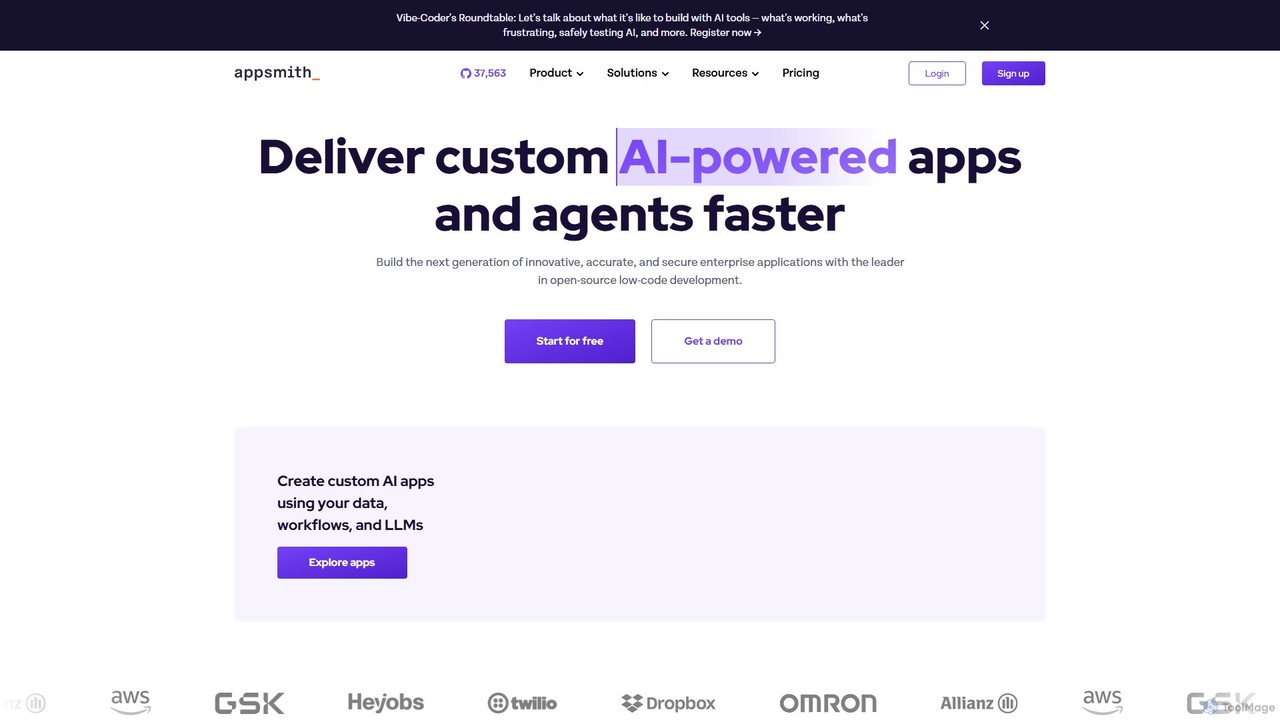
Appsmith is an open-source, low-code platform designed for developers to build, ship, and maintain internal tools, dashboards, and AI-powered applications rapidly. It connects to any data source, allows UI building via drag-and-drop or natural language, and offers full customization with JavaScript, empowering teams to create secure, scalable enterprise-grade applications with unprecedented speed.

Preview

Retool Product overview

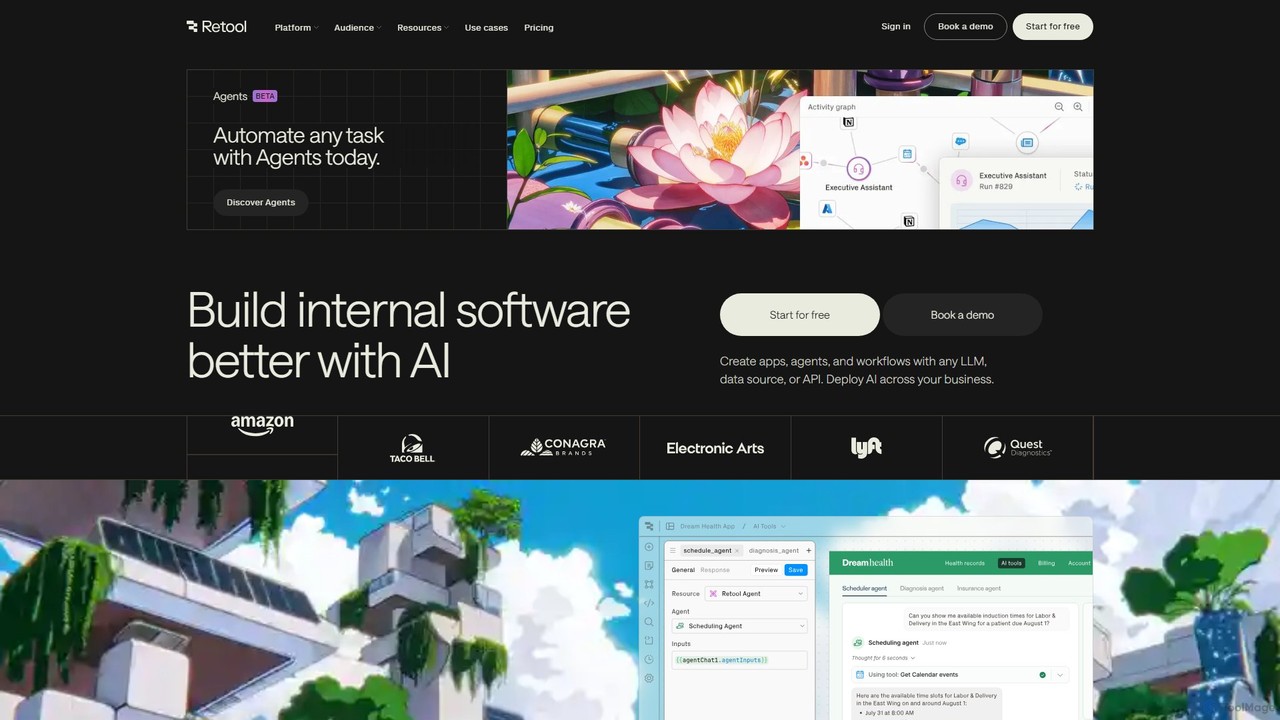
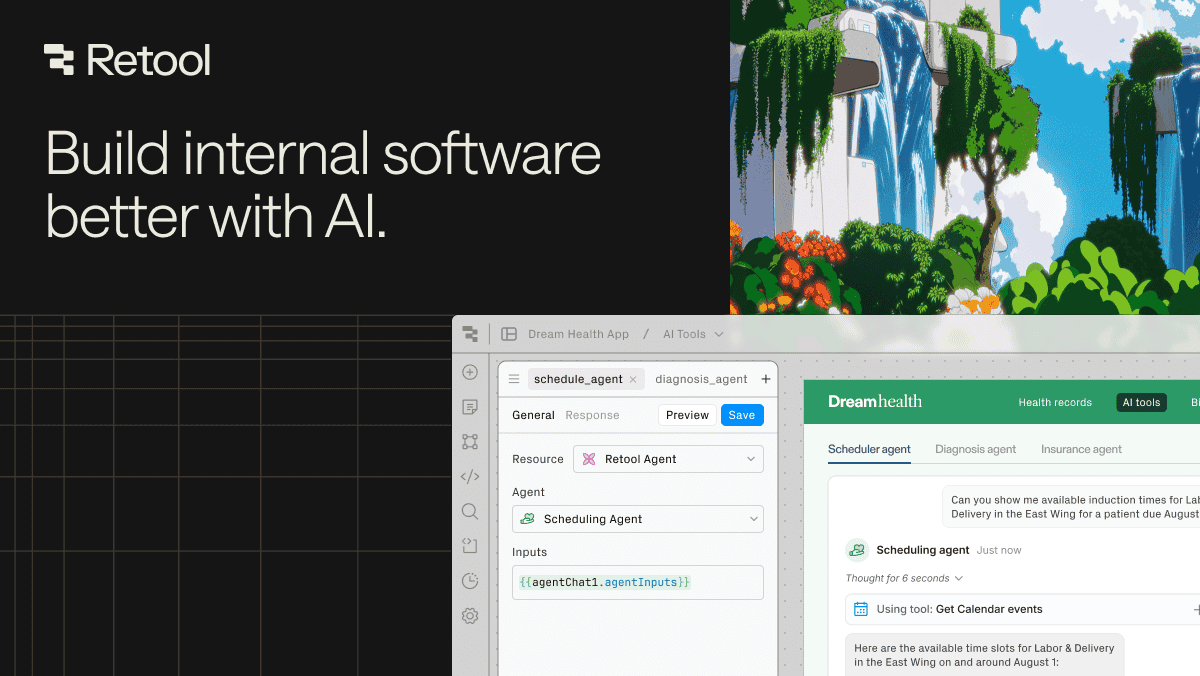
Retool is an AI-powered development platform for building internal software, applications, and automated workflows with exceptional speed. It enables developers and teams to create custom tools like admin panels, dashboards, and CRMs by connecting to any database or API, using a combination of visual building, code, and AI agents.

Preview

Quick facts

Compare product focus, pricing models and audiences. Highlighted rows indicate different listed information; unknown pricing does not mean free.

Appsmith VS Retool — Quick facts
Quick factsAppsmithRetool
Pricing modelFreemiumFreemium
Product typeWebWeb
Primary focusInternal ToolsInternal Tools
Audience and rolesNo data availableNo data available
CategoriesInternal Tools · Dashboard · Low Code No Code · Workflow AutomationInternal Tools · Low Code No Code · Workflow Automation
AddedAug 13, 2025Aug 8, 2025
UpdatedNov 19, 2026Nov 19, 2026

Features, usage and use cases

Explore the listed product descriptions, features and workflows. Taxonomy labels alone are not feature evaluations.

Appsmith

Appsmith is a leading open-source low-code development platform that empowers developers and enterprises to build custom, AI-powered applications and internal tools with remarkable speed and efficiency. Designed with a developer-first philosophy, Appsmith bridges the gap between no-code simplicity and full-code flexibility. It provides a comprehensive environment to connect to various data sources, build responsive user interfaces, customize business logic, and securely deploy applications. By integrating with Large Language Models (LLMs), Appsmith enables the creation of innovative, accurate, and secure enterprise applications, helping businesses automate processes, streamline operations, and modernize legacy systems.

How to use Appsmith

Using Appsmith follows a straightforward, four-step development lifecycle:

  1. Connect to Data: Start by connecting to your data sources. Appsmith offers seamless integration with any database (like PostgreSQL, MongoDB), SaaS tool, or API (REST/GraphQL). You can also self-host for secure access to internal data.
  2. Build the UI: Assemble your application's user interface using a powerful drag-and-drop editor with a rich library of pre-built widgets. For faster development, you can use natural language prompts to generate UI components or even code your own custom widgets using JS/HTML/CSS.
  3. Customize Logic: Define your application's behavior and business logic. You can write JavaScript code directly within a centralized IDE that features auto-complete, debugging, and linting. Alternatively, use natural language prompts to generate code for workflows and data transformations. You can also import your own JS libraries for extended functionality.
  4. Deploy and Maintain: Connect your Appsmith application to a Git repository (like GitHub or GitLab) for version control. This allows you to manage development, staging, and production environments, review pull requests, and automate deployments using your existing CI/CD pipelines.

Core Features of Appsmith

  • AI-Powered Development: Build custom AI apps using your data, workflows, and preferred LLMs. Use built-in AI actions and natural language prompts to generate UI and logic.
  • Open-Source & Self-Hostable: The Community Edition is fully open-source under the Apache 2.0 license, offering transparency and eliminating vendor lock-in. It can be self-hosted on your own infrastructure, including air-gapped environments.
  • Extensive Integrations: Natively connect to dozens of databases, APIs, and SaaS platforms like Stripe, Google Sheets, and more.
  • Drag-and-Drop UI Builder: A visual editor with responsive widgets to quickly build beautiful and functional user interfaces.
  • Full-Code Flexibility: A developer-centric IDE to write and debug JavaScript, transform data, and control every aspect of your application's logic.
  • Git-Based Version Control: Integrate with Git to collaborate, manage versions, review changes, and deploy updates seamlessly across different environments.
  • Enterprise-Grade Security: Features include SAML/OIDC SSO, Role-Based Access Control (RBAC), SCIM for user provisioning, audit logs, and SOC 2 Type II compliance.
  • Embeddable Applications: Embed Appsmith applications within your existing legacy or SaaS applications with shared logins to extend their functionality.

Use Cases for Appsmith

Leading companies from startups to enterprises leverage Appsmith to improve operations and efficiency:

  • Admin Panels & CRUD Interfaces: Quickly build interfaces for managing data in your databases, such as a UI on top of Snowflake control tables or a Django admin panel alternative.
  • Workflow Automation: Automate manual processes like refund processing with Stripe, server fleet patching, or new customer application approvals.
  • Custom Dashboards: Create unified Customer 360 dashboards that visualize KPIs from multiple sources or track marketing campaigns with a centralized UTM manager.
  • Internal Tools: Develop a wide range of internal tools, from a Zendesk clone for customer support to custom extensions for project management platforms, significantly reducing seat license costs.
  • Legacy System Modernization: Add new features and modern interfaces to existing legacy applications up to 90% faster.

Advantages of Appsmith

Appsmith offers a unique combination of speed, control, and security. Its developer-first approach ensures that you are never limited by the platform's abstractions, always providing code-level control. The open-source model provides transparency, a vibrant community, and the flexibility to self-host for maximum data security. Businesses can build and iterate on applications 80-90% faster than traditional methods, reduce operational costs, and empower their teams to innovate without being bogged down by repetitive development tasks.

Pricing and Plans

Appsmith offers a simple, user-based pricing model that scales with your needs:

  • Free: Perfect for individuals and small teams. Includes up to 5 users (cloud), Git integration, Google SSO, and community support.
  • Business: Priced at $15 per user/month. Designed for growing teams, it includes everything in Free plus up to 99 users, unlimited environments and repos, workflows, premium integrations, custom roles, audit logs, and email/chat support.
  • Enterprise: Starts at $2,500/month for 100 users. For teams needing advanced security and scale, this plan adds SAML/OIDC SSO, SCIM user provisioning, CI/CD, private app embedding, dedicated support with SLAs, and optional add-ons like air-gapped deployment and managed hosting.

Retool

Retool is a comprehensive development platform designed to accelerate the creation of internal software. It provides a powerful environment where businesses can build custom applications, automate complex workflows, and deploy AI-powered agents to handle repetitive tasks. By connecting to any database, API, or large language model (LLM), Retool serves as a versatile application layer for various business functions, including data teams, operations, and customer support. The platform is trusted by over 10,000 companies, from startups to Fortune 500 enterprises, to streamline processes, enhance productivity, and drive business impact.

The core philosophy of Retool is to eliminate boilerplate code and abstract away the complexities of software development, allowing builders to focus on the unique logic that differentiates their business. It offers a flexible and composable approach, combining a drag-and-drop canvas, a full-featured code editor, and natural language inputs to translate ideas into functional software. This hybrid model caters to both speed and power, enabling rapid prototyping and sophisticated customization.

How to use Retool

Using Retool involves a straightforward, multi-faceted process that adapts to the user's preferred building style:

  1. Connect to Data Sources: The first step is to connect Retool to your existing data and tools. This can be any SQL or NoSQL database, a REST or GraphQL API, or any custom data source. Retool provides seamless integration to ensure your apps have access to the data they need.
  2. Build the Interface: You can build the user interface in three primary ways. Use the Visual Builder with its drag-and-drop canvas to quickly assemble pre-built components like tables, forms, and charts. For more complex needs, use the Code Editor to write custom JavaScript, CSS, or React components. Alternatively, leverage the Natural Language feature (in early access) to describe the desired app, and Retool will generate the components and logic.
  3. Create Logic and Automation: Define the application's behavior by writing queries (e.g., SQL, JavaScript) to read and write data. For automation, use Retool Workflows to orchestrate multi-step processes triggered by schedules or webhooks.
  4. Integrate AI: Deploy Retool Agents, which are AI-powered digital workers, to automate critical processes like customer support ticket triage, data analysis, or sales outreach. You can integrate with any LLM to add intelligent features to your applications.
  5. Deploy and Secure: Share your applications with internal or external users with granular permissions and enterprise-grade security. Retool integrates with standard developer workflows like Git for version control and CI/CD, and can be deployed in Retool's secure cloud or self-hosted in your own VPC for maximum control.

Core Features of Retool

  • AI Agents: Deploy autonomous AI workers to automate complex, multi-step tasks and workflows, priced transparently by the hour.
  • Visual App Builder: A drag-and-drop canvas with over 100 pre-built components to quickly build web and mobile application UIs.
  • Code-First Environment: A powerful IDE to write custom JavaScript, connect to APIs, and insert custom code anywhere, offering unlimited flexibility.
  • Retool Workflows: A tool for building, scheduling, and monitoring backend automations and cron jobs that connect to your data sources.
  • Retool Database: A built-in PostgreSQL database to store, edit, and manage data directly within the platform, perfect for getting started quickly.
  • Broad Connectivity: Native integrations with dozens of databases and APIs, plus the ability to connect to any REST, GraphQL, or gRPC API.
  • Enterprise-Grade Security: Features like granular access controls, audit logs, SAML/OpenID SSO, and on-premise deployment options to meet strict compliance requirements.
  • Mobile App Development: Build native iOS and Android applications that can work offline and utilize device-specific features.

Use Cases for Retool

Retool is versatile enough to support a wide range of internal tool needs across different departments:

  • Operations Teams: Build inventory management systems, HR onboarding workflows, order fulfillment dashboards, and other custom tools to streamline core business processes.
  • Data & Analytics Teams: Create interactive dashboards for business intelligence, admin panels for database management, data quality monitoring systems, and tools for tracking experiments.
  • Customer Support Teams: Develop applications for triaging support tickets, managing customer information (a custom CRM), processing refunds, and tracking common issues to reduce engineering bottlenecks.
  • AI & LLM Applications: Build content moderation tools, document processing workflows, custom AI agents for research, and monitors for LLM performance. For example, ClickUp automated hundreds of weekly hours with custom AI tools, and Descript built over 50 AI apps to automate manual work.

Advantages of Retool

Retool offers significant advantages over building internal tools from scratch or using limited off-the-shelf software:

  • Development Speed: Companies report building tools up to 10-20x faster, saving thousands of engineering hours and millions of dollars.
  • Flexibility and Power: The platform uniquely combines low-code ease-of-use with the full power of programming, ensuring no limitations on what can be built.
  • Cost-Effective AI: The hourly pricing for AI Agents provides a transparent and predictable cost structure that aligns with business value, making AI automation more accessible.
  • Centralized and Secure: All internal tools can be built, managed, and secured within a single platform, with robust permissioning and compliance features.
  • Empowers Non-Engineers: While built for developers, its accessibility allows technical business users (e.g., those who know SQL) to build or modify tools, freeing up engineering resources.

Pricing and Plans

Retool offers a flexible, freemium pricing model that scales with business needs, available in both cloud-hosted and self-hosted versions.

  • Free Plan: Ideal for individuals and small teams starting out. Includes unlimited web & mobile apps for up to 5 users, 500 workflow runs/month, and 20 free Agent hours/month.
  • Team Plan ($10/standard user/month): For growing teams. Increases workflow runs to 5,000/month and allows for more than 5 users.
  • Business Plan ($50/standard user/month): For teams needing more control. Adds audit logging, rich permission controls, portals for external users, and unlimited environments.
  • Enterprise Plan (Custom Pricing): For large organizations with advanced security and compliance needs. Includes SAML/OpenID SSO, source control, dedicated support, and volume discounts.

Pricing is differentiated between Standard Users (who can build/edit) and End Users (who only use apps), making it cost-effective to roll out tools to the entire organization. Retool Agents are priced separately by the hour, with rates varying by the capability of the chosen AI model.

Positioning

Their taxonomy shows where the products overlap and where each one has a more distinct focus. Unknown fields are shown explicitly and are never filled with assumptions.

Categories

Shared
Internal ToolsLow Code No CodeWorkflow Automation
Only Appsmith
Dashboard
Only Retool
No listed items

Tags

Shared
admin paneldeveloper toolsinternal toolslow-codeno-codeworkflow automation
Only Appsmith
AI application builderdashboard builderdatabase GUIGitjavascriptopen source
Only Retool
ai agentsapplication builderbusiness intelligenceCRMdashboarddatabase UI

Audience and roles

Shared
No listed items
Only Appsmith
No listed items
Only Retool
No listed items

Traffic comparison

Traffic is shown on the same scale so differences in market visibility are not visually understated.

How to interpret the traffic data

Both charts share the same months and vertical scale. Each tool identifies its latest reporting month; missing months are left blank, not counted as zero. Regional and source visit counts are estimates calculated from the reported shares.

Appsmith monthly traffic:

Latest traffic · 2026-05

Monthly visits
243.7K
Avg. visit duration
3:49
Pages per visit
6.58
Bounce rate
37.03%
Data updated 2026-06-15

Monthly traffic trend

  • 2025-09: 294.9K
  • 2026-01: 245K
  • 2026-02: 222.9K
  • 2026-03: 264K
  • 2026-04: 335.3K
  • 2026-05: 243.7K

Top regions

Top 5 countries/regions
Country/regionPercentageEstimated visits
🇮🇳India53.21%129.7K
🇦🇷Argentina16.66%40.6K
🇺🇸United States13.8%33.6K
🇫🇷France8.43%20.5K
🇳🇬Nigeria7.9%19.3K

Traffic sources

Source typePercentageEstimated visits
Direct87.03%212.1K
Referral7.91%19.3K
Email5.06%12.3K

Search keywords

app smithappsmithchange theme in appsmith browser pageiunlockerwarframe market

Retool monthly traffic:

Latest traffic · 2026-05

Monthly visits
1.6M
Avg. visit duration
5:00
Pages per visit
4.41
Bounce rate
43.91%
Data updated 2026-06-15

Monthly traffic trend

  • 2025-09: 1.9M
  • 2026-01: 1.9M
  • 2026-02: 1.7M
  • 2026-03: 2.1M
  • 2026-04: 1.8M
  • 2026-05: 1.6M

Top regions

Top 5 countries/regions
Country/regionPercentageEstimated visits
🇺🇸United States58.95%929K
🇮🇳India16.3%256.9K
🇬🇧United Kingdom8.6%135.5K
🇫🇷France8.5%133.9K
🇦🇺Australia7.65%120.6K

Traffic sources

Source typePercentageEstimated visits
Direct90.79%1.4M
Referral5.51%86.8K
Email3.7%58.3K

Search keywords

framerreplitretoolretool careerstavily

Community signals

Ratings, comments, favorites, and likes are community signals—not a substitute for product fit.

Appsmith

Rating
No data available
Comments
0
Favorites
144
Likes
141

Retool

Rating
No data available
Comments
0
Favorites
187
Likes
189

Appsmith vs Retool · Comparison FAQ

What do Appsmith and Retool have in common?
Both tools are listed under Internal Tools、Low Code No Code、Workflow Automation. These categories indicate overlapping use cases; compare their detailed descriptions for workflows, capabilities and limitations.
Are Appsmith and Retool free?
Listed pricing models: Appsmith — Freemium; Retool — Freemium. Missing pricing is not proof of a free plan, and freemium does not mean every feature is free. Check official sites for current plans, limits and trials.
How should I choose between Appsmith and Retool?
The primary listed category is Internal Tools for Appsmith, and Internal Tools for Retool. Compare features, steps and use cases, then verify pricing, data permissions and deployment needs. This page does not include hands-on testing and does not declare a winner from traffic or tags.

Sources and comparison methodology

This page is assembled from ToolMage product listings, taxonomy, traffic statistics and on-site user feedback. It is not a hands-on test or an independent review.
  • Feature and plan descriptions reflect information in the listings, not real-time guarantees. Verify pricing, quotas, availability and privacy terms on the official sites.
  • Traffic uses the reporting months shown. Missing statistics do not mean zero visits, and different periods do not establish growth or superiority. Regional and source visit counts are estimates based on shares.
  • Different tags indicate differences in the listings, not proof that the other product lacks a capability. Ratings, favorites and visits are not used to declare a winner.

Related comparisons