Brewit
Database
AI TOOL COMPARISON
What is the difference, and which fits your workflow? Compare features, usage, pricing models and traffic side by side.
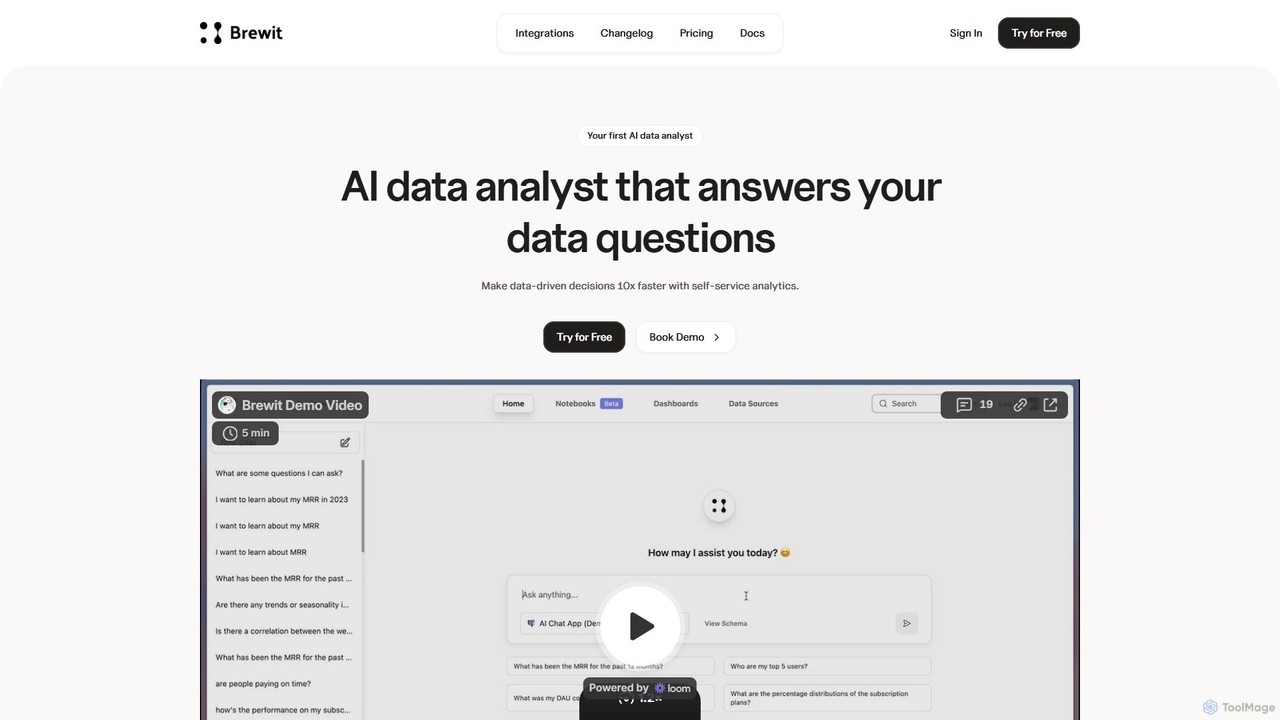
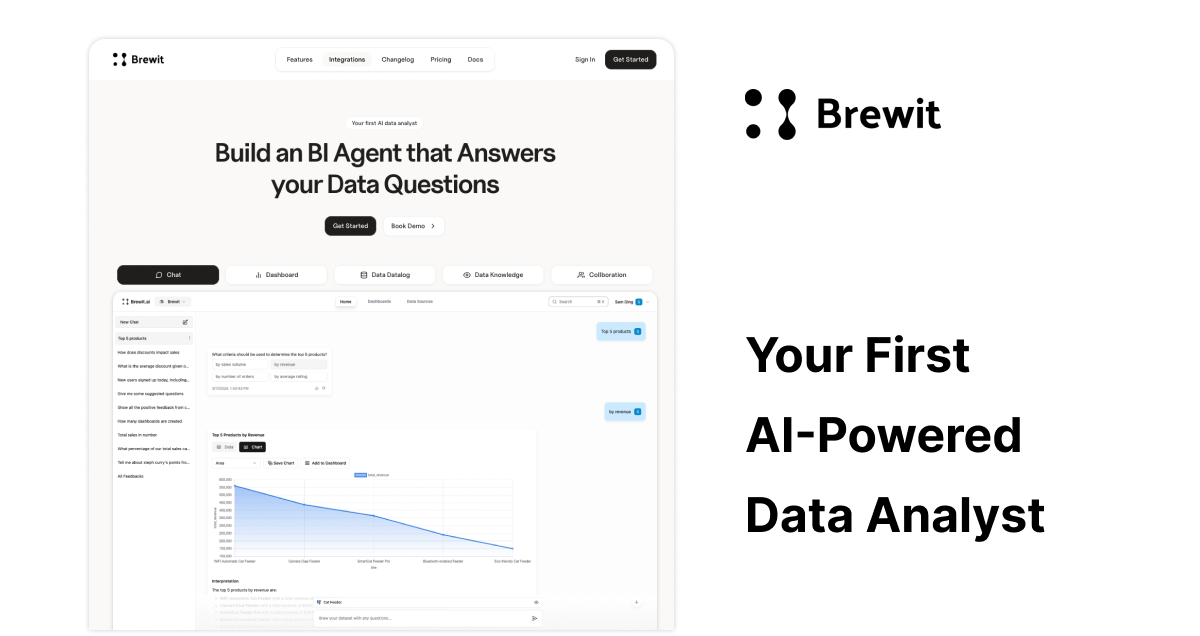
Brewit is an AI-powered analytics platform that enables users to perform self-service data analysis. Connect to your databases, chat in natural language to query data, generate SQL, and create interactive visualizations and reports. It simplifies business intelligence, making data accessible to everyone in the organization, regardless of their technical skills.
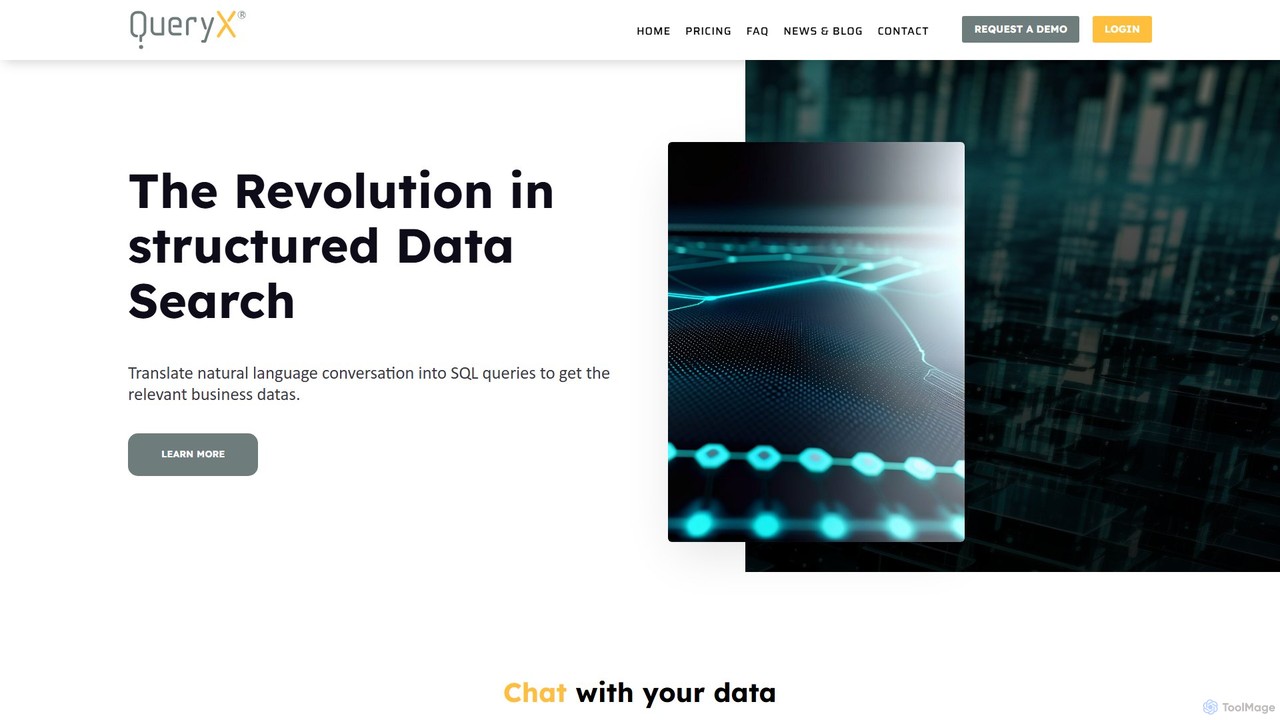
QueryX is an AI-powered platform that translates natural language conversations, including voice commands, into complex SQL queries. It enables both technical and non-technical users to interact with structured databases effortlessly, accelerating data analysis and decision-making while ensuring data confidentiality and high accuracy.
Compare product focus, pricing models and audiences. Highlighted rows indicate different listed information; unknown pricing does not mean free.
| Quick facts | Brewit | QueryX |
|---|---|---|
| Pricing model | Freemium | Freemium |
| Product type | Web | Web |
| Primary focus | Database | Business Intelligence |
| Audience and roles | No data available | No data available |
| Categories | Database · No Code | Business Intelligence · Data Analysis · Database · No Code |
| Added | Aug 17, 2025 | Aug 2, 2025 |
| Updated | Nov 19, 2026 | Nov 19, 2026 |
Explore the listed product descriptions, features and workflows. Taxonomy labels alone are not feature evaluations.
Brewit is a transformative AI-powered analytics tool designed to democratize data analysis across organizations. It empowers teams to make better, data-driven decisions 10 times faster and at a fraction of the cost of traditional business intelligence solutions. By connecting directly to your existing databases and data warehouses, Brewit allows users to interact with their data using simple, natural language. Ask a question, and the platform's advanced AI, powered by models like GPT-4 Turbo, automatically writes the necessary SQL queries, analyzes the data, and generates insightful charts and visualizations.
The platform is built around a conversational interface, making complex data exploration as easy as chatting with a colleague. It eliminates the need for technical expertise in SQL or data science, allowing marketing, sales, and product teams to get the answers they need on their own. To ensure the reliability and accuracy of the AI's responses, Brewit incorporates a built-in semantic layer and data catalog. This allows data teams to define business logic, add descriptions to tables and columns, and manage a data dictionary, ensuring that the AI consistently uses the correct context for its analysis.
Using Brewit is a streamlined, three-step process designed for simplicity and power:
Brewit is versatile and can be applied across various business functions:
Brewit offers a significant competitive edge by making data analysis accessible, fast, and reliable. Its primary advantage is the democratization of data, breaking down the barriers between data and decision-makers. The platform's speed and cost-effectiveness provide a high return on investment. The emphasis on accuracy, with features like the semantic layer and evaluation module, builds trust in the AI-generated insights. Finally, its flexibility, with extensive integrations and an embeddable API, allows it to fit seamlessly into any existing data stack and workflow.
Brewit's pricing information is not publicly listed on the website, which is common for enterprise-focused SaaS platforms. They likely offer a tiered pricing model based on usage, features, and the number of users. Typically, this includes a free trial or a starter plan to allow teams to test the platform. For detailed information on enterprise plans and custom pricing, it is recommended to contact the Brewit sales team directly through their website's "Get Started" call-to-action.
QueryX is revolutionizing the way users interact with structured data. It's a sophisticated AI platform designed to bridge the gap between natural human language and the complex syntax of SQL. By allowing users to simply ask questions in their own words, either by typing or speaking, QueryX translates these conversational inputs into precise SQL queries. This empowers everyone in an organization, from business executives and doctors to data analysts and developers, to unlock valuable insights from their databases without needing to write a single line of code.
The platform is built to be a seamless blend of intuitive interaction and powerful AI-driven analysis. It functions as an intelligent co-pilot, dramatically speeding up the data exploration process. With QueryX, what used to take hours of meticulous query writing can now be accomplished in minutes, fostering a more data-driven culture across all departments.
Using QueryX is designed to be a straightforward and intuitive process. First, you connect your structured relational database to the QueryX environment. The platform supports a wide range of SQL databases. Once connected, you can use the QueryX Chat interface. Simply type your question in natural language, such as "Show me the total sales for the last quarter in the European region," or even dictate it using the voice input feature. QueryX processes your request, generates the corresponding SQL query, and returns the relevant data or insights. You can also ask follow-up questions to refine your search and conduct deeper investigations conversationally. For developers and system integrators, QueryX offers robust APIs and open-source sample code to embed its Text-to-SQL capabilities into existing software or BI visualization tools.
For Healthcare Professionals: A doctor like Margaux can independently search vast patient databases for specific information to aid in diagnosis by asking simple questions like, "Find patients with these symptoms who responded to this treatment," without needing IT assistance.
For Data Analysts: An analyst like Clara, who spends significant time writing complex SQL, can use QueryX to generate queries instantly. She can ask, "What is the correlation between customer acquisition cost and lifetime value by marketing channel?" and get the SQL code in seconds, freeing up time for deeper analysis.
For E-commerce Managers: A Customer Experience Manager like Quentin can enhance his RAG-based customer support tool. By integrating QueryX, he can provide real-time, dynamic information like "How many units of product X are left in stock?" or "What are the current promotions on laptops?" directly from the database.
QueryX offers a unique combination of simplicity, power, and security. Its no-code framework makes data accessible to everyone, regardless of technical skill. For professionals, it provides a massive productivity boost, significantly reducing the time spent on data extraction. The platform's commitment to accuracy, backed by its advanced error correction and learning mechanisms, ensures that the insights are reliable for critical business decisions. Furthermore, its strict confidentiality protocols and the option for on-premise deployment address the security concerns of modern enterprises.
QueryX offers a scalable pricing structure to fit different needs:
Their taxonomy shows where the products overlap and where each one has a more distinct focus. Unknown fields are shown explicitly and are never filled with assumptions.
Traffic is shown on the same scale so differences in market visibility are not visually understated.
Both charts share the same months and vertical scale. Each tool identifies its latest reporting month; missing months are left blank, not counted as zero. Regional and source visit counts are estimates calculated from the reported shares.
No data available
No data available
Ratings, comments, favorites, and likes are community signals—not a substitute for product fit.
This page is assembled from ToolMage product listings, taxonomy, traffic statistics and on-site user feedback. It is not a hands-on test or an independent review.