ToolMage
Sign in

AI TOOL COMPARISON

Brewit vs Querio

What is the difference, and which fits your workflow? Compare features, usage, pricing models and traffic side by side.

Jump to key differences

Product overview

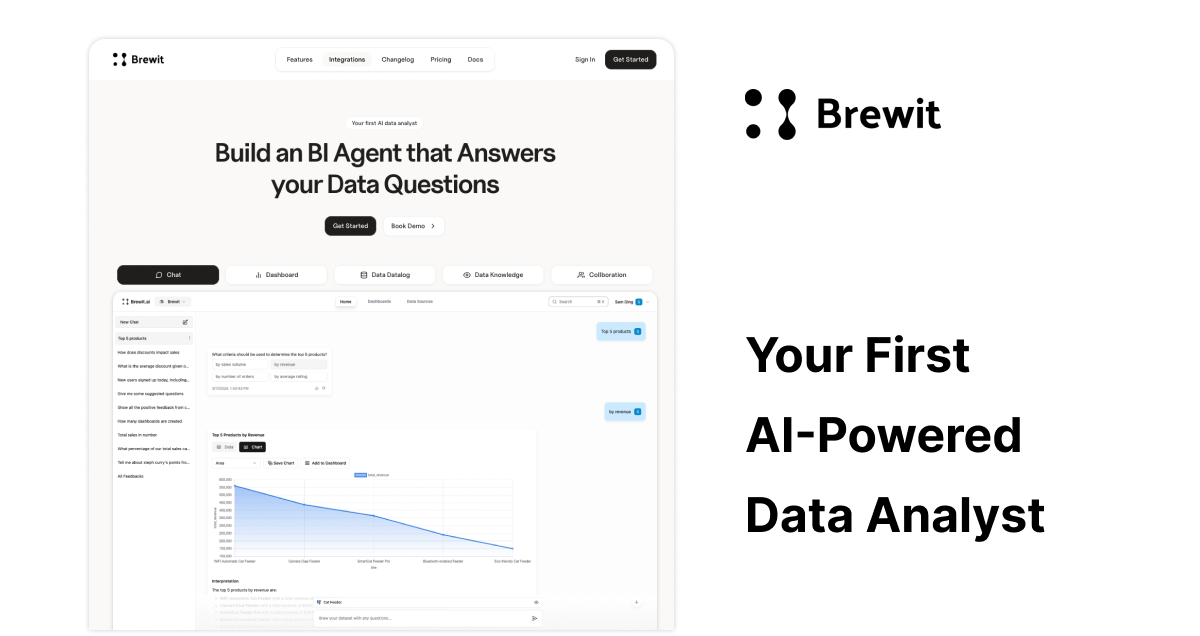
Brewit Product overview

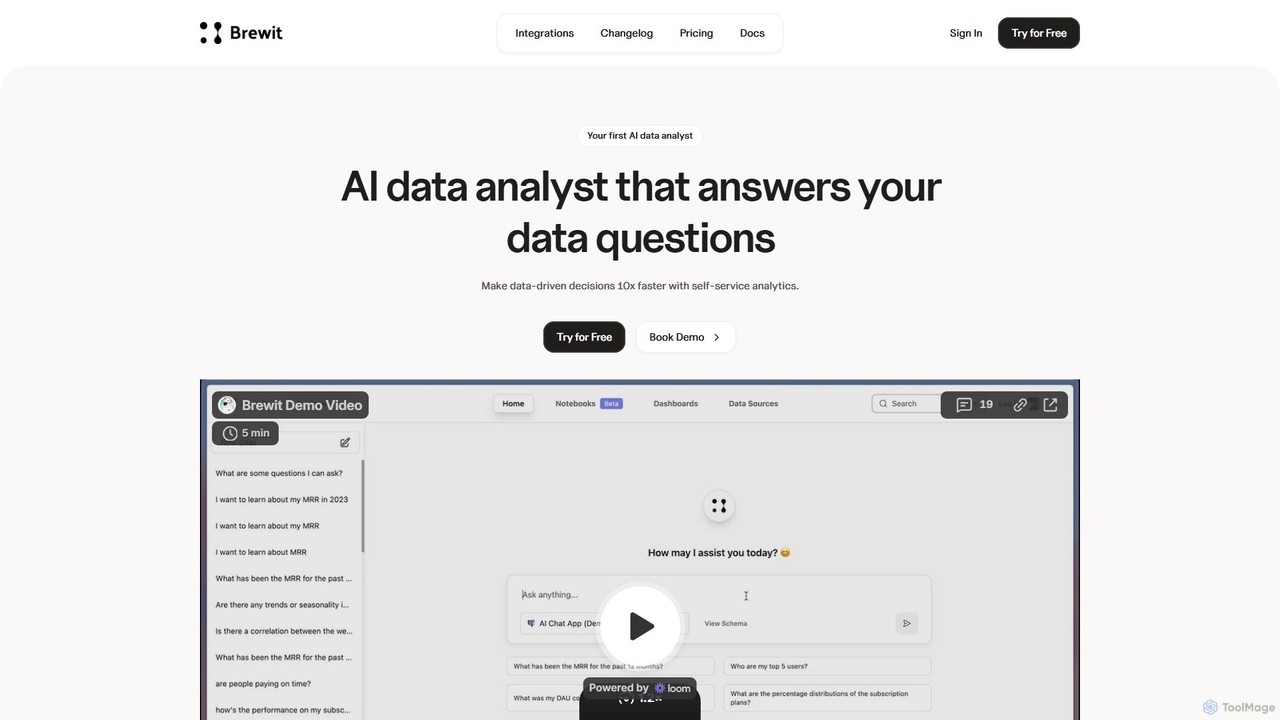
Brewit is an AI-powered analytics platform that enables users to perform self-service data analysis. Connect to your databases, chat in natural language to query data, generate SQL, and create interactive visualizations and reports. It simplifies business intelligence, making data accessible to everyone in the organization, regardless of their technical skills.

Preview

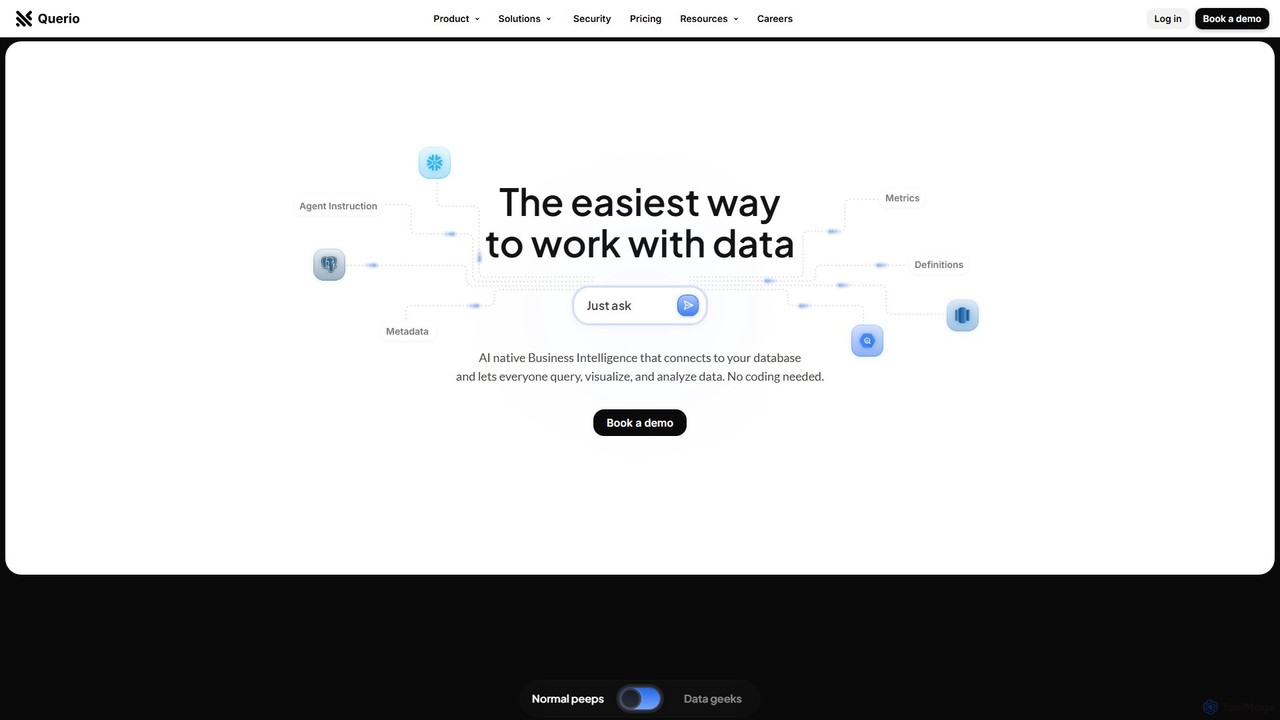
Querio Product overview

Querio is an AI-native Business Intelligence (BI) platform that allows teams to analyze their data using natural language. Connect directly to your database and ask questions to generate queries, visualizations, and reports without writing any code. It's designed for both technical and non-technical users to make data-driven decisions quickly.

Preview

Quick facts

Compare product focus, pricing models and audiences. Highlighted rows indicate different listed information; unknown pricing does not mean free.

Brewit VS Querio — Quick facts
Quick factsBrewitQuerio
Pricing modelFreemiumFreemium
Product typeWebWeb
Primary focusDatabaseBusiness Intelligence
Audience and rolesNo data availableNo data available
CategoriesDatabase · No CodeBusiness Intelligence · Database · Data Analysis
AddedAug 17, 2025Aug 16, 2025
UpdatedNov 19, 2026Nov 19, 2026

Features, usage and use cases

Explore the listed product descriptions, features and workflows. Taxonomy labels alone are not feature evaluations.

Brewit

Brewit is a transformative AI-powered analytics tool designed to democratize data analysis across organizations. It empowers teams to make better, data-driven decisions 10 times faster and at a fraction of the cost of traditional business intelligence solutions. By connecting directly to your existing databases and data warehouses, Brewit allows users to interact with their data using simple, natural language. Ask a question, and the platform's advanced AI, powered by models like GPT-4 Turbo, automatically writes the necessary SQL queries, analyzes the data, and generates insightful charts and visualizations.

The platform is built around a conversational interface, making complex data exploration as easy as chatting with a colleague. It eliminates the need for technical expertise in SQL or data science, allowing marketing, sales, and product teams to get the answers they need on their own. To ensure the reliability and accuracy of the AI's responses, Brewit incorporates a built-in semantic layer and data catalog. This allows data teams to define business logic, add descriptions to tables and columns, and manage a data dictionary, ensuring that the AI consistently uses the correct context for its analysis.

How to use Brewit

Using Brewit is a streamlined, three-step process designed for simplicity and power:

  1. Connect Your Data Source: Easily connect to a wide range of databases and data warehouses, including PostgreSQL, MySQL, Snowflake, BigQuery, Microsoft SQL Server, and Databricks. You can also upload CSV or Excel files to the Brewit Workbook. The platform supports secure connections via SSH tunnels for databases behind firewalls.
  2. Analyze with Natural Language: Use the intuitive chat interface to ask questions about your data in plain English. For example, you could ask, "What were our top 10 selling products last quarter?" or "Show me the user growth trend month-over-month." Brewit translates your request into a SQL query, executes it, and provides an answer with recommended charts.
  3. Build and Share Insights: Turn your analysis into compelling stories. Use the Notion-style notebook editor to create beautiful, dynamic reports and dashboards. Drag and drop charts from your chat conversations, add text, and organize your findings. You can then share these dashboards and reports with your team to foster a data-informed culture.

Core Features of Brewit

  • AI-Powered Conversational Analytics: Chat with your data in natural language to get instant answers, SQL queries, and visualizations.
  • Broad Data Integration: Native connectors for major databases and warehouses like Snowflake, BigQuery, PostgreSQL, MySQL, and more.
  • Notion-Style Notebook Editor: Create dynamic, layered reports and dashboards with a user-friendly, block-based editor.
  • Automated Semantic Layer: A built-in data catalog to manage business logic, ensuring the AI provides accurate and consistent answers.
  • Embeddable Analytics: An API to embed the Brewit chat agent directly into your own applications, websites, or internal tools.
  • Text-to-SQL Evaluation Module: A powerful feature for data teams to test and validate the accuracy of the AI's SQL generation against their own database.
  • Workspace Analytics: Dashboards to monitor user activity and engagement within the Brewit platform.
  • Secure Connections: Support for connecting to databases via SSH tunnels, ensuring your data remains secure.

Use Cases for Brewit

Brewit is versatile and can be applied across various business functions:

  • Sales Teams: Can track performance metrics, analyze sales funnels, and identify top-performing regions without waiting for a data analyst.
  • Marketing Departments: Can measure campaign effectiveness, analyze customer behavior, and understand channel ROI in real-time.
  • Product Managers: Can monitor feature adoption, track user engagement, and analyze user feedback to inform product roadmaps.
  • Data Teams: Can accelerate their workflow, quickly prototype dashboards, and empower business users with a trusted self-service tool, freeing up their time for more complex strategic projects.

Advantages of Brewit

Brewit offers a significant competitive edge by making data analysis accessible, fast, and reliable. Its primary advantage is the democratization of data, breaking down the barriers between data and decision-makers. The platform's speed and cost-effectiveness provide a high return on investment. The emphasis on accuracy, with features like the semantic layer and evaluation module, builds trust in the AI-generated insights. Finally, its flexibility, with extensive integrations and an embeddable API, allows it to fit seamlessly into any existing data stack and workflow.

Pricing and Plans

Brewit's pricing information is not publicly listed on the website, which is common for enterprise-focused SaaS platforms. They likely offer a tiered pricing model based on usage, features, and the number of users. Typically, this includes a free trial or a starter plan to allow teams to test the platform. For detailed information on enterprise plans and custom pricing, it is recommended to contact the Brewit sales team directly through their website's "Get Started" call-to-action.

Querio

Querio is a revolutionary AI-native Business Intelligence (BI) platform designed to democratize data access across organizations. It empowers every team member, regardless of their technical expertise, to interact with, analyze, and visualize complex data simply by asking questions in natural language. By connecting securely and directly to your existing databases, Querio eliminates the traditional barriers of complex query languages like SQL and the reliance on dedicated data teams for routine reports. The platform's intelligent AI agents learn the context of your data, enabling them to provide accurate, relevant answers and insights, transforming raw data into actionable intelligence.

How to use Querio

Using Querio is an intuitive process designed for speed and efficiency:

  1. Connect Your Data Source: Securely connect Querio to your production databases. The platform supports various integrations, ensuring a seamless setup without the need for data migration.
  2. Let AI Learn Your Context: Querio's AI agents analyze your database schema and metadata. You can provide additional custom context to ensure the AI understands your business logic, metrics, and definitions perfectly.
  3. Ask Questions in Natural Language: Simply type your questions into the prompt interface, just as you would ask a colleague. For example, "What were our top 10 selling products in the last quarter?" or "Show me the user retention rate by cohort for the past 6 months."
  4. Analyze and Drill Down: Querio doesn't just provide a single answer. It allows you to ask follow-up questions to drill down into specifics, helping you understand the 'why' behind the data, not just the 'what'.
  5. Visualize and Report: Instantly generate dynamic dashboards and professional reports from your queries. Track your KPIs, filter data on the fly, and share insights with your team to foster a data-driven culture.

Core Features of Querio

  • AI-Powered Natural Language Querying: The core of Querio, allowing users to query databases using plain English, eliminating the need for SQL or coding knowledge.
  • Intelligent AI Agents: These agents learn your unique data structure and business context to provide highly accurate and relevant answers.
  • Dynamic Dashboards and Reporting: Create, customize, and share interactive dashboards and reports to track key metrics and present data professionally.
  • Follow-up Question Capability: Engage in a conversational analysis by asking follow-up questions to explore data more deeply and uncover root causes.
  • Direct & Secure Database Integrations: Connects directly to your data where it lives, ensuring security and real-time analysis without data duplication. Supports SOC 2 Type II compliance for enterprise needs.
  • Collaborative Environment: Empowers teams like Product, Finance, Operations, and Data to become self-sufficient in their data needs, fostering better collaboration and faster decision-making.
  • Custom LLM Choices (Enterprise): Enterprise clients can choose custom Large Language Models and opt for self-hosted deployments for maximum control and security.

Use Cases for Querio

Querio is versatile and benefits various teams within an organization:

  • Product Teams: Can analyze user behavior, track feature adoption, and measure the impact of new releases without waiting for the data team.
  • Finance Teams: Can monitor financial KPIs, analyze revenue trends, and generate financial reports on-demand.
  • Operations Teams: Can track operational efficiency, monitor supply chains, and identify bottlenecks in real-time.
  • Marketing Teams: Can analyze campaign performance, track customer acquisition cost (CAC), and understand customer lifetime value (LTV).
  • Executive Leadership: Can get a high-level overview of business performance through customized dashboards and by asking strategic questions directly.

Advantages of Querio

Querio offers a significant competitive edge:

  • Democratization of Data: Makes data accessible and actionable for everyone, not just data experts.
  • Increased Efficiency: Drastically reduces the time from question to insight, from weeks to minutes.
  • Reduced Engineering Load: Frees up data and engineering teams from handling ad-hoc query requests, allowing them to focus on more strategic initiatives.
  • Enhanced Data Literacy: Empowers employees to make informed, data-driven decisions independently, fostering a stronger data culture.
  • Security and Trust: With direct connections and enterprise-grade security features, your data remains safe and under your control.

Pricing and Plans

Querio offers a structured pricing model with a mandatory 1-month free guided pilot for all plans to ensure value before commitment.

  • Standard Plan: Starting at $1100/month. Ideal for growing teams. Includes 1 production database, 1000 prompts, and Slack support.
  • Pro Plan: Starting from $2000/month. Designed for data-driven organizations. Includes everything in Standard, plus up to 3 databases, 4500 prompts, priority support, and dashboard migration.
  • Enterprise Plan: Custom pricing. For large-scale or regulated operations. Includes everything in Pro, plus self-hosting options, SCIM, 24/7 SRE support, SOC 2 Type II audit report, and custom LLM choices.
  • Startup Program: A special program is available for startups that have raised less than $3 million.

Positioning

Their taxonomy shows where the products overlap and where each one has a more distinct focus. Unknown fields are shown explicitly and are never filled with assumptions.

Categories

Shared
Database
Only Brewit
No Code
Only Querio
Business IntelligenceData Analysis

Tags

Shared
AI analyticsbusiness intelligencedashboarddata analysisdatabasedata visualizationnatural language queryno-codereporting
Only Brewit
SQLtext to sql
Only Querio
No listed items

Audience and roles

Shared
No listed items
Only Brewit
No listed items
Only Querio
No listed items

Traffic comparison

Traffic is shown on the same scale so differences in market visibility are not visually understated.

How to interpret the traffic data

Both charts share the same months and vertical scale. Each tool identifies its latest reporting month; missing months are left blank, not counted as zero. Regional and source visit counts are estimates calculated from the reported shares.

Brewit

No data available

Querio monthly traffic:

Latest traffic · 2026-05

Monthly visits
48.9K
Avg. visit duration
0:26
Pages per visit
2.03
Bounce rate
39.19%
Data updated 2026-06-15

Monthly traffic trend

  • 2025-09: 17.1K
  • 2026-01: 23.3K
  • 2026-02: 21.4K
  • 2026-03: 27.9K
  • 2026-04: 44.1K
  • 2026-05: 48.9K

Top regions

Top 5 countries/regions
Country/regionPercentageEstimated visits
🇺🇸United States51.57%25.2K
🇧🇷Brazil14.07%6.9K
🇻🇳Vietnam13.42%6.6K
🇮🇳India10.6%5.2K
🇬🇧United Kingdom10.34%5.1K

Traffic sources

Source typePercentageEstimated visits
Direct81.82%40K
Referral18.18%8.9K

Search keywords

bar graph vs histogram difference and how to identify'chat gpt logochatgpt logointeractive data visualization, good examplesjuliuis ai pro monthly

Community signals

Ratings, comments, favorites, and likes are community signals—not a substitute for product fit.

Brewit

Rating
No data available
Comments
0
Favorites
194
Likes
179

Querio

Rating
No data available
Comments
0
Favorites
182
Likes
183

Brewit vs Querio · Comparison FAQ

What do Brewit and Querio have in common?
Both tools are listed under Database. These categories indicate overlapping use cases; compare their detailed descriptions for workflows, capabilities and limitations.
Are Brewit and Querio free?
Listed pricing models: Brewit — Freemium; Querio — Freemium. Missing pricing is not proof of a free plan, and freemium does not mean every feature is free. Check official sites for current plans, limits and trials.
How should I choose between Brewit and Querio?
The primary listed category is Database for Brewit, and Business Intelligence for Querio. Compare features, steps and use cases, then verify pricing, data permissions and deployment needs. This page does not include hands-on testing and does not declare a winner from traffic or tags.

Sources and comparison methodology

This page is assembled from ToolMage product listings, taxonomy, traffic statistics and on-site user feedback. It is not a hands-on test or an independent review.

  • Feature and plan descriptions reflect information in the listings, not real-time guarantees. Verify pricing, quotas, availability and privacy terms on the official sites.
  • Traffic uses the reporting months shown. Missing statistics do not mean zero visits, and different periods do not establish growth or superiority. Regional and source visit counts are estimates based on shares.
  • Different tags indicate differences in the listings, not proof that the other product lacks a capability. Ratings, favorites and visits are not used to declare a winner.

Related comparisons