ToolMage
Sign in

AI TOOL COMPARISON

convertercode vs Cratecode

What is the difference, and which fits your workflow? Compare features, usage, pricing models and traffic side by side.

Jump to key differences

Product overview

convertercode Product overview

An AI-powered tool for developers that seamlessly converts code from one programming language to another. It supports a wide range of languages, helping to modernize legacy systems, facilitate cross-platform development, and accelerate learning.

Preview

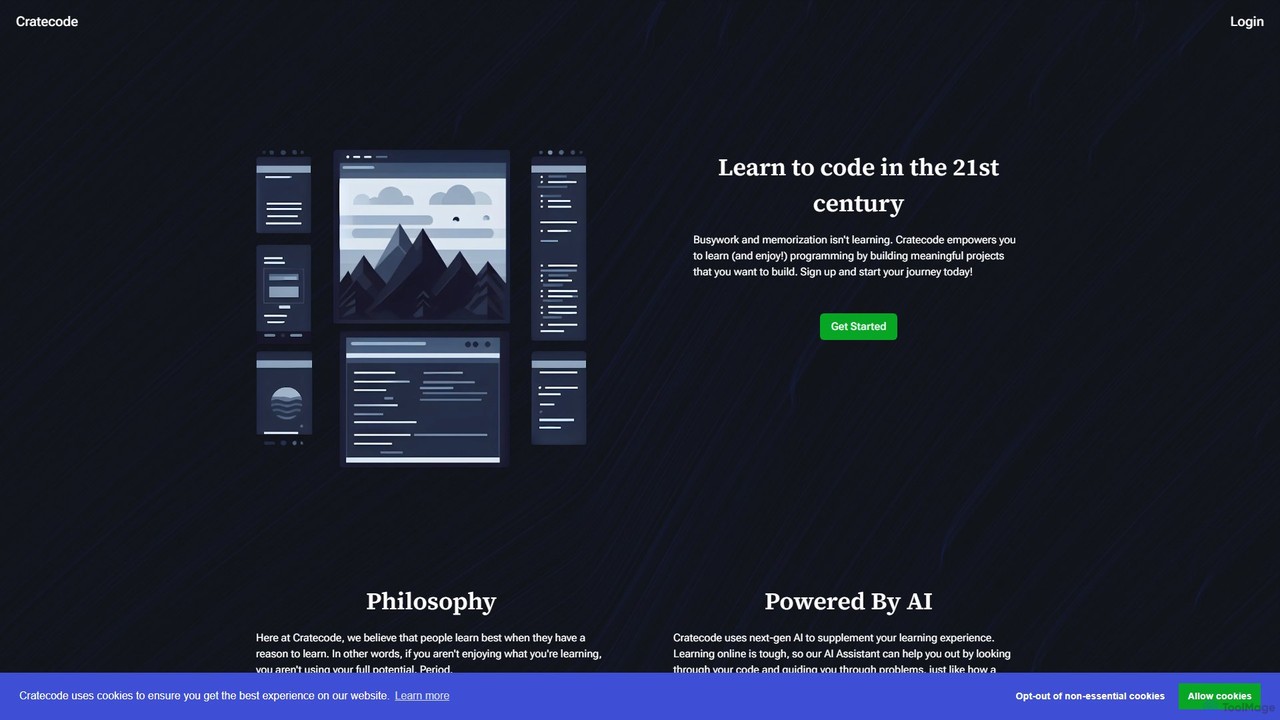
Cratecode Product overview

Cratecode is an AI-powered platform for learning to code by building real-world projects. It features an AI assistant that acts as a personal tutor, providing code analysis, answering questions, and offering step-by-step guidance. The platform emphasizes a hands-on, non-linear learning approach to make programming engaging and effective.

Preview

Quick facts

Compare product focus, pricing models and audiences. Highlighted rows indicate different listed information; unknown pricing does not mean free.

convertercode VS Cratecode — Quick facts
Quick factsconvertercodeCratecode
Pricing modelFreemiumFreemium
Product typeWebWeb
Primary focusCode AssistantCode Assistant
Audience and rolesNo data availableNo data available
CategoriesCode Assistant · Programming · AutomationCode Assistant · Programming · Learning
AddedAug 16, 2025Aug 7, 2025
UpdatedNov 19, 2026Nov 19, 2026

Features, usage and use cases

Explore the listed product descriptions, features and workflows. Taxonomy labels alone are not feature evaluations.

convertercode

convertercode is an advanced AI-driven platform designed to streamline the process of code translation. It empowers developers, teams, and organizations to effortlessly migrate codebases, learn new programming languages, and enhance productivity. By leveraging sophisticated machine learning models, convertercode understands the context, logic, and nuances of code, ensuring high-fidelity translations that go beyond simple syntax replacement. Whether you're updating a legacy application from an old language to Java or converting a Python script to Go for better performance, convertercode is your intelligent coding companion.

How to use convertercode

Using convertercode is designed to be intuitive and efficient, allowing developers to get results in just a few simple steps:

  1. Input Code: Navigate to the convertercode website. You will find a user-friendly interface with an input field. Paste the code snippet or entire file content you wish to convert into this field.
  2. Select Languages: Choose the source programming language of your code from a dropdown menu. Then, select the desired target language you want to convert the code into. The platform supports a vast array of popular and legacy languages.
  3. Initiate Conversion: Click the 'Convert' button. The AI engine will analyze your code, understanding its structure, algorithms, and dependencies.
  4. Review and Refine: Within moments, the converted code will appear in the output window. The platform provides syntax highlighting for both source and target code for easy comparison. You can review the generated code, copy it to your clipboard, or make minor adjustments if needed.

Core Features of convertercode

  • Multi-Language Support: Translates between a wide variety of programming languages, including Python, JavaScript, Java, C++, C#, Go, Rust, TypeScript, PHP, and more.
  • AI-Powered Contextual Translation: Utilizes advanced LLMs to understand the logic and idioms of the source language, generating accurate and idiomatic code in the target language.
  • Syntax Highlighting: Provides clear and readable code blocks for both input and output, making it easy to compare and verify the translation.
  • Code Explanation: Offers an optional feature to generate natural language explanations of the converted code, which is an excellent tool for learning new languages or understanding complex logic.
  • Batch Conversion: Allows users to upload and convert multiple files or entire project directories, significantly speeding up large-scale migration projects.
  • Secure API Access: Provides a robust API for developers to integrate convertercode's translation capabilities directly into their CI/CD pipelines, IDEs, or custom applications.

Use Cases for convertercode

convertercode is a versatile tool suitable for various scenarios:

  • Legacy Code Migration: Modernize outdated applications by converting legacy code (e.g., COBOL, old Java versions) to modern, efficient languages like Go, Rust, or Python.
  • Cross-Platform Development: Adapt algorithms and functions written for one environment (e.g., a Python backend script) for use in another (e.g., a JavaScript function for a web application).
  • Educational Tool: Helps developers and students learn new programming languages by showing how concepts they already know are implemented in a different syntax.
  • Team Collaboration: Enables teams with diverse programming language skills to collaborate more effectively by easily translating code snippets for review and integration.
  • Rapid Prototyping: Quickly convert an algorithm prototyped in a high-level language like Python into a high-performance language like C++ or Rust for production deployment.

Advantages of convertercode

The primary advantage of convertercode is its ability to dramatically increase efficiency. It saves countless hours of manual, error-prone work, allowing developers to focus on feature development and problem-solving. The AI-driven approach ensures a higher degree of accuracy compared to manual conversion, especially for complex logic. It's a cost-effective solution for companies looking to modernize their tech stack without hiring a large team of specialized developers. Furthermore, it serves as a powerful on-the-job training tool, accelerating the learning curve for new technologies.

Pricing and Plans

convertercode operates on a freemium model to cater to a wide range of users:

  • Free Plan: Ideal for individual developers, students, and small tasks. It includes a limited number of conversions per day and supports smaller code snippets.
  • Pro Plan: Designed for professional developers and small teams. This plan offers unlimited conversions, support for larger files, priority processing, and access to advanced features like batch conversion.
  • Enterprise Plan: A custom solution for large organizations. It includes all Pro features, plus dedicated API access with higher rate limits, on-premise deployment options, premium support, and enhanced security compliance.

Cratecode

Cratecode is a modern, AI-enhanced educational platform designed to revolutionize the way people learn programming. It moves away from traditional methods of memorization and busywork, instead adopting a philosophy that people learn best by doing. The core of Cratecode is its project-based curriculum, where learners engage with meaningful projects that have genuine use-cases. This hands-on approach not only makes learning more enjoyable but also equips students with practical skills they can apply in the real world.

The platform is built around an integrated, web-based development environment that provides all the necessary tools to start coding immediately. This includes a text editor for writing code, a terminal (or console) to see the output and run commands, and a file manager to organize project files. This seamless experience eliminates the need for complex local setups, allowing beginners to focus entirely on learning.

How to use Cratecode

Getting started with Cratecode is straightforward. New users can begin in a 'Preview Mode' to explore the interface and lessons without commitment. To save progress and access all features, a simple sign-up is required. Once in, you can choose a course or project. The learning environment is divided into several key areas:

  1. The Toolbox: This is your main information hub, containing the lesson text, instructions, and concepts you're currently learning.
  2. The Editor: A code editor where you will write and modify your code (e.g., in files like `index.js`).
  3. The Terminal: Located below the editor, this is where your code's output is displayed and where you can interact with your program.
  4. The AI Assistant: When you encounter a challenge, get stuck on a bug, or simply have a question, you can summon the AI Assistant. You can ask it to review your code, explain a concept, or guide you through a difficult problem.

The platform encourages experimentation. Users are prompted to not just follow lessons, but to actively play with the code, change it, and see what happens, fostering a deeper understanding of programming principles.

Core Features of Cratecode

  • AI-Powered Assistant: A next-generation AI tutor that can answer programming questions, analyze your code for mistakes or improvements, provide detailed explanations, and offer step-by-step guidance to solve problems, much like a human teacher.
  • Project-Based Learning: The curriculum is centered around building engaging and practical projects, ensuring that learners are motivated and can see the real-world application of their skills.
  • Non-Linear Learning Paths: Cratecode's courses are designed to be flexible, allowing you to forge your own path while still providing the necessary structure for success.
  • Integrated Development Environment (IDE): A fully-featured, browser-based editor, terminal, and file system, so you can start coding without any setup.
  • Growth-Oriented Progress Tracking: The platform focuses on measuring your growth and how far you've come, rather than emphasizing how much you have left to learn, creating a positive and encouraging learning environment.

Use Cases for Cratecode

Cratecode is ideal for a wide range of users:

  • Absolute Beginners: Individuals with no prior coding experience can use Cratecode's guided, interactive environment to learn the fundamentals from scratch.
  • Students and Self-Learners: Those looking for a supplement to traditional classes or a more effective self-study tool will find the AI assistant invaluable for getting unstuck and reinforcing concepts.
  • Hobbyist Programmers: People who want to learn coding to build personal projects, games, or websites can use Cratecode to gain practical skills in an enjoyable way.
  • Aspiring Developers: The focus on building portfolio-worthy projects helps aspiring professionals prepare for the job market.

Advantages of Cratecode

The primary advantage of Cratecode is its unique blend of project-based learning and AI-powered support. This combination tackles the most common challenges in learning to code: loss of motivation and getting stuck. The AI assistant acts as a 24/7 personal tutor, providing instant, personalized feedback that would otherwise be costly or unavailable. The project-based approach ensures that learners stay engaged and develop a practical, applicable skillset. This makes the learning process not only more effective but also significantly more enjoyable.

Pricing and Plans

Cratecode operates on a freemium model. The platform proudly states "Learn to Code for Free," offering a robust free plan that allows users to start their learning journey. This includes access to the core lessons and the AI-powered assistant. To unlock the full features of the platform, such as saving progress and accessing more advanced content or tools, users are required to sign up for an account. While specific details of paid tiers are not listed, the model is designed to be highly accessible, with the free offering being substantial enough to provide significant value.

Positioning

Their taxonomy shows where the products overlap and where each one has a more distinct focus. Unknown fields are shown explicitly and are never filled with assumptions.

Categories

Shared
Code AssistantProgramming
Only convertercode
Automation
Only Cratecode
Learning

Tags

Shared
developer toolsjavascriptprogramming
Only convertercode
AIc++code convertercode translatorgojavalegacy migrationpythonrust
Only Cratecode
AI assistantAI tutorcode learningeducationlearn to codeproject-based learning

Audience and roles

Shared
No listed items
Only convertercode
No listed items
Only Cratecode
No listed items

Traffic comparison

Traffic is shown on the same scale so differences in market visibility are not visually understated.

How to interpret the traffic data

Both charts share the same months and vertical scale. Each tool identifies its latest reporting month; missing months are left blank, not counted as zero. Regional and source visit counts are estimates calculated from the reported shares.

convertercode

No data available

Cratecode monthly traffic:

Latest traffic · 2026-05

Monthly visits
4.5K
Avg. visit duration
0:36
Pages per visit
1.85
Bounce rate
39.5%
Data updated 2026-06-15

Monthly traffic trend

  • 2025-09: 15K
  • 2026-01: 11.3K
  • 2026-02: 6.5K
  • 2026-03: 4.9K
  • 2026-04: 4.9K
  • 2026-05: 4.5K

Top regions

Top 5 countries/regions
Country/regionPercentageEstimated visits
🇺🇸United States74.52%3.4K
🇮🇳India23.35%1.1K
🇳🇱Netherlands2.13%97

Search keywords

are b and bcpl programming languages a type of assembly languagebrainfuck languagecratecodediscord code to respond usernasm x86 cq0 example

Community signals

Ratings, comments, favorites, and likes are community signals—not a substitute for product fit.

convertercode

Rating
No data available
Comments
0
Favorites
177
Likes
176

Cratecode

Rating
No data available
Comments
0
Favorites
169
Likes
163

convertercode vs Cratecode · Comparison FAQ

What do convertercode and Cratecode have in common?
Both tools are listed under Code Assistant、Programming. These categories indicate overlapping use cases; compare their detailed descriptions for workflows, capabilities and limitations.
Are convertercode and Cratecode free?
Listed pricing models: convertercode — Freemium; Cratecode — Freemium. Missing pricing is not proof of a free plan, and freemium does not mean every feature is free. Check official sites for current plans, limits and trials.
How should I choose between convertercode and Cratecode?
The primary listed category is Code Assistant for convertercode, and Code Assistant for Cratecode. Compare features, steps and use cases, then verify pricing, data permissions and deployment needs. This page does not include hands-on testing and does not declare a winner from traffic or tags.

Sources and comparison methodology

This page is assembled from ToolMage product listings, taxonomy, traffic statistics and on-site user feedback. It is not a hands-on test or an independent review.

  • Feature and plan descriptions reflect information in the listings, not real-time guarantees. Verify pricing, quotas, availability and privacy terms on the official sites.
  • Traffic uses the reporting months shown. Missing statistics do not mean zero visits, and different periods do not establish growth or superiority. Regional and source visit counts are estimates based on shares.
  • Different tags indicate differences in the listings, not proof that the other product lacks a capability. Ratings, favorites and visits are not used to declare a winner.

Related comparisons