ToolMage
Sign in

AI TOOL COMPARISON

Gradio vs TensorFlow

What is the difference, and which fits your workflow? Compare features, usage, pricing models and traffic side by side.

Jump to key differences

Product overview

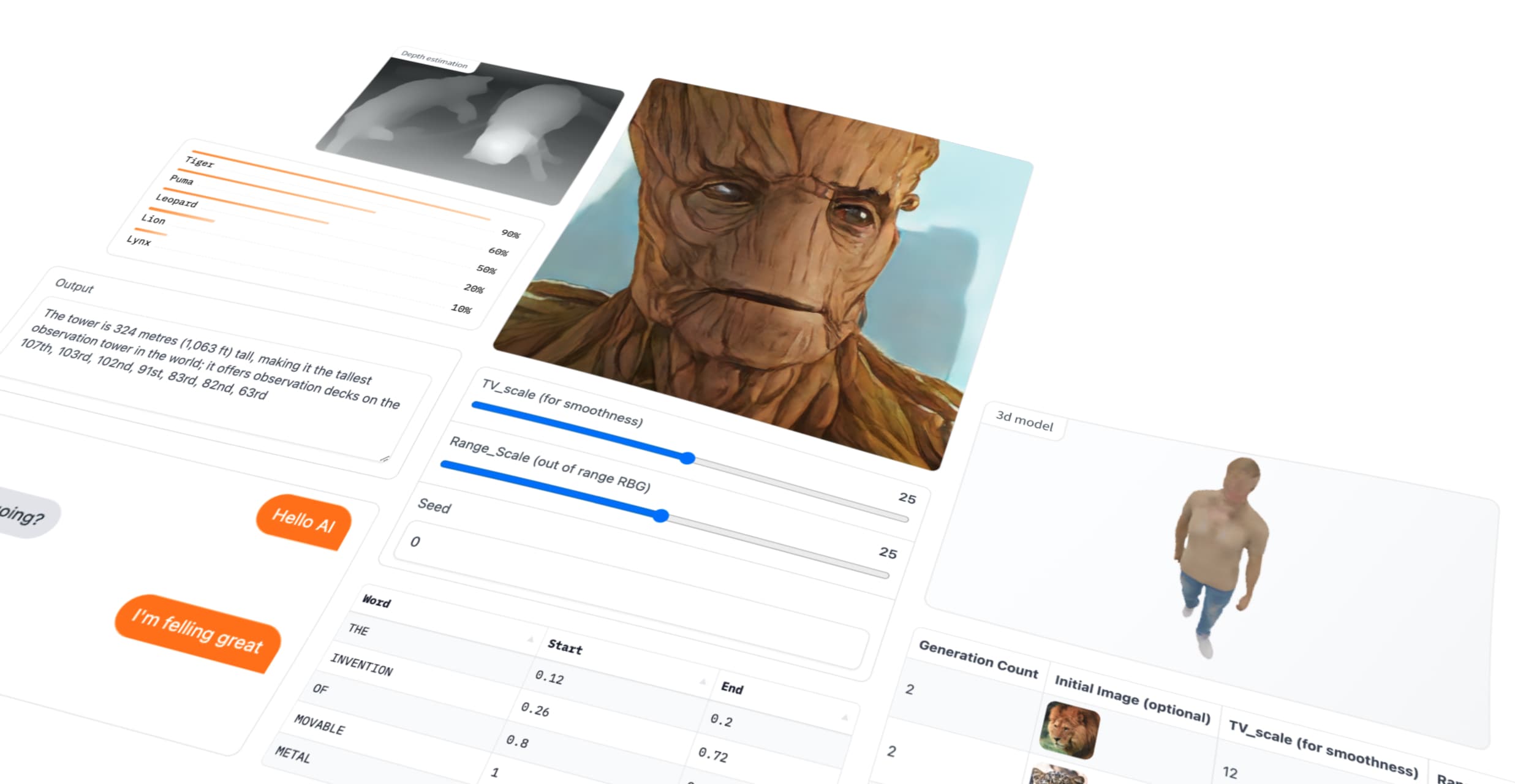
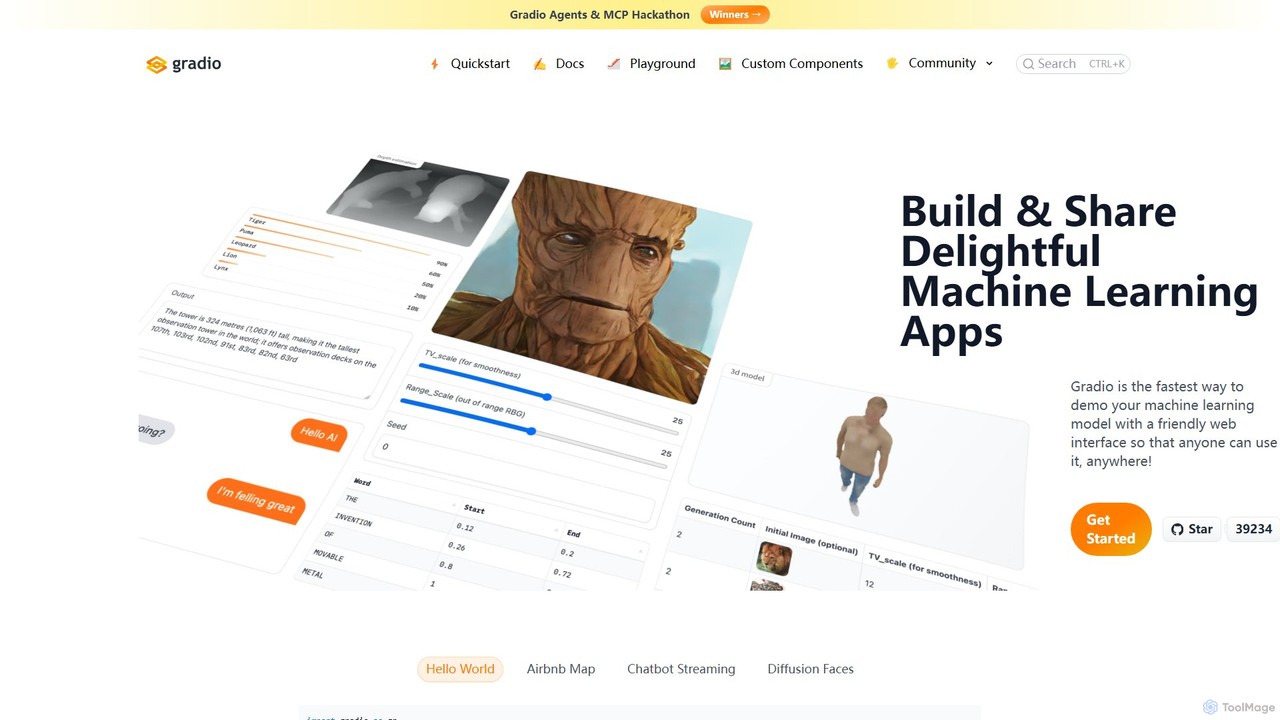
Gradio Product overview

Gradio is an open-source Python library that allows you to quickly build and share user-friendly web interfaces for your machine learning models, APIs, or any Python function. No web development experience is required.

Preview

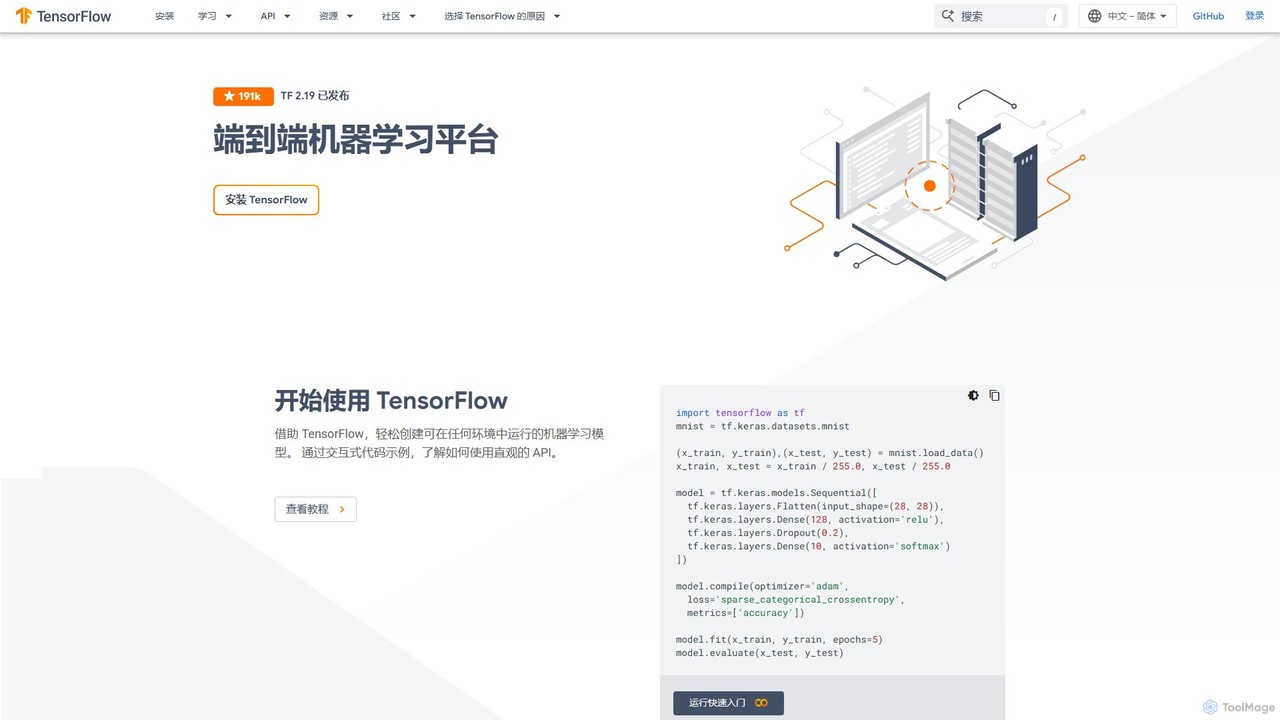
TensorFlow Product overview

TensorFlow is an end-to-end open-source platform for machine learning developed by Google. It provides a comprehensive, flexible ecosystem of tools, libraries, and community resources that lets researchers and developers build and deploy ML-powered applications. From beginners to experts, TensorFlow offers intuitive high-level APIs for easy model building and powerful low-level APIs for advanced research, enabling deployment across servers, edge devices, and browsers.

Preview

Quick facts

Compare product focus, pricing models and audiences. Highlighted rows indicate different listed information; unknown pricing does not mean free.

Gradio VS TensorFlow — Quick facts
Quick factsGradioTensorFlow
Pricing modelFreeFree
Product typeWebWeb
Primary focusData VisualizationFrameworks
Audience and rolesNo data availableNo data available
CategoriesData Visualization · Machine Learning · Web App · PrototypingFrameworks · Machine Learning · Developer Tools
AddedAug 17, 2025Aug 11, 2025
UpdatedNov 19, 2026Nov 19, 2026

Features, usage and use cases

Explore the listed product descriptions, features and workflows. Taxonomy labels alone are not feature evaluations.

Gradio

Gradio is a powerful, open-source Python framework designed to bridge the gap between machine learning models and interactive web applications. It provides the fastest way for developers, researchers, and data scientists to create and share intuitive demos for their work. With just a few lines of Python code, you can generate a user-friendly web interface that allows anyone to interact with your model, API, or arbitrary function from anywhere, without needing any knowledge of JavaScript, CSS, or web hosting.

The core philosophy of Gradio is simplicity and speed. It abstracts away the complexities of web development, allowing you to focus on your Python code. Whether you're building a complex deep learning model, a data analysis dashboard, or a simple utility function, Gradio can wrap it in a clean, interactive UI. The library is widely adopted in the machine learning community and is heavily integrated with platforms like Hugging Face Spaces, which offers free hosting for Gradio applications.

How to use Gradio

Getting started with Gradio is incredibly straightforward. The process typically involves three simple steps:

  1. Installation: First, install the Gradio package using pip. It's recommended to do this within a Python virtual environment (version 3.10 or higher is required).
    pip install --upgrade gradio
  2. Code Implementation: Import the library (commonly as `gr`) and define the Python function you want to create an interface for. This function can be anything from a simple text manipulation function to a complex model's prediction method. Then, instantiate one of Gradio's main classes, such as `gr.Interface`, `gr.Blocks`, or `gr.ChatInterface`, passing your function and defining the input and output components.
  3. Launch the App: Call the `launch()` method on your instance. This will start a local web server and open the UI in your browser. To share your application with others, simply set `share=True` in the `launch()` method. This will generate a temporary public URL that you can send to colleagues or collaborators, allowing them to use your app running on your local machine. For permanent deployment, you can easily host your app on Hugging Face Spaces for free.

Core Features of Gradio

  • Rapid UI Development: Go from a Python script to an interactive web app in minutes with minimal code.
  • Rich Component Library: Offers over 30 pre-built input/output components, including textboxes, sliders, image uploaders, video players, audio recorders, dataframes, and plots.
  • Customizable Layouts with Blocks: The `gr.Blocks` class provides a low-level API for creating complex, multi-step applications with custom layouts and event-driven logic.
  • Dedicated Chatbot Interface: The `gr.ChatInterface` class is specifically designed to create sophisticated chatbot UIs with features like streaming responses and retry/undo buttons.
  • Effortless Sharing and Hosting: Generate public share links with a single parameter (`share=True`) and deploy permanently on Hugging Face Spaces for free.
  • Streaming Capabilities: Supports real-time input and output streaming, essential for applications like live speech recognition, video processing, and generative AI audio.
  • Extensive Ecosystem: Includes Python (`gradio_client`) and JavaScript (`@gradio/client`) clients for programmatic interaction, and `Gradio-Lite` for running apps entirely in the browser using WebAssembly.
  • Seamless Integrations: Works well with the entire Python data science and ML ecosystem, including PyTorch, TensorFlow, Scikit-learn, Hugging Face Transformers, ONNX, and experiment tracking tools like W&B and Comet.
  • Internationalization (i18n): Built-in support for creating multilingual applications.

Use Cases for Gradio

Gradio's versatility makes it suitable for a wide range of applications:

  • ML Model Demos: The primary use case is creating interactive demos for models in computer vision (image classification, object detection), NLP (text generation, translation, NER), and audio (speech-to-text, music generation).
  • Data Science Dashboards: Build interactive dashboards to visualize and filter data from sources like BigQuery, Supabase, or even Google Sheets.
  • Rapid Prototyping: Quickly test ideas and iterate on ML models by creating a simple UI to experiment with different inputs.
  • AI-Powered Chatbots and Agents: Develop and deploy conversational AI, customer support bots, and complex multi-agent systems.
  • Internal Tools: Create internal applications for tasks like data annotation, model evaluation, and A/B testing.
  • Educational Content: Build interactive tutorials that help explain complex machine learning concepts.

Advantages of Gradio

The main advantage of Gradio is its unparalleled simplicity and speed, which significantly accelerates the development cycle from model to demo. It democratizes the creation of AI applications by removing the barrier of web development. Its open-source nature fosters a vibrant community that contributes to a rich ecosystem of extensions and integrations. Furthermore, its ability to generate shareable links and integrate with free hosting platforms like Hugging Face Spaces makes it incredibly easy to showcase work and collaborate with others globally.

Pricing and Plans

Gradio is a completely free and open-source library, distributed under the Apache 2.0 license. You can use it for any personal, academic, or commercial project without any cost. Additionally, hosting public Gradio applications on Hugging Face Spaces is also offered for free, making it a highly accessible solution for the entire community.

TensorFlow

TensorFlow is a free and open-source software library for machine learning and artificial intelligence. Developed by the Google Brain team, it has become one of the most popular and widely used platforms for building and training neural networks. TensorFlow provides an end-to-end ecosystem that allows developers to easily build, train, and deploy ML models across a wide range of platforms, from large server farms to small edge devices and even web browsers.

The core of TensorFlow is a system for defining and running computations involving tensors, which are multi-dimensional arrays. This dataflow graph-based model allows for immense flexibility and scalability. It is designed to facilitate everything from large-scale research experiments to robust, production-ready applications, powering many of Google's own products like Search, Gmail, and Photos.

How to use TensorFlow

The typical workflow for using TensorFlow involves several key steps:

  1. Installation: TensorFlow can be easily installed using Python's package manager: pip install tensorflow.
  2. Data Loading and Preprocessing: Use the powerful tf.data API to build efficient and complex input pipelines. This allows you to load data from various sources, transform it, and feed it into your model seamlessly.
  3. Model Building: For most use cases, the high-level Keras API (tf.keras) is the recommended way to build models. You can create a simple sequential model or use the more flexible Functional API or Model Subclassing for complex architectures. A basic model might look like this:
    model = tf.keras.models.Sequential([...layers...])
  4. Model Compilation: Before training, you need to configure the learning process using the model.compile() method. Here, you specify the optimizer (e.g., 'adam'), the loss function (e.g., 'sparse_categorical_crossentropy'), and metrics to monitor (e.g., 'accuracy').
  5. Training: Train the model by calling the model.fit() method, passing your training data, number of epochs, and validation data.
  6. Evaluation and Prediction: After training, evaluate your model's performance on a test set with model.evaluate() or make predictions on new data with model.predict().
  7. Deployment: Save your trained model and deploy it using tools from the TensorFlow ecosystem like TensorFlow Serving for production servers, TensorFlow Lite for mobile and embedded devices, or TensorFlow.js for running models in the browser.

Core Features of TensorFlow

  • Flexible Model Building: Offers both the simple and intuitive Keras API for rapid prototyping and low-level APIs for complete control and advanced research.
  • Robust MLOps - Production Ready: TensorFlow Extended (TFX) provides a complete platform for deploying production ML pipelines, managing the entire lifecycle from data ingestion to model deployment and management.
  • Multi-Platform Deployment: Train a model once and deploy it anywhere. TensorFlow Lite optimizes models for on-device inference on mobile (Android/iOS) and embedded systems, while TensorFlow.js enables ML applications to run directly in the browser or on Node.js.
  • Powerful Experimentation Tools: TensorBoard provides a suite of web-based visualization tools to understand, debug, and optimize your TensorFlow programs. Track metrics like loss and accuracy, visualize the model graph, and view histograms of weights and biases.
  • Comprehensive Ecosystem: Includes TensorFlow Hub for a vast repository of pre-trained models, TensorFlow Datasets for easy access to standard datasets, and specialized libraries like TF-Agents for reinforcement learning and TensorFlow GNN for graph neural networks.

Use Cases for TensorFlow

TensorFlow's versatility makes it suitable for a wide array of applications across industries:

  • Computer Vision: Image classification, object detection, image segmentation, and facial recognition.
  • Natural Language Processing (NLP): Sentiment analysis, text generation, machine translation, and chatbots.
  • Reinforcement Learning: Training agents for games, robotics, and optimization problems like Spotify's playlist generation.
  • Audio Processing: Speech recognition, voice synthesis, and music generation with projects like Magenta.
  • Predictive Analytics: Time-series forecasting for finance, demand forecasting for retail, and traffic prediction.
  • Medical Discovery: Analyzing medical images, predicting disease outbreaks, and aiding in drug discovery.

Advantages of TensorFlow

TensorFlow stands out due to its numerous advantages:

  • Scalability: It is designed to run on a wide range of hardware, from single CPU/GPU systems to large, distributed clusters of servers and specialized hardware like TPUs (Tensor Processing Units).
  • Maturity and Reliability: Backed by Google, it is a mature, well-tested framework that powers countless real-world, large-scale applications.
  • Strong Community and Support: It boasts a massive global community of developers and researchers, extensive documentation, tutorials, and professional support.
  • End-to-End Platform: It provides a cohesive and comprehensive set of tools that covers the entire machine learning workflow, reducing the need for multiple disparate tools.

Pricing and Plans

TensorFlow is a completely free and open-source project, distributed under the Apache 2.0 License. There are no fees, subscriptions, or paid tiers for using the software itself. Users are free to download, modify, and distribute it for both research and commercial purposes. Costs associated with using TensorFlow are typically related to the underlying hardware (e.g., purchasing GPUs) or cloud computing resources (e.g., using Google Cloud AI Platform, AWS, or Azure for training and deployment).

Positioning

Their taxonomy shows where the products overlap and where each one has a more distinct focus. Unknown fields are shown explicitly and are never filled with assumptions.

Categories

Shared
Machine Learning
Only Gradio
Data VisualizationWeb AppPrototyping
Only TensorFlow
FrameworksDeveloper Tools

Tags

Shared
data sciencemachine learningopen sourcepython
Only Gradio
chatbotdemodevelopmentHugging FaceprototypingUI builderweb app
Only TensorFlow
computer visiondeep learningdeploymentgooglemodel trainingneural networksNLP

Audience and roles

Shared
No listed items
Only Gradio
No listed items
Only TensorFlow
No listed items

Traffic comparison

Traffic is shown on the same scale so differences in market visibility are not visually understated.

How to interpret the traffic data

Both charts share the same months and vertical scale. Each tool identifies its latest reporting month; missing months are left blank, not counted as zero. Regional and source visit counts are estimates calculated from the reported shares.

Gradio monthly traffic:

Latest traffic · 2026-05

Monthly visits
219.5K
Avg. visit duration
1:01
Pages per visit
1.9
Bounce rate
49.23%
Data updated 2026-06-15

Monthly traffic trend

  • 2025-09: 292.9K
  • 2026-01: 283.3K
  • 2026-02: 245.2K
  • 2026-03: 250.4K
  • 2026-04: 236.6K
  • 2026-05: 219.5K

Top regions

Top 5 countries/regions
Country/regionPercentageEstimated visits
🇺🇸United States36.88%80.9K
🇨🇳China29.39%64.5K
🇮🇳India12.7%27.9K
🇪🇸Spain10.7%23.5K
🇻🇳Vietnam10.33%22.7K

Traffic sources

Source typePercentageEstimated visits
Direct76.77%168.5K
Referral22.08%48.5K
Email1.15%2.5K

Search keywords

gradiogradio pythongradio statusgradio themesgradio ui

TensorFlow monthly traffic:

Latest traffic · 2026-05

Monthly visits
688.6K
Avg. visit duration
1:55
Pages per visit
7.28
Bounce rate
50.17%
Data updated 2026-06-15

Monthly traffic trend

  • 2025-09: 894.8K
  • 2026-01: 811K
  • 2026-02: 769.2K
  • 2026-03: 803.4K
  • 2026-04: 735.1K
  • 2026-05: 688.6K

Top regions

Top 5 countries/regions
Country/regionPercentageEstimated visits
🇺🇸United States40.89%281.6K
🇮🇳India36.17%249.1K
🇩🇪Germany9.26%63.8K
🇳🇬Nigeria6.94%47.8K
🇨🇳China6.74%46.4K

Traffic sources

Source typePercentageEstimated visits
Direct63.62%438.1K
Referral33.53%230.9K
Email2.85%19.6K

Search keywords

tensorboardtensor flowtensorflowtensorflow playgroundword2vec

Community signals

Ratings, comments, favorites, and likes are community signals—not a substitute for product fit.

Gradio

Rating
No data available
Comments
0
Favorites
172
Likes
184

TensorFlow

Rating
No data available
Comments
0
Favorites
149
Likes
138

Gradio vs TensorFlow · Comparison FAQ

What do Gradio and TensorFlow have in common?
Both tools are listed under Machine Learning. These categories indicate overlapping use cases; compare their detailed descriptions for workflows, capabilities and limitations.
Are Gradio and TensorFlow free?
Listed pricing models: Gradio — Free; TensorFlow — Free. Missing pricing is not proof of a free plan, and freemium does not mean every feature is free. Check official sites for current plans, limits and trials.
How should I choose between Gradio and TensorFlow?
The primary listed category is Data Visualization for Gradio, and Frameworks for TensorFlow. Compare features, steps and use cases, then verify pricing, data permissions and deployment needs. This page does not include hands-on testing and does not declare a winner from traffic or tags.

Sources and comparison methodology

This page is assembled from ToolMage product listings, taxonomy, traffic statistics and on-site user feedback. It is not a hands-on test or an independent review.
  • Feature and plan descriptions reflect information in the listings, not real-time guarantees. Verify pricing, quotas, availability and privacy terms on the official sites.
  • Traffic uses the reporting months shown. Missing statistics do not mean zero visits, and different periods do not establish growth or superiority. Regional and source visit counts are estimates based on shares.
  • Different tags indicate differences in the listings, not proof that the other product lacks a capability. Ratings, favorites and visits are not used to declare a winner.

Related comparisons