
ToolMage
Sign in
Middleware
Observability · 46.5K monthly visits

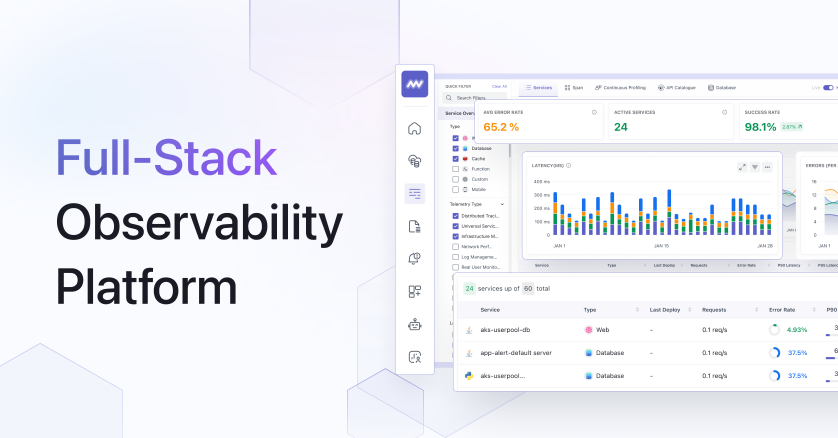
Middleware is an AI-powered, full-stack cloud observability platform designed to modernize IT infrastructure. It unifies logs, metrics, traces, and RUM data into a single view, enabling teams to monitor their entire tech stack in real-time. With its core OpsAI feature, Middleware automatically detects, diagnoses, and even resolves up to 70% of issues, significantly reducing resolution time and improving developer productivity. It offers a cost-effective, scalable solution for businesses of all sizes.

VS
Splunk
It Operations · 1.2M monthly visits

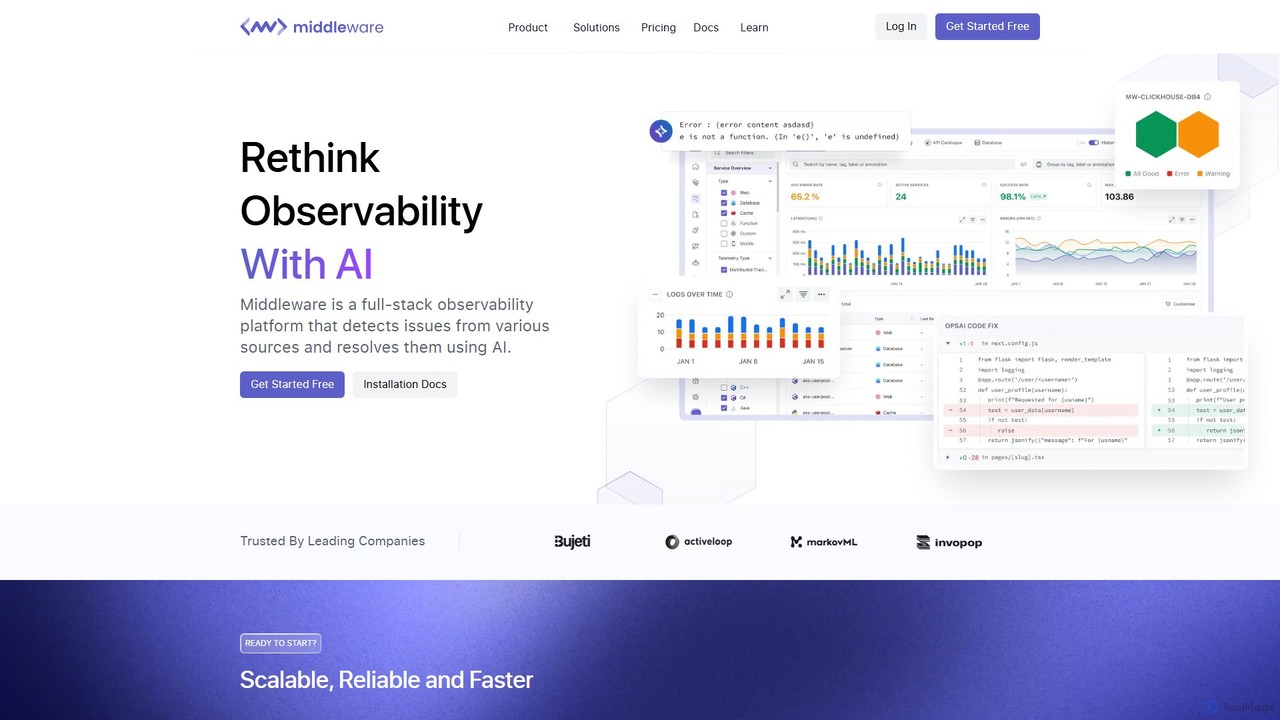
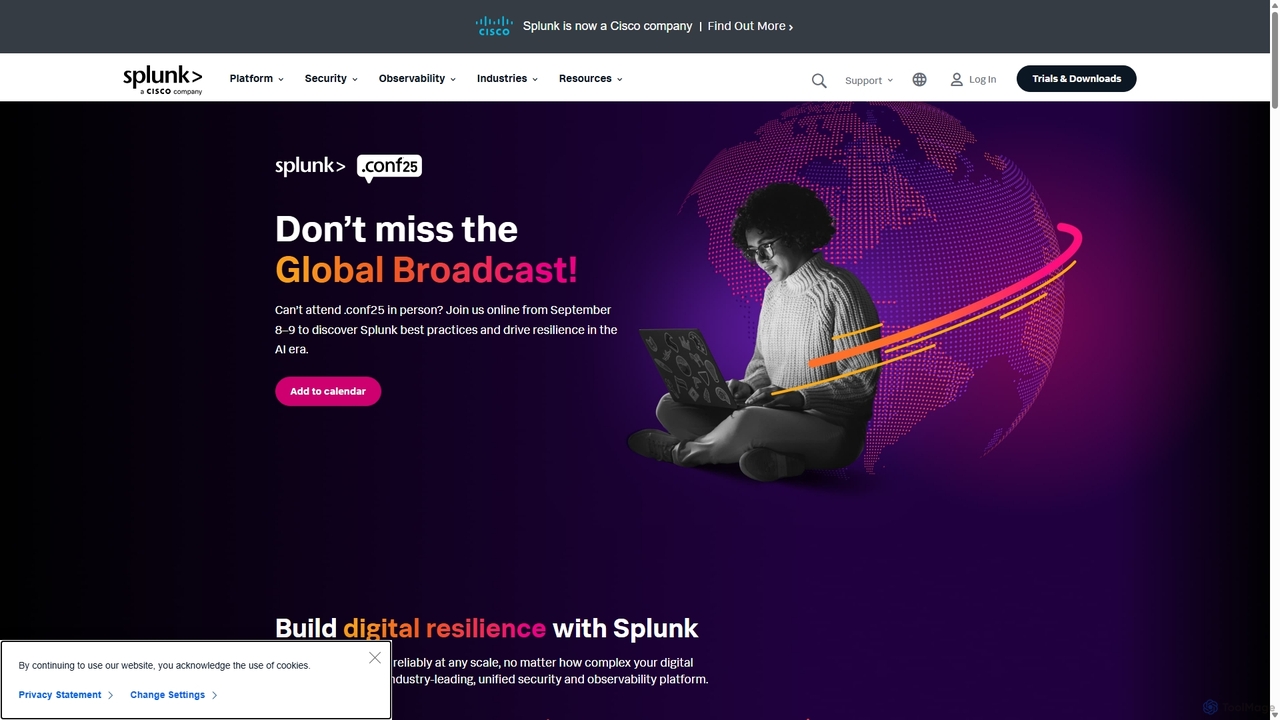
Splunk is the key to enterprise resilience, offering a unified, AI-powered platform for security and observability. It enables organizations to investigate, monitor, analyze, and act on data from any source at any scale. Now a Cisco company, Splunk helps SecOps, ITOps, and engineering teams keep their digital systems secure and reliable in the AI era.

Middleware vs Splunk: pricing, features, traffic, and use cases

Compare Middleware and Splunk across positioning, pricing, traffic, and user feedback using structured factual data.

Updated Aug 5, 2026

Product overview

Middleware Product overview

Middleware is an AI-powered, full-stack cloud observability platform designed to modernize IT infrastructure. It unifies logs, metrics, traces, and RUM data into a single view, enabling teams to monitor their entire tech stack in real-time. With its core OpsAI feature, Middleware automatically detects, diagnoses, and even resolves up to 70% of issues, significantly reducing resolution time and improving developer productivity. It offers a cost-effective, scalable solution for businesses of all sizes.
Preview

Splunk Product overview

Splunk is the key to enterprise resilience, offering a unified, AI-powered platform for security and observability. It enables organizations to investigate, monitor, analyze, and act on data from any source at any scale. Now a Cisco company, Splunk helps SecOps, ITOps, and engineering teams keep their digital systems secure and reliable in the AI era.

Preview

Detailed feature comparison

FeatureMiddlewareSplunk
Primary categoryObservabilityIt Operations
Added2025-08-172025-09-17
PricingFreemiumPaid
Official websitemiddleware.iosplunk.com
Product typeWebsiteWebsite
Performance data
User ratingNot verifiedNot verified
Comments00
Monthly visits46.5K1.2M
Monthly growth-13.2%-8.8%
Favorites111133
DetailsView detailsView details

Middleware vs Splunk monthly traffic

Compare Middleware and Splunk by monthly reach, traffic trend, visit depth, top regions, and acquisition sources.

How to interpret the traffic data

In the Middleware vs Splunk monthly traffic comparison, Middleware currently shows 46.5K visits and Splunk shows 1.2M; Splunk has about 26.5 times the visible traffic of Middleware, an absolute difference of about 1.2M visits. This reflects visible reach, not feature quality or paid users.

Both tools provide verified traffic details, so monthly trends, visit depth, regions, and acquisition sources can be compared on the same basis.

Middleware monthly traffic:

Latest traffic

Monthly visits
46.5K
Avg. visit duration
0:22
Pages per visit
2.07
Bounce rate
39.02%
Data updated 2026-06-15

Monthly traffic trend

  • 2025/9: 87K Monthly visits
  • 2026/1: 122K Monthly visits
  • 2026/2: 82.5K Monthly visits
  • 2026/3: 65.8K Monthly visits
  • 2026/4: 53.6K Monthly visits
  • 2026/5: 46.5K Monthly visits

Top regions

Top 5 countries/regions
Country/regionPercentageTraffic
🇮🇳India38.73%18K
🇺🇸United States25.22%11.7K
🇳🇬Nigeria16.65%7.7K
🇷🇺Russia9.87%4.6K
🇩🇪Germany9.53%4.4K

Traffic sources

Source typePercentageTraffic
Direct94.79%44.1K
Email3.99%1.9K
Referral1.22%567

Search keywords

distributed trace complete guide bloghow to prune volumes in dockerlogging.formatter example jsonmiddlewareprometheus labe lvalue matcing

Splunk monthly traffic:

Latest traffic

Monthly visits
1.2M
Avg. visit duration
3:01
Pages per visit
4.02
Bounce rate
48.27%
Data updated 2026-06-15

Monthly traffic trend

  • 2025/9: 1.5M Monthly visits
  • 2026/1: 1.3M Monthly visits
  • 2026/2: 1.2M Monthly visits
  • 2026/3: 1.3M Monthly visits
  • 2026/4: 1.3M Monthly visits
  • 2026/5: 1.2M Monthly visits

Top regions

Top 5 countries/regions
Country/regionPercentageTraffic
🇺🇸United States60.25%742.1K
🇮🇳India17.42%214.6K
🇬🇧United Kingdom9.23%113.7K
🇦🇺Australia7.43%91.5K
🇯🇵Japan5.67%69.8K

Traffic sources

Source typePercentageTraffic
Direct55.87%688.1K
Referral41.08%506K
Email3.05%37.6K

Search keywords

numlookupsiemsplunksplunk careerssplunk enterprise
Traffic-based selection guidance: If public market visibility is an important first-pass criterion, investigate Splunk first. The final choice should still follow taxonomy, use case, and a real trial because higher traffic does not prove broader capabilities or better workflow fit.

Usage comparison

Compare the core capabilities of Middleware and Splunk

Middleware Core features

Observability
Cloud Management
Monitoring

Splunk Core features

Observability
It Operations
Analytics
Threat Detection

Use cases

Middleware Use cases

APM
log management
observability
AI for developers
cloud monitoring
Datadog alternative
devops
error tracking
infrastructure monitoring
performance monitoring
site reliability

Splunk Use cases

APM
log management
observability
AIOps
big data
data analysis
digital resilience
it operations
machine data
security
SIEM
threat detection

Best suited roles

Middleware Best suited roles

No verified data available

Splunk Best suited roles

Chief Information Security Officer
Data Analyst
DevOps Engineer
IT Operations Manager
Product Manager
Security Analyst
Site Reliability Engineer
Software Developer

Middleware vs Splunk:In-depth comparison and selection guidance

First decide whether the products solve the same kind of need

This in-depth Middleware vs Splunk comparison uses only the product records, taxonomy, audience, traffic, and community signals available on this page. Middleware is primarily listed under “Observability”, while Splunk is primarily listed under “It Operations”, so the first decision is whether your actual task matches their recorded scope.

The structured fields currently show these decision-relevant differences: Primary category (Middleware: Observability; Splunk: It Operations); Pricing (Middleware: Freemium; Splunk: Paid); Monthly visits (Middleware: 46.5K; Splunk: 1.2M); Monthly growth (Middleware: -13.2%; Splunk: -8.8%); Favorites (Middleware: 111; Splunk: 133). These facts are more useful for selection than brand visibility alone.

What market visibility and monthly traffic mean

In the Middleware vs Splunk monthly traffic comparison, Middleware currently shows 46.5K visits and Splunk shows 1.2M; Splunk has about 26.5 times the visible traffic of Middleware, an absolute difference of about 1.2M visits. This reflects visible reach, not feature quality or paid users.

Both tools provide verified traffic details, so monthly trends, visit depth, regions, and acquisition sources can be compared on the same basis.

If public market visibility is an important first-pass criterion, investigate Splunk first. The final choice should still follow taxonomy, use case, and a real trial because higher traffic does not prove broader capabilities or better workflow fit.

Product positioning, use cases, and roles

Middleware and Splunk currently overlap in shared categories: Observability; shared tags: APM, log management, and observability. This can place both on the same shortlist, but it does not prove equal implementation, depth, or cost.

Middleware's unique categories/tags are Cloud Management, Monitoring, AI for developers, cloud monitoring, Datadog alternative, devops, error tracking, and infrastructure monitoring; Splunk's are It Operations, Analytics, Threat Detection, AIOps, big data, data analysis, digital resilience, and it operations. These unique fields are the strongest differentiators: validate the product whose recorded scope matches the task instead of following traffic alone.

What ratings, comments, and favorites can tell you

Middleware has no verified rating, 0 comments, 111 favorites, and 97 likes;Splunk has no verified rating, 0 comments, 133 favorites, and 129 likes。

Neither product has enough rating or comment samples for a credible reputation ranking.

Selection guidance by actual need

When to evaluate Middleware first

Put Middleware on the priority trial list when the task aligns with “Observability” and especially Cloud Management, Monitoring, AI for developers, cloud monitoring, Datadog alternative, and devops. This follows recorded positioning and does not imply unlisted capabilities are absent.

Middleware also currently records: pricing is freemium, product type is website, 46.5K verified monthly visits, no verified user rating. Verify any hard requirement around price, platform, or reach before trial, and do not let sparse review data substitute for testing.

When to evaluate Splunk first

Put Splunk on the priority trial list when the task aligns with “It Operations” and especially It Operations, Analytics, Threat Detection, AIOps, big data, and data analysis, or the users include Chief Information Security Officer, Data Analyst, DevOps Engineer, and IT Operations Manager. This follows recorded positioning and does not imply unlisted capabilities are absent.

Splunk also currently records: pricing is paid, product type is website, 1.2M verified monthly visits, no verified user rating. Verify any hard requirement around price, platform, or reach before trial, and do not let sparse review data substitute for testing.

How to validate the recommendation before deciding

The available data describes positioning, public visibility, and community signals, but it cannot prove output quality, speed, integration effort, privacy, or long-term cost in your workflow. Before deciding, run the same representative tasks in Middleware and Splunk, then record completion time, accuracy, manual corrections, and the real paid threshold. A like-for-like trial turns this comparison into a defensible adoption decision.

Comparison FAQ

How should I choose between Middleware and Splunk?
Compare positioning, pricing, taxonomy, and traffic maturity, then verify the latest details on each official website.
Where does this comparison data come from?
The factual baseline is derived from product, taxonomy, traffic, and community data. Reviewed editorial conclusions show their source and verification date.
What do unknown fields mean?
Unknown means there is not enough reliable evidence; the page does not fill gaps with assumptions.