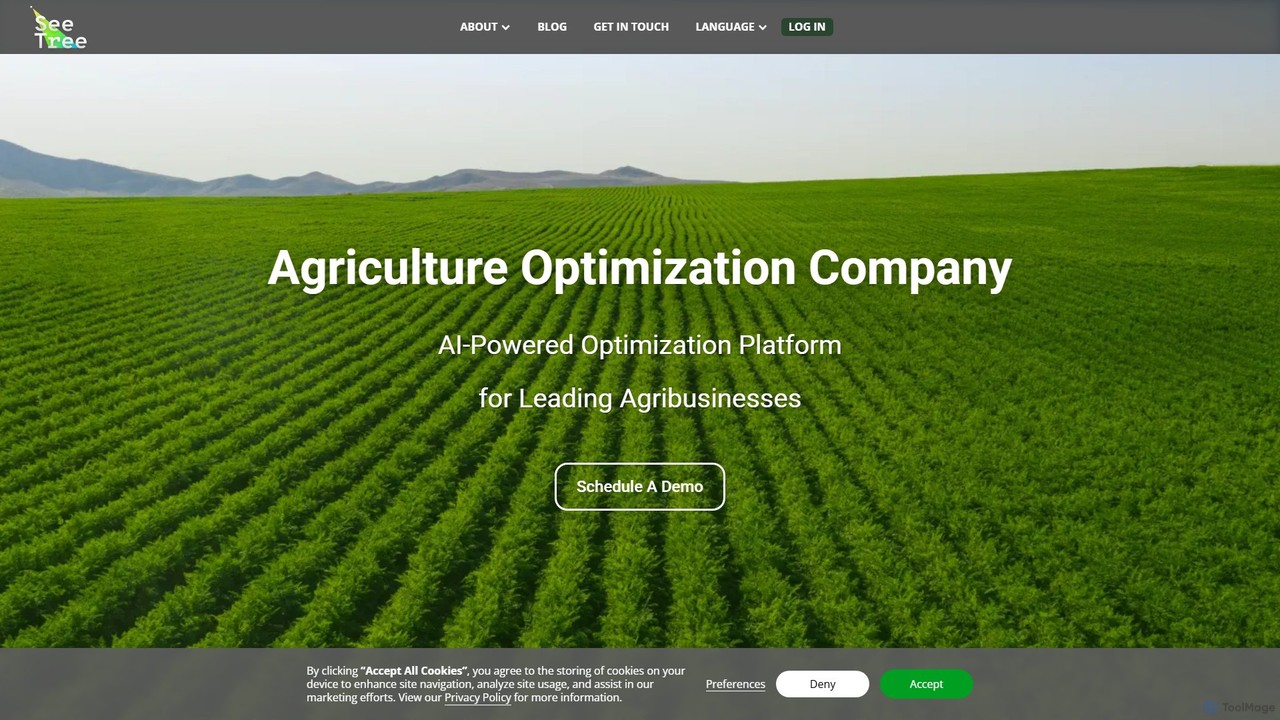
Precision Farming tools are AI-powered solutions that optimize agricultural practices by leveraging data and automation. These tools integrate advanced technologies like IoT sensors, drones, satellite imagery, and machine learning algorithms to provide granular insights into farm conditions. They enable farmers to make data-driven decisions, leading to improved resource efficiency, increased yields, and reduced environmental impact.
Core Features
- Real-time Crop Monitoring: Utilizes drone and satellite imagery with AI analysis to detect crop health issues, pest infestations, and nutrient deficiencies across large areas.
- Variable Rate Application: Automatically adjusts the application of water, fertilizers, and pesticides based on real-time soil and crop data, optimizing input usage.
- Automated Irrigation Systems: Employs soil moisture sensors and weather data to precisely control irrigation, ensuring optimal water delivery and conservation.
- Yield Prediction & Optimization: Analyzes historical data, weather patterns, and crop health metrics to forecast yields and recommend strategies for maximization.
- Agricultural Robotics: Deploys autonomous robots for tasks like planting, weeding, harvesting, and data collection, reducing manual labor and increasing precision.
Applicable Scenarios
Precision Farming tools are essential for modern agricultural enterprises, large-scale farms, and specialized crop growers aiming to enhance productivity and sustainability. They are used to manage diverse crops, optimize livestock operations, and improve land utilization. These solutions help farmers transition from traditional, uniform field management to highly localized, data-driven interventions.
How to Choose
When selecting Precision Farming tools, consider the specific needs of your farm, such as crop types, field size, and existing infrastructure. Evaluate the tool's data integration capabilities with other farm management systems, the accuracy of its sensors and AI models, and its scalability. Assess the ease of use, technical support, and the return on investment through potential savings in inputs and increased yields.