ToolMage
Sign in

Best 1 Content Generation AI tools for Ai Detection

Popular Content Generation AI tools in Ai Detection include AI Cover Letter Generator, helping you work more efficiently.

AI Cover Letter Generator
Freemium

AI Cover Letter Generator

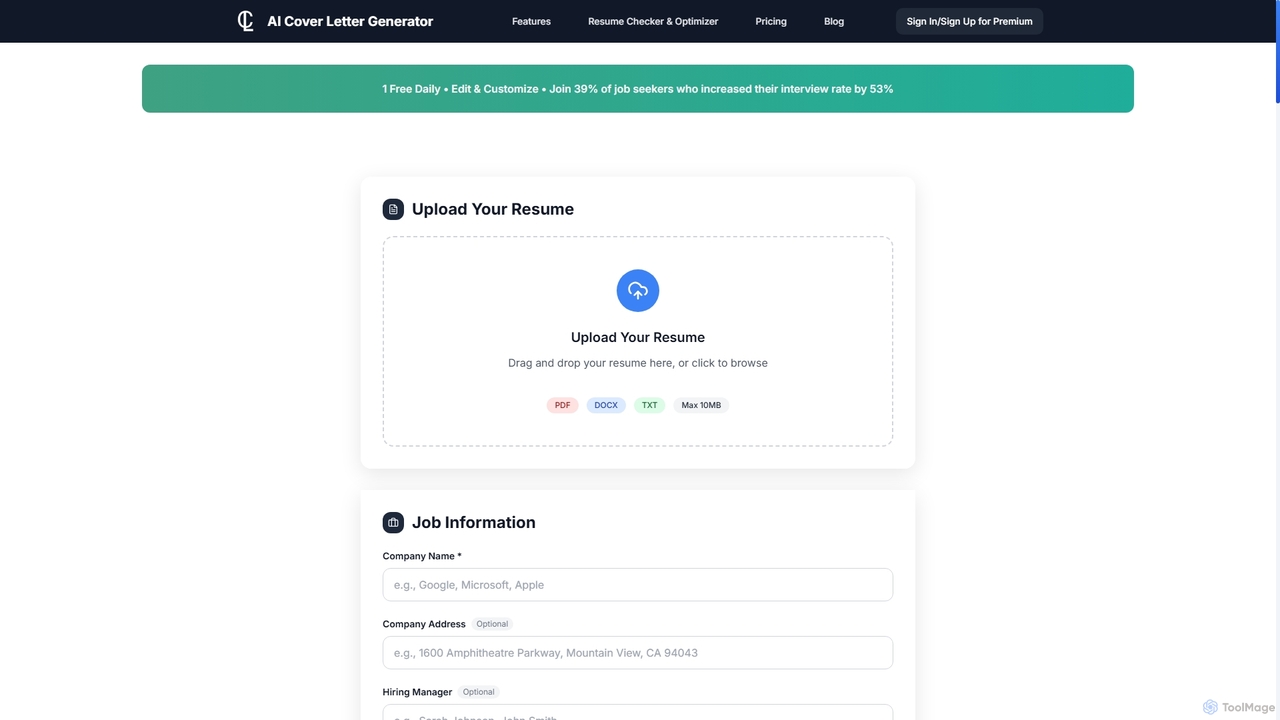
AI Cover Letter Generator is an intelligent tool that leverages artificial intelligence to create personalized, professional cover letters for job applications. It analyzes your resume and the specific job description to craft unique content, aiming to significantly increase your interview callback rates and streamline your job search process.

Content Generation
Visits 6.5KFavorites 95Likes 90

About Content Generation

Content Generation tools are AI-powered applications that automatically create various forms of text, images, audio, or video based on user prompts or data. Leveraging advanced natural language processing and machine learning models, these tools significantly accelerate the content creation workflow. While the parent category AI Detection focuses on identifying AI-generated content, Content Generation empowers users to produce original material efficiently for diverse purposes.

Core Features

  • Text Generation: Automatically produces articles, marketing copy, scripts, and more from prompts.
  • Image Synthesis: Creates unique images, illustrations, and visual assets based on textual descriptions.
  • Video & Audio Production: Generates video clips, voiceovers, and music, often from text inputs.
  • Content Repurposing: Transforms existing content into new formats, like turning a blog post into social media snippets.
  • Style & Tone Customization: Adjusts the output's writing style, tone, and target audience to match specific needs.

Use Cases

Content Generation tools are invaluable for marketers, content creators, developers, and businesses seeking to scale their content production. They are used to quickly draft initial content, generate diverse creative assets, and maintain a consistent content flow across various platforms.

How to Choose

When selecting a Content Generation tool, consider the types of content you need to create (text, image, video), the quality and originality of the output, customization options for style and tone, integration capabilities with existing workflows, and the pricing model. Evaluate the tool's ease of use and the accuracy of its generated content.

Content Generation use cases

1

Automate Marketing Copy Creation

Marketing specialists and small business owners can leverage Content Generation tools to rapidly produce diverse marketing copy. By inputting product features or campaign goals, they can generate multiple variations of ad headlines, social media captions, email subject lines, and call-to-action phrases. This significantly reduces the time spent on brainstorming and drafting, allowing for quicker A/B testing and campaign launches, potentially increasing engagement by 30%.

2

Draft Blog Posts and Articles Efficiently

Content writers and bloggers can use Content Generation tools to overcome writer's block and accelerate the initial drafting phase of articles. By providing a topic, keywords, and desired tone, the AI can generate outlines, introductory paragraphs, or even full first drafts. This allows writers to focus on refining, fact-checking, and adding their unique voice, cutting down drafting time by up to 50% and enabling them to publish more frequently.

3

Generate Product Descriptions for E-commerce

E-commerce managers and online retailers face the challenge of creating unique, SEO-friendly product descriptions for hundreds or thousands of items. Content Generation tools can automate this process by taking basic product specifications (e.g., material, color, size, features) and generating engaging, descriptive text. This ensures consistency, saves countless hours of manual writing, and helps improve search engine visibility for product listings, potentially boosting conversion rates by 15%.

4

Create Engaging Social Media Content

Social media managers and community builders often need to produce a high volume of diverse content daily. Content Generation tools can assist by generating creative captions, relevant hashtags, and even image ideas based on a given topic or trend. This streamlines the content pipeline, ensures a consistent brand voice, and frees up time for engagement and strategy, leading to a 20% increase in posting frequency and audience interaction.

5

Develop Personalized Email Campaigns at Scale

Sales and marketing teams often struggle to personalize email outreach for large audiences. Content Generation tools can create highly customized email content by integrating with CRM data. They can generate personalized subject lines, body paragraphs, and calls to action that resonate with individual recipients' profiles and past interactions. This capability significantly improves open rates and click-through rates, potentially boosting lead conversion by 25%.

6

Produce Video Scripts and Storyboards

Video creators and digital agencies can utilize Content Generation tools to streamline the pre-production phase of video creation. By inputting a video concept, target audience, and key messages, the AI can generate detailed video scripts, scene descriptions, and even storyboard suggestions. This accelerates the creative process, ensures message consistency, and provides a solid foundation for visual production, reducing scriptwriting time by up to 40%.

Content Generation FAQ

What are AI Content Generation tools?

AI Content Generation tools are software applications that use artificial intelligence, primarily machine learning and natural language processing, to automatically create various types of content. This includes text (articles, marketing copy), images (illustrations, photos), audio (voiceovers, music), and video. They aim to assist or automate parts of the content creation process, making it faster and more scalable for users across different industries.

How do AI Content Generation tools work?

AI Content Generation tools typically work by taking user inputs, known as prompts, which can be text, keywords, or even existing data. These inputs are then processed by sophisticated AI models, such as large language models (LLMs) for text or diffusion models for images. The AI analyzes the prompt, understands the context and desired output, and then generates new, original content that aligns with the instructions. The quality and relevance of the output depend heavily on the clarity of the prompt and the sophistication of the underlying AI model.

What are the benefits of using AI Content Generation tools?

The primary benefits of using AI Content Generation tools include significant time savings and increased efficiency in content production. They help overcome writer's block, enable content creation at scale, and ensure consistency in brand voice and style. These tools can also generate diverse content variations for A/B testing, reduce costs associated with manual content creation, and free up human creators to focus on strategic planning and creative oversight, rather than repetitive tasks.

How to choose the right AI Content Generation tool?

To choose the right AI Content Generation tool, first identify your specific content needs (e.g., text, images, video). Evaluate the quality and originality of the output, as some tools perform better in certain areas. Consider customization options for style, tone, and format. Look for integration capabilities with your existing platforms (CRM, CMS). Assess the pricing model, ease of use, and the level of human oversight required. Finally, check for features like plagiarism detection or SEO optimization if those are critical for your workflow.

What is the difference between AI Content Generation and AI Detection?

AI Content Generation and AI Detection serve opposite but complementary purposes. AI Content Generation tools are designed to create new content, such as articles, images, or code, using AI algorithms based on user prompts. Their goal is to produce original material efficiently. In contrast, AI Detection tools are designed to analyze existing content to determine whether it was generated by AI or a human. Their goal is to identify and verify the origin of content, often for purposes of authenticity, plagiarism checks, or academic integrity. While one creates, the other scrutinizes the creation.