
Ai Infrastructure Best in category 2 results Memory Management AI Tool

Popular AI tools in the Memory Management field of Ai Infrastructure include Cogniz、llongterm, etc., helping you quickly improve efficiency.

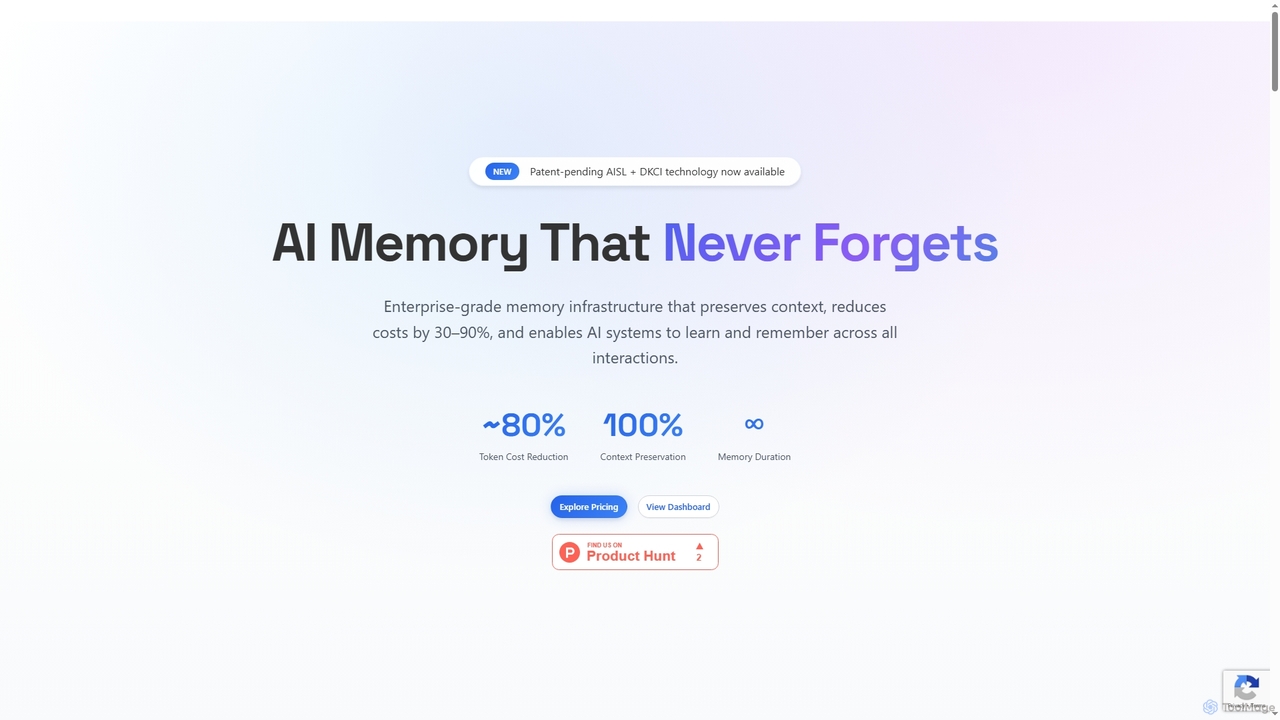
Cogniz

Cogniz

Cogniz is an enterprise-grade AI memory infrastructure featuring patent-pending AISL + DKCI technology. It enables AI systems to …

8.7K
llongterm

llongterm

llongterm is a developer-focused API providing persistent, long-term memory for AI applications and agents. It enables AI to …

1.7K

About Memory Management

Memory Management tools for AI are specialized solutions designed to efficiently allocate, deallocate, and optimize memory resources for artificial intelligence models and applications. These tools are crucial for managing the high memory demands of deep learning frameworks and large datasets, ensuring optimal performance and scalability. By intelligently handling memory, they prevent out-of-memory errors, enable the training of larger models, and reduce operational costs in AI infrastructure.

Core Features

  • Dynamic Memory Allocation: Intelligently allocates and reclaims memory during AI model execution, adapting to varying tensor sizes and computational graphs.
  • Memory Pooling: Reuses pre-allocated memory blocks to reduce overhead from frequent allocation/deallocation, especially for GPU memory.
  • GPU Memory Optimization: Provides specific strategies and APIs for efficient utilization of graphics processing unit memory, critical for deep learning.
  • Memory Profiling & Debugbing: Tools to visualize memory usage patterns, identify leaks, and pinpoint inefficiencies within AI workloads.
  • Tensor Memory Management: Specialized handling for multi-dimensional arrays (tensors) that are fundamental to AI computations.

Use Cases

These tools are essential for AI researchers training large language models, MLOps engineers deploying high-throughput inference services, and developers optimizing AI applications for resource-constrained edge devices. They ensure that complex AI workloads can run efficiently without encountering memory bottlenecks.

How to Choose

When selecting AI memory management tools, consider their compatibility with your existing AI frameworks (e.g., PyTorch, TensorFlow) and hardware (e.g., NVIDIA GPUs). Evaluate the overhead introduced by the tool, its ease of integration into your development pipeline, and its ability to provide detailed memory profiling insights for optimization. Scalability and support for dynamic workloads are also key factors.

Memory ManagementUse Cases

1

Training Large Language Models (LLMs)

AI researchers and ML engineers leverage memory management tools to train colossal language models with billions of parameters. These tools optimize GPU memory usage, allowing for larger batch sizes or model configurations that would otherwise lead to out-of-memory errors. This enables faster experimentation and the development of more powerful, state-of-the-art AI models.

2

Deploying AI on Resource-Constrained Edge Devices

Embedded AI developers and IoT engineers utilize memory management solutions to run sophisticated AI inference on devices with limited memory, such as smart cameras, drones, or industrial sensors. By minimizing memory footprint and optimizing allocation, these tools enable real-time AI capabilities directly on the edge, extending battery life and reducing reliance on cloud connectivity.

3

Concurrent AI Inference Serving for High Throughput

MLOps engineers and cloud architects employ memory management to efficiently serve multiple AI models or handle numerous concurrent inference requests from a single GPU or server. Memory pooling and dynamic allocation strategies ensure optimal sharing of GPU resources, significantly reducing inference latency, increasing throughput, and maximizing hardware utilization in production environments.

4

Optimizing Data Loading and Preprocessing for Training

Data scientists and ML engineers use these tools to manage large datasets during the training phase. Memory management helps in efficiently handling data buffers, implementing caching strategies, and optimizing prefetching mechanisms. This reduces I/O bottlenecks, ensures data is readily available for GPU processing, and ultimately accelerates training epochs for deep learning models.

5

Developing Custom AI Accelerators and Hardware

Hardware engineers and system architects designing specialized AI chips (ASICs or FPGAs) rely on advanced memory management techniques. These tools provide critical insights into memory access patterns and enable fine-grained control over memory allocation within custom hardware. This co-design approach is essential for achieving peak performance and energy efficiency in purpose-built AI accelerators.

6

Debugging and Preventing Memory Leaks in AI Applications

Software engineers and AI application developers utilize memory profiling and debugging tools to identify and resolve memory leaks or inefficient memory usage within complex AI applications. By visualizing memory consumption over time, these tools pinpoint where memory is allocated but not properly released, improving application stability, preventing crashes, and ensuring long-term reliability of AI systems.

Memory ManagementFrequently Asked Questions