LiveAvatar
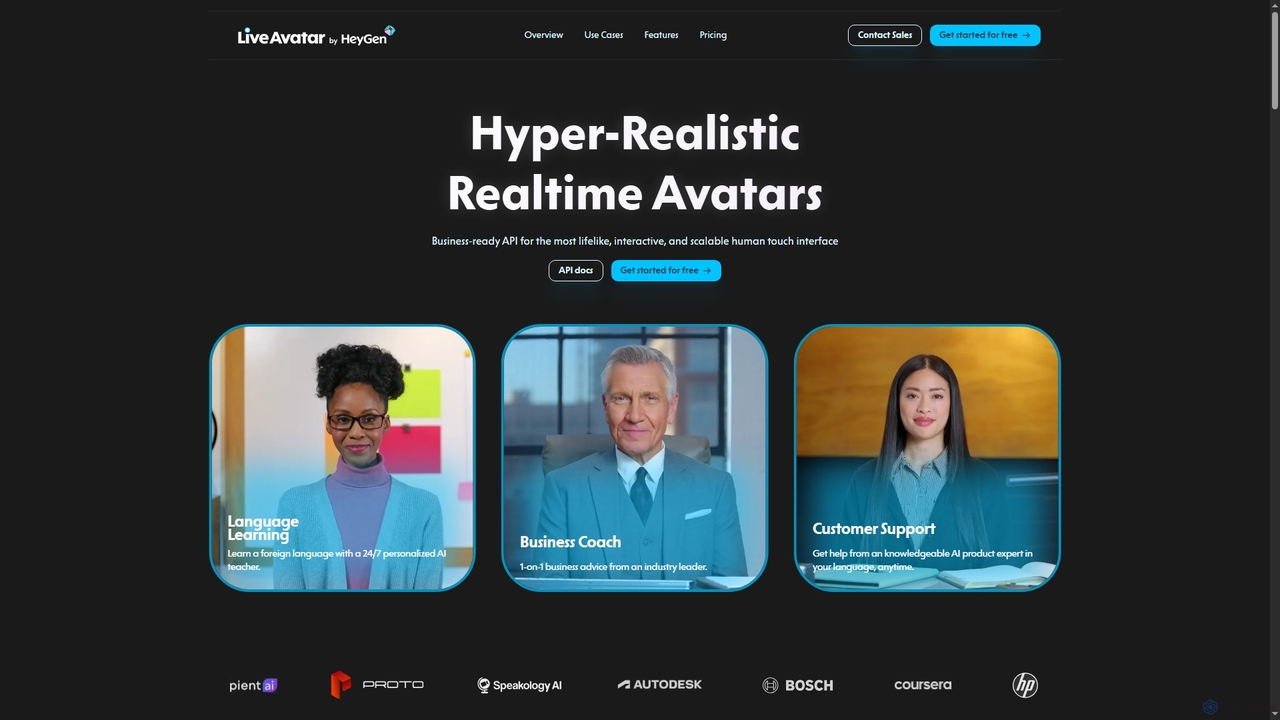
LiveAvatar provides a business-ready API for integrating hyper-realistic, real-time, lip-synced AI avatars into any product. Enhance user engagement …
LiveAvatar provides a business-ready API for integrating hyper-realistic, real-time, lip-synced AI avatars into any product. Enhance user engagement with lifelike conversational interfaces for customer support, language learning, sales training, and more. Create custom avatars with just two minutes of footage or choose from a diverse library.
About Avatar Generation
Avatar Generation tools are a specialized type of API that programmatically creates unique digital representations of users, such as profile pictures or virtual characters. Leveraging generative AI models like GANs or diffusion models, these APIs can produce a wide variety of avatars from text prompts, photos, or user-defined parameters. They are primarily used by developers and platforms to automate the creation of personalized user profiles, enhance virtual environments, and provide dynamic visual identities in applications. The key advantage is the ability to generate consistent, high-quality avatars at scale without manual design work.
Core Features
- API-driven Generation: Programmatically create avatars via REST API calls, enabling seamless integration into apps and websites.
- Style Customization: Control artistic styles, from photorealistic to cartoon, anime, or pixel art, to match brand aesthetics.
- Input Flexibility: Generate avatars from various inputs like text descriptions, uploaded photos, or structured data parameters.
- Batch Processing: Create hundreds or thousands of unique avatars in a single automated process for large-scale applications.
- Consistent Identity: Maintain a consistent visual style for avatars generated for the same user or brand across different platforms.
Use Cases
These APIs are widely integrated into social media platforms, gaming applications, and virtual event platforms to provide users with personalized profile pictures. E-commerce and customer support systems use them to create friendly, relatable chatbot or agent personas. Developers also use Avatar Generation APIs in metaverse and VR/AR applications to populate virtual worlds with diverse non-player characters (NPCs) or user representations.
How to Choose
When selecting an Avatar Generation API, evaluate the quality and diversity of the generated styles. Assess the API's documentation, ease of integration, and available SDKs. Consider the pricing model—whether it's per-call, subscription-based, or tiered—to align with your usage volume. Finally, check performance metrics like generation speed and server uptime to ensure it meets your application's real-time requirements.

Avatar GenerationUse Cases
Automating Profile Pictures for a Social App
A developer building a new social network integrates an Avatar Generation API. When a new user signs up, they can either upload a photo to be transformed into a stylized avatar or answer a few questions to generate one from scratch. The API call is made in the background, providing a uniform and engaging onboarding experience without requiring users to have a ready-to-use profile picture. This increases user completion rates for profiles and establishes a consistent visual identity for the platform from the start.
Creating Unique NPCs for a Video Game
A game development studio uses an API to programmatically generate thousands of unique non-player characters (NPCs) for their open-world game. By sending different parameters (e.g., age, ethnicity, style, accessories) to the API in a script, they can populate cities and towns with diverse-looking characters. This process saves hundreds of hours of manual 3D modeling and texturing work, allowing the art team to focus on key characters while ensuring the game world feels vibrant and populated.
Personalizing Chatbot Interfaces
A company developing a customer service chatbot uses an Avatar Generation API to create a dynamic face for their bot. The API generates an avatar that aligns with the company's brand identity. Furthermore, the avatar's expression can be dynamically updated via API calls based on the conversation's sentiment (e.g., smiling for a positive resolution, neutral for an inquiry). This makes the automated interaction feel more human and engaging, improving customer satisfaction with the support service.
Generating Avatars for a Virtual Events Platform
An online conference platform integrates an avatar API to allow attendees to create personalized virtual representations. Upon registration, attendees can upload a photo, and the API generates a consistent, professional-looking avatar for use in virtual lobbies, networking sessions, and Q&A panels. This enhances the sense of presence and community, making the virtual event feel more interactive and personal compared to using generic icons or just names. The platform can offer different style packs (e.g., 'Business Professional', 'Creative Casual') as a premium feature.
Creating Branded Avatars for a Marketing Campaign
A marketing agency uses an API to launch an interactive campaign where users can create an avatar in the brand's signature artistic style. Users visit a campaign microsite, upload their photo, and the site calls the API to generate a shareable, branded avatar. This drives high user engagement and organic social media visibility as users share their unique creations. The agency can track API usage to measure the campaign's reach and success in real-time, providing valuable data-driven insights to the client.
Developing a Custom Avatar Creator Tool
A SaaS company builds a standalone avatar creation tool on top of a powerful Avatar Generation API. They provide a user-friendly interface that abstracts the API's complexity, allowing customers to fine-tune styles, colors, and features through simple controls. The company then sells subscriptions to this tool, targeting content creators, small businesses, and individuals who need custom avatars for their online presence. By leveraging a third-party API, they significantly reduce their time-to-market and R&D costs for the core AI technology.