Gohorto
Gohorto is an AI-powered innovation program management platform designed for startup ecosystems. It unifies operations for accelerators, incubators, …
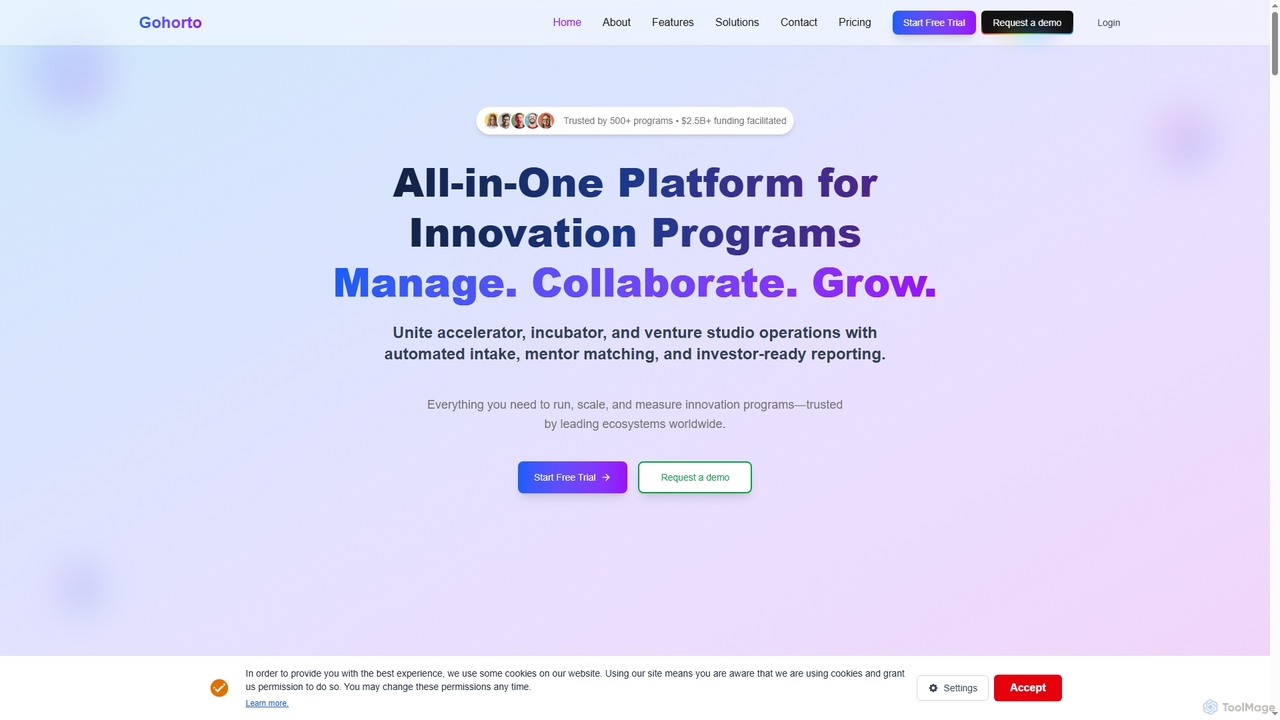
Gohorto is an AI-powered innovation program management platform designed for startup ecosystems. It unifies operations for accelerators, incubators, venture studios, universities, and corporations, streamlining application intake, mentor matching, and investor-ready reporting to foster growth and impact.
About Business Advisor
AI Business Advisor tools are a specialized category within Artificial Intelligence, designed to provide strategic insights and operational guidance to businesses. These tools leverage advanced data analytics, machine learning, and natural language processing to analyze market trends, financial data, and internal operations. They empower decision-makers with data-driven recommendations, helping optimize strategies, identify growth opportunities, and mitigate risks. By automating complex analytical tasks, AI Business Advisors enhance the speed and accuracy of strategic planning.
Core Features
- Market Analysis & Forecasting: Predict market trends, consumer behavior, and competitive landscapes with high accuracy.
- Financial Performance Optimization: Analyze financial data to identify cost-saving opportunities and revenue growth strategies.
- Strategic Planning Support: Offer data-backed recommendations for business expansion, product development, and resource allocation.
- Risk Assessment & Mitigation: Identify potential business risks across various domains and suggest proactive mitigation strategies.
- Operational Efficiency Insights: Pinpoint inefficiencies in workflows, supply chains, and resource utilization for improvement.
Applicable Scenarios
Business Advisor AI tools are invaluable for small to large enterprises, consultants, and entrepreneurs across various sectors. They assist C-suite executives in formulating long-term strategies, marketing managers in identifying new market segments, and financial analysts in optimizing investment portfolios. For example, a startup can use an AI Business Advisor to validate a new product idea against market demand and competitive offerings, or an established company can leverage it to identify inefficiencies in its supply chain and optimize logistics.
How to Choose
When selecting an AI Business Advisor, consider its analytical depth, the breadth of data sources it can integrate, and its ability to generate actionable recommendations tailored to your industry. Evaluate the clarity of its insights, the customization options for specific business models, and the level of human oversight required. Scalability, robust security features, and seamless integration with existing business intelligence platforms are also crucial for long-term value and effective implementation.

Business AdvisorUse Cases
Developing Market Entry Strategies
A business development manager exploring new international markets can utilize an AI Business Advisor to analyze geopolitical risks, local consumer preferences, and competitive landscapes. The tool processes vast datasets to identify the most promising regions, suggest optimal entry modes (e.g., direct investment, joint venture), and forecast potential market share, significantly reducing research time and informing strategic decisions with data-driven insights.
Optimizing Financial Investment Portfolios
A financial analyst in an investment firm can leverage an AI Business Advisor to evaluate various investment opportunities against predefined risk tolerances and return objectives. The AI analyzes historical market data, economic indicators, and company financials to recommend portfolio adjustments, identify undervalued assets, and predict future performance, helping to maximize returns while managing risk effectively.
Enhancing Supply Chain Efficiency
An operations manager in a manufacturing company can deploy an AI Business Advisor to analyze supply chain data, including logistics, inventory levels, and supplier performance. The AI identifies bottlenecks, predicts potential disruptions, and suggests optimal inventory reorder points and routing strategies. This leads to reduced operational costs, improved delivery times, and enhanced resilience against unforeseen supply chain challenges.
Strategic Customer Segmentation
A marketing director aims to refine customer targeting for a new product launch. An AI Business Advisor analyzes customer demographics, purchase history, and behavioral data to identify distinct customer segments with high potential. It provides insights into their preferences and pain points, enabling the marketing team to craft highly personalized campaigns that resonate with each segment, leading to higher conversion rates and improved customer satisfaction.
Proactive Risk Identification and Mitigation
A compliance officer in a financial institution uses an AI Business Advisor to continuously monitor regulatory changes, market volatility, and internal transaction patterns. The AI identifies emerging compliance risks, flags unusual activities indicative of fraud, and suggests proactive measures to update policies or enhance monitoring protocols. This helps the institution maintain regulatory adherence and protect against financial losses.
Product Portfolio Performance Analysis
A product manager needs to assess the performance of their company's diverse product portfolio. An AI Business Advisor integrates sales data, customer feedback, and market trends to evaluate each product's profitability, growth potential, and market fit. It identifies underperforming products for potential discontinuation or redesign, and highlights high-potential products for further investment, optimizing the overall product strategy.