Bilt
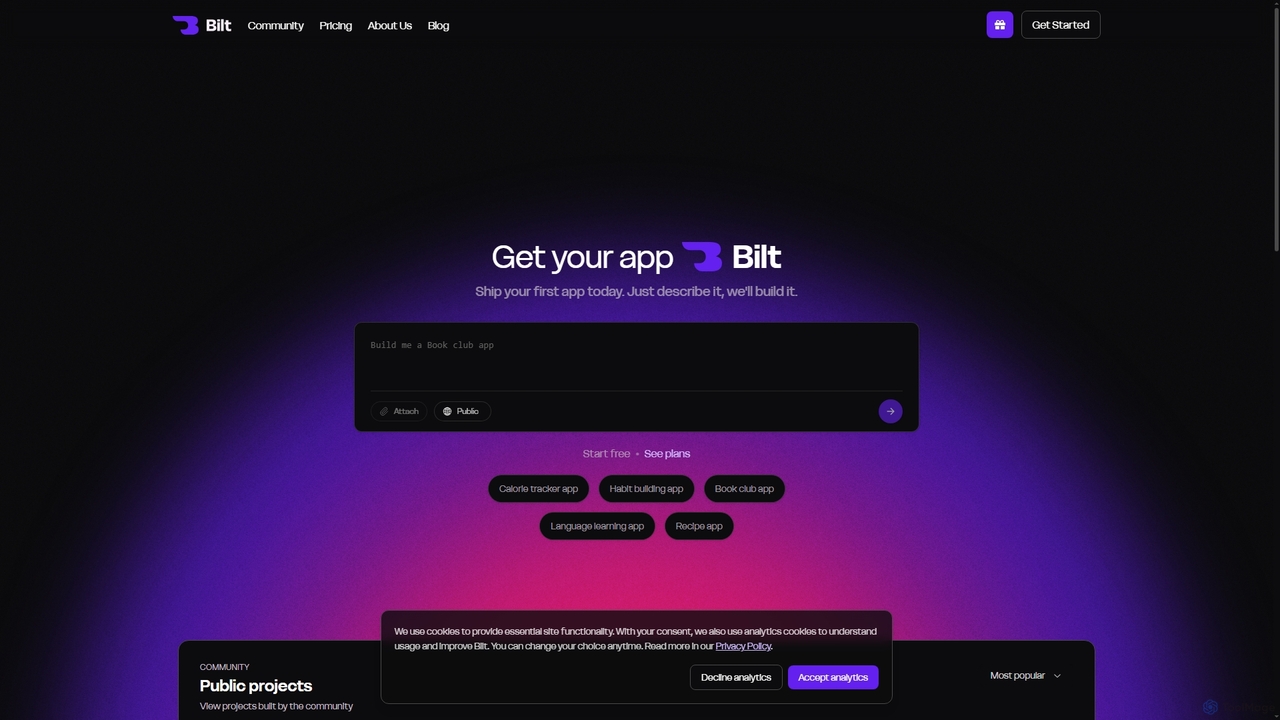
Bilt is an AI-powered mobile app builder that transforms natural language descriptions into native iOS and Android applications …
Bilt is an AI-powered mobile app builder that transforms natural language descriptions into native iOS and Android applications without writing any code. It offers real-time previews, seamless deployment to app stores, and full source code access, making app development accessible to everyone.
Jules
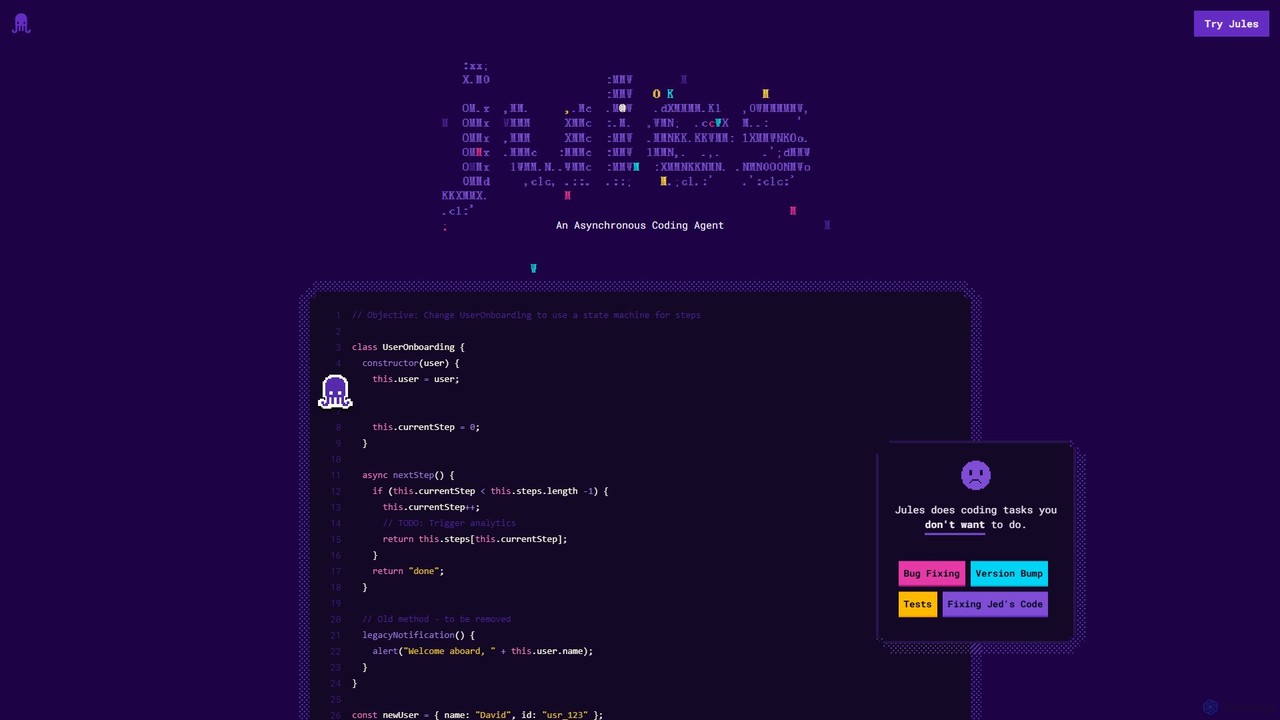
Jules is an experimental, asynchronous AI coding agent from Google. Powered by Gemini 2.5 Pro, it integrates with …
Jules is an experimental, asynchronous AI coding agent from Google. Powered by Gemini 2.5 Pro, it integrates with your GitHub repositories to help fix bugs, build new features, and refactor code. Simply provide a prompt, and Jules will create a plan, write the code, and submit a pull request for your review, streamlining your development workflow.
About Code Generation
AI Code Generation tools are a class of software that uses artificial intelligence, particularly large language models, to automatically write, complete, and debug source code. They analyze natural language prompts or existing code context to produce functional code snippets, functions, or even entire applications. This capability significantly accelerates development cycles, reduces repetitive coding tasks, and lowers the barrier to entry for new programmers. These tools act as intelligent assistants integrated directly into a developer's workflow, enhancing productivity rather than replacing human expertise.
Core Features
- Natural Language to Code: Converts plain text descriptions and prompts into executable code in various programming languages.
- Intelligent Code Completion: Provides context-aware suggestions for completing lines or entire blocks of code, going beyond simple autocompletion.
- Code Refactoring & Optimization: Analyzes existing code and suggests improvements for performance, readability, or adherence to best practices.
- Automated Test Generation: Creates unit tests and test cases automatically based on the source code's logic to ensure quality.
- Code Explanation & Debugging: Explains complex code snippets in natural language and helps identify potential bugs or errors.
Use Cases
These tools are primarily used by software developers, data scientists, and students. Developers utilize them to speed up prototyping and eliminate boilerplate code writing. Data scientists leverage them to quickly generate scripts for data analysis and visualization. Students and beginners find them valuable for learning new programming languages and understanding complex algorithms through practical examples.
How to Choose
When selecting an AI Code Generation tool, consider its programming language support (e.g., Python, JavaScript, Go), the quality of its IDE integration (e.g., VS Code, JetBrains), the accuracy of its suggestions, its ability to understand project-wide context, and its security policies regarding your codebase. Also, evaluate the pricing model to ensure it aligns with your usage patterns.

Code GenerationUse Cases
Rapid Prototyping for a Web App
A startup developer needs to build a functional prototype for a new web application quickly. Using an AI code generation tool, they describe required features in plain English, such as "create a user login page with email and password fields" or "generate a REST API endpoint to fetch user data." The tool generates the necessary HTML, CSS, and JavaScript/Python code, allowing the developer to assemble a working demo in hours instead of days. This process significantly speeds up the feedback loop with stakeholders and validates ideas faster.
Automating Unit Test Creation
A quality assurance engineer is tasked with increasing test coverage for a complex application. Instead of manually writing hundreds of unit tests, they use an AI code generator. By selecting a function or class, the tool analyzes the code's logic and automatically generates a comprehensive suite of test cases, including edge cases and assertions. This process can reduce the manual effort for writing tests by over 70%, helping the team catch bugs earlier in the development lifecycle and maintain a higher standard of code quality.
Generating Complex SQL Queries
A data analyst needs to extract specific insights from a large database but is not an expert in complex SQL joins and subqueries. They use an AI code generation tool with a natural language interface. They simply type a request like, "Show me the total sales for each product category in the last quarter, for customers who made more than three purchases." The tool translates this into an optimized, multi-line SQL query, which the analyst can immediately execute to get the required data for their report, saving significant time and effort.
Learning a New Programming Framework
A junior developer is learning the React framework for the first time. They struggle with understanding concepts like state management and component lifecycle. By using an AI code generation tool as a learning companion, they can ask it to "generate a React component for a simple to-do list" or "explain this useEffect hook with an example." The tool provides working code examples and clear explanations, acting as an interactive tutor that accelerates their learning curve and helps them grasp practical implementation faster.
Refactoring and Documenting Legacy Code
A maintenance team inherits a large, poorly documented codebase. To improve its maintainability, they use an AI code generation tool. The tool can automatically refactor complex, inefficient functions into cleaner, more performant versions. It can also generate clear documentation and comments (docstrings) for entire modules by analyzing the code's purpose. This process makes the legacy code easier to understand, modify, and onboard new team members, reducing technical debt significantly.
Converting Code Between Languages
A software team is migrating a legacy system from Python to Go to improve performance. Manually rewriting the entire codebase is time-consuming and error-prone. They employ an AI code generation tool to automate the translation. The tool reads the source Python files and generates equivalent Go code, preserving the original logic and structure. While developers still need to review and refine the output, this automates up to 80% of the conversion work, saving months of development time and reducing the risk of introducing new bugs.