AskFlow
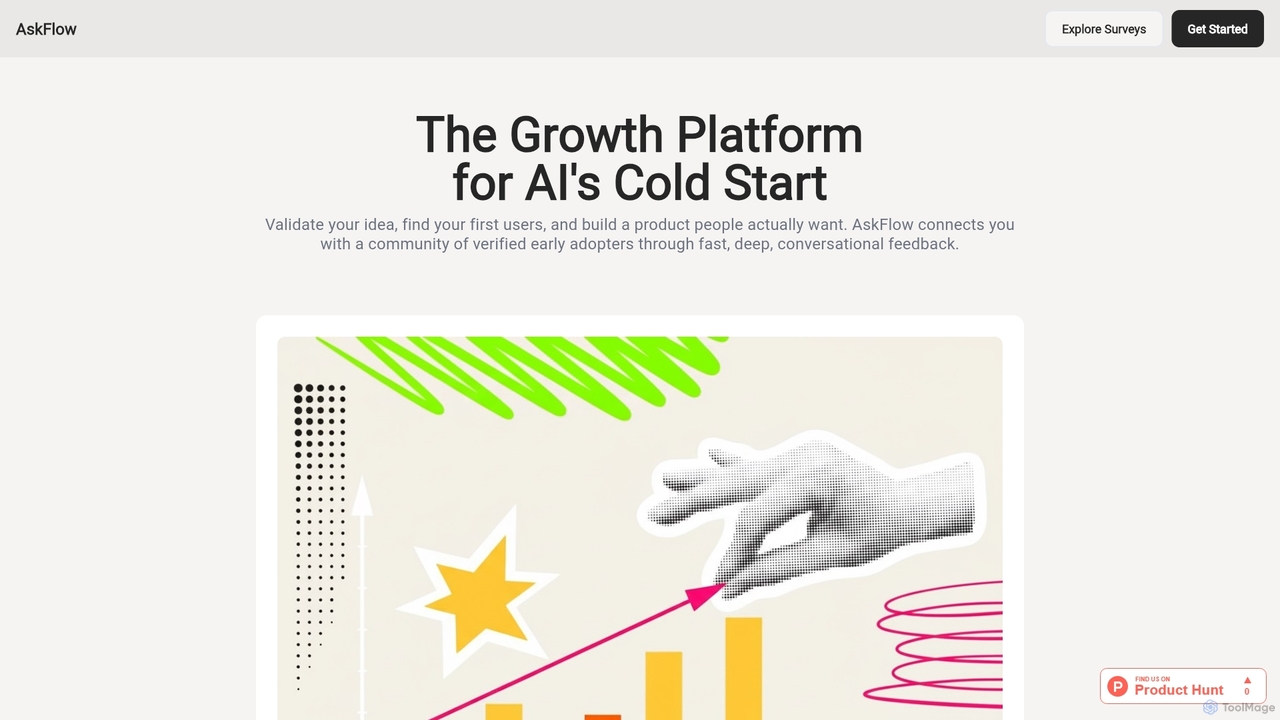
AskFlow is a growth platform designed for AI startups to accelerate product development and achieve product-market fit. It …
AskFlow is a growth platform designed for AI startups to accelerate product development and achieve product-market fit. It enables rapid idea validation through conversational surveys, connects innovators with a curated community of early adopters, and provides deep, actionable user insights to guide product roadmaps efficiently.
LanceQ
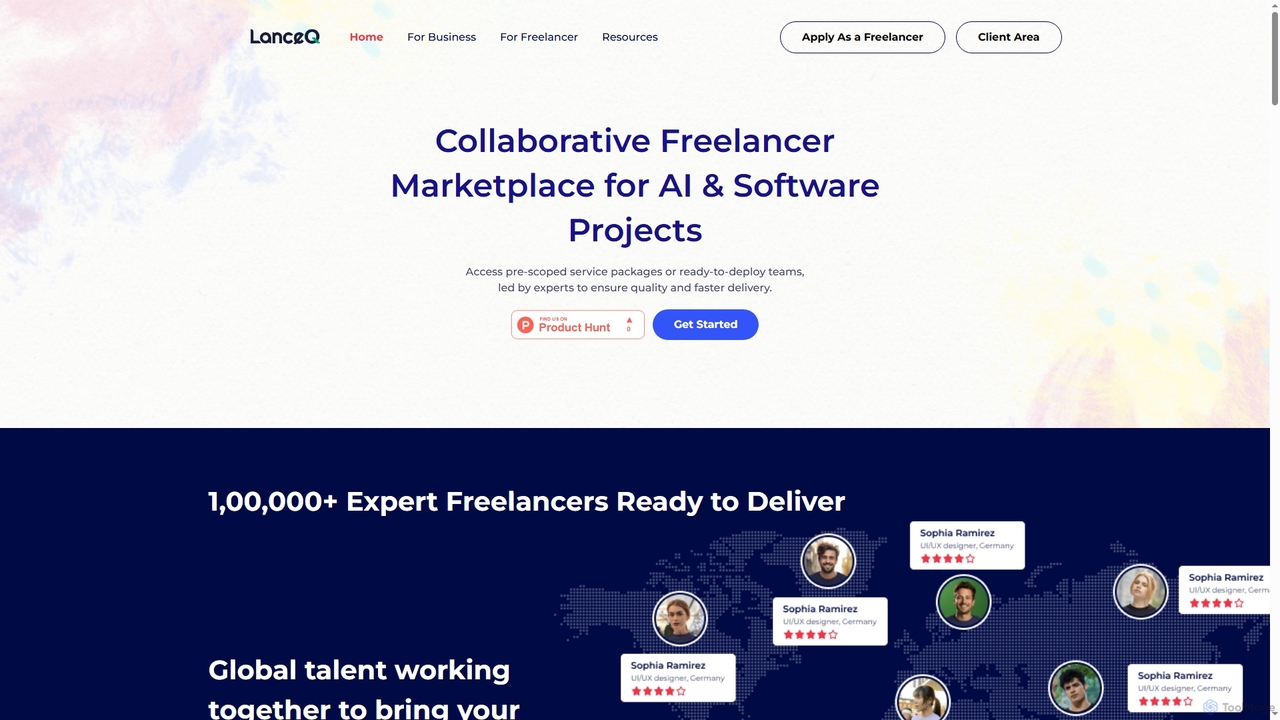
LanceQ is a collaborative freelancer marketplace specializing in AI and software projects. It connects businesses with a global …
LanceQ is a collaborative freelancer marketplace specializing in AI and software projects. It connects businesses with a global network of top-tier AI experts and developers, offering pre-scoped service packages, ready-to-deploy teams, and AI-driven talent matching for high-quality, efficient project delivery.
About Development
AI Development tools are a category of Artificial Intelligence tools designed to assist developers in building, deploying, and managing AI models and applications. These platforms and frameworks streamline the entire AI lifecycle, from data preparation and model training to deployment and monitoring. They empower developers to create intelligent solutions more efficiently, often by abstracting complex underlying AI infrastructure and providing intuitive interfaces or specialized SDKs.
Core Features
- Model Training & Optimization: Tools for training machine learning models, hyperparameter tuning, and performance optimization.
- Data Annotation & Preparation: Features for labeling datasets, data cleaning, and transformation to prepare for model input.
- Automated Machine Learning (AutoML): Automating repetitive tasks in the ML pipeline, such as feature engineering and model selection.
- Deployment & MLOps: Capabilities for deploying models to production, monitoring performance, and managing the model lifecycle.
- Code Generation & Assistance: AI-powered code suggestions, completion, and generating code snippets based on natural language prompts.
Applicable Scenarios
Software development teams leverage these tools to integrate AI-powered features into their applications, while data scientists and ML engineers streamline their model development workflows. Researchers also use them for experimenting with new AI architectures and algorithms, accelerating innovation across various industries.
How to Choose
When selecting an AI Development tool, consider its integration capabilities with your existing tech stack, including programming languages and cloud platforms. Evaluate the level of abstraction offered, from low-code/no-code options to deep customization. Assess scalability and performance for handling large datasets and complex models, and understand the cost model for compute, storage, and specialized features.
DevelopmentUse Cases
Automated Code Generation for Web Applications
A front-end developer uses an AI development tool to generate boilerplate code for UI components or API integrations based on design specifications. By simply providing high-level requirements or mockups, the tool can produce functional code snippets, significantly reducing manual coding time and accelerating the initial development phase of web applications.
Streamlining Machine Learning Model Training
A data scientist leverages an AutoML platform to automatically select the best algorithm and tune hyperparameters for a predictive model. This automation significantly accelerates the experimentation phase, allowing the data scientist to achieve higher model accuracy and deploy models faster without extensive manual configuration.
Efficient Data Annotation for Computer Vision
A computer vision engineer employs an AI-powered annotation tool to quickly label thousands of images for object detection tasks. The tool uses active learning to suggest labels and identify ambiguous cases, significantly reducing human effort, improving label consistency, and accelerating the creation of high-quality training datasets.
Deploying and Monitoring AI Models in Production
An MLOps engineer utilizes an AI development platform to deploy a trained recommendation model to a cloud environment. The platform provides automated monitoring for performance drift, data quality issues, and resource utilization, ensuring the model operates reliably and efficiently in a production setting with minimal manual intervention.
AI-Assisted Bug Detection and Code Refactoring
A software engineer integrates an AI development tool into their IDE that analyzes code in real-time. The tool suggests potential bugs, security vulnerabilities, and refactoring opportunities, providing actionable recommendations to improve code quality, maintainability, and adherence to best practices, thereby reducing debugging time.
Building Custom AI APIs for Business Logic
A backend developer uses an AI development framework to create a custom natural language processing (NLP) API for their internal business application. This allows for sentiment analysis of customer feedback or automated text summarization, enabling the business to integrate advanced AI capabilities into their workflows without requiring deep machine learning expertise.