Artificial Intelligence Best in category 1 results Financial Planning AI Tool

Popular AI tools in the Financial Planning field of Artificial Intelligence include Aidebttracker, etc., helping you quickly improve efficiency.

Aidebttracker

Aidebttracker

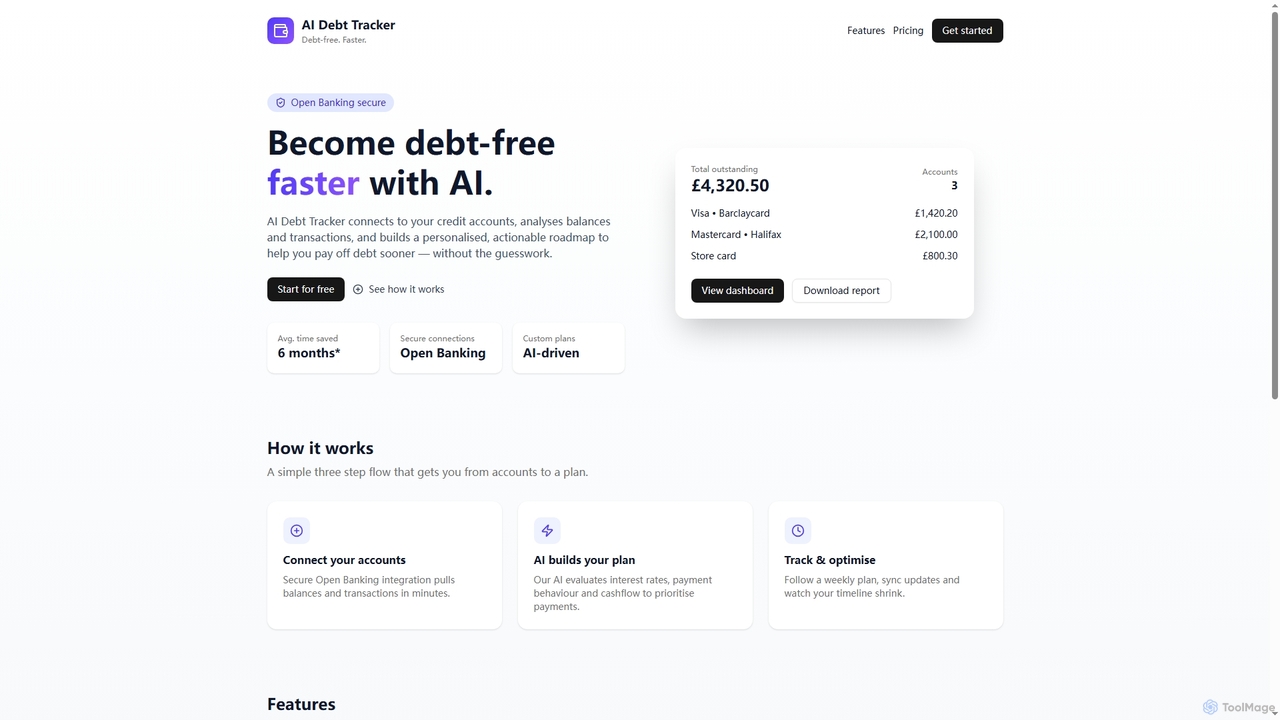
Aidebttracker is an AI-powered personal finance tool designed to help users manage and reduce debt effectively. It securely …

2.8K

About Financial Planning

Financial Planning AI tools are a specialized category within artificial intelligence that leverage advanced algorithms and machine learning to automate and enhance personal and business financial management. These tools analyze vast amounts of financial data, identify patterns, and generate personalized insights and recommendations for budgeting, investing, debt management, and retirement planning. They empower individuals and organizations to make informed financial decisions, optimize wealth growth, and achieve long-term financial goals with greater efficiency and accuracy.

Core Features

  • Automated Budgeting & Expense Tracking: Automatically categorizes transactions, tracks spending habits, and helps users adhere to financial plans.
  • Personalized Investment Advice: Provides data-driven recommendations for portfolio allocation, risk assessment, and investment opportunities tailored to individual goals.
  • Retirement & Goal Planning: Projects future financial scenarios, calculates savings needs, and outlines strategies to reach retirement and other life goals.
  • Debt Management & Optimization: Analyzes debt profiles and suggests optimal repayment strategies to minimize interest and accelerate debt freedom.
  • Financial Forecasting & Scenario Analysis: Simulates various economic conditions and personal financial changes to predict future outcomes and prepare for contingencies.

Use Cases

Individuals seeking to manage personal finances, small business owners planning cash flow, and wealth managers assisting clients all benefit from AI financial planning. For instance, a young professional can use these tools to set up an automated savings plan for a down payment, while a retiree might use them to optimize their withdrawal strategy and ensure long-term income stability.

How to Choose

When selecting a Financial Planning AI tool, consider its scope of features (e.g., budgeting, investing, tax planning), the level of personalization and automation offered, its integration capabilities with existing financial accounts, and the transparency of its algorithms. Evaluate the security measures for data protection, the clarity of its user interface, and the pricing model to ensure it aligns with your specific financial needs and technical comfort level.

Financial PlanningUse Cases

1

Automated Personal Budgeting and Expense Tracking

Individuals struggling with managing daily spending can utilize AI financial planning tools to automatically categorize transactions from linked bank accounts and credit cards. The AI identifies spending patterns, flags unusual expenses, and provides real-time insights into budget adherence, helping users maintain financial discipline and identify areas for savings without manual data entry.

2

AI-driven Investment Portfolio Optimization

Investors, from beginners to experienced, can leverage these tools to analyze market trends, assess risk tolerance, and receive personalized recommendations for optimizing their investment portfolios. The AI continuously monitors asset performance, suggests rebalancing strategies, and identifies potential investment opportunities or risks, aiming to maximize returns while aligning with individual financial goals.

3

Retirement Planning and Projection

Individuals planning for retirement can input their current savings, income, and desired retirement lifestyle into AI financial planning platforms. The AI projects future financial scenarios, calculates the necessary savings rate, and models various investment strategies to ensure sufficient funds for retirement. It can also adjust plans based on market changes or personal life events.

4

Debt Management and Repayment Strategy

Users with multiple debts (e.g., credit cards, student loans, mortgages) can employ AI tools to consolidate their debt information. The AI analyzes interest rates, balances, and payment terms to recommend the most efficient repayment strategies, such as snowball or avalanche methods, helping users reduce interest paid and accelerate their path to becoming debt-free.

5

Tax Planning and Optimization

Small business owners and individuals can use AI financial planning tools to identify potential tax deductions, optimize tax-advantaged investments, and forecast tax liabilities throughout the year. The AI can analyze income streams and expenses to suggest strategies for minimizing tax burdens and ensuring compliance, simplifying complex tax preparation processes.

6

Estate Planning and Wealth Transfer Guidance

High-net-worth individuals or families can utilize advanced AI financial planning tools to assist with complex estate planning. While not replacing legal advice, the AI can help organize assets, model potential inheritance scenarios, and provide insights into strategies for wealth transfer, charitable giving, and trust management, ensuring assets are distributed according to wishes.

Financial PlanningFrequently Asked Questions