ToolMage
Sign in

Best 3 Large Language Models AI tools for Artificial Intelligence

Popular Large Language Models AI tools in Artificial Intelligence include Chatbotsphere, TwoTrim, and Boule, helping you work more efficiently.

Boule
Freemium

Boule

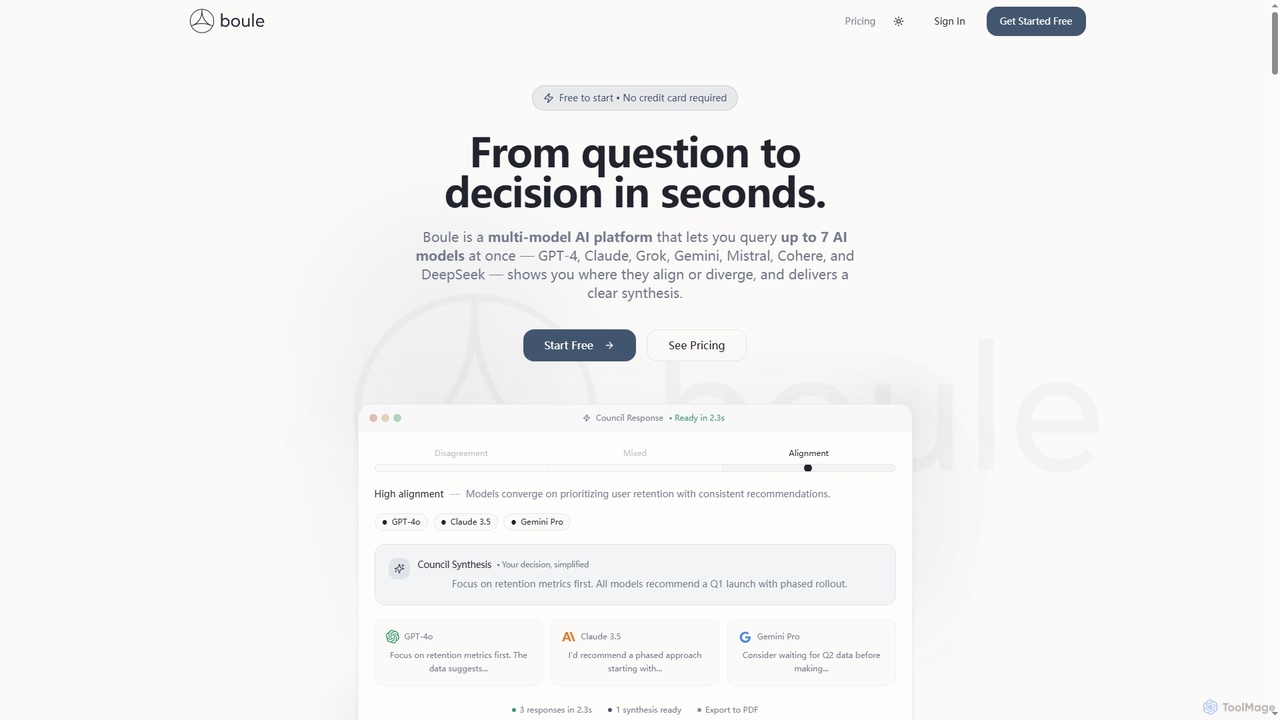
Boule is an innovative multi-model AI platform that queries up to seven leading AI models simultaneously, including GPT-4o, Claude 3.5, and Gemini Pro. It provides synthesized insights, highlights model alignment or divergence, and streamlines decision-making, offering clarity in seconds.

Large Language Models
Visits 7.3KFavorites 38Likes 43
TwoTrim
Paid

TwoTrim

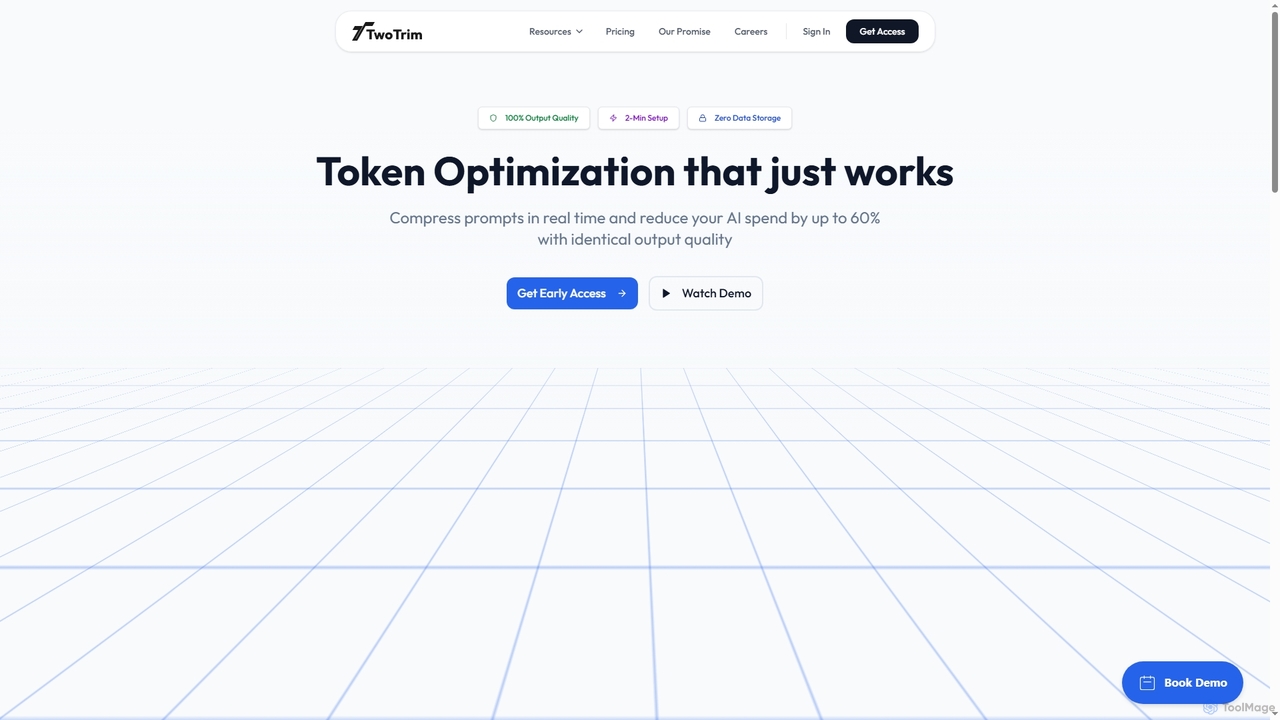
TwoTrim is an AI token optimization platform that intelligently compresses large language model prompts in real-time, reducing AI API costs by up to 60% while guaranteeing 100% output quality. It offers a secure, stateless, and transparent solution for enterprises.

Large Language Models
Visits 7.3KFavorites 80Likes 88
Chatbotsphere

Chatbotsphere

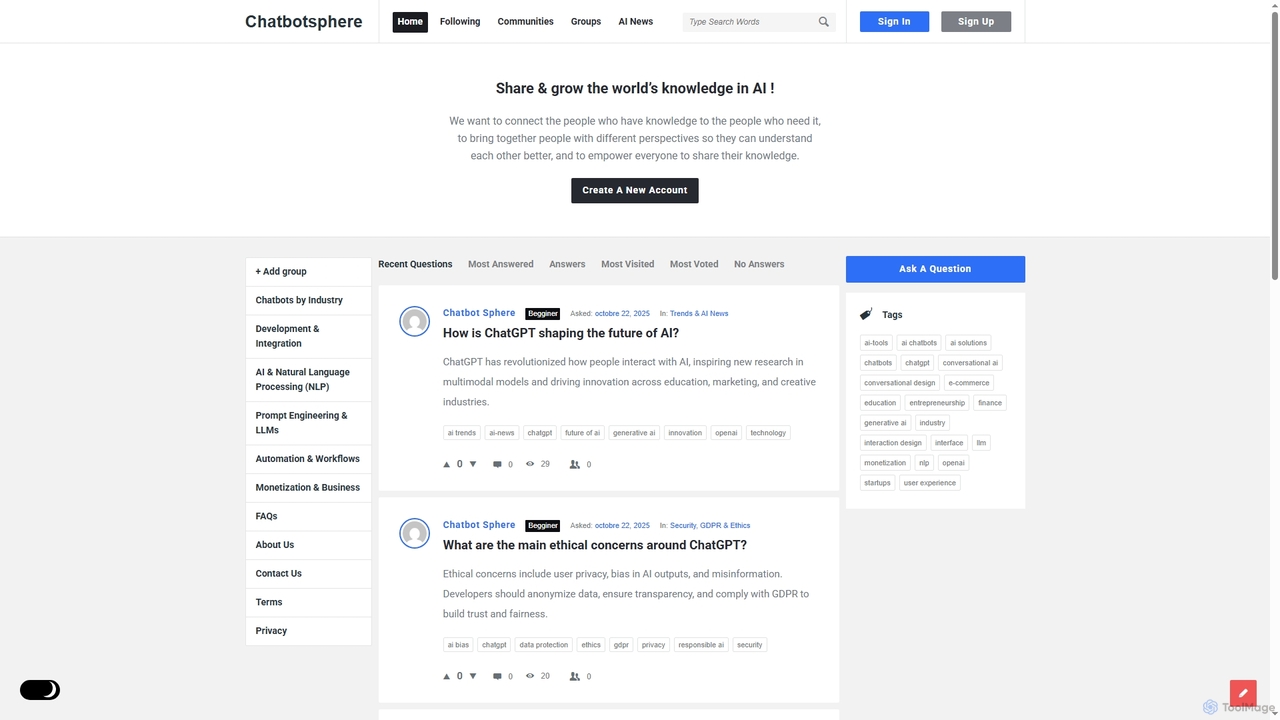
Chatbotsphere is a dynamic online community and knowledge-sharing platform dedicated to artificial intelligence, particularly focusing on chatbots, natural language processing, and large language models. It connects experts with learners, fostering discussions, sharing insights, and empowering users to explore the latest advancements, ethical considerations, and practical applications of AI in various industries.

Large Language Models
Visits 7.7KFavorites 146Likes 138

About Large Language Models

Large Language Models (LLMs) are a type of artificial intelligence model designed to understand, generate, and process human language at a massive scale. Trained on vast datasets of text and code, they use deep learning architectures like Transformers to recognize patterns, context, and nuances in language. This enables them to perform a wide range of tasks, from answering complex questions and writing coherent essays to generating software code. Their key strength lies in their ability to perform in-context learning, adapting to new tasks with minimal examples.

Core Features

  • Natural Language Understanding (NLU): Accurately interpret user intent, sentiment, and context from text inputs.
  • Text Generation: Create human-like text for articles, emails, summaries, and creative writing.
  • In-Context Learning: Adapt to new tasks and formats based on a few examples provided in the prompt.
  • Code Generation & Interpretation: Write, debug, and explain code in various programming languages.
  • Multilingual Capabilities: Process and translate text across a wide array of different languages.

Use Cases

LLMs are utilized across various sectors. In software development, they act as coding assistants to accelerate development cycles. Content marketing teams use them for brainstorming, drafting articles, and creating social media posts. In customer service, they power sophisticated chatbots that can handle complex user queries beyond simple FAQs. Researchers and analysts leverage them to summarize dense documents and extract key insights from large volumes of data.

How to Choose

When selecting a Large Language Model, consider several factors. Evaluate the model's performance on benchmarks relevant to your specific tasks, such as reasoning, coding, or writing. Analyze the API costs, including pricing per token and rate limits. Assess the ease of integration and the quality of documentation. For sensitive applications, data privacy policies and the ability to fine-tune the model on your own private data are critical considerations.

Large Language Models use cases

1

Automated Content Creation for Marketing

A content marketer needs to produce a series of blog posts and social media updates for a new product launch. Instead of starting from scratch, they use a Large Language Model. By providing a prompt with the product details, target audience, and desired tone, the LLM generates multiple draft articles, headlines, and tweets. The marketer then refines and edits this generated content, reducing the initial drafting time by over 70%. This allows them to focus on strategy and promotion rather than spending hours on basic writing tasks.

2

Intelligent Code Assistant for Developers

A software developer is working on a complex algorithm and is stuck on a specific function. They use an LLM integrated into their code editor. By writing a comment describing the function's purpose (e.g., "function to sort a list of objects by date"), the LLM instantly generates the complete, syntactically correct code snippet. It can also be used to explain unfamiliar code, translate code between languages (e.g., Python to JavaScript), or write unit tests. This significantly speeds up the development process and helps developers learn new patterns and languages more effectively.

3

Advanced Customer Support Chatbot

A company wants to upgrade its rule-based customer support chatbot. By implementing a solution powered by a Large Language Model, the new chatbot can understand nuanced, open-ended customer questions instead of relying on keyword matching. It can access a knowledge base to provide detailed, context-aware answers about products, policies, and troubleshooting steps. The LLM allows the chatbot to maintain conversational context, handle follow-up questions, and even detect customer frustration, escalating to a human agent when necessary. This improves first-contact resolution rates and enhances overall customer satisfaction.

4

Research and Data Summarization

A financial analyst needs to quickly understand the key takeaways from dozens of lengthy market research reports and earnings calls transcripts. They use an LLM-powered tool to process these documents. The analyst can ask specific questions like "What are the main risks mentioned for Q4?" or request a concise summary of each document. The LLM extracts relevant information, identifies trends across multiple sources, and presents the findings in a structured, easy-to-digest format. This process saves hours of manual reading and allows the analyst to make faster, more informed decisions.

5

Personalized Educational Tutoring

An educational platform integrates an LLM to offer personalized tutoring to students. A student struggling with algebra can ask the LLM-powered tutor for explanations of concepts like 'quadratic equations' in simple terms. The tutor can generate practice problems tailored to the student's skill level, provide step-by-step solutions, and offer hints without giving away the answer. Unlike a static textbook, the LLM can adapt its teaching style, answer follow-up questions, and create a dynamic, interactive learning experience that helps students grasp difficult subjects at their own pace.

6

Creative Writing and Brainstorming Partner

A novelist is experiencing writer's block while developing a new character. They use an LLM as a brainstorming partner. They describe the character's basic traits and situation, and then ask the model questions like, "What are some potential backstories for a detective who is afraid of the dark?" or "Suggest five plot twists involving a stolen artifact." The LLM provides a variety of creative and unexpected ideas, helping the writer overcome their block and explore new narrative directions. It acts as a creative catalyst, generating possibilities that the writer can then develop and integrate into their story.

Large Language Models FAQ

What are Large Language Models (LLMs)?

Large Language Models (LLMs) are advanced artificial intelligence systems trained on massive amounts of text and code data. Their primary function is to understand, process, and generate human-like language. Unlike simpler AI, LLMs use complex neural networks, such as the Transformer architecture, to grasp context, nuance, grammar, and even reasoning. This allows them to perform diverse tasks like writing articles, generating code, answering questions conversationally, and summarizing long documents. Their 'large' scale refers to both the immense dataset they are trained on and the billions of parameters in their neural network, which enables their powerful capabilities.

How do I choose the right Large Language Model for my project?

Choosing the right LLM depends on your specific needs. Consider these key factors:

  • Task Specialization: Some models excel at creative writing, while others are optimized for code generation or factual question-answering. Match the model's strengths to your primary use case.
  • Performance and Size: Larger models are generally more capable but can be slower and more expensive. Evaluate if a smaller, faster model is sufficient for your needs.
  • Cost: Analyze the pricing model, which is often based on the number of tokens (words or parts of words) processed. Factor in both input and output costs for your expected usage.
  • API and Integration: Check for well-documented APIs, client libraries in your preferred programming language, and ease of integration into your existing workflow.
  • Fine-tuning and Customization: If you need the model to learn specific knowledge or a certain style, verify if it supports fine-tuning with your own data.
What is the difference between a Large Language Model and a traditional machine learning model?

The primary difference lies in their scope and flexibility. Traditional machine learning models are typically trained for one specific task, such as sentiment analysis or spam detection. They require labeled data for that single task and do not generalize well to others. In contrast, Large Language Models are trained on a vast, general dataset, allowing them to perform a wide array of language tasks without task-specific training. They can adapt to new tasks on the fly through 'in-context learning' by simply understanding a user's prompt. This makes LLMs far more versatile and powerful for general-purpose language understanding and generation.

What are the main capabilities of Large Language Models?

Large Language Models have a diverse set of capabilities centered around processing and generating text. Key functions include:

  • Text Generation: Writing original content, from emails and reports to poetry and scripts.
  • Summarization: Condensing long articles, research papers, or conversations into key points.
  • Question Answering: Providing direct answers to factual questions or explaining complex topics.
  • Translation: Translating text between dozens of languages with high accuracy.
  • Code Generation: Writing code snippets, functions, or even entire programs based on natural language descriptions.
  • Classification and Analysis: Performing tasks like sentiment analysis, topic classification, and identifying named entities in text.
Who can benefit from using Large Language Models?

A wide range of professionals and industries can benefit from LLMs. Developers use them to write and debug code faster. Marketers and writers leverage them for content creation, brainstorming, and SEO optimization. Customer support teams build more intelligent and helpful chatbots. Researchers and students can accelerate their work by summarizing dense literature and analyzing text data. Business analysts use them to extract insights from reports and customer feedback. Essentially, anyone who works extensively with text, code, or information can find valuable applications for Large Language Models to enhance productivity and creativity.