ToolMage
Sign in

Best 1 Music Production AI tools for Artificial Intelligence

Popular Music Production AI tools in Artificial Intelligence include DropKit, helping you work more efficiently.

DropKit
Freemium

DropKit

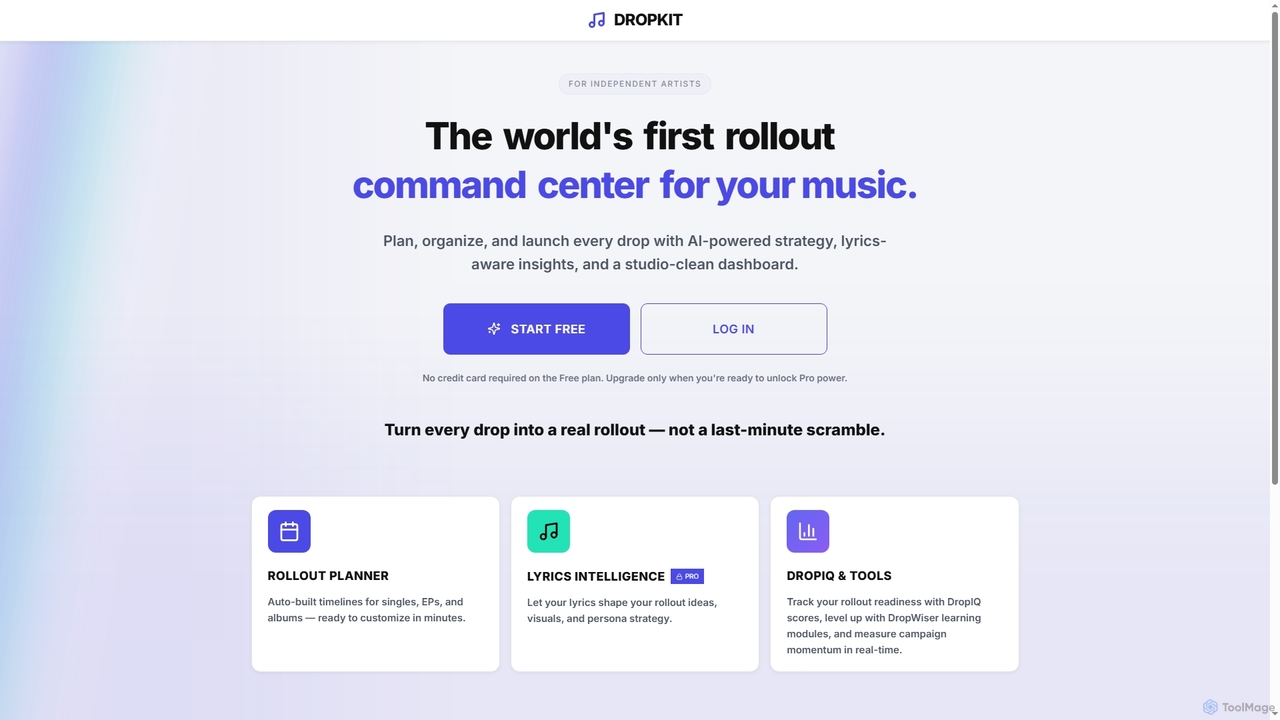
DropKit is the world's first AI-powered command center designed for independent artists to plan, organize, and launch their music releases. It offers strategic timelines, lyrics-aware insights, and real-time tracking to transform music drops into professional rollouts.

Music Production
Visits 6KFavorites 142Likes 138

About Music Production

AI Music Production tools are a category of artificial intelligence applications designed to assist and automate various stages of music creation. Leveraging machine learning and generative AI, these tools can compose melodies, generate harmonies, refine audio mixes, and even master tracks. They empower musicians, producers, and content creators to streamline workflows, overcome creative blocks, and achieve professional-sounding results with unprecedented efficiency.

Core Features

  • AI Composition: Generates original melodies, harmonies, rhythms, and full instrumental pieces based on user input or style preferences.
  • Smart Mixing & Mastering: Analyzes audio tracks to suggest optimal levels, EQ, compression, and applies professional mastering effects automatically.
  • Vocal Synthesis & Processing: Creates realistic synthetic vocals, corrects pitch and timing, and applies effects to existing vocal recordings.
  • Sound Design & Effects: Generates unique sound effects, ambient textures, and instrumental timbres for various creative projects.

Applicable Scenarios

Independent artists use these tools to quickly prototype song ideas or generate backing tracks. Film and game composers leverage AI for creating adaptive soundtracks or generating diverse sound effects. Content creators, such as YouTubers and podcasters, utilize AI to produce royalty-free background music tailored to their video or audio content, saving time and licensing costs.

How to Choose

When selecting AI music production tools, consider your primary use case (e.g., composition, mixing, vocal processing) and the genres you work with, as some tools specialize. Evaluate integration capabilities with your existing Digital Audio Workstation (DAW) and the level of creative control offered. Also, assess the pricing model, the quality of AI-generated output, and the community support available for learning and troubleshooting.

Music Production use cases

1

Automated Background Music for Content Creators

Content creators, including YouTubers, podcasters, and video editors, often need high-quality, royalty-free background music. AI music production tools allow them to input desired mood, genre, and duration, generating unique tracks instantly. This eliminates the need for extensive music libraries or expensive licensing, significantly speeding up post-production and ensuring a consistent audio aesthetic for their content.

2

AI-Assisted Songwriting for Independent Musicians

Independent musicians and songwriters can utilize AI tools to overcome creative blocks or explore new musical ideas. By providing a basic melody, chord progression, or even just a text prompt, the AI can generate variations, add complementary harmonies, suggest drum patterns, or even complete entire instrumental sections. This acts as a powerful co-creator, accelerating the songwriting process and expanding creative possibilities.

3

Professional Mixing & Mastering for Home Studio Producers

Home studio producers often lack the expertise or expensive equipment for professional-grade mixing and mastering. AI tools can analyze individual tracks and the overall mix, automatically adjusting levels, equalization, compression, and spatial effects to achieve a balanced and polished sound. For mastering, AI can optimize loudness, dynamics, and stereo imaging, making tracks ready for distribution across platforms.

4

Realistic Vocal Synthesis and Correction for Demos

For artists creating demos or producers needing placeholder vocals, AI vocal synthesis can generate realistic singing or spoken parts from text. Additionally, AI pitch correction and timing adjustment tools can refine existing vocal recordings, fixing imperfections with precision and naturalness. This saves studio time and allows for rapid iteration on vocal arrangements without needing a singer present.

5

Dynamic Sound Design for Game Developers

Game developers require a vast array of sound effects and adaptive music for immersive experiences. AI music production tools can generate unique environmental sounds, creature noises, UI feedback sounds, or even entire adaptive soundtracks that respond to in-game events. This significantly reduces the manual effort in sound design, providing a rich and dynamic audio landscape for games.

6

Personalized Practice & Backing Tracks for Instrumentalists

Instrumentalists looking to practice or jam can use AI tools to generate custom backing tracks. Users can specify genre, tempo, key, and instrumentation, and the AI will create a full band accompaniment. This provides a versatile and endless source of practice material, allowing musicians to hone their improvisation skills, learn new scales, or simply enjoy playing along to personalized music.

Music Production FAQ

What are AI Music Production tools?

AI Music Production tools are software applications that use artificial intelligence, primarily machine learning and generative algorithms, to assist in creating, mixing, and mastering music. They can automate tasks like composing melodies, generating drum patterns, refining audio levels, and applying mastering effects, acting as a powerful assistant for musicians, producers, and content creators.

How do AI music production tools differ from traditional DAWs?

Traditional Digital Audio Workstations (DAWs) provide a comprehensive environment for manual recording, editing, mixing, and arranging music. AI music production tools, while often integrating with DAWs, focus on automation and generative capabilities. They can create content (melodies, beats) or optimize existing content (mixes, masters) with minimal human input, whereas DAWs require direct manual control over every aspect.

Can AI replace human creativity in music production?

No, AI is not designed to replace human creativity but rather to augment it. AI music production tools serve as powerful assistants, offering new ideas, automating tedious tasks, and providing technical refinement. They can help overcome creative blocks, explore new sonic territories, and accelerate workflows, allowing human artists to focus more on artistic vision and less on repetitive manual processes.

What specific tasks can AI perform in music production?

AI can perform a wide range of tasks in music production. This includes generating original musical compositions (melodies, harmonies, rhythms), assisting with mixing (auto-EQ, compression, level balancing), mastering tracks for optimal loudness and clarity, synthesizing realistic vocals from text, correcting pitch and timing in recordings, and creating unique sound effects or ambient textures for various projects.

How to choose the right AI music production software?

To choose the right AI music production software, consider your primary needs: are you focused on composition, mixing, mastering, or vocal processing? Evaluate the tool's compatibility with your preferred musical genres and its integration with your existing Digital Audio Workstation (DAW). Look into the level of creative control it offers, its pricing model, and the quality of its AI-generated output. Reading reviews and trying free trials can also be very helpful.

Who benefits most from AI music production tools?

A wide range of individuals and professionals can benefit from AI music production tools. This includes independent musicians and songwriters looking for creative assistance or efficient demo production, home studio producers seeking professional mixing and mastering results, content creators (YouTubers, podcasters) needing royalty-free background music, game developers requiring dynamic sound design, and even music educators or students exploring new ways to learn and create music.