ToolMage
Sign in

Best 1 Personalized Learning AI tools for Artificial Intelligence

Popular Personalized Learning AI tools in Artificial Intelligence include TechieLearns, helping you work more efficiently.

TechieLearns
Free

TechieLearns

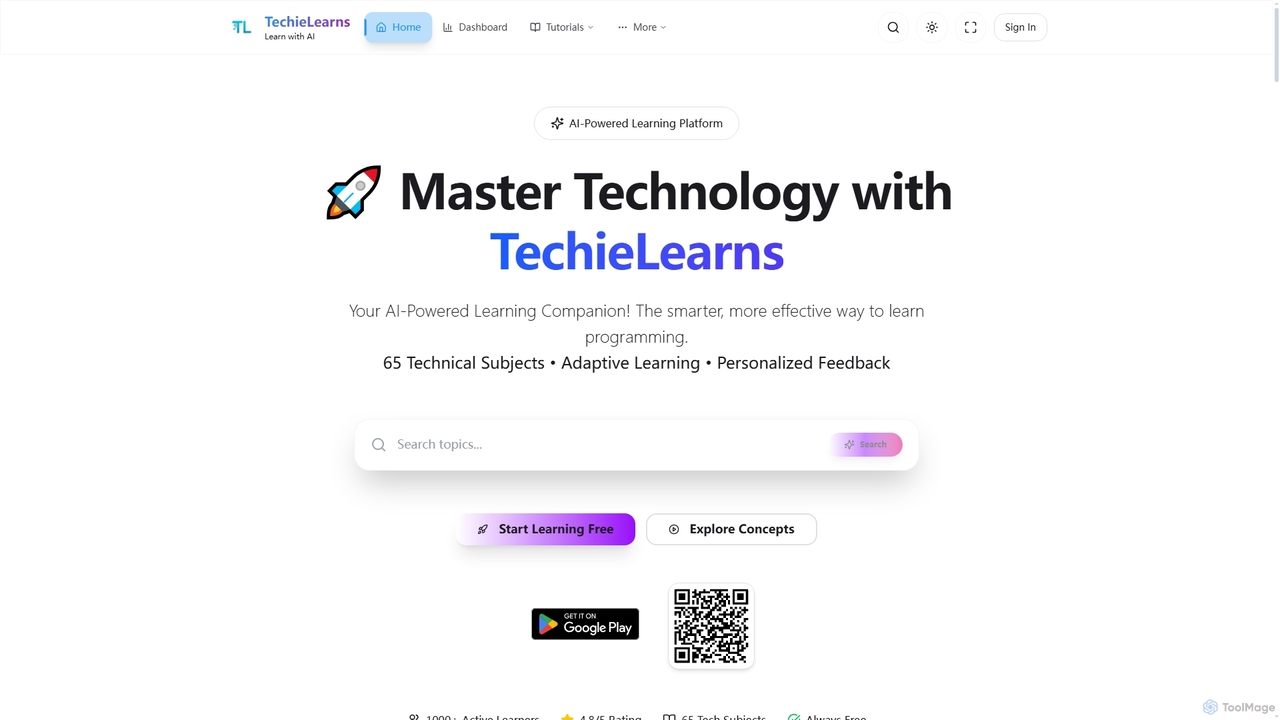
TechieLearns is an AI-powered learning platform designed to help individuals master programming and various technical subjects through adaptive lessons, interactive coding practice, and personalized feedback. It offers a comprehensive, engaging, and always-free learning experience for all skill levels.

Personalized Learning
Visits 3.4KFavorites 109Likes 118

About Personalized Learning

Personalized Learning tools are AI-powered platforms designed to adapt educational content and teaching methods to individual student needs, preferences, and learning paces. Leveraging advanced artificial intelligence, these tools analyze learner data to create highly customized educational paths, ensuring more effective and engaging learning experiences. They aim to optimize knowledge acquisition and skill development by providing targeted resources and real-time feedback, moving beyond one-size-fits-all education.

Core Features

  • Adaptive Content Delivery: Dynamically adjusts learning materials, difficulty levels, and examples based on student performance and comprehension.
  • Intelligent Assessment: Provides continuous, formative assessments that identify strengths and weaknesses, offering immediate, personalized feedback.
  • Learning Path Customization: Generates unique learning sequences and recommendations tailored to individual goals, prior knowledge, and learning styles.
  • Performance Analytics: Offers detailed insights into student progress, engagement, and areas requiring further attention for educators and learners.
  • Interactive Tutoring: Provides AI-driven virtual tutors that offer explanations, answer questions, and guide students through complex topics.

Use Cases

These tools are invaluable for educators seeking to differentiate instruction, students requiring tailored support, and corporate trainers aiming for efficient skill development. They are used in K-12 education to address diverse learning needs, in higher education for self-paced courses, and in professional development for targeted upskilling, ensuring every learner receives the most relevant and effective educational experience.

How to Choose

When selecting a Personalized Learning tool, consider its adaptive capabilities (how deeply it customizes content), the breadth of its subject matter coverage, its integration with existing learning management systems (LMS), and the quality of its data analytics and reporting features. Evaluate the user interface for both students and educators, the level of interactive support offered, and the pricing model to ensure it aligns with your educational goals and budget.

Featured tool rankings

Personalized Learning use cases

1

Enhancing K-12 Student Engagement

For elementary and secondary school teachers, personalized learning tools can identify individual student learning gaps in subjects like math or reading. By providing adaptive exercises and interactive lessons tailored to each student's proficiency level, these tools keep learners challenged but not overwhelmed, significantly boosting engagement and improving academic outcomes in diverse classrooms.

2

Accelerating Corporate Skill Development

HR and training departments in corporations utilize personalized learning platforms to rapidly upskill employees in new technologies or compliance requirements. The AI assesses an employee's current knowledge and job role, then curates a custom learning path with relevant modules, simulations, and assessments, ensuring efficient and targeted professional development that directly impacts productivity.

3

Supporting University Self-Paced Courses

University students enrolled in online or self-paced courses benefit from personalized learning tools that act as virtual study guides. The AI tracks their progress, recommends additional resources based on their performance on quizzes, and provides targeted explanations for difficult concepts, allowing students to master complex subjects at their own pace and schedule.

4

Personalizing Language Acquisition

Individuals learning a new language can use personalized learning tools to receive custom practice exercises, vocabulary reviews, and conversational prompts. The AI adapts to their proficiency level, identifies areas for improvement (e.g., grammar, pronunciation), and provides immediate feedback, making the language learning process more efficient and tailored to their specific needs.

5

Assisting Students with Learning Differences

Parents and special education teachers employ personalized learning tools to support students with dyslexia, ADHD, or other learning differences. These tools can adjust presentation formats, provide multi-modal content, break down complex tasks into smaller steps, and offer frequent, positive reinforcement, creating an accessible and effective learning environment.

6

Optimizing Test Preparation Strategies

Students preparing for standardized tests (e.g., SAT, GRE, professional certifications) leverage personalized learning platforms to identify their weakest areas. The AI analyzes practice test results, then generates a customized study plan focusing on specific topics and question types where improvement is most needed, maximizing study efficiency and potential scores.

Personalized Learning FAQ

What are Personalized Learning tools?

Personalized Learning tools are AI-driven platforms that customize educational content and experiences for individual learners. They use algorithms to analyze student data, such as performance, learning style, and preferences, to deliver adaptive materials, tailored feedback, and unique learning paths, moving beyond traditional one-size-fits-all education.

How do Personalized Learning tools differ from traditional e-learning platforms?

Traditional e-learning platforms typically offer static content and a fixed curriculum for all users. In contrast, Personalized Learning tools, powered by AI, dynamically adapt content, difficulty, and pace based on individual student interactions and progress. This adaptive nature provides a far more engaging and effective learning experience tailored to specific needs, unlike the generic approach of traditional platforms.

What are the key benefits of using Personalized Learning tools?

The primary benefits include increased student engagement and motivation due to relevant content, improved academic outcomes through targeted support, and enhanced efficiency in learning by focusing on individual needs. These tools also provide valuable data insights for educators, help address diverse learning styles, and enable self-paced mastery of subjects.

How do Personalized Learning tools adapt to individual students?

Personalized Learning tools adapt by continuously collecting and analyzing data on a student's performance, interactions, and progress. Using machine learning algorithms, they identify knowledge gaps, preferred learning modalities, and areas of strength. Based on this analysis, the tools then dynamically adjust the content, recommend specific resources, modify the difficulty level, or suggest alternative learning paths in real-time.

Who can benefit most from Personalized Learning tools?

A wide range of individuals and organizations can benefit. This includes K-12 students with diverse learning needs, university students in self-paced or online courses, professionals seeking targeted upskilling, and individuals learning new languages or preparing for exams. Educators and corporate trainers also benefit by gaining insights into learner progress and being able to deliver more effective, individualized instruction.