
ToolMage
Sign in

Best 1 Text Summarization AI tools for Artificial Intelligence

Popular Text Summarization AI tools in Artificial Intelligence include SignuluOne, helping you work more efficiently.

SignuluOne
Paid

SignuluOne

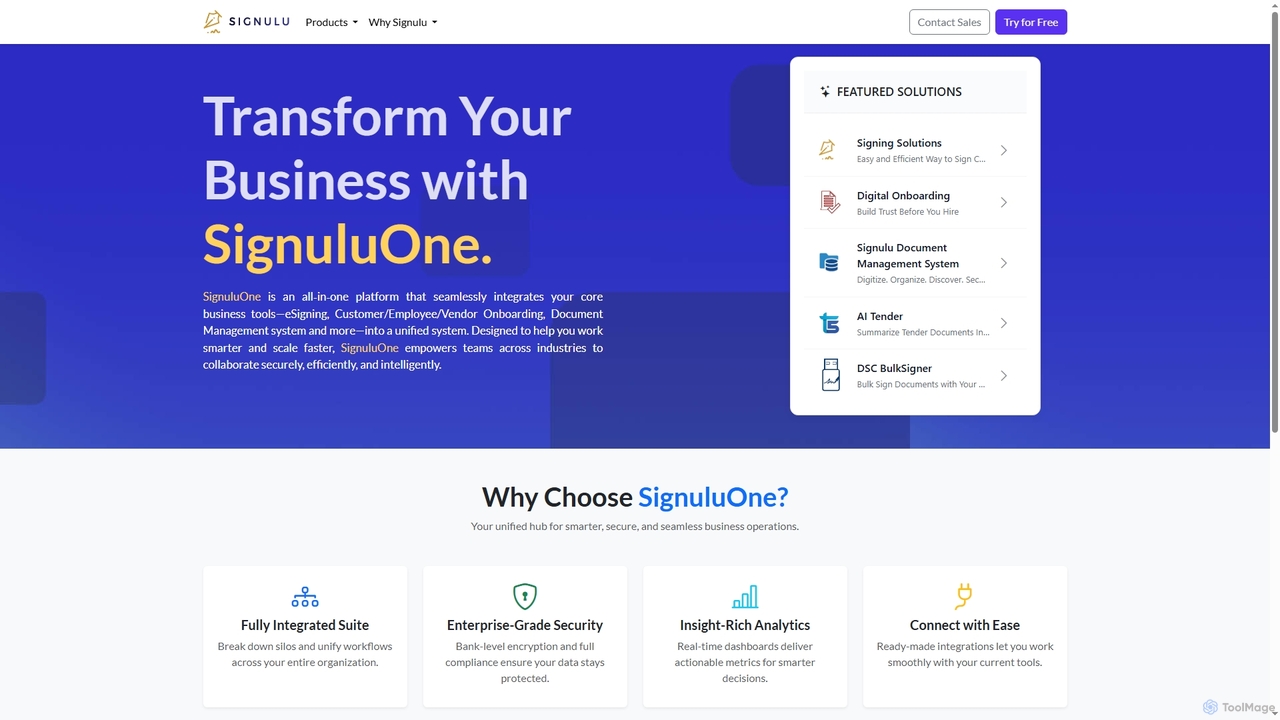
SignuluOne is an all-in-one platform designed to transform business operations by integrating core tools like eSigning, customer/employee/vendor onboarding, and document management into a unified system. It empowers teams across various industries to collaborate securely, efficiently, and intelligently, helping businesses work smarter and scale faster.

Text Summarization
Visits 3.5KFavorites 96Likes 113

About Text Summarization

Text Summarization tools are AI-powered applications that automatically condense lengthy text into concise, coherent summaries. They utilize advanced Natural Language Processing (NLP) to identify key information, distinguishing between extractive methods that pull key sentences and abstractive methods that generate new, summary sentences. This allows users to quickly understand the core message of articles, reports, or documents without reading them in their entirety. These tools are particularly valuable for professionals, researchers, and students who need to process large volumes of information efficiently.

Core Features

  • Summarization Methods: Offers either extractive (selecting key sentences) or abstractive (generating new summary sentences) summarization to suit different needs.
  • Customizable Length: Allows users to define the desired length of the summary, from a single sentence to a multi-paragraph overview.
  • Key Point Extraction: Identifies and lists the most critical points or keywords from the source text for a quick glance.
  • Multi-Format Input: Supports various input methods, including pasting text, uploading documents (PDF, DOCX), or providing a URL.

Use Cases

Text Summarization tools are widely used in academia for literature reviews, in business for analyzing market reports and competitor news, and in content creation for repurposing long-form articles into social media posts. Legal professionals also use them to quickly review case files and contracts.

How to Choose

When selecting a tool, consider the summarization quality and its ability to retain context. Evaluate the supported document types and languages. For developers or businesses, the availability of an API for integration is a key factor. Also, compare the user interface's simplicity and the pricing model to ensure it aligns with your usage frequency and budget.

Featured tool rankings

Text Summarization use cases

1

Accelerate Academic Literature Reviews

For postgraduate students and researchers, reviewing dozens of academic papers is a time-consuming but essential task. A text summarization tool can significantly speed up this process. By inputting the URL or PDF of a research paper, the tool generates a concise summary of the abstract, methodology, and conclusions. This allows the researcher to quickly assess the relevance of hundreds of papers in a fraction of the time, identifying the most critical studies for their work without getting bogged down in less relevant details.

2

Create Concise Business and Market Reports

Business analysts and strategists constantly monitor industry news, competitor announcements, and market research reports. Instead of manually reading and synthesizing this information, they can use a summarization tool to process multiple sources quickly. By feeding articles and reports into the tool, they can extract key trends, statistics, and strategic insights. This allows for the rapid creation of daily or weekly intelligence briefings for executives, ensuring decision-makers stay informed without information overload.

3

Generate Meeting Summaries from Transcripts

After a long meeting, creating accurate minutes can be tedious. Project managers and team leads can use a text summarizer to automate this task. By feeding a raw meeting transcript into the tool, it can identify and extract key discussion points, decisions made, and action items assigned. The output serves as a reliable first draft for meeting minutes, saving significant administrative time and ensuring that important outcomes are captured and communicated clearly to all stakeholders.

4

Repurpose Content for Social Media Marketing

Content marketers often need to adapt a single long-form piece, like a blog post or whitepaper, for multiple platforms. A text summarizer is ideal for this. A social media manager can paste the text of a 2,000-word article and instantly generate several summary variations: a 280-character tweet, a concise LinkedIn post, and a slightly longer Facebook update. This streamlines the content creation workflow, ensures messaging consistency across channels, and maximizes the reach of a single piece of content with minimal effort.

5

Efficiently Review Legal Documents and Contracts

Legal professionals, such as lawyers and paralegals, often face mountains of text in the form of contracts, case law, and depositions. A text summarization tool can provide a high-level overview of these lengthy documents. By quickly generating a summary, a legal professional can grasp the key clauses, arguments, and precedents involved in a case. This doesn't replace detailed legal analysis but serves as a powerful preliminary review tool, helping to prioritize documents and focus attention on the most critical sections, saving hours of reading time.

6

Analyze Customer Feedback and Support Tickets

Product managers and customer support leads need to understand user sentiment from vast amounts of feedback, such as reviews, survey responses, and support tickets. Manually reading through thousands of entries is impractical. A text summarization tool can be used to process this unstructured data in bulk. By summarizing batches of feedback, managers can quickly identify recurring themes, common complaints, and popular feature requests, enabling data-driven decisions for product improvement and better customer service strategies.

Text Summarization FAQ

What are AI Text Summarization tools?

AI Text Summarization tools are software applications that use artificial intelligence, specifically Natural Language Processing (NLP), to condense a long piece of text into a shorter version. They work by identifying the most important information and presenting it in a concise and readable format. These tools can save significant time for anyone who needs to quickly understand the essence of lengthy documents, articles, or reports without reading them word-for-word.

What is the difference between extractive and abstractive summarization?

Extractive and abstractive are the two primary methods of AI text summarization.

  • Extractive Summarization: This method works by identifying and selecting the most important sentences or phrases directly from the original text and combining them to form a summary. It's like using a highlighter to pick out key points. The summary consists of original text only.
  • Abstractive Summarization: This more advanced method involves understanding the context of the source text and then generating new, original sentences to capture the main ideas. It's more like how a human would write a summary, often resulting in more fluent and natural-sounding text.

How do I choose the right text summarization tool?

Choosing the right tool depends on your specific needs. Consider the following factors:

  • Accuracy and Coherence: Test the tool with a sample text to see if the summary accurately reflects the main points and is easy to read.
  • Input Formats: Check if it supports the formats you use, such as direct text input, URLs, PDFs, or DOCX files.
  • Customization: Look for options to control the summary length or style (e.g., bullet points vs. paragraph).
  • Integration: If you need to automate workflows, check for API access or browser extensions.
  • Cost: Compare free versions and paid plans to find one that fits your budget and usage volume.

Are text summarization tools accurate?

The accuracy of text summarization tools has improved significantly with advancements in AI. For well-structured documents like news articles or scientific papers, modern tools can produce highly accurate and relevant summaries. However, accuracy can vary depending on the complexity and clarity of the source text. For creative, ambiguous, or poorly written content, the summary might miss some nuance. It's generally a good practice to use the summary as a starting point or a way to quickly assess a document, rather than as a complete replacement for critical reading.

Who can benefit from using a text summarizer?

A wide range of individuals and professionals can benefit from text summarizers. Key users include:

  • Students and Researchers: To quickly review academic papers and articles for literature reviews.
  • Business Professionals: To stay updated on industry news, analyze reports, and summarize meeting notes.
  • Content Creators and Marketers: To repurpose long-form content into social media posts and newsletters.
  • Legal Professionals: To get a quick overview of lengthy contracts, case files, and legal documents.
  • Anyone with Information Overload: To save time and efficiently process daily news, emails, and long reads.