ToolMage
Sign in

Best 2 Brainstorming AI tools

Popular Brainstorming AI tools include Twigg and Moka, helping you work more efficiently.

Moka

Moka

Moka is an AI assistant developed in Turkey, designed to help users with a wide range of tasks including code writing, creative content generation, idea brainstorming, and educational support. It aims to streamline projects and enhance productivity through intelligent chat interactions.

Idea Generation
Visits 6.5KFavorites 183Likes 185
Twigg
Freemium

Twigg

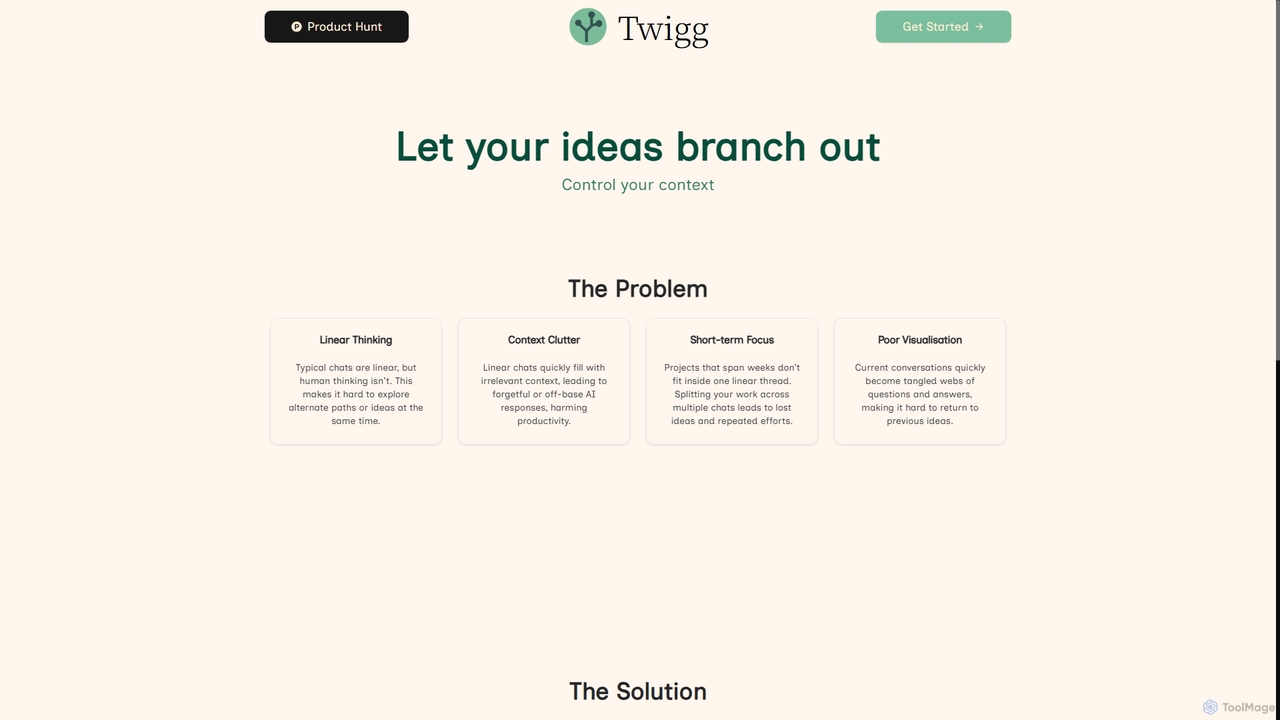
Twigg is an innovative AI chat interface that transforms linear conversations into interactive, branching idea trees. It helps users manage context, explore tangents, and visualize complex projects, making long-term collaboration with LLMs more efficient and intuitive.

Context Management
Visits 8.2KFavorites 187Likes 185

About Brainstorming

AI Brainstorming tools are a class of software designed to facilitate and augment the creative ideation process using artificial intelligence. These tools leverage large language models (LLMs) and semantic analysis to generate a wide range of ideas, concepts, and solutions based on user prompts. They help users overcome creative blocks, explore diverse perspectives, and structure thoughts visually. By acting as a creative partner, AI brainstorming tools accelerate the initial stages of any project, from marketing campaigns to product development.

Core Features

  • Automated Idea Generation: Produces numerous ideas, keywords, and concepts from a single prompt or topic.
  • Visual Mind Mapping: Organizes generated ideas into interactive, hierarchical mind maps for better clarity.
  • Concept Expansion & Elaboration: Takes a simple idea and expands it with related details, arguments, or examples.
  • Collaborative Workspace: Allows teams to brainstorm together in a shared digital environment in real-time.
  • Prompt Templates: Offers pre-built templates for specific brainstorming tasks like SWOT analysis or content planning.

Use Cases

These tools are widely used by marketing teams for campaign ideation, product managers for feature brainstorming, and content creators for developing new topics. Writers and screenwriters also use them to overcome writer's block and explore plotlines. In corporate settings, they facilitate strategic planning sessions and problem-solving workshops, making the process more dynamic and productive.

How to Choose

When selecting an AI brainstorming tool, consider the quality and diversity of its idea generation engine. Evaluate its visualization capabilities, such as mind mapping and diagramming flexibility. Assess the collaboration features if you work in a team, and check for integration options with other project management or writing software. Finally, consider the user interface's intuitiveness and the pricing model's suitability for your needs.


Brainstorming use cases

1

Marketing Campaign Ideation

A marketing team preparing for a new product launch uses an AI brainstorming tool to generate creative concepts. By inputting the product's core features, target audience, and brand voice, the tool produces hundreds of potential campaign slogans, social media angles, and promotional event ideas. The team can then visually organize these ideas in a mind map, cluster related concepts, and vote on the most promising directions. This process significantly reduces the time spent in initial ideation meetings and provides a wider range of creative starting points than manual brainstorming alone.

2

Developing New Product Features

A product manager is tasked with brainstorming the next set of features for a software application. They input existing user feedback, competitor analysis, and strategic goals into an AI brainstorming tool. The AI generates a structured list of potential features, categorizing them by user need (e.g., 'Productivity Enhancements', 'Collaboration Tools'). It also expands on each idea, suggesting potential user flows and technical considerations. This allows the product manager to quickly identify high-impact features and create a more comprehensive product roadmap for discussion with the development team.

3

Content Planning and Topic Generation

A content creator or blogger struggling with writer's block uses an AI brainstorming tool to discover new article ideas. By entering a broad topic like 'sustainable living', the tool generates a list of sub-topics, potential article titles, and key questions that an audience might have. It can suggest different content formats, such as 'how-to guides', 'listicles', or 'expert interviews'. The creator can then select a promising idea and ask the AI to generate a basic outline, including an introduction, main points, and a conclusion, providing a solid structure to start writing immediately.

4

Academic Research and Thesis Structuring

A graduate student beginning their thesis uses an AI brainstorming tool to explore research avenues. They input their core research area, and the AI suggests potential research questions, identifies related academic fields, and lists key theorists or seminal papers. The student can then use the tool to structure their thesis, generating a logical chapter outline. For each chapter, the AI can help brainstorm key arguments, potential counter-arguments, and sources to investigate, transforming a daunting task into a manageable, step-by-step process.

5

Business Naming and Brand Identity

An entrepreneur starting a new venture needs a compelling business name and tagline. They use an AI brainstorming tool, inputting keywords related to their industry, values, and target market (e.g., 'eco-friendly', 'tech', 'urban youth'). The AI generates hundreds of name variations, including abstract names, descriptive names, and clever portmanteaus. It can also generate corresponding taglines and even basic logo concepts. This provides a rich pool of creative options, helping the founder move past the initial naming hurdle and start building a strong brand identity quickly.

6

Fictional Story and Character Development

A novelist or screenwriter uses an AI brainstorming tool to flesh out their story world. By providing a basic premise, the AI can suggest compelling plot twists, generate detailed character profiles with unique backstories and motivations, or even outline entire story arcs. For example, if a writer is stuck on a character's motivation, they can ask the AI to propose several reasons based on the character's established personality traits. This collaborative process helps spark new creative directions and adds depth and complexity to the narrative that might not have been considered otherwise.

Brainstorming FAQ

What are AI Brainstorming tools?

AI Brainstorming tools are software applications that use artificial intelligence, particularly large language models (LLMs), to help users generate, develop, and organize ideas. Unlike traditional brainstorming methods, these tools actively participate in the creative process by suggesting new concepts, expanding on existing thoughts, and structuring information visually. They are designed to overcome creative blocks, accelerate ideation, and introduce diverse perspectives into any project or problem-solving session.

How to choose the right AI brainstorming tool?

To choose the right tool, consider these factors:

  • Idea Generation Quality: Does the tool produce relevant, creative, and diverse ideas, or are they generic?
  • Visualization Features: Does it offer flexible mind mapping, whiteboarding, or other visual formats to organize thoughts?
  • Collaboration Capabilities: If you work in a team, check for real-time editing, commenting, and sharing features.
  • Ease of Use: The interface should be intuitive, allowing you to focus on ideas rather than learning the software.
  • Integration and Export: Can you easily export your work to other formats (like text, PDF, or images) or integrate it with other tools you use?
What's the difference between AI brainstorming and traditional mind mapping tools?

The key difference is generation versus organization. Traditional mind mapping tools are passive; they provide a canvas for you to manually organize your own ideas. AI brainstorming tools are active partners in creation. They not only help you organize ideas but also actively generate new ones, suggest connections you might have missed, and expand on your initial thoughts. In essence, a mind mapping tool is a digital whiteboard, while an AI brainstorming tool is a creative collaborator.

Can AI brainstorming tools replace human creativity?

No, AI brainstorming tools are designed to augment, not replace, human creativity. They act as a catalyst to spark new ideas and help structure thoughts, but the critical thinking, strategic direction, and emotional intelligence required to select and refine the best ideas still come from the human user. The most effective use of these tools is as a collaborative partner, where the AI handles rapid idea generation and the human provides context, curation, and insight.

Who can benefit from using AI brainstorming tools?

A wide range of individuals and teams can benefit from these tools. This includes:

  • Marketers and Advertisers: For creating campaign concepts, slogans, and content ideas.
  • Product Managers and Designers: For brainstorming new features and user experience solutions.
  • Writers and Content Creators: For overcoming writer's block and developing new topics or plotlines.
  • Entrepreneurs: For business naming, strategy development, and problem-solving.
  • Students and Researchers: For exploring research questions and structuring academic papers.

Essentially, anyone who needs to generate and organize creative ideas can find value in using an AI brainstorming tool.