ToolMage
Sign in

Best 3 Content Creation AI tools for Business

Popular Content Creation AI tools in Business include Mulerun, Alai, and xiaoyuxiezuo, helping you work more efficiently.

Mulerun
Freemium

Mulerun

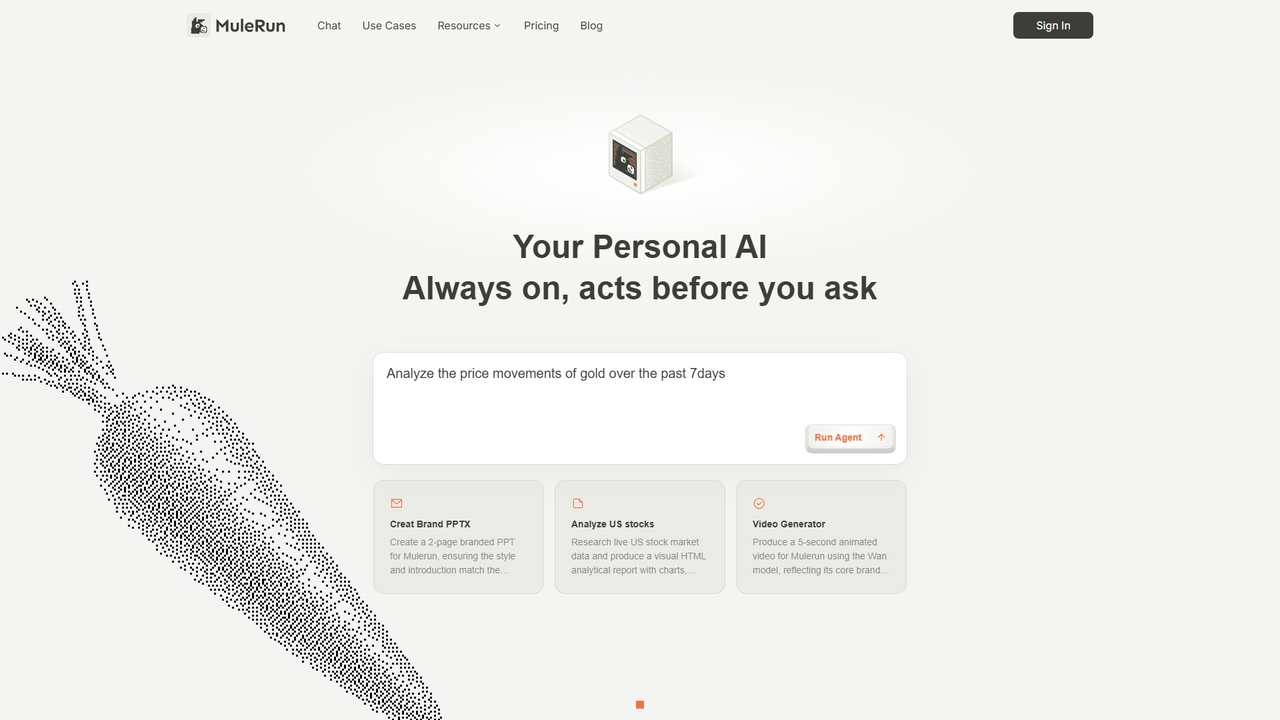
Mulerun is an always-on AI workforce that automates end-to-end workflows on a dedicated computer. Unlike chatbots, it executes complex multi-step tasks like research, analysis, content creation, and reporting 24/7, learning from collective intelligence to improve continuously.

Analytics
Visits 914.4KFavorites 31Likes 26
Alai

Alai

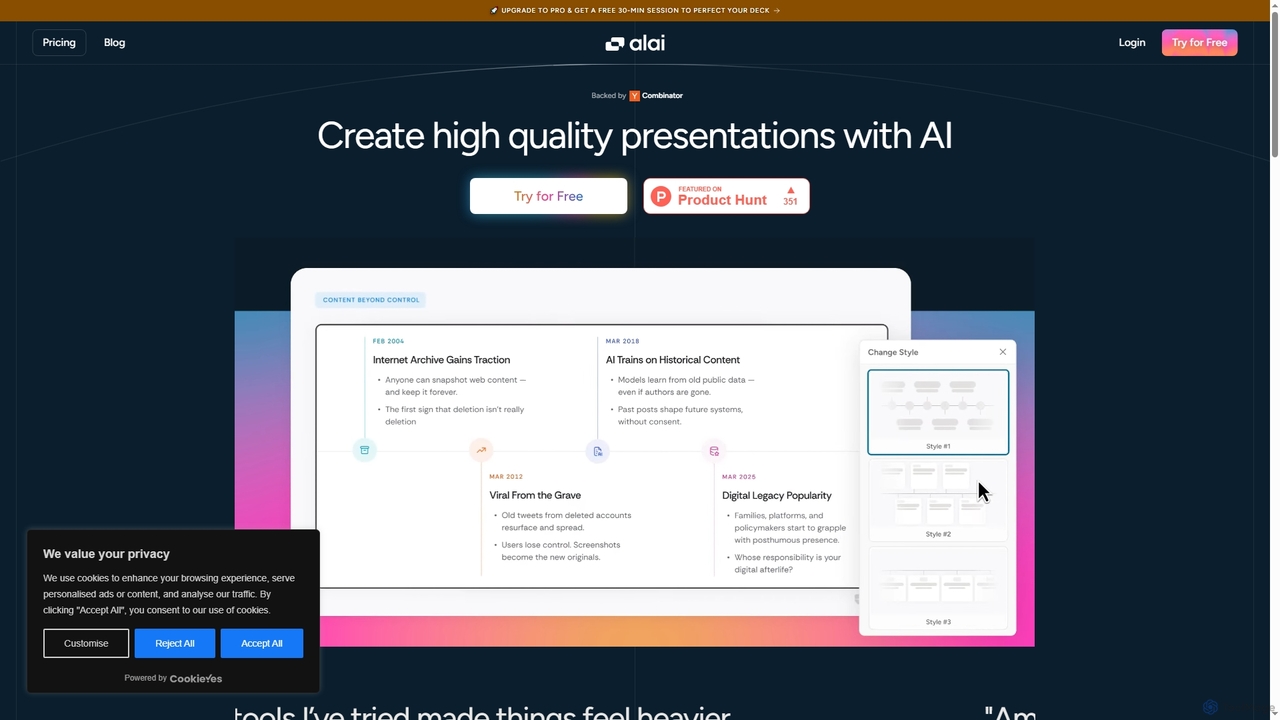
Alai is an AI-powered presentation maker that transforms your ideas into professional, high-quality slide decks in seconds. It streamlines the design process, allowing users to focus on content while ensuring visual consistency and compelling communication.

Content Creation
Visits 230.4KFavorites 135Likes 126
xiaoyuxiezuo
Freemium

xiaoyuxiezuo

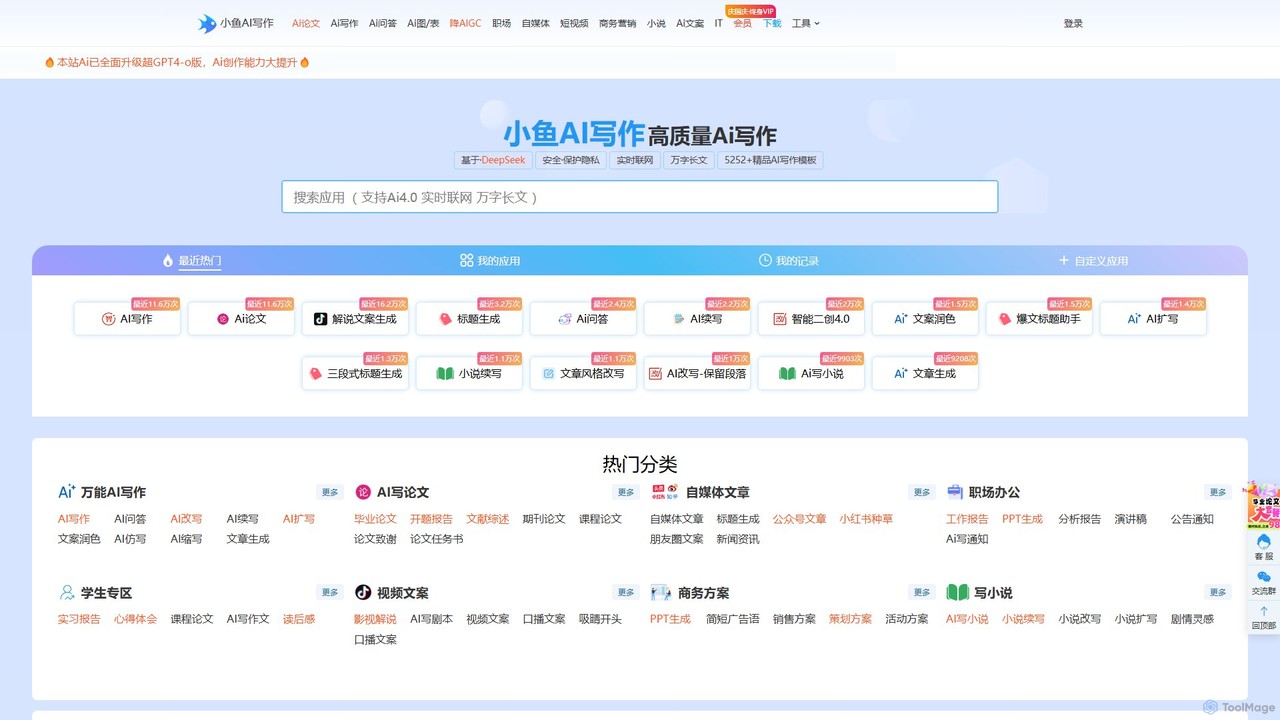
xiaoyuxiezuo is a powerful AI writing assistant powered by advanced models like GPT-4o and DeepSeek. It offers over 5,200 templates for diverse content needs, including academic papers, social media posts, business reports, and creative fiction. Key features include real-time web access, long-form article generation, and customizable applications, making it a versatile tool for students, marketers, and professionals.

Content Creation
Visits 7.5KFavorites 113Likes 101

About Content Creation

AI Content Creation tools are applications that leverage artificial intelligence, particularly large language models, to automatically generate written, visual, or audio content. These tools analyze prompts and data to produce original articles, social media posts, marketing copy, and more. Their primary value for businesses is the ability to scale content production, overcome creative blocks, and maintain a consistent brand voice across multiple channels. Unlike standard word processors, they actively create new material rather than just formatting existing text.

Core Features

  • Multi-Format Generation: Creates a wide range of content types, including blog posts, ad copy, emails, video scripts, and social media updates.
  • Tone and Style Customization: Allows users to define and adjust the output's tone of voice (e.g., professional, casual, witty) to align with brand identity.
  • SEO-Focused Writing: Generates content optimized for search engines by incorporating target keywords and following SEO best practices for structure.
  • Idea and Outline Generation: Provides topic suggestions, content briefs, and structured outlines to kickstart the creative process.
  • Language Translation and Localization: Adapts content for different regions and languages, maintaining the core message while respecting cultural nuances.

Applicable Scenarios

These tools are widely used by marketing departments, digital agencies, SEO specialists, and solo entrepreneurs. For instance, a marketing team can use them to rapidly produce a month's worth of social media content, while an e-commerce business can generate unique product descriptions for hundreds of items, significantly reducing manual effort.

Selection Criteria

When choosing an AI Content Creation tool, evaluate the quality and originality of the generated content. Consider the range of content formats and languages it supports. Assess its integration capabilities with your existing platforms, such as WordPress or social media schedulers. Finally, review the pricing model to ensure it aligns with your content volume and budget.

Content Creation use cases

1

Automating Blog Post and Article Writing

A marketing manager for a B2B tech company needs to publish two in-depth blog posts per week to drive organic traffic. Using an AI Content Creation tool, they input a target keyword and a brief outline. The AI generates a well-structured draft of over 1,500 words, including an introduction, body paragraphs with subheadings, and a conclusion. The manager then spends about 30% of their usual time editing, fact-checking, and adding brand-specific insights. This process allows them to consistently meet their content calendar goals and focus more on strategy and promotion rather than initial drafting.

2

Scaling Social Media Content Production

A social media manager for a direct-to-consumer brand is responsible for daily posts across Instagram, Facebook, and Twitter. To maintain engagement, they need a high volume of varied content. They use an AI tool to generate dozens of post variations from a single promotional message. They can request different tones (e.g., humorous, inspiring), formats (e.g., question, fun fact), and lengths for each platform. The AI also suggests relevant hashtags. This approach reduces content creation time by over 70%, freeing up the manager to focus on community interaction and performance analysis.

3

Generating High-Converting Ad Copy

An e-commerce store owner is launching a new product and needs compelling ad copy for Google Ads and Facebook campaigns. Using an AI content tool, they input the product features, target audience (e.g., young professionals, fitness enthusiasts), and desired call-to-action. The tool generates multiple ad variations based on copywriting frameworks like AIDA (Attention, Interest, Desire, Action) and PAS (Problem, Agitate, Solve). This allows the owner to quickly A/B test different headlines and descriptions to find the combination with the highest click-through rate, optimizing their ad spend without needing to hire a professional copywriter.

4

Drafting Email Marketing Campaigns

A CRM specialist is tasked with creating a 5-part email nurture sequence for new subscribers. Instead of writing each email from scratch, they use an AI tool. They provide the context: 'a welcome sequence for a SaaS trial user'. The AI generates a series of emails, including a welcome message, a feature highlight email, a case study email, a trial-ending reminder, and a final conversion offer. The specialist can then quickly customize these drafts with specific customer data and branding, launching the entire campaign in a fraction of the time it would normally take.

5

Creating Video Scripts for Marketing

A content creator for a startup wants to produce a series of short, engaging YouTube videos explaining their product. They are not professional scriptwriters. Using an AI tool, they input the video's topic ('How our app saves time for freelancers'), desired length (2 minutes), and key points to cover. The AI generates a complete script, broken down into scenes with suggestions for visuals (e.g., 'Show a screen recording of the dashboard') and a voiceover narrative. This provides a strong foundation, allowing the creator to focus on filming and editing, dramatically speeding up the video production workflow.

6

Generating Unique Product Descriptions at Scale

An online retailer manages a catalog of over 5,000 products, many of which are similar. To avoid duplicate content issues for SEO and to make each listing engaging, they need unique descriptions. Manually, this is a monumental task. They use an AI content tool integrated with their e-commerce platform. By feeding the tool a CSV file with product specifications (e.g., material, dimensions, key features), it generates a unique, persuasive, and keyword-rich description for every single item. This not only saves thousands of hours but also improves their search engine rankings and conversion rates.

Content Creation FAQ

What are AI Content Creation tools?

AI Content Creation tools are software applications that use artificial intelligence, primarily large language models (LLMs), to generate human-like text, images, and other media based on user prompts. They function by analyzing vast amounts of data to understand patterns, styles, and context, allowing them to produce original content. Key applications in a business context include drafting articles, writing marketing copy, generating social media posts, and creating scripts. Unlike simple grammar checkers, these tools actively produce new content from scratch.

How to choose the right AI Content Creation tool for business?

Choosing the right tool depends on your specific business needs. Consider these factors:

  • Content Quality and Originality: Test the tool's output. Does it sound natural? Is it factually accurate and free of plagiarism? High-quality output is crucial for brand reputation.
  • Supported Formats: Ensure the tool can generate the types of content you need most, whether it's long-form articles, social media captions, ad copy, or video scripts.
  • Customization and Control: Look for features that allow you to set a specific tone of voice, input brand guidelines, and control the output's structure to maintain brand consistency.
  • Integrations: Check if the tool integrates with your existing workflow, such as your CMS (e.g., WordPress), social media schedulers, or marketing automation platforms.
  • Pricing Model: Evaluate whether a subscription-based model or a pay-per-use credit system better suits your content volume and budget.
Can AI-generated content rank on search engines like Google?

Yes, AI-generated content can rank on search engines. Google's official stance is that it rewards high-quality content that is helpful to people, regardless of how it is produced. The key is not whether AI was used, but whether the final content meets the standards of Experience, Expertise, Authoritativeness, and Trustworthiness (E-E-A-T). To rank well, AI-generated content must be original, accurate, well-edited by a human expert to add unique insights, and structured to satisfy user search intent. Simply publishing raw, unedited AI output is unlikely to perform well.

What is the difference between AI Content Creation and AI Content Optimization tools?

The primary difference lies in their function: creation versus improvement.

  • AI Content Creation tools generate new content from scratch. You provide a prompt, topic, or data, and the tool writes an article, social media post, or ad copy for you. Their goal is to produce original material.
  • AI Content Optimization tools (like SEO writing assistants) analyze and enhance existing content. They don't write the content for you, but they provide suggestions to improve its readability, SEO score, tone, and grammar. Their goal is to refine and perfect material that has already been written.

The two types of tools are often used together in a business workflow: first, use a creation tool to generate a draft, then use an optimization tool to polish it for publication.

Who benefits most from using AI Content Creation tools in a business?

While many roles can benefit, several groups see the most significant impact:

  • Marketing Teams: They can scale content production for blogs, social media, and email campaigns, allowing them to test more ideas and maintain a consistent publishing schedule with fewer resources.
  • SEO Specialists: These tools help generate topic clusters, create SEO-optimized article drafts, and write meta descriptions at scale, accelerating content strategy execution.
  • Small Business Owners & Solopreneurs: Individuals with limited time and budget can produce professional-quality marketing materials without hiring a dedicated writer or agency.
  • E-commerce Managers: They can quickly generate thousands of unique product descriptions, improving SEO and providing a better shopping experience for customers.