ToolMage
Sign in

Best 2 Decision Intelligence AI tools for Business

Popular Decision Intelligence AI tools in Business include verteego and Scios.ai, helping you work more efficiently.

verteego
Paid

verteego

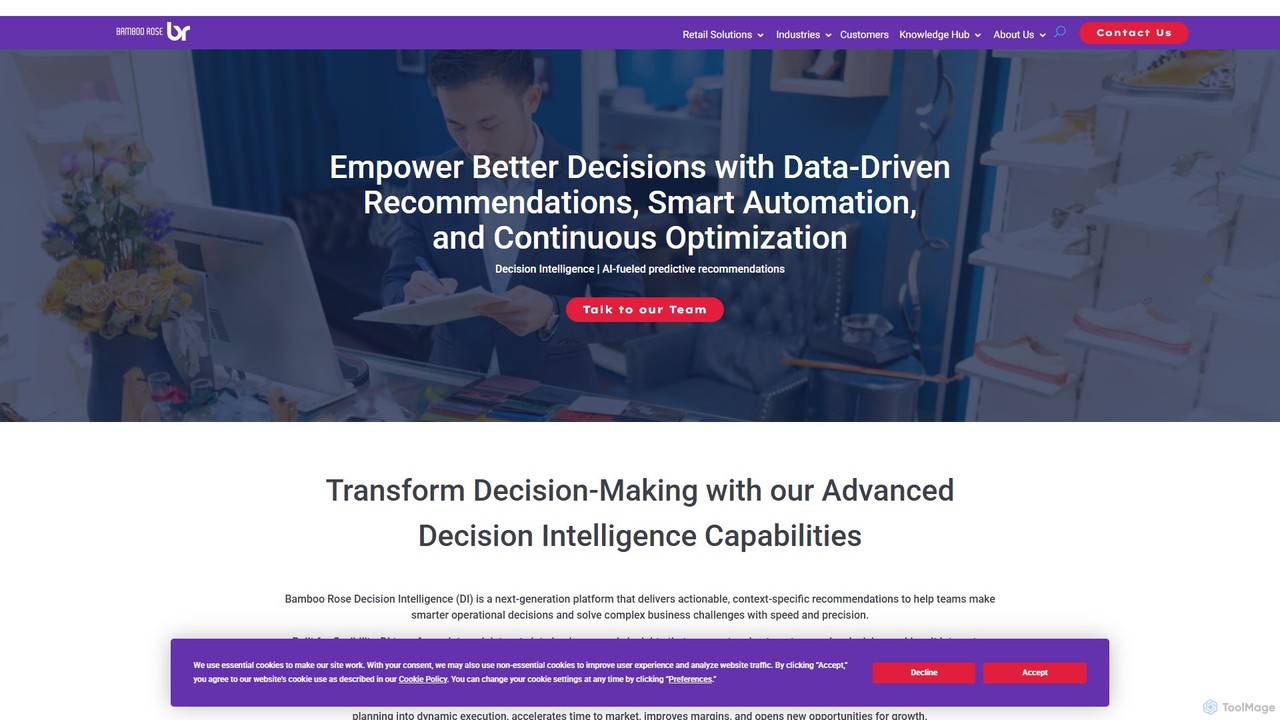
Verteego is an AI-powered decision intelligence platform, now part of Bamboo Rose, designed for the retail industry. It transforms data into actionable recommendations for supply chain management, product lifecycle optimization, and demand forecasting. It empowers teams in fashion, food, and general merchandise to make smarter, faster, data-driven decisions.

Decision Intelligence
Visits 155.9KFavorites 124Likes 121
Scios.ai
Paid

Scios.ai

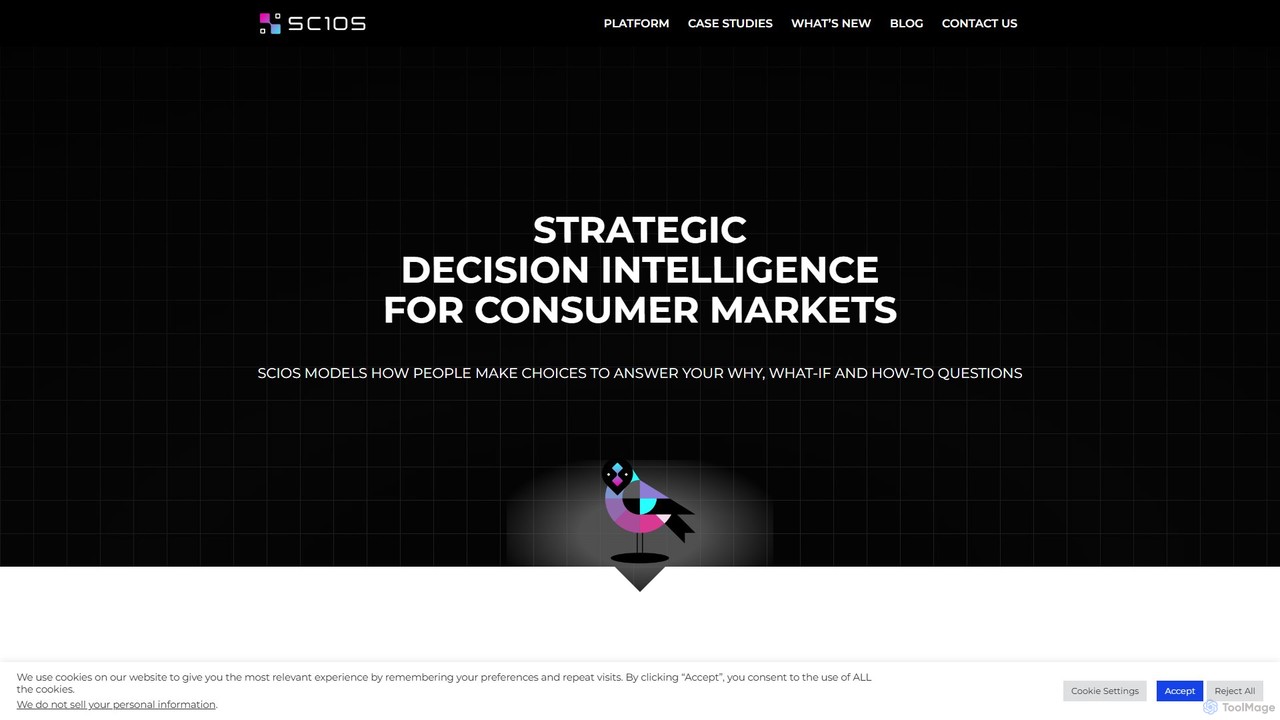
Scios.ai is a strategic decision intelligence platform for consumer markets. It uses human-centric AI, digital consumer twins, and market simulation to model how people make choices, enabling businesses to test strategies, predict outcomes, and make confident, data-backed decisions risk-free.

Decision Intelligence
Visits 5.6KFavorites 103Likes 112

About Decision Intelligence

Decision Intelligence (DI) tools are a class of AI-powered platforms designed to augment and automate complex human decision-making. They go beyond traditional business intelligence by not just describing data, but by prescribing actions and simulating outcomes. By integrating predictive analytics, machine learning, and optimization, these tools help organizations anticipate future trends, understand causal relationships, and select the best course of action to achieve specific goals. This approach transforms data from a passive report into an active recommendation engine for strategic and operational choices.

Core Features

  • Prescriptive Analytics: Recommends specific, data-backed actions to achieve defined business objectives.
  • Causal Inference: Identifies true cause-and-effect relationships in data, moving beyond simple correlations.
  • Outcome Simulation: Models and compares the potential results of different decisions before they are implemented.
  • Optimization Engines: Finds the most effective solution from among countless possibilities to maximize outcomes like profit or efficiency.
  • Explainability (XAI): Provides clear, understandable reasoning behind its automated recommendations to build user trust.

Use Cases

Decision Intelligence is crucial in sectors requiring complex, multi-variable optimization. For example, in supply chain management for optimizing logistics and inventory, in finance for dynamic risk assessment and portfolio management, and in marketing for personalizing campaigns and maximizing budget ROI. It is ideal for roles like operations managers, financial analysts, and marketing strategists.

How to Choose

When selecting a DI tool, evaluate its modeling capabilities, particularly its support for causal inference and simulation. Assess its integration capacity with existing data sources like ERPs and CRMs. Consider the transparency of its recommendation logic (explainability) and its scalability to handle your organization's data volume and complexity. Finally, examine the user interface to ensure it is accessible to your intended users, whether they are data scientists or business managers.

Decision Intelligence use cases

1

Supply Chain Inventory Optimization

A supply chain manager for a retail company faces volatile demand and shipping delays. Using a Decision Intelligence tool, they input historical sales data, supplier performance metrics, and real-time logistics information. The platform runs simulations of various inventory strategies, such as adjusting safety stock levels or diversifying suppliers for critical products. Instead of just showing past trends, the tool prescribes an optimal reordering plan. The recommendation specifies which products to order, in what quantities, and from which suppliers to minimize stockout risk by 25% while reducing excess inventory holding costs by 15%.

2

Dynamic Pricing for E-commerce

An e-commerce pricing analyst needs to manage prices for thousands of products based on competitor data, demand fluctuations, and inventory levels. A Decision Intelligence system continuously ingests this market and internal data. It uses predictive models to forecast the impact of price changes on sales volume and profit margins. The tool then recommends optimal price adjustments in real-time. For example, it might suggest a 5% price increase on a high-demand item with low stock, while recommending a 10% discount on a slow-moving product, leading to an overall 7% increase in revenue.

3

Marketing Campaign Budget Allocation

A marketing director is planning the next quarter's budget across multiple channels like social media, search ads, and email marketing. A Decision Intelligence tool analyzes past campaign performance, customer attribution data, and market trends. It simulates different budget allocation scenarios to predict the potential Return on Investment (ROI) for each. The platform provides a clear recommendation on how to distribute the budget to maximize lead generation, predicting a 20% uplift in qualified leads for the same advertising spend by reallocating funds from underperforming channels to high-potential ones.

4

Financial Risk Assessment and Mitigation

A financial analyst at a lending institution needs to evaluate credit applications. A Decision Intelligence platform integrates various data sources, including applicant history, market data, and economic indicators, to build a causal model of default risk. It simulates the impact of potential economic downturns on an applicant's ability to repay. The system not only scores the risk but also recommends specific mitigation strategies, such as adjusting loan terms or requiring a larger down payment for higher-risk applicants, thereby reducing the institution's potential losses by an estimated 10%.

5

Human Resources Attrition Prediction

An HR manager is concerned about high employee turnover in a specific department. A Decision Intelligence tool analyzes anonymized employee data, such as tenure, performance reviews, compensation, and survey feedback. It goes beyond correlation to identify the causal drivers of attrition. The tool pinpoints that a lack of promotion opportunities, rather than salary, is the primary cause. It then recommends implementing a targeted career development program and simulates its potential impact, projecting a 30% reduction in departmental attrition within the next year.

6

Energy Consumption Optimization for Manufacturing

A plant operations manager aims to reduce high energy costs. A Decision Intelligence system analyzes real-time sensor data from machinery, production schedules, and fluctuating energy prices. It simulates different production schedules to find the most energy-efficient plan. The tool recommends shifting certain high-energy processes to off-peak hours and suggests optimal machine settings to reduce idle power consumption. By implementing these data-driven decisions, the plant achieves a consistent 12% reduction in monthly energy costs without impacting production output.

Decision Intelligence FAQ

What is Decision Intelligence (DI)?

Decision Intelligence (DI) is an AI-driven discipline that combines data science, social science, and managerial science to improve and automate decision-making. Unlike traditional Business Intelligence (BI), which focuses on describing past data (what happened), DI focuses on prescribing future actions (what should we do). It uses techniques like predictive modeling, simulation, and causal inference to recommend the best course of action and explain why it's optimal, effectively bridging the gap between data analysis and real-world action.

How is Decision Intelligence different from Business Intelligence (BI)?

The primary difference lies in their purpose and output. Business Intelligence (BI) is descriptive, while Decision Intelligence (DI) is prescriptive.

  • BI (The 'What'): Focuses on data aggregation and visualization. It provides dashboards and reports to show you what happened in the past and what is happening now. Its output is information.
  • DI (The 'So What' and 'Now What'): Focuses on recommendations, simulations, and automation. It uses data to tell you what you should do next and what the likely outcome will be. Its output is a recommended decision.

In short, BI helps you understand your business, whereas DI helps you decide how to run it better.

What are the key features of a Decision Intelligence tool?

Key features of Decision Intelligence tools are designed to guide action, not just present data. Look for platforms that include:

  • Prescriptive Analytics: The ability to generate specific, actionable recommendations rather than just insights.
  • Causal Inference Engines: Technology that can distinguish true cause-and-effect relationships from mere correlations, leading to more robust decisions.
  • Simulation and 'What-if' Analysis: Tools to test the potential outcomes of different decisions in a virtual environment before committing resources.
  • Optimization Algorithms: The capacity to find the best solution from countless possibilities to meet a specific goal, such as maximizing profit or minimizing cost.
  • Explainability (XAI): Features that provide clear reasons behind AI-driven recommendations to build trust and facilitate adoption.
Who should use Decision Intelligence tools?

Decision Intelligence tools are valuable for any role that involves making complex, data-rich decisions where the outcome has a significant business impact. This includes:

  • Business Leaders and Executives: For strategic planning, market entry decisions, and major investment choices.
  • Operations Managers: For optimizing supply chains, production schedules, and resource allocation.
  • Marketing Teams: For budget allocation, campaign optimization, and customer segmentation.
  • Financial Analysts: For risk assessment, portfolio management, and fraud detection.

Essentially, they empower anyone from analysts to executives to move from simply analyzing data to making optimal, data-driven actions with confidence.

How do I choose the right Decision Intelligence platform?

Choosing the right DI platform depends on your specific business problem and technical environment. Consider these key factors:

  • Problem-Solution Fit: Does the platform specialize in your domain (e.g., supply chain, marketing, finance), or is it a general-purpose tool that requires extensive customization?
  • Data Integration: How easily can it connect to your existing data sources, such as databases, data warehouses, APIs, and cloud storage?
  • Model Transparency: Can you understand how the AI reaches its conclusions? Look for platforms with strong explainability (XAI) features to ensure you can trust and verify the recommendations.
  • Scalability and Performance: Can the platform handle the volume and velocity of your data as your business grows?
  • User Experience: Is the interface intuitive for your intended users, whether they are data scientists who need deep control or business managers who need clear, actionable dashboards?