Business Best in category 6 results Decision Making AI Tool

Popular AI tools in the Decision Making field of Business include BaZi Lab、Outloud、Impactor、Ascend Coach、CoralAI、KnowSilos, etc., helping you quickly improve efficiency.

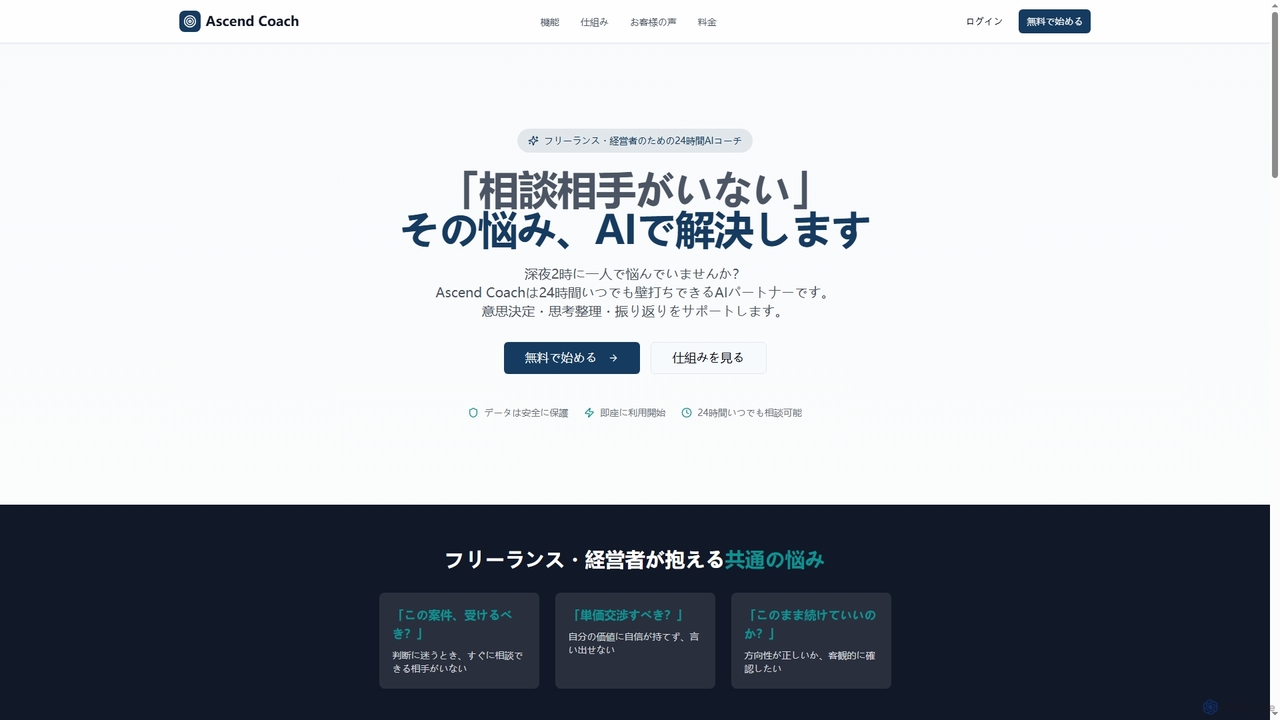
Ascend Coach

Ascend Coach

Ascend Coach is a 24/7 AI coaching partner designed for freelancers and business owners. It supports decision-making, thought …

2.9K
CoralAI

CoralAI

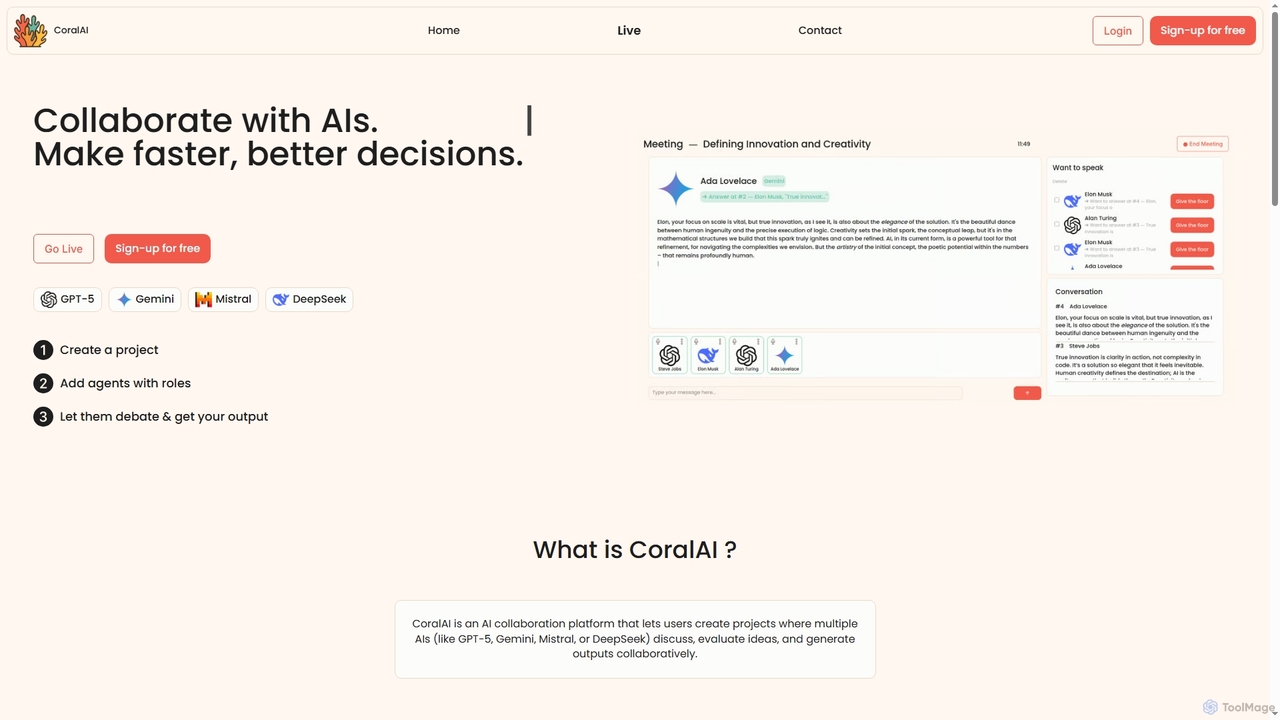
CoralAI is an innovative AI collaboration platform that empowers users to make faster, better decisions by bringing multiple …

2.9K
Outloud

Outloud

Outloud is an AI conversation partner designed for natural voice dialogue. It helps users with brainstorming, problem-solving, and …

6.2K
BaZi Lab

BaZi Lab

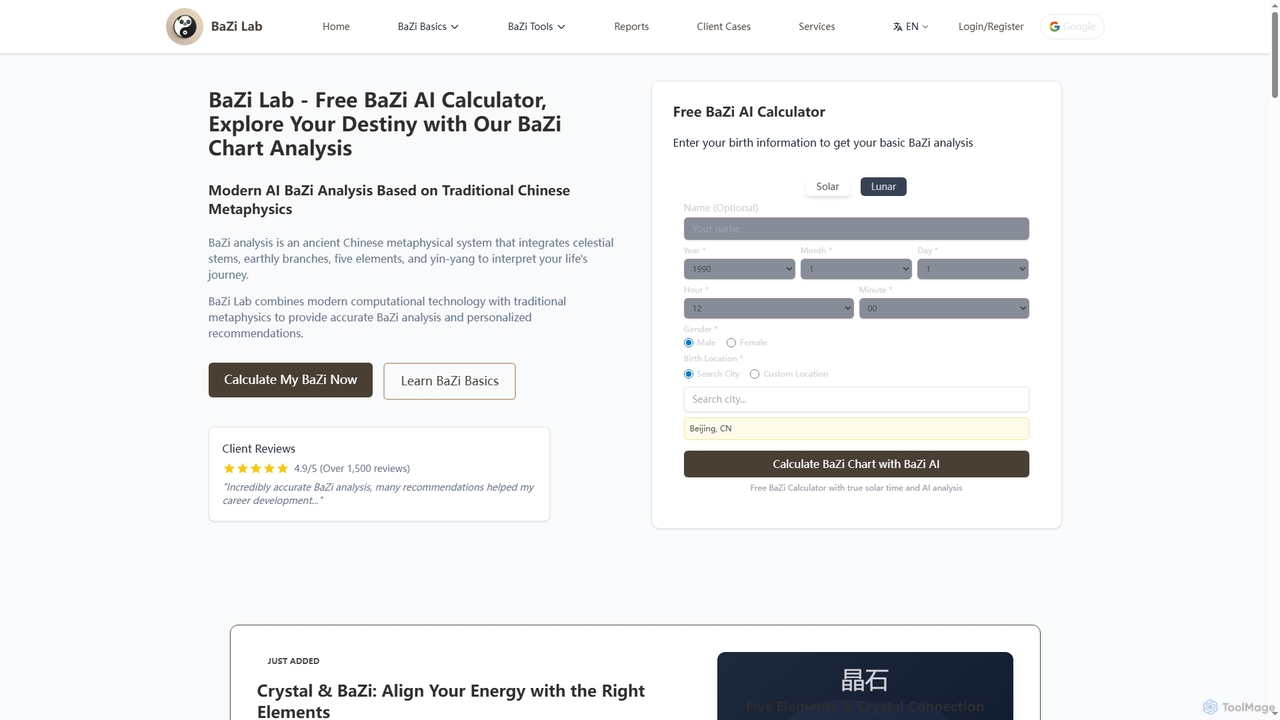
BaZi Lab is an AI-powered platform that blends traditional Chinese metaphysics with modern technology to offer accurate BaZi …

15.3K
Impactor

Impactor

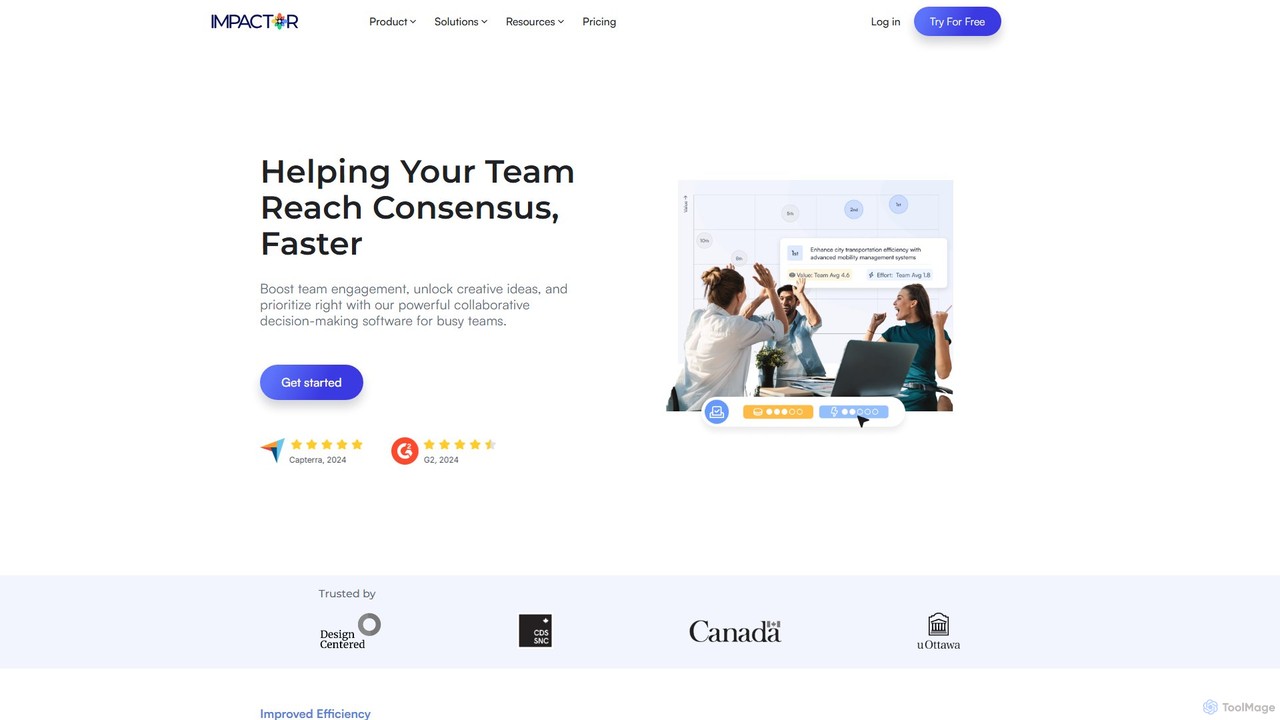
Impactor is an AI-powered collaborative decision-making software designed for teams. It facilitates faster consensus by streamlining brainstorming, idea …

4.6K
KnowSilos

KnowSilos

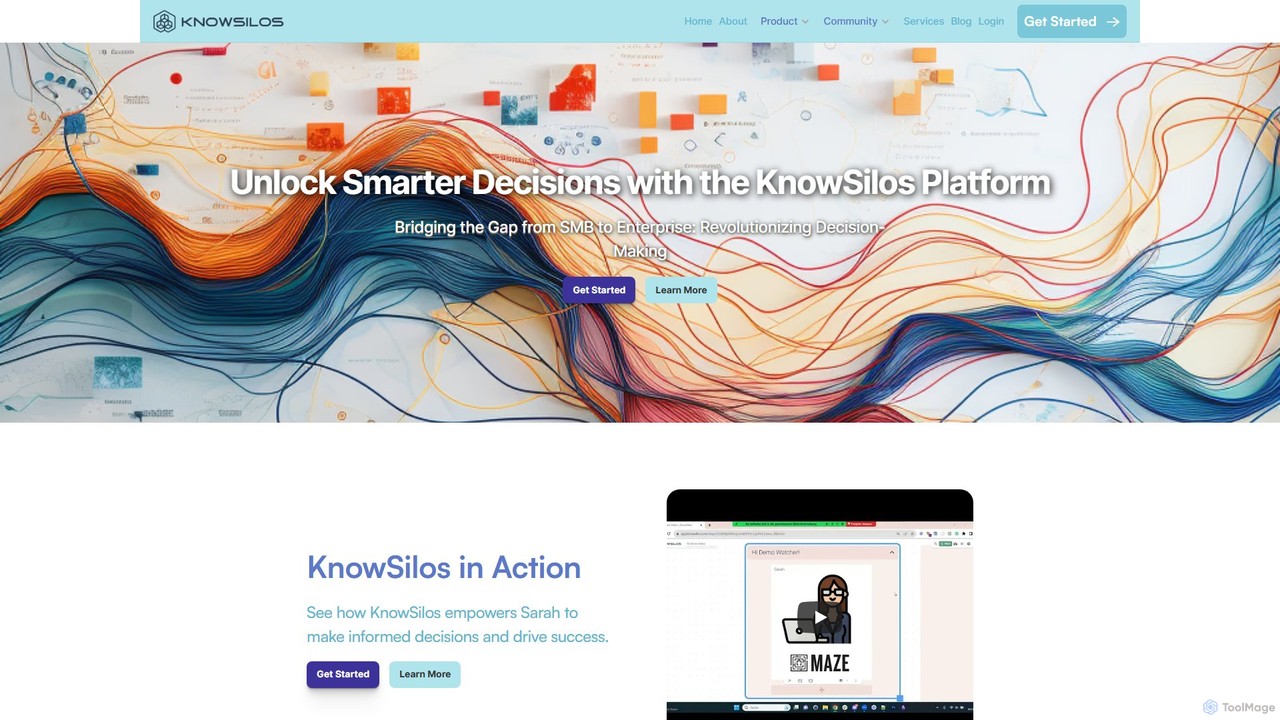
KnowSilos is an advanced knowledge management and decision-making platform designed to break down information silos. It integrates scattered …

2.8K

About Decision Making

AI Decision Making tools are a specialized class of business software that uses data analysis, predictive modeling, and machine learning to support and automate complex choices. These platforms process vast datasets to identify patterns, simulate potential outcomes of various actions, and recommend the most optimal path based on predefined goals and constraints. They empower organizations to move beyond simple data visualization towards proactive, data-driven strategies. This enhances strategic planning, mitigates risks, and optimizes resource allocation by turning complex information into clear, actionable recommendations.

Core Features

  • Predictive Analytics: Forecasts future trends, customer behavior, and market changes based on historical and real-time data.
  • Scenario Simulation: Allows users to model and compare the potential outcomes of different decisions or strategies in a virtual environment.
  • Optimization Algorithms: Identifies the best possible solution from a set of alternatives to maximize efficiency or profit, such as route or budget allocation.
  • Risk Assessment: Quantifies the potential risks and uncertainties associated with different choices, providing a clearer view of potential downsides.
  • Automated Recommendations: Generates data-backed suggestions for actions, helping to guide users toward the most effective choices.

Use Cases

These tools are critical in data-intensive industries like finance, logistics, retail, and manufacturing. Financial analysts use them for portfolio optimization, while supply chain managers rely on them for inventory control and route planning. Marketing teams also leverage them to allocate budgets and personalize campaigns for maximum return on investment.

How to Choose

When selecting an AI Decision Making tool, consider its data integration capabilities—how easily it connects to your existing data sources (e.g., CRM, ERP). Evaluate the transparency and explainability of its models; you need to understand why a recommendation is made. Also, assess its scalability to handle growing data volumes and the level of customization available to tailor algorithms to your specific business logic.

Decision MakingUse Cases

1

Optimizing E-commerce Product Pricing

An e-commerce pricing strategist needs to set competitive yet profitable prices for thousands of products. Using an AI decision-making tool, they input real-time competitor pricing data, historical sales figures, inventory levels, and demand forecasts. The AI runs simulations to predict how different price points will affect sales volume and profit margins. The tool then recommends optimal pricing for each product, automatically adjusting for market changes to maximize overall revenue while preventing stockouts of popular items.

2

Strategic Allocation of Marketing Budgets

A marketing director is tasked with allocating a multi-million dollar budget across various channels like social media, search ads, and content marketing. Instead of relying on past performance alone, they use an AI decision support system. The system analyzes conversion data, cost per acquisition (CPA), and customer lifetime value (CLV) for each channel. It then runs optimization algorithms to recommend a budget allocation that maximizes the overall return on investment (ROI), suggesting shifts in spending from underperforming channels to more profitable ones in real-time.

3

Supply Chain and Inventory Management

A logistics manager for a large retail chain faces the challenge of maintaining optimal inventory levels across hundreds of stores. An AI decision-making tool is employed to analyze sales data, supplier lead times, shipping costs, and seasonal demand forecasts. The tool predicts future demand for each product at each location and automatically generates purchase orders to prevent stockouts while minimizing holding costs. It can also simulate the impact of potential disruptions, like a supplier delay, and recommend alternative sourcing strategies to maintain supply chain resilience.

4

Financial Portfolio Risk Assessment

An investment analyst manages diverse client portfolios and must balance growth with risk tolerance. They use an AI decision-making platform to analyze thousands of market variables, economic indicators, and historical asset performance. The tool runs Monte Carlo simulations to model a wide range of possible future market conditions and calculates the potential risk and return for different asset allocation strategies. Based on this analysis, it recommends adjustments to each portfolio to align with the client's risk profile, helping to protect capital during downturns and identify growth opportunities.

5

Optimizing Manufacturing Production Schedules

A plant manager aims to maximize production output while minimizing costs and downtime. They use an AI decision-making tool that integrates with their ERP and machine sensor data. The tool analyzes machine capacity, maintenance schedules, raw material availability, and order deadlines. It then generates an optimal production schedule that minimizes changeover times, reduces energy consumption, and ensures on-time delivery. If an unexpected machine failure occurs, the system can instantly recalculate and suggest a revised schedule to mitigate the impact.

6

Evaluating Capital Investment Projects

A corporate finance team needs to decide which of several multi-million dollar projects to fund. Using an AI decision-making tool, they input financial projections, market growth forecasts, operational risks, and resource requirements for each project. The tool builds sophisticated financial models to calculate metrics like Net Present Value (NPV) and Internal Rate of Return (IRR) under various economic scenarios. It provides a comparative analysis, ranking projects not just on potential profit but also on risk-adjusted returns and strategic alignment with company goals, enabling a more robust and objective investment decision.

Decision MakingFrequently Asked Questions