Translingo
Translingo is an AI-powered platform designed for events, offering real-time translation, transcription, and AI-generated summaries. It supports over …
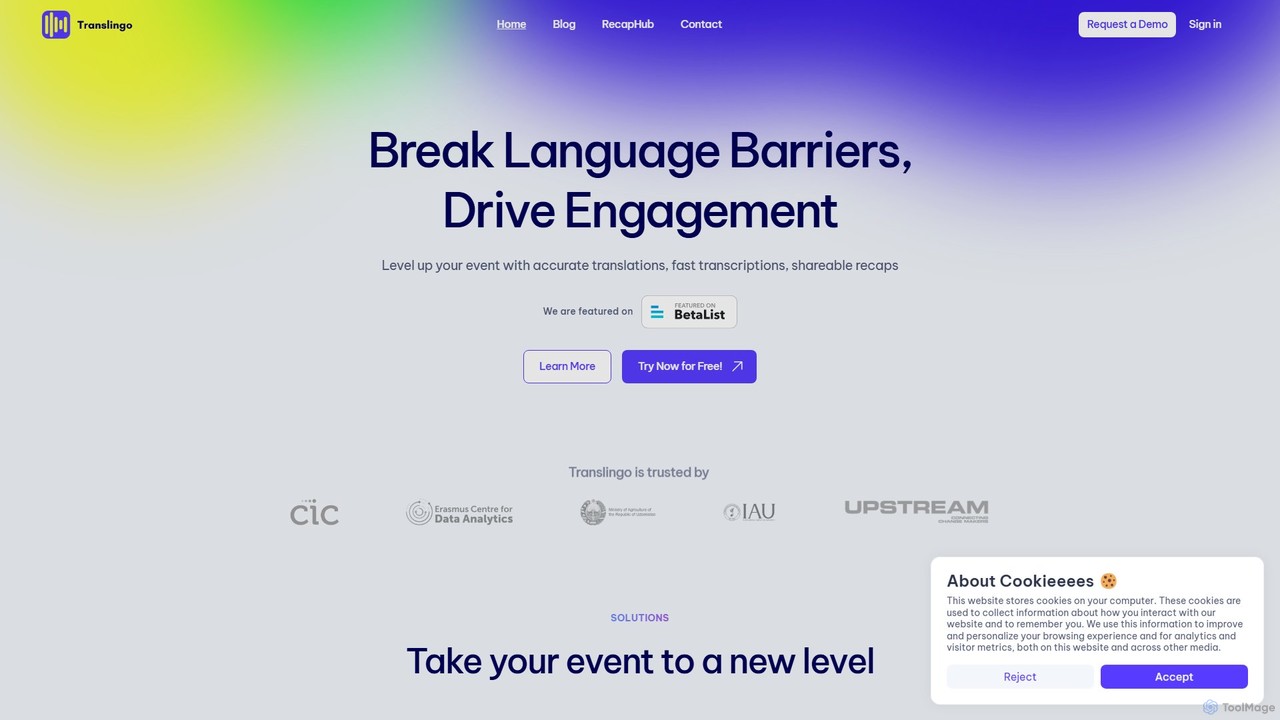
Translingo is an AI-powered platform designed for events, offering real-time translation, transcription, and AI-generated summaries. It supports over 60 languages, breaking down communication barriers for global conferences, corporate meetings, and training sessions. The tool is web-based, requires no app downloads, and integrates seamlessly with any A/V setup, making events more inclusive and engaging.
About Events
AI Event tools are specialized platforms that leverage artificial intelligence to optimize the entire lifecycle of virtual, hybrid, and in-person events. They use machine learning and data analysis to automate planning, personalize attendee experiences, and provide deep analytical insights. This enables organizers to increase efficiency, boost engagement, and maximize the return on investment (ROI) for their events. These tools go beyond simple logistics management by offering predictive capabilities and intelligent automation within the business context.
Core Features
- Intelligent Scheduling: Suggests optimal event dates, times, and session flows based on audience data and historical trends.
- Personalized Matchmaking: Connects attendees, speakers, and sponsors based on shared interests, goals, and profiles.
- Automated Marketing: Generates promotional emails, social media posts, and targeted ad campaigns to attract the right audience.
- Real-time Analytics: Monitors attendee engagement, session popularity, and social sentiment during the event to enable quick adjustments.
- Post-Event Intelligence: Provides comprehensive reports, summarizes key takeaways, and scores leads based on interaction data.
Use Cases
These tools are widely used by corporate event planners, marketing agencies, conference organizers, and professional associations. They are particularly effective for managing large-scale international conferences, virtual summits, trade shows, and corporate meetings, helping to streamline complex logistical and engagement challenges.
How to Choose
When selecting an AI Event tool, consider the type of events you host (virtual, hybrid, in-person), its integration capabilities with your existing CRM and marketing platforms, the depth of analytics provided, and the platform's scalability to handle your expected number of attendees. Also, evaluate the user-friendliness of the interface for both organizers and attendees.

EventsUse Cases
Optimize Corporate Conference Agendas
An event manager for a multinational corporation plans an annual sales conference. Using an AI tool, they analyze attendee profiles and past feedback to automatically generate a schedule that minimizes session conflicts and maximizes relevance. The tool creates personalized agendas for each of the 500+ attendees, suggesting relevant breakout sessions and networking opportunities, which increases overall satisfaction scores by 20%.
Enhance Virtual Summit Networking
An organizer of a global tech summit uses an AI-powered matchmaking feature to enhance networking. Before the event, attendees and exhibitors fill out profiles with their interests and objectives. The AI algorithm then suggests high-compatibility connections and facilitates one-on-one meeting schedules. This results in a 40% increase in scheduled meetings compared to previous events without the tool.
Automate Event Marketing Campaigns
A marketing team for a B2B SaaS company is promoting a product launch webinar. They use an AI tool to generate multiple versions of email invitations and social media posts tailored to different audience segments. The AI also optimizes the campaign's timing and channel selection based on real-time performance data, leading to a 30% higher registration conversion rate.
Analyze Real-time Attendee Engagement
During a large hybrid trade show, the operations team uses an AI analytics dashboard to monitor attendee flow and engagement. The system tracks which booths are most popular, how long attendees stay in specific sessions, and analyzes social media sentiment using hashtags. This allows the team to make immediate adjustments, such as reallocating staff to busy areas or addressing negative feedback promptly.
Streamline Post-Event Lead Management
After a three-day industry expo, a sales team is faced with hundreds of scanned badges. They use an AI event tool that automatically transcribes contact information, enriches it with public data, and scores each lead based on their session attendance and booth interactions. This allows the sales team to prioritize follow-ups with the most engaged prospects, shortening the sales cycle.
Repurpose Webinar Content Effortlessly
A content marketer needs to create follow-up materials after a live webinar. An AI tool processes the webinar recording to automatically generate a full transcript, a concise summary, key highlight clips for social media, and several draft blog posts based on the main topics discussed. This reduces the content repurposing time from several days to just a few hours.