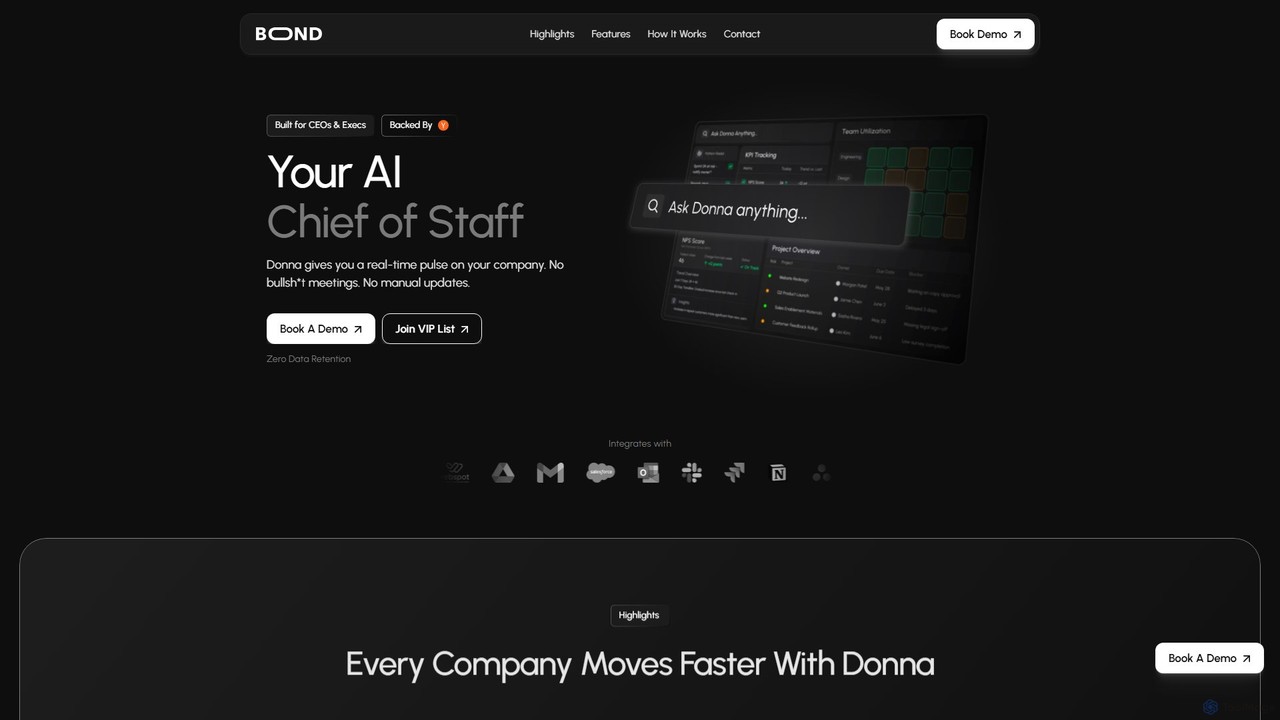
AI Executive Tools are a specialized category of business software designed to support high-level strategic decision-making for senior leadership. These platforms leverage artificial intelligence to aggregate, analyze, and synthesize vast amounts of data from disparate company sources like ERP and CRM systems. They provide executives with predictive insights, automated reports, and scenario modeling capabilities, enabling faster, more data-informed strategic planning. Unlike general business analytics tools, they focus on delivering concise, forward-looking intelligence tailored to the needs of C-suite roles.
Core Features
- Automated Briefings: Generates daily or weekly summaries of key business metrics, market trends, and competitive landscapes.
- Predictive Forecasting: Uses machine learning to forecast financial performance, sales trends, and potential operational risks.
- Scenario Modeling: Allows leaders to simulate the potential impact of strategic decisions before implementation.
- KPI Anomaly Detection: Automatically identifies and alerts executives to significant deviations from expected performance indicators.
- Natural Language Queries: Enables executives to ask complex questions about business data in plain language and receive instant answers.
Use Cases
These tools are primarily used by C-level executives (CEOs, CFOs, COOs), vice presidents, and department heads in medium to large enterprises. They are crucial for preparing board reports, conducting strategic planning sessions, monitoring company-wide performance, and assessing M&A opportunities. For example, a CFO can use a tool to model the financial impact of a new pricing strategy, while a CEO can receive a concise daily brief on overall business health.
How to Choose
When selecting an AI Executive Tool, prioritize its integration capabilities with your existing systems (e.g., Salesforce, SAP). Evaluate the quality and depth of its predictive analytics and forecasting models. Consider the user interface's intuitiveness, as it must be easily usable by non-technical leaders. Finally, assess the tool's data security protocols and compliance with industry regulations to ensure sensitive company information is protected.