DingTalk
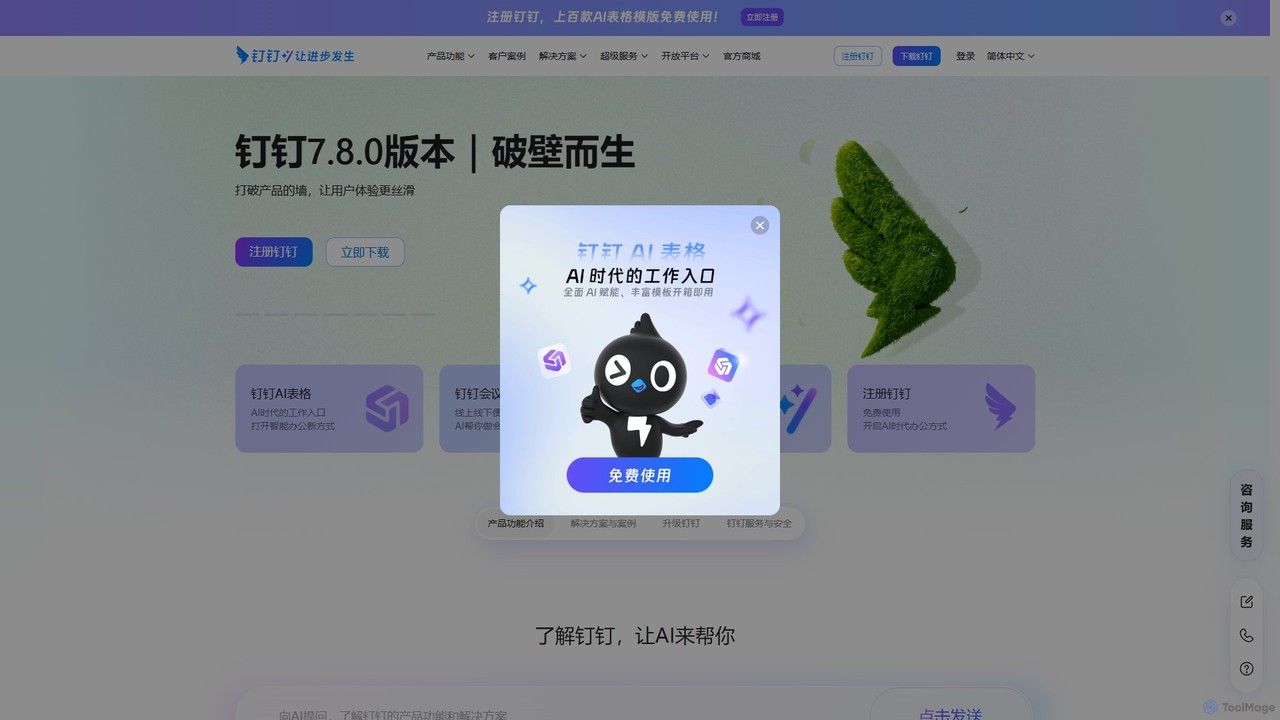
DingTalk is an all-in-one enterprise collaboration and management platform powered by AI. It integrates instant messaging, video conferencing, …
DingTalk is an all-in-one enterprise collaboration and management platform powered by AI. It integrates instant messaging, video conferencing, project management, and a full office suite with advanced AI capabilities like intelligent assistants, automated meeting summaries, and AI-powered data analysis. Designed for businesses of all sizes, it streamlines workflows, enhances productivity, and digitizes organizational operations from HR to finance.
About Management
AI Management tools are a category of AI-powered software designed to optimize and automate various organizational and project management functions. These tools leverage machine learning, natural language processing, and predictive analytics to enhance decision-making, streamline workflows, and improve team collaboration. They provide intelligent insights and automation capabilities that transform traditional management practices, leading to greater efficiency and strategic foresight within business operations.
Core Features
- Intelligent Task Automation: Automatically assigns tasks, sets deadlines, and manages dependencies based on project data and team availability.
- Predictive Analytics for Resource Allocation: Forecasts resource needs and potential bottlenecks, optimizing staffing and budget distribution.
- AI-driven Performance Monitoring: Analyzes team and project performance data to identify trends, risks, and areas for improvement.
- Automated Reporting & Insights: Generates comprehensive reports and actionable insights from complex operational data, saving manual effort.
- Enhanced Collaboration & Communication: Facilitates smarter communication and knowledge sharing through AI-powered summaries and content organization.
Use Cases
These tools are invaluable for project managers, team leads, operations managers, and HR professionals across various industries. They are used to manage complex projects, optimize resource utilization, track team performance, and make data-driven strategic decisions. For instance, a project manager might use AI to predict project delays and reallocate resources proactively.
How to Choose
When selecting AI management tools, consider the specific management functions you need to enhance, such as project tracking, resource planning, or performance analytics. Evaluate the tool's integration capabilities with existing business software, its scalability to accommodate growth, and the level of data security it offers. User-friendliness and the clarity of AI-generated insights are also crucial for successful adoption.
ManagementUse Cases
Optimizing Project Timelines and Resource Allocation
Project managers utilize AI management tools to analyze project data, identify critical paths, and predict potential delays. The AI suggests optimal resource assignments and schedule adjustments, ensuring projects stay on track and within budget by proactively addressing bottlenecks and maximizing team efficiency.
Automating Routine Administrative Tasks
Team leads leverage AI management platforms to automate repetitive tasks like meeting scheduling, minute summarization, and follow-up reminders. This frees up significant time, allowing managers to focus on strategic planning, team development, and more impactful leadership activities rather than administrative overhead.
Enhancing Team Performance and Engagement
HR and team managers utilize AI to analyze individual and team performance metrics, identify skill gaps, and suggest personalized training or development paths. AI can also help in recognizing positive contributions and flagging potential burnout risks, fostering a more engaged and productive workforce through data-driven insights.
Data-Driven Strategic Decision Making
Business leaders employ AI management tools to synthesize vast amounts of operational and market data. The AI provides predictive insights into market trends, operational efficiencies, and potential risks, enabling more informed and agile strategic planning and investment decisions for long-term growth and competitive advantage.
Streamlining Cross-Departmental Collaboration
Organizations use AI platforms to break down silos between departments. The AI can automatically route information, suggest relevant experts for specific tasks, and provide real-time updates on shared projects, ensuring seamless communication and coordinated efforts across the enterprise, thereby boosting overall productivity.
Predictive Maintenance and Operations Management
Operations managers in manufacturing or logistics use AI to monitor equipment performance and predict maintenance needs before failures occur. This proactive approach minimizes downtime, optimizes operational efficiency, and extends the lifespan of critical assets, significantly reducing overall costs and improving reliability.