DeviceHub
DeviceHub is an AI-powered intelligence platform for connected hardware. It enables companies to monitor, analyze, and deploy software …
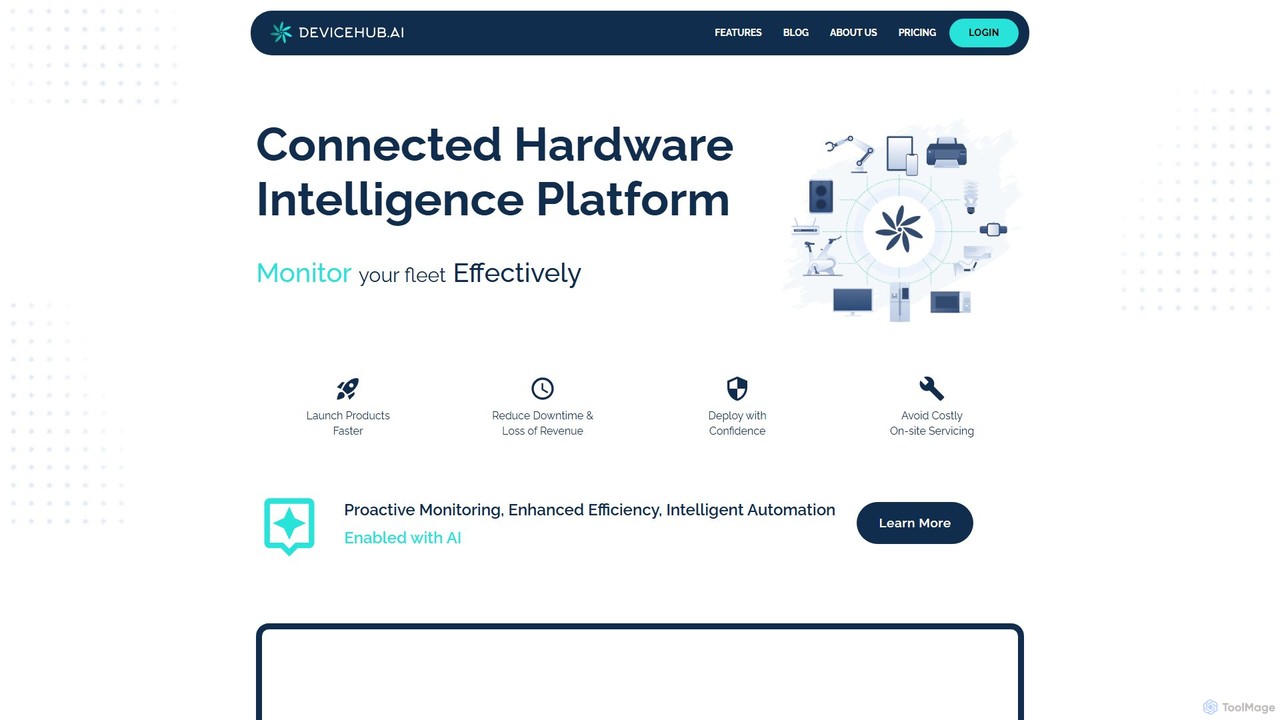
DeviceHub is an AI-powered intelligence platform for connected hardware. It enables companies to monitor, analyze, and deploy software to large-scale IoT device fleets, reducing downtime, accelerating product launches, and providing actionable insights through advanced AI and automation.
About Monitoring
Monitoring tools are AI-powered solutions designed to automatically track, analyze, and interpret vast amounts of data from various business operations, IT systems, and digital environments. Leveraging advanced machine learning algorithms, these tools excel at detecting subtle anomalies, predicting potential issues, and identifying complex patterns that traditional methods or human analysis might miss. Their primary value lies in providing real-time, actionable insights and operational intelligence, enabling businesses to proactively maintain efficiency, enhance security posture, and optimize performance across their entire infrastructure, contributing significantly to data-driven decision-making within the broader business context.
Core Features
- Anomaly Detection: Automatically identifies unusual patterns or deviations in operational data, signaling potential system failures, security breaches, or performance degradation before they escalate.
- Predictive Analytics: Utilizes historical data and machine learning models to forecast future trends, resource needs, and potential system outages, enabling proactive maintenance and strategic resource allocation.
- Real-time Dashboards: Offers customizable, interactive visualizations of key performance indicators (KPIs), operational metrics, and system health, providing immediate, comprehensive oversight.
- Automated Alerting: Configurable system that sends instant notifications to relevant teams via various channels (email, SMS, Slack) when predefined thresholds are breached or critical anomalies are detected.
- Root Cause Analysis: Employs AI to correlate events and data points from disparate sources, helping to quickly pinpoint the underlying causes of performance issues, incidents, or security threats.
Applicable Scenarios
AI monitoring tools are indispensable for IT operations teams managing complex cloud infrastructure, cybersecurity analysts detecting sophisticated threats, and business intelligence departments tracking critical operational KPIs. They are widely used in scenarios such as ensuring continuous website uptime and application availability, optimizing cloud resource utilization to control costs, identifying fraudulent financial transactions, and monitoring customer experience metrics to improve service delivery.
How to Choose
When selecting an AI monitoring tool, prioritize its integration capabilities with your existing IT ecosystem and business applications, ensuring seamless data ingestion from all relevant sources. Evaluate the tool's ability to provide not just data, but actionable insights and intelligent recommendations, reducing alert fatigue. Consider the flexibility of its customization options for dashboards and alerting rules, its scalability to handle growing data volumes, and the vendor's commitment to data privacy and compliance with industry-specific regulations.

MonitoringUse Cases
Proactive IT Infrastructure Health Monitoring
An IT operations manager uses AI monitoring tools to continuously track the performance and health of servers, networks, and cloud services. The AI automatically detects unusual CPU spikes, memory leaks, or network latency, predicting potential outages hours before they occur. This enables the team to address issues proactively, preventing downtime and ensuring critical business applications remain available, significantly reducing operational risks and costs associated with reactive troubleshooting.
Real-time Cybersecurity Threat Detection
A cybersecurity analyst deploys AI monitoring to scan network traffic, system logs, and user behavior for suspicious activities. The AI identifies subtle patterns indicative of phishing attempts, malware infections, or insider threats that might bypass traditional security measures. By correlating disparate data points, the tool provides immediate alerts with high fidelity, allowing the analyst to investigate and neutralize threats rapidly, thereby protecting sensitive business data and maintaining compliance with security regulations.
Optimizing Cloud Resource Utilization and Costs
A cloud architect uses AI monitoring to gain deep visibility into resource consumption across various cloud platforms. The AI analyzes usage patterns, identifies idle or underutilized instances, and detects anomalies in spending. Based on these insights, the tool provides recommendations for rightsizing virtual machines, scheduling auto-scaling events, and identifying cost-saving opportunities, helping the organization optimize its cloud expenditure while maintaining performance and scalability for business applications.
Enhancing Customer Experience Monitoring
A product manager leverages AI monitoring to track user interactions, application performance, and customer journey metrics across digital platforms. The AI identifies bottlenecks, slow loading times, or error patterns that negatively impact user experience. By analyzing these insights, the tool helps pinpoint areas for improvement in the product or service, leading to a smoother customer journey, increased satisfaction, and ultimately, higher retention rates and revenue for the business.
Monitoring Business Process Performance
An operations analyst uses AI monitoring to track the efficiency and compliance of critical business processes, such as order fulfillment or customer onboarding. The AI analyzes process logs and event data to identify bottlenecks, deviations from standard operating procedures, or potential compliance risks. This allows the analyst to gain insights into process performance, pinpoint areas for automation or optimization, and ensure that business operations run smoothly and adhere to regulatory requirements, improving overall operational efficiency.
Predictive Maintenance for Industrial Equipment
In a manufacturing plant, maintenance engineers utilize AI monitoring to analyze sensor data from machinery, such as temperature, vibration, and pressure. The AI detects subtle deviations from normal operating parameters, predicting equipment failures before they occur. This enables the engineers to schedule maintenance proactively, replacing parts or performing repairs during planned downtime, thereby minimizing unexpected breakdowns, extending equipment lifespan, and significantly reducing maintenance costs and production interruptions.