ToolMage
Sign in

Best 3 Salon Management AI tools for Business

Popular Salon Management AI tools in Business include Qlient, Amara, and LocSync, helping you work more efficiently.

LocSync
Paid

LocSync

LocSync is a 24/7 AI-powered receptionist specifically designed for locticians. Developed by a master loctician, it handles voice calls and chats to manage bookings, answer specialized loc care questions, collect deposits, and increase revenue through automated upselling.

Salon Management
Visits 6.1KFavorites 122Likes 128
Qlient

Qlient

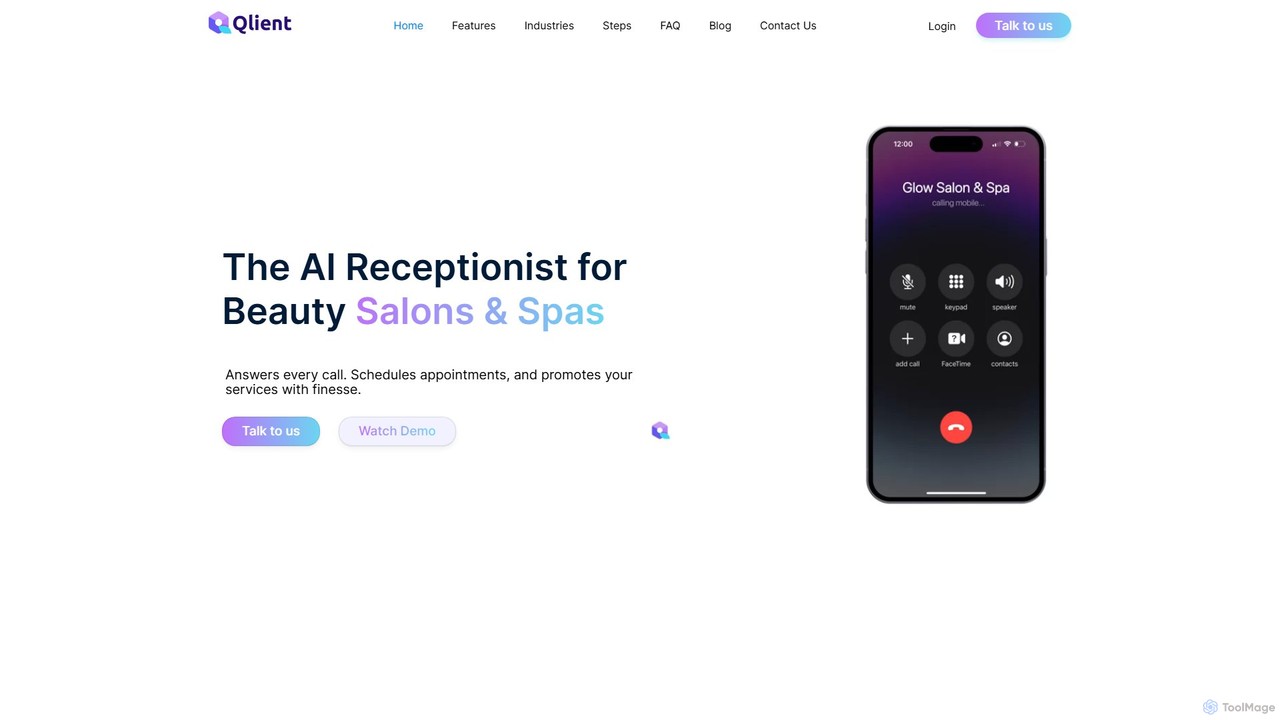
Qlient is a specialized AI receptionist for beauty salons and spas. It operates 24/7, using a hyper-realistic voice to answer calls, book appointments, manage calendars, and integrate with existing salon software. This enhances customer service and operational efficiency by ensuring no call or booking opportunity is ever missed.

Salon Management
Visits 7.7KFavorites 132Likes 152
Amara
Freemium

Amara

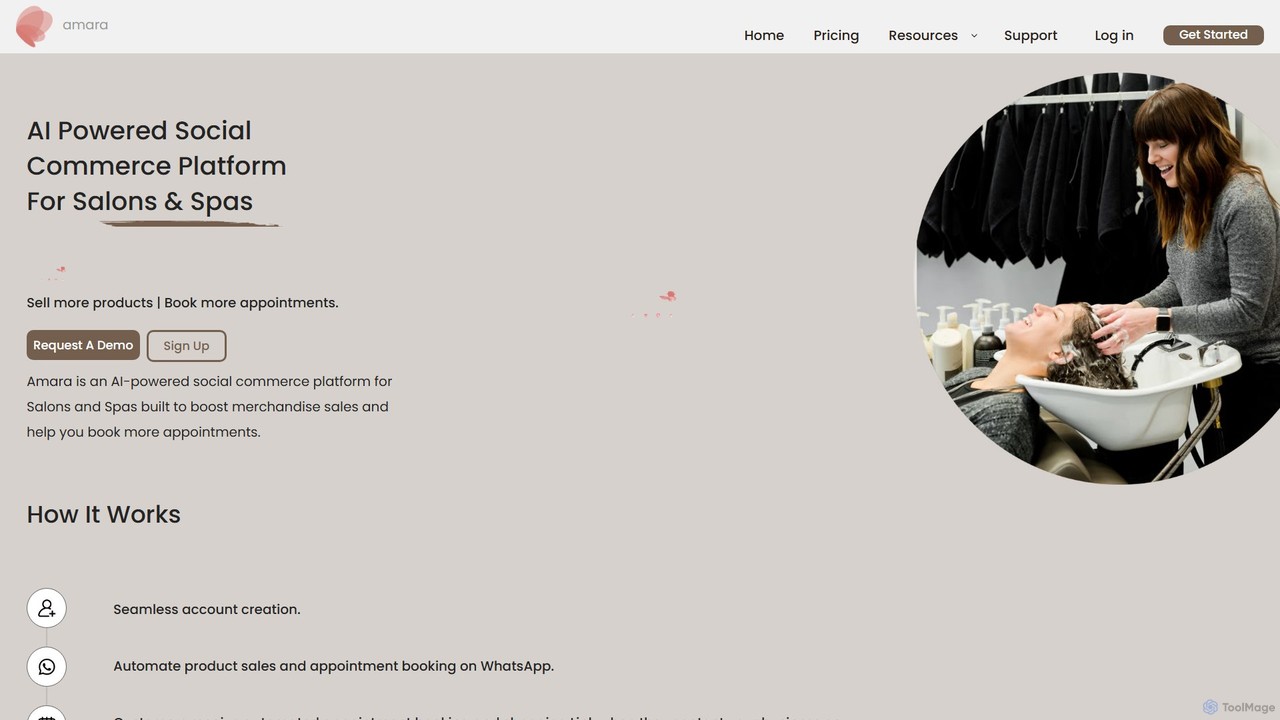
Amara is an AI-powered social commerce platform designed for salons and spas. It boosts merchandise sales and appointment bookings by automating customer interactions on WhatsApp, providing a custom online store, and leveraging AI analytics for business optimization.

Salon Management
Visits 6.7KFavorites 141Likes 132

About Salon Management

AI Salon Management tools are specialized platforms that leverage artificial intelligence to automate and optimize daily salon operations. These systems use machine learning algorithms to analyze client data, predict booking patterns, and personalize marketing efforts. The primary value lies in increasing operational efficiency, enhancing client retention, and providing data-driven insights for business growth. By automating routine tasks, these tools free up staff to focus on delivering exceptional client services.

Core Features

  • Intelligent Scheduling: Automatically suggests optimal appointment times based on staff availability, service duration, and client history to minimize gaps.
  • Automated Client Communication: Sends AI-powered appointment reminders, confirmations, and personalized follow-up messages to reduce no-shows.
  • Predictive Inventory Management: Forecasts product needs based on service history and upcoming appointments, suggesting timely reorders.
  • Personalized Marketing: Analyzes client behavior to create and send targeted promotional campaigns, such as birthday offers or service reminders.
  • Data Analytics & Reporting: Generates insightful reports on revenue, client retention, staff performance, and peak business hours.

Use Cases

These tools are ideal for salon owners, spa managers, and independent stylists seeking to streamline their business. They are applied in daily operations for managing appointments, communicating with clients, tracking inventory, and executing marketing strategies. For instance, a multi-location salon can use AI analytics to compare performance across branches, while a solo stylist can automate their booking and reminders to focus on clients.

How to Choose

When selecting an AI Salon Management tool, consider the specific needs of your business. Key factors include the platform's integration capabilities with existing POS systems and calendars, the sophistication of its AI features (e.g., predictive analytics vs. simple automation), and its scalability as your business grows. Also, evaluate the user interface for ease of use for both staff and clients, and review the pricing model to ensure it aligns with your budget and expected return on investment.

Salon Management use cases

1

Automate Appointment Booking and Rescheduling

A salon owner implements an AI management tool with a 24/7 online booking portal. When a client visits the website, an AI chatbot assists them in finding available slots with their preferred stylist, booking the service, and processing a deposit. The system automatically updates the stylist's calendar and sends an instant confirmation. If a client needs to reschedule, they can interact with the same bot, which intelligently offers alternative slots based on real-time availability, reducing front-desk calls by over 60% and ensuring the schedule is always optimized.

2

Execute Personalized Client Marketing Campaigns

A salon manager uses an AI tool to increase client retention. The system analyzes each client's service history, visit frequency, and product purchases. Based on this data, it automatically segments clients and sends targeted campaigns. For example, a client who regularly gets hair coloring receives a reminder with a special offer for a root touch-up after 6 weeks. Another client who hasn't visited in 3 months receives a 'We Miss You' promotion. This level of personalization leads to a 25% increase in repeat bookings from targeted campaigns.

3

Optimize Inventory with Predictive Ordering

A spa manager struggles with stockouts of popular retail products and overstocking of others. They adopt an AI salon management system with predictive inventory features. The AI analyzes historical sales data, service consumption rates (e.g., how much color is used per service), and upcoming appointments. It then generates precise reorder recommendations, flagging items that are running low and predicting future demand. This reduces inventory holding costs by 15% and ensures popular products are always in stock, improving both cash flow and client satisfaction.

4

Enhance Staff Performance with AI Analytics

The owner of a multi-stylist salon uses an AI platform to gain deeper insights into staff performance. The system tracks key metrics for each stylist, such as client retention rate, average service ticket, retail sales, and client reviews. The AI identifies top performers and areas for improvement, for example, flagging that a junior stylist has excellent reviews but low retail sales. Based on this insight, the owner provides targeted sales training to that stylist. This data-driven approach helps in creating fair incentive programs and personalized professional development plans, boosting overall team productivity.

5

Automate Client Feedback Collection and Analysis

To consistently improve service quality, a salon automates its feedback process. 24 hours after each appointment, the AI system automatically sends a personalized email or SMS to the client asking for a rating and comments. The AI then processes all incoming feedback, using natural language processing (NLP) to analyze text comments for sentiment (positive, negative, neutral) and key themes (e.g., 'waiting time', 'staff friendliness', 'price'). This provides the management with a real-time dashboard of client satisfaction, highlighting recurring issues without requiring manual review of hundreds of comments.

6

Implement Dynamic Pricing for Services

A high-end salon aims to maximize revenue by optimizing its pricing structure. They use an AI management tool that suggests dynamic pricing. The AI analyzes factors like demand for specific stylists, peak vs. off-peak hours, day of the week, and seasonality. For instance, it might suggest a slight price increase for Saturday afternoon appointments with a senior stylist, or offer a small discount for a Tuesday morning slot. This strategy helps fill unpopular time slots and maximizes earnings during high-demand periods, leading to an overall revenue increase of 10-15% without alienating clients.

Salon Management FAQ

What is AI Salon Management software?

AI Salon Management software is a specialized business tool that uses artificial intelligence to streamline and enhance salon operations. Unlike traditional software, it employs machine learning to automate tasks like intelligent appointment scheduling, send personalized client marketing, predict inventory needs, and provide deep business analytics. The core purpose is to reduce administrative workload, improve client engagement, and help salon owners make data-driven decisions for growth.

How is AI salon software different from standard salon software?

The key difference lies in automation and intelligence. Standard software typically requires manual input for scheduling, marketing, and reporting. AI salon software, on the other hand, is proactive. It can:

  • Predict trends: Forecast no-shows or peak booking times.
  • Personalize automatically: Send unique marketing messages to different client segments without manual setup.
  • Optimize schedules: Intelligently fill gaps in calendars to maximize staff utilization.
  • Provide deeper insights: Analyze data to uncover hidden patterns in client behavior or sales.
In essence, standard software is a digital record-keeper, while AI software acts as an intelligent assistant to optimize the business.

What key AI features should I look for in a salon management tool?

When evaluating AI salon management tools, prioritize features that offer tangible benefits. Look for:

  • Predictive Scheduling: Goes beyond simple booking to suggest optimal times and reduce gaps.
  • Automated, Personalized Marketing: Creates and sends targeted campaigns based on client data (e.g., service history, visit frequency).
  • Smart Inventory Management: Forecasts product usage and suggests reorder points to prevent stockouts.
  • Client Sentiment Analysis: Automatically analyzes reviews and feedback to gauge satisfaction and identify issues.
  • Performance Analytics: Provides data-driven reports on staff productivity, client retention, and revenue trends.
These features move beyond basic automation to provide strategic value for your business.

Can AI salon tools really help with client retention?

Yes, significantly. AI tools enhance client retention primarily through personalization and proactive communication. By analyzing client data, they can automatically send timely reminders for follow-up services, personalized birthday offers, or promotions for products a client has previously purchased. Furthermore, by automating feedback collection and analyzing sentiment, salons can quickly identify and address sources of client dissatisfaction before they lead to churn. This data-driven approach to client relationship management builds loyalty and makes clients feel valued, which is key to retention.

How do I choose the right AI Salon Management tool for my business?

Choosing the right tool depends on your specific needs. Follow these steps:
1. Assess Your Needs: Are you a solo stylist needing booking automation, or a multi-location salon requiring advanced analytics? List your top 3-5 challenges.
2. Check Integrations: Ensure the tool integrates with your existing systems, such as your payment processor (POS), accounting software, and website.
3. Evaluate AI Features: Don't just look for the 'AI' label. Ask for demos to see how the predictive scheduling or personalized marketing actually works.
4. Consider User Experience: The software should be intuitive for both your staff and your clients (for online booking).
5. Review Pricing & Scalability: Choose a plan that fits your current budget but can also grow with your business.