Business Best in category 1 results Services AI Tool

Popular AI tools in the Services field of Business include Scribie, etc., helping you quickly improve efficiency.

Scribie

Scribie

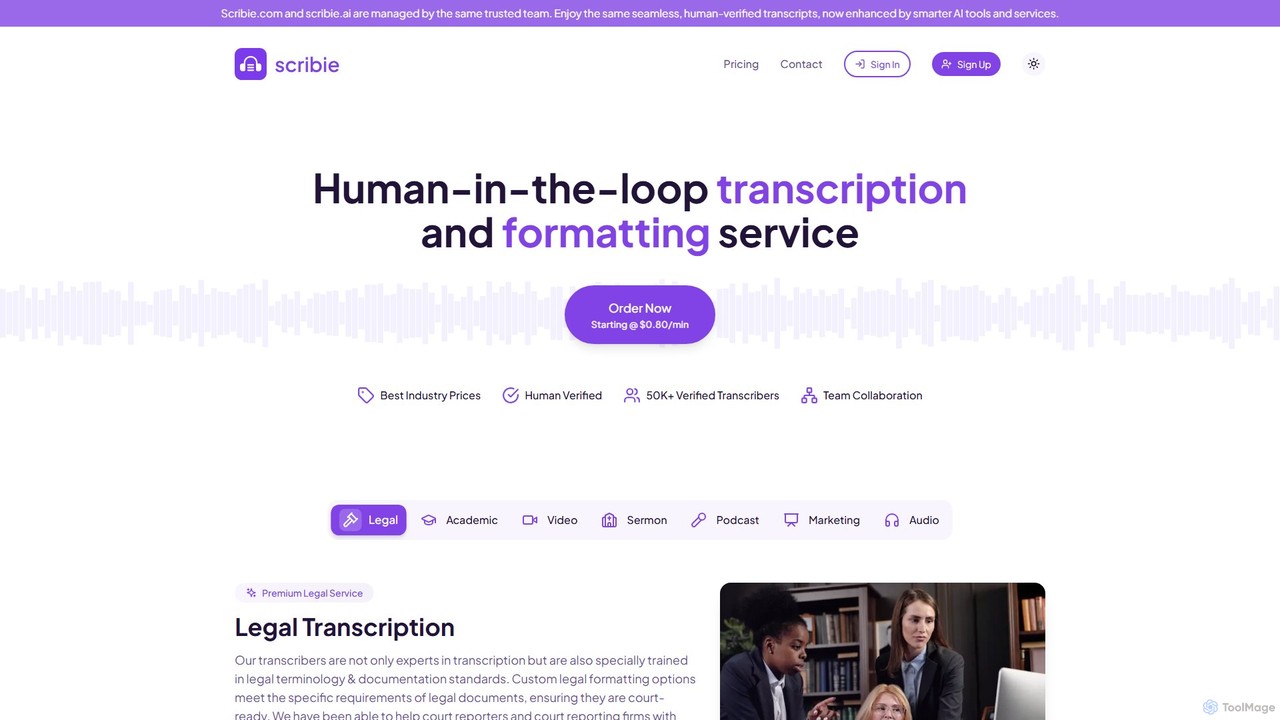
Scribie offers AI-enhanced, human-verified transcription services, providing highly accurate and affordable transcripts. It combines advanced technology with a …

18.0K

About Services

AI Services are specialized AI-powered tools designed to automate, enhance, or deliver specific business functions and customer interactions. These tools leverage advanced machine learning, natural language processing, and data analytics to streamline operations, personalize experiences, and provide data-driven insights. As a sub-category of Business AI, they focus on delivering tangible, often automated, value across various departmental needs, from customer support to marketing and sales.

Core Features

  • Automated Customer Interaction: Deploying chatbots and virtual assistants for 24/7 support and inquiry handling.
  • Personalized Marketing & Sales: Tailoring content, product recommendations, and lead nurturing based on user behavior and data.
  • Data-driven Business Insights: Analyzing large datasets to identify trends, predict outcomes, and inform strategic decisions.
  • Intelligent Process Automation: Automating repetitive, rule-based tasks across departments like HR, finance, and operations.
  • Content & Media Generation: Creating text, images, or audio for marketing, customer communication, or internal use as a service.

Applicable Scenarios

Businesses across various sectors utilize AI Services to optimize their operations. E-commerce companies use them for automated customer support and personalized product recommendations. Marketing agencies leverage AI for targeted campaign management and content creation. Financial institutions deploy AI for fraud detection and risk assessment, while HR departments use them for efficient candidate screening and onboarding processes.

How to Choose

When selecting an AI Service tool, consider its alignment with your specific business needs, such as customer support, marketing automation, or data analysis. Evaluate its integration capabilities with your existing CRM, ERP, or other systems. Assess the scalability of the solution to grow with your business, and scrutinize its data privacy and security protocols. Finally, compare pricing models and the level of customization offered to ensure it fits your budget and operational requirements.

ServicesUse Cases

1

Automating Customer Service Responses

E-commerce businesses deploy AI chatbots to handle common customer inquiries 24/7, providing instant support and reducing the workload on human agents, leading to faster resolution times and improved customer satisfaction.

2

Personalizing Marketing Content Recommendations

Marketing teams utilize AI services to analyze user behavior and preferences, automatically generating and recommending tailored products or content to individual customers, significantly increasing engagement and conversion rates.

3

Intelligent Sales Lead Qualification & Nurturing

Sales teams leverage AI tools to automatically assess the intent of potential leads, score them based on likelihood to convert, and send customized follow-up communications, thereby streamlining the sales pipeline and boosting efficiency.

4

Streamlining HR Candidate Screening

HR departments use AI services to quickly analyze large volumes of resumes and applications, identifying candidates whose skills and experience best match job requirements, which accelerates the recruitment process and reduces time-to-hire.

5

Real-time Financial Fraud Detection

Financial institutions implement AI services to continuously monitor transaction data, promptly detecting anomalous patterns and potential fraudulent activities, thereby mitigating financial risks and enhancing security measures.

6

Optimizing Supply Chain Demand Forecasting

Manufacturing companies employ AI services to analyze historical sales data, market trends, and external factors, accurately predicting product demand to optimize inventory levels, production schedules, and logistics, reducing waste and costs.

ServicesFrequently Asked Questions