ToolMage
Sign in

Best 123 Startup Tools for Business

Popular Startup Tools in Business include LogoAI, LOGO.com, Tailor Brands, Freelogodesign, Logomakerr.ai, OpenVC, Prelaunch.com, Logomaster.ai, Sell The Trend, and Visible, helping you work more efficiently.

LiftMyPitch
Free

LiftMyPitch

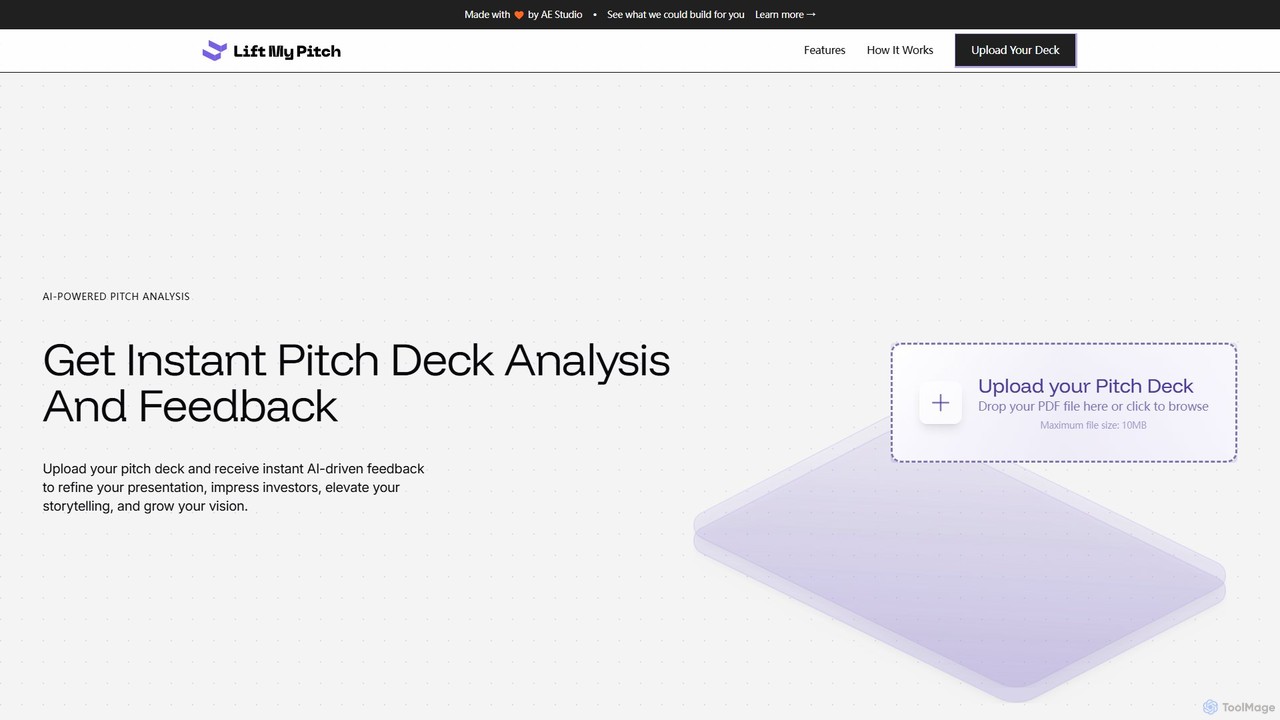
An AI-powered tool that provides instant analysis and actionable feedback on your pitch deck. Upload your PDF to receive insights on structure, narrative, and design, helping you refine your presentation to impress investors and secure funding.

Startup Tools
Visits 5.8KFavorites 142Likes 136
exitfund
Free

exitfund

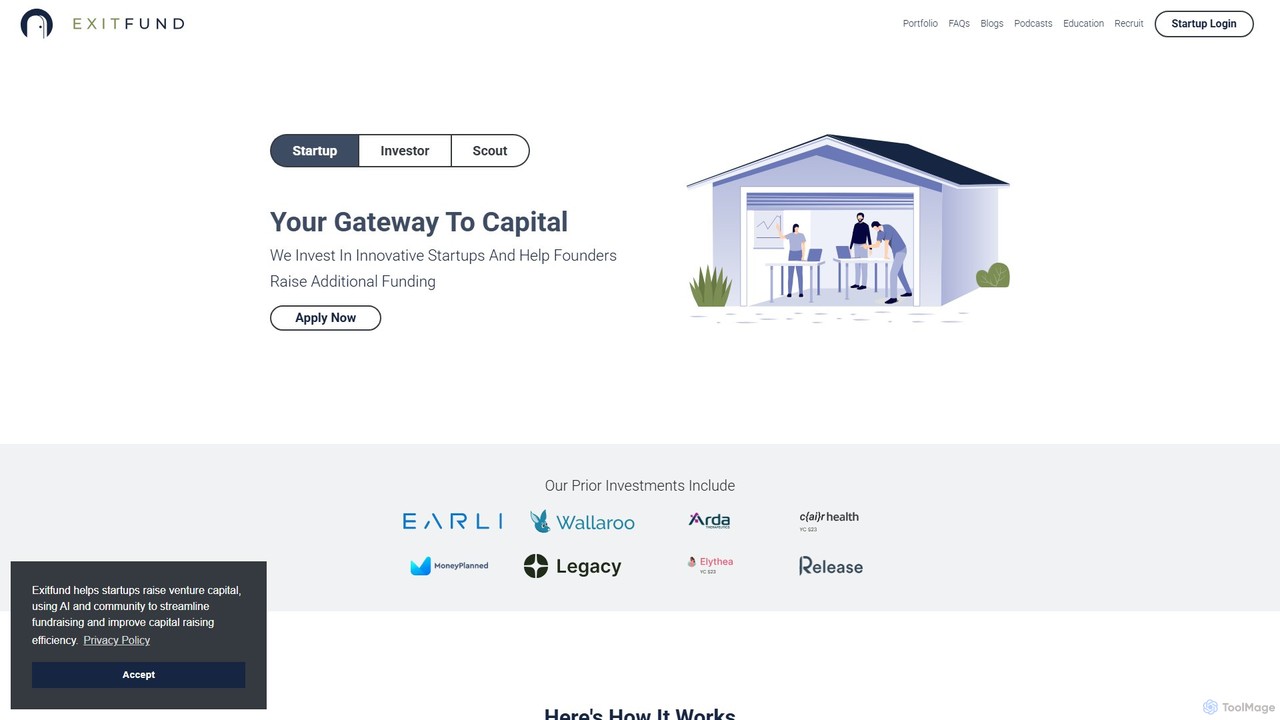
Exitfund is an investment platform and angel investor network that provides capital and mentorship to innovative early-stage startups. It offers a streamlined application process, rapid decision-making, and access to a powerful community of founders and co-investors to help entrepreneurs succeed.

Startup Tools
Visits 7.9KFavorites 164Likes 136
FutureFounderAI
Paid

FutureFounderAI

FutureFounderAI is an AI-powered platform designed for aspiring entrepreneurs to validate their business ideas. It analyzes your concept against market trends, provides a strength assessment, and offers personalized guidance and market insights to refine your plan and increase your chances of success.

Startup Tools
Visits 5.9KFavorites 101Likes 115

About Startup Tools

AI Startup Tools are a specialized suite of applications designed to accelerate the journey of early-stage companies. These tools leverage artificial intelligence to automate and enhance critical tasks such as idea validation, market research, business planning, and fundraising preparation. They provide data-driven insights and generate essential assets, enabling founders to launch and scale faster with limited resources. This focused approach helps startups navigate uncertainty and increase their chances of success.

Core Features

  • Idea Validation & Market Analysis: Uses AI to analyze market trends, competitor landscapes, and potential customer demand to assess business viability.
  • Business Plan & Pitch Deck Generation: Automatically creates structured business plans, financial projections, and persuasive investor pitch decks from user inputs.
  • MVP & Landing Page Builders: Enables the rapid creation of minimum viable products (MVPs) and high-converting landing pages, often with no-code interfaces.
  • Automated Financial Modeling: Generates detailed financial forecasts, including profit and loss statements, cash flow analysis, and cap table management.
  • Growth Hacking Automation: Identifies target customer segments and automates initial outreach for marketing and lead generation campaigns.

Use Cases

These tools are primarily used by aspiring entrepreneurs, early-stage founders, and teams within incubators or accelerators. For instance, a solo founder can use an AI tool to validate a new app idea against market data before development. A small team can generate a professional pitch deck and financial model in hours, not weeks, to prepare for a seed funding round.

How to Choose

When selecting an AI Startup Tool, consider your current stage; tools for ideation differ from those for scaling. Evaluate the scope of features—do you need an all-in-one platform or a specialized tool for a single task like pitch deck creation? Assess integration capabilities with other software you use, and consider the tool's scalability to ensure it can support your company's growth.

Featured tool rankings

Startup Tools use cases

1

Validate a New Business Idea

An aspiring entrepreneur has an idea for a subscription box service for eco-friendly products. Before investing time and money, they use an AI startup tool to conduct market analysis. They input their concept, target audience (eco-conscious millennials), and potential product categories. The AI scans market reports, social media trends, and competitor data to generate a viability score. It highlights a high demand for sustainable home goods but low interest in subscription models for this niche. This data-driven insight helps the founder pivot their idea to an e-commerce store instead, saving months of pursuing a less viable model.

2

Create a Pitch Deck for Investors

A small tech startup with two co-founders needs to raise a seed round. They lack design skills and are short on time. Using an AI pitch deck generator, they input key information: the problem they solve, their solution, target market size, business model, and team bios. The AI tool structures this information into a standard 10-slide investor deck format. It suggests compelling visuals, generates concise copy for each slide, and even creates initial financial projection charts. Within two hours, they have a professional, well-structured presentation ready for investor meetings, a task that would have previously taken them several days.

3

Build a No-Code MVP Landing Page

A non-technical founder wants to test demand for a new B2B SaaS product. Instead of hiring a developer, she uses an AI landing page builder. She describes her product and target audience in plain English. The AI generates several design layouts, writes persuasive headline and feature copy, and selects relevant stock imagery. She can then easily customize the colors and branding. The tool also integrates a simple email sign-up form to collect leads from interested visitors. In under a day, she launches a professional-looking landing page to start gathering user feedback and building a waitlist, validating her concept with real market interest.

4

Generate a Go-to-Market Strategy

A startup is ready to launch its mobile app but has a limited marketing budget. The team uses an AI strategy tool to develop a go-to-market plan. They provide details about their app's features, ideal customer profile, and budget constraints. The AI analyzes this information and proposes a multi-channel strategy. It suggests focusing on organic social media content for TikTok and Instagram, identifies three niche subreddits for community engagement, and generates a list of micro-influencers for potential collaboration. It also drafts initial ad copy and suggests a small starting budget for targeted Facebook ads, providing a clear, actionable launch plan.

5

Automate Financial Projections

A founder preparing for an angel investor meeting needs a three-year financial forecast but isn't an expert in finance. They use an AI financial modeling tool. They input their pricing model ($20/month subscription), estimated customer acquisition cost ($50), and projected monthly user growth (15%). The AI automatically generates a detailed profit and loss statement, cash flow forecast, and balance sheet. It also calculates key metrics like customer lifetime value (LTV) and churn rate assumptions. This allows the founder to present a credible and comprehensive financial plan with confidence, without needing to spend weeks learning complex spreadsheet formulas.

6

Draft Initial Legal Documents

Two co-founders are officially starting their company and need a founder's agreement. To save on initial legal costs, they use an AI legal document generator. They answer a series of questions about equity split, roles and responsibilities, vesting schedules, and intellectual property ownership. Based on their answers, the tool generates a standard, customizable founder's agreement. While this document is not a substitute for advice from a qualified lawyer, it provides a solid, comprehensive starting point for their discussions and helps them formalize their partnership quickly and cost-effectively, allowing them to focus on building the product.

Startup Tools FAQ

What are AI Startup Tools?

AI Startup Tools are a category of software specifically designed to address the unique challenges faced by new and early-stage companies. They use artificial intelligence to automate and streamline essential startup activities like validating business ideas, conducting market research, creating business plans and pitch decks, and building minimum viable products (MVPs). Unlike general business software, these tools are built for speed, agility, and resource efficiency, helping founders make data-driven decisions and accelerate their path to launch and growth with a smaller team and budget.

How do AI Startup Tools differ from general Business AI Tools?

The primary difference lies in their focus and application. General Business AI Tools are often designed for established companies to optimize existing operations, such as enterprise CRMs, supply chain management, or HR analytics. In contrast, AI Startup Tools are built for the pre-launch and early-growth phases. They focus on:

  • Validation and Creation: Helping create a business from scratch (e.g., idea validation, pitch deck generation).
  • Speed over Perfection: Enabling rapid prototyping and testing (e.g., no-code MVP builders).
  • Resource Constraint: Designed for small teams with limited budgets and technical expertise.
  • All-in-One Functionality: Often bundling multiple early-stage needs into a single platform.
In short, startup tools help build the plane, while general business tools help fly it more efficiently once it's airborne.

Who should use AI Startup Tools?

AI Startup Tools are most beneficial for individuals and small teams at the beginning of their entrepreneurial journey. This includes:

  • Aspiring Entrepreneurs: People with a business idea who need to validate its potential and create a foundational plan.
  • Early-Stage Founders: Founders who are actively building their product, seeking funding, and planning their market launch.
  • Non-Technical Founders: Individuals without a coding background who want to build a prototype or landing page quickly.
  • Bootstrapped Startups: Companies operating on a tight budget that need to maximize efficiency and minimize costs for tasks like marketing, financial modeling, and legal paperwork.
  • Participants in Incubators/Accelerators: Teams in structured programs who need to achieve milestones rapidly.

What key features should I look for in an AI Startup Tool?

When choosing an AI Startup Tool, prioritize features that align with your immediate needs. Key features to look for include:

  • Market and Idea Validation: The ability to analyze market data, competitor information, and trends to help you refine your business concept.
  • Business Plan and Pitch Deck Generation: Tools that can quickly structure your ideas into professional documents for stakeholders and investors.
  • No-Code Development: Features for building functional websites, landing pages, or MVPs without needing to write code.
  • Financial Modeling: Automated generation of financial projections like P&L statements and cash flow forecasts.
  • Integration Capabilities: The ability to connect with other essential tools in your workflow, such as CRMs, email marketing platforms, or analytics software.

Can AI tools replace human advisors and co-founders?

No, AI startup tools are designed to be powerful assistants, not replacements for human expertise and collaboration. They excel at automating repetitive tasks, analyzing large datasets, and generating structured content based on inputs. However, they cannot replicate the strategic thinking, creativity, industry experience, and network that human advisors, mentors, and co-founders bring. The most effective approach is to use AI tools to augment the founding team's capabilities, freeing up their time from tedious tasks to focus on high-level strategy, building relationships, and making critical business decisions.