ToolMage
Sign in

Best 1 Ai Interviewing AI tools for Career Development

Popular Ai Interviewing AI tools in Career Development include Uptoskills, helping you work more efficiently.

Uptoskills

Uptoskills

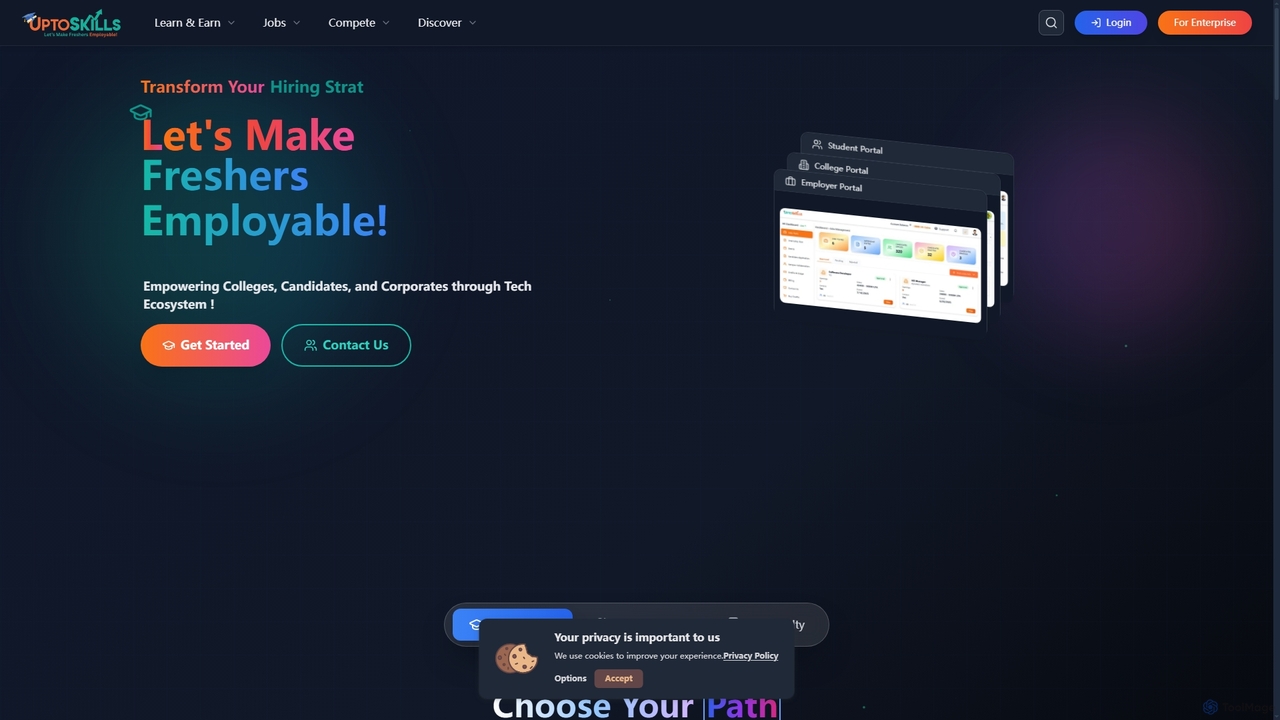
Uptoskills is an AI-powered career ecosystem designed to transform skill sets and enhance employability for students, faculty, and corporates. It offers advanced AI Interview and Assessment platforms, alongside a comprehensive suite of features for job discovery, internships, skill development, and competitive events.

Ai Interviewing
Visits 51.1KFavorites 143Likes 142

About Ai Interviewing

AI Interviewing tools are a category of AI-powered platforms designed to simulate job interviews, provide real-time feedback, and assist in candidate assessment. Leveraging advanced natural language processing, computer vision, and machine learning, these tools analyze verbal and non-verbal cues, offering objective insights into a candidate's performance. They serve as invaluable resources for job seekers to hone their interview skills and for organizations to streamline and standardize their recruitment processes, ultimately enhancing efficiency and fairness in hiring.

Core Features

  • Virtual Interview Simulation: Conduct mock interviews with AI avatars or pre-recorded questions, replicating real-world scenarios.
  • Real-time Performance Feedback: Receive instant analysis on speaking pace, tone, eye contact, facial expressions, and answer content.
  • Question Generation & Customization: AI generates relevant interview questions based on job descriptions or specific skill sets.
  • Sentiment & Emotion Analysis: Tools assess emotional cues and confidence levels during responses.
  • Automated Candidate Scoring: Objectively score candidates based on predefined criteria, reducing human bias in initial screening.

Applicable Scenarios

Job seekers utilize these tools for comprehensive practice and self-improvement before critical interviews. Recruiters and HR departments deploy them for initial candidate screening, ensuring a standardized and efficient first-round assessment. Career coaches integrate AI interviewing platforms to provide data-driven, personalized feedback to their clients, enhancing their readiness for the job market.

How to Choose

When selecting an AI Interviewing tool, consider the depth and type of feedback offered (e.g., verbal, non-verbal, content analysis). Evaluate its customization options for interview questions and scenarios, ensuring it aligns with specific job roles or company culture. Data privacy and security features are crucial, especially for sensitive candidate information. Finally, assess the user interface's intuitiveness and the platform's integration capabilities with existing HR systems.

Ai Interviewing use cases

1

Job Seekers Practicing for Specific Roles

A software engineer preparing for a technical interview uses an AI interviewing tool to simulate a coding challenge discussion. The tool provides feedback on clarity of explanation, problem-solving approach, and confidence, helping the candidate refine their communication skills and technical articulation before the actual interview.

2

Recruiters Conducting Initial Candidate Screening

An HR recruiter for a large corporation uses an AI interviewing platform to conduct the first round of interviews for hundreds of applicants. The AI analyzes candidates' responses to standardized questions, identifying key skills and cultural fit indicators, allowing the recruiter to efficiently shortlist the most promising candidates for human review.

3

HR Departments Standardizing Interview Processes

A global company implements an AI interviewing system to ensure consistency across all entry-level interviews worldwide. This standardizes the questions asked, the evaluation criteria, and the feedback provided, reducing unconscious bias and ensuring a fair and equitable assessment process for all candidates, regardless of location.

4

Career Coaches Providing Data-Driven Feedback

A career coach integrates AI interviewing tools into their coaching sessions. After a client completes a mock interview, the coach reviews the AI's detailed performance report, which highlights areas like speaking pace, filler words, and body language. This objective data allows the coach to offer highly targeted and effective advice for improvement.

5

Universities Preparing Students for the Job Market

A university career services department offers AI interviewing practice to graduating students. Students can practice various interview types (e.g., behavioral, case study) and receive immediate, private feedback. This helps them build confidence and identify areas for improvement in a low-stakes environment before facing real employers.

6

Companies Assessing Soft Skills at Scale

A customer service company uses AI interviewing to evaluate candidates' communication, empathy, and problem-solving skills for high-volume roles. The AI's ability to analyze tone, word choice, and response structure provides consistent, scalable insights into soft skills that are difficult to assess manually in early stages, streamlining the hiring funnel.

Ai Interviewing FAQ

What are AI Interviewing tools?

AI Interviewing tools are platforms that use artificial intelligence to simulate job interviews and analyze candidate performance. They leverage technologies like natural language processing and computer vision to evaluate verbal responses, body language, and vocal cues, providing objective feedback to both job seekers for practice and recruiters for initial screening.

How can AI Interviewing improve my job search or recruitment process?

For job seekers, AI Interviewing offers a safe space to practice, receive instant, unbiased feedback, and identify areas for improvement, boosting confidence. For recruiters, it standardizes the initial screening process, reduces time-to-hire, minimizes human bias, and allows for efficient assessment of a large volume of candidates, focusing human effort on top talent.

What features should I look for in an AI Interviewing tool?

Key features to consider include virtual interview simulation with customizable questions, real-time feedback on verbal and non-verbal cues (e.g., pace, tone, eye contact), sentiment analysis, and detailed performance reports. Look for tools that offer diverse interview scenarios, data privacy compliance, and user-friendly interfaces for an effective experience.

Is AI Interviewing fair and unbiased?

AI Interviewing aims to reduce human bias by applying consistent evaluation criteria and objective analysis. While AI systems can be trained on diverse datasets to minimize inherent biases, it's crucial for developers and users to regularly audit and refine algorithms to ensure fairness. When implemented correctly, AI can offer a more standardized and less subjective initial assessment than traditional methods.

How does AI Interviewing differ from traditional human interviews?

AI Interviewing primarily focuses on objective, data-driven analysis of specific performance metrics (e.g., speaking patterns, facial expressions, keyword usage) in a structured, often automated, environment. Traditional human interviews, while offering nuanced interaction and deeper contextual understanding, can be more susceptible to unconscious biases and inconsistencies in evaluation. AI tools often serve as a complementary first step to human interviews.