ToolMage
Sign in

Best 14 Interview Preparation AI tools for Career Development

Popular Interview Preparation AI tools in Career Development include Nora AI, JobGenie, Applikit, Duos, Intervify, HireHelp, Instict, English Job Ready, JobInterview, and Resumefy, helping you work more efficiently.

Duos

Duos

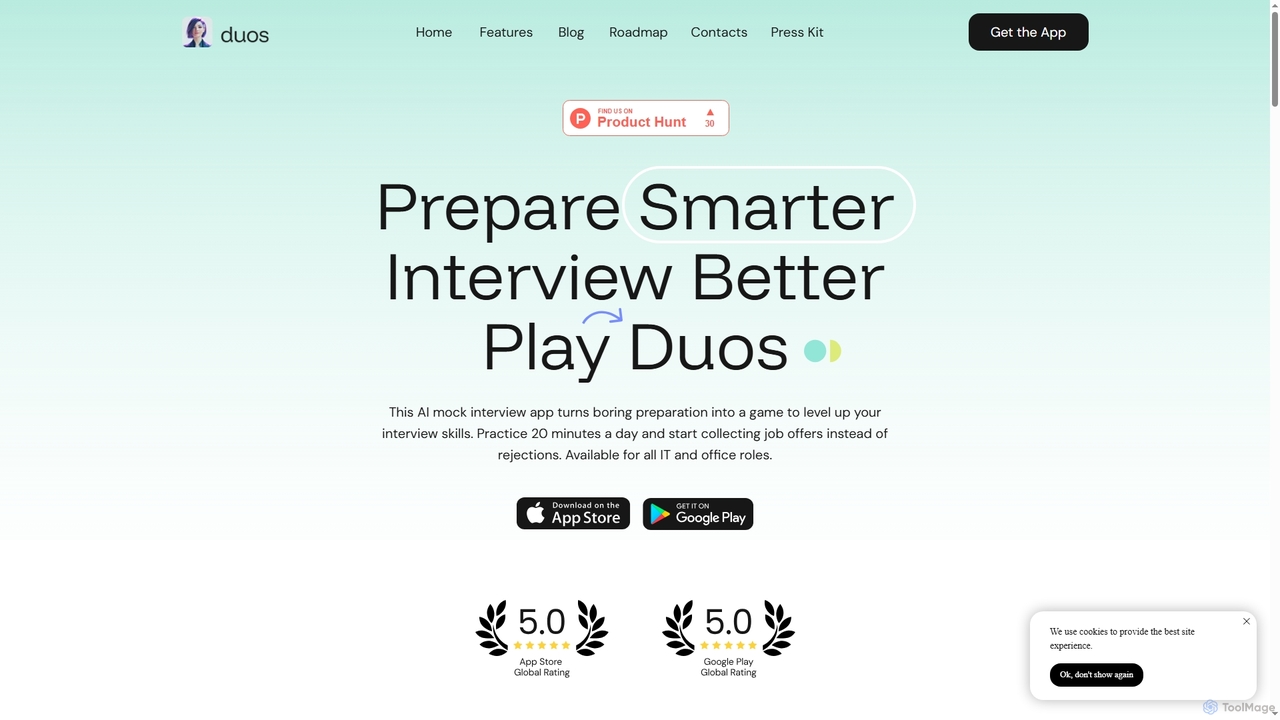
Duos is an AI mock interview simulator that transforms job interview preparation into an engaging, gamified experience. It offers realistic interview scenarios, instant AI feedback, and personalized coaching to help professionals in IT and office roles build confidence and ace their next interview.

Interview Preparation
Visits 7.2KFavorites 106Likes 101

About Interview Preparation

AI Interview Preparation tools are specialized applications designed to help users practice and improve their interview skills through simulated experiences. These tools leverage artificial intelligence, including natural language processing (NLP) and computer vision, to provide real-time, data-driven feedback on both verbal and non-verbal communication. By analyzing aspects like speech clarity, filler words, pace, and body language, they offer objective insights that are difficult to obtain through traditional practice. This enables candidates to build confidence, refine their answers, and perform more effectively in actual job interviews.

Core Features

  • AI-Powered Mock Interviews: Simulates realistic interview scenarios with questions tailored to specific roles or industries.
  • Real-time Performance Feedback: Provides instant analysis on speech metrics such as pace, tone, filler words, and word choice.
  • Body Language Analysis: Uses computer vision to offer feedback on eye contact, posture, and facial expressions.
  • Answer Transcription & Analysis: Transcribes user responses and analyzes them for clarity, conciseness, and keyword relevance.
  • Customizable Question Banks: Allows users to practice with common questions or upload specific questions for a targeted role.

Use Cases

These tools are widely used by job seekers across all experience levels, from recent graduates preparing for their first corporate role to senior professionals aiming for executive positions. They are particularly valuable for individuals preparing for remote video interviews, non-native speakers looking to improve fluency and clarity, and anyone seeking to overcome interview anxiety by practicing in a private, low-stress environment.

How to Choose

When selecting an AI Interview Preparation tool, consider the depth and quality of the feedback provided—does it cover both verbal and non-verbal cues? Evaluate the relevance and size of the question library for your specific industry. Assess the platform's user interface and ease of use. Finally, review the privacy policy to understand how your video and audio data are handled and stored.

Featured tool rankings

Interview Preparation use cases

1

Practicing for a Tech Industry Interview

A software engineer preparing for an interview at a major tech company uses an AI tool to practice behavioral and system design questions. They can select a 'Software Engineering' interview module which provides relevant prompts. The AI analyzes their responses for technical clarity, confidence in tone, and the structure of their explanations. It flags overuse of filler words like 'um' and 'like', and provides a detailed report on their speech pace. This allows the engineer to refine how they articulate complex technical concepts, ensuring their answers are both accurate and easy to follow, significantly boosting their confidence before the real interview.

2

Simulating a Management Position Interview

A project manager aspiring to a director-level role uses an AI interview tool to prepare for leadership-focused questions. The tool simulates scenarios asking about conflict resolution, strategic planning, and team motivation. The AI provides feedback on body language, such as maintaining eye contact and projecting a confident posture, which are critical for leadership roles. It also analyzes the word choice, suggesting stronger, more decisive language. After several practice sessions, the manager feels more prepared to articulate their leadership philosophy and strategic vision, demonstrating the executive presence required for the promotion.

3

Building Confidence for a First Job Interview

A recent university graduate with limited interview experience uses an AI tool to build confidence. They start with common questions like 'Tell me about yourself' and 'What are your weaknesses?'. The tool provides a safe space to practice without fear of judgment. The instant feedback helps them identify and reduce nervous habits, such as speaking too quickly or avoiding eye contact. The tool's transcription feature allows them to review their answers and refine them for clarity and impact. By repeatedly practicing, the graduate becomes more comfortable and articulate, transforming their anxiety into confidence for their first real-world interviews.

4

Improving Fluency for Non-Native Speakers

An international professional applying for a job in an English-speaking country uses an AI interview tool to practice their language skills. The tool's real-time feedback on pronunciation, pace, and use of filler words is invaluable. It highlights words that are mispronounced and suggests a more natural speaking rhythm. The user can practice industry-specific terminology repeatedly until they are comfortable. This targeted practice helps them communicate their qualifications more effectively and reduces the language barrier, allowing their professional expertise to shine through during the interview.

5

Rehearsing a Sales Pitch for an Interview

A sales professional interviewing for a new role is asked to prepare a mock sales pitch. They use an AI interview tool to rehearse their presentation. The tool's AI analyzes their tone of voice for enthusiasm and persuasiveness, and tracks their body language for confident gestures. It provides a word cloud of their pitch, helping them ensure key value propositions are mentioned frequently. The feedback helps them refine their delivery, making it more engaging and impactful. They enter the interview ready to deliver a polished and compelling pitch that demonstrates their sales acumen.

6

Preparing for an Internal Promotion Interview

An employee applying for a promotion within their current company uses an AI tool to practice articulating their past contributions and future vision. They upload specific questions related to their company's goals and the new role's responsibilities. The tool helps them structure their answers using the STAR (Situation, Task, Action, Result) method by analyzing the transcript for these key components. It also provides feedback on their tone to ensure they sound collaborative and forward-thinking, not just self-promotional. This preparation helps them clearly demonstrate their value and readiness for increased responsibility to the internal hiring committee.

Interview Preparation FAQ

What are AI Interview Preparation tools?

AI Interview Preparation tools are software applications that use artificial intelligence to simulate job interviews and provide feedback to users. They leverage technologies like Natural Language Processing (NLP) to understand what you say and computer vision to analyze non-verbal cues like eye contact and posture. The primary goal is to offer an objective, data-driven way for candidates to practice, identify weaknesses, and build confidence before a real interview. Unlike simply recording yourself, these tools provide structured, actionable feedback on specific performance metrics.

How do I choose the right AI Interview Preparation tool?

To choose the right tool, consider these factors:

  • Feedback Quality: Look for tools that offer comprehensive feedback on both verbal (clarity, filler words, pace) and non-verbal (eye contact, posture) communication.
  • Question Relevance: Ensure the tool has a robust and relevant question bank for your specific industry or role (e.g., tech, finance, marketing).
  • User Experience: The platform should be intuitive and easy to use, allowing you to focus on practicing rather than navigating a complex interface.
  • Privacy Policy: Since you'll be recording video and audio, review how the company handles and protects your data.
How do these tools differ from just recording myself?

While recording yourself is a useful practice, AI tools offer a significant advantage: structured, real-time analysis. A simple recording allows for self-review, which can be subjective. AI tools, however, act as an objective coach. They actively analyze your performance against specific metrics (e.g., filler word count, speech pace in words per minute, percentage of eye contact) and provide instant, data-driven reports. This targeted feedback makes it much easier to identify specific areas for improvement and track your progress over time, which is difficult to do with self-recording alone.

Can AI Interview Preparation tools help with technical interviews?

Yes, many AI interview tools can assist with technical interview preparation, although their capabilities vary. They often feature specialized question banks for roles in software engineering, data science, or finance. While an AI cannot judge the correctness of your code like a human can, it excels at evaluating how you communicate your technical solution. It can provide feedback on the clarity of your explanation, your confidence, and your ability to structure a complex answer. This helps you practice articulating your thought process, which is a critical skill in technical interviews.

Who can benefit most from using AI Interview Preparation tools?

A wide range of individuals can benefit. This includes:

  • Recent Graduates: To gain experience and build confidence for their first professional interviews.
  • Career Changers: To practice articulating how their past experience translates to a new industry.
  • Non-Native Speakers: To improve language fluency, pronunciation, and reduce communication barriers.
  • Experienced Professionals: To refine their communication for senior or leadership roles and stay competitive.
  • Anyone with Interview Anxiety: To practice in a private, low-stakes environment to become more comfortable and composed.

Essentially, anyone looking to improve their interview performance through objective, actionable feedback can find significant value in these tools.