ToolMage
Sign in

Best 4 Interview AI tools for Career

Popular Interview AI tools in Career include OfferGenie, Offermore, acedit, and Bange.io, helping you work more efficiently.

acedit
Freemium

acedit

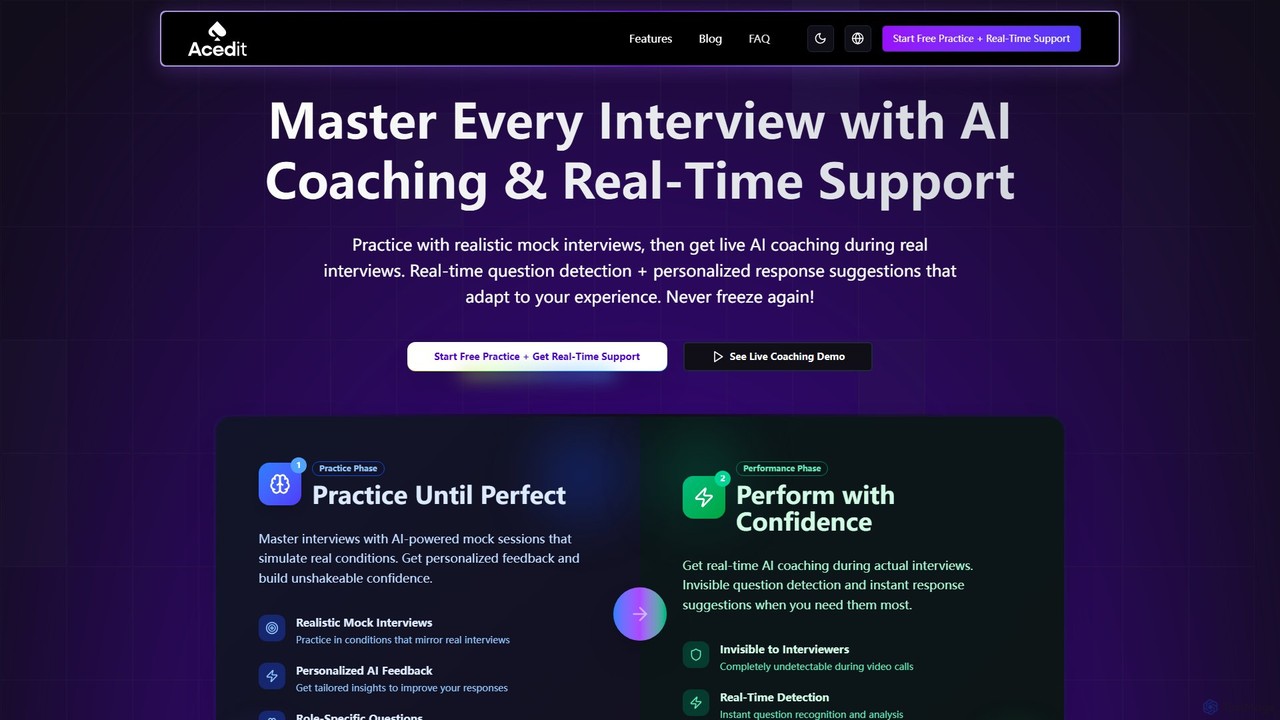
Acedit is an AI-powered Chrome extension that acts as your personal interview coach. It provides real-time, invisible support during live video interviews by detecting questions and suggesting personalized answers. It also offers mock interview practice, resume optimization, and AI-generated cover letters to help you land your dream job.

Interview
Visits 11.4KFavorites 126Likes 122
Bange.io
Freemium

Bange.io

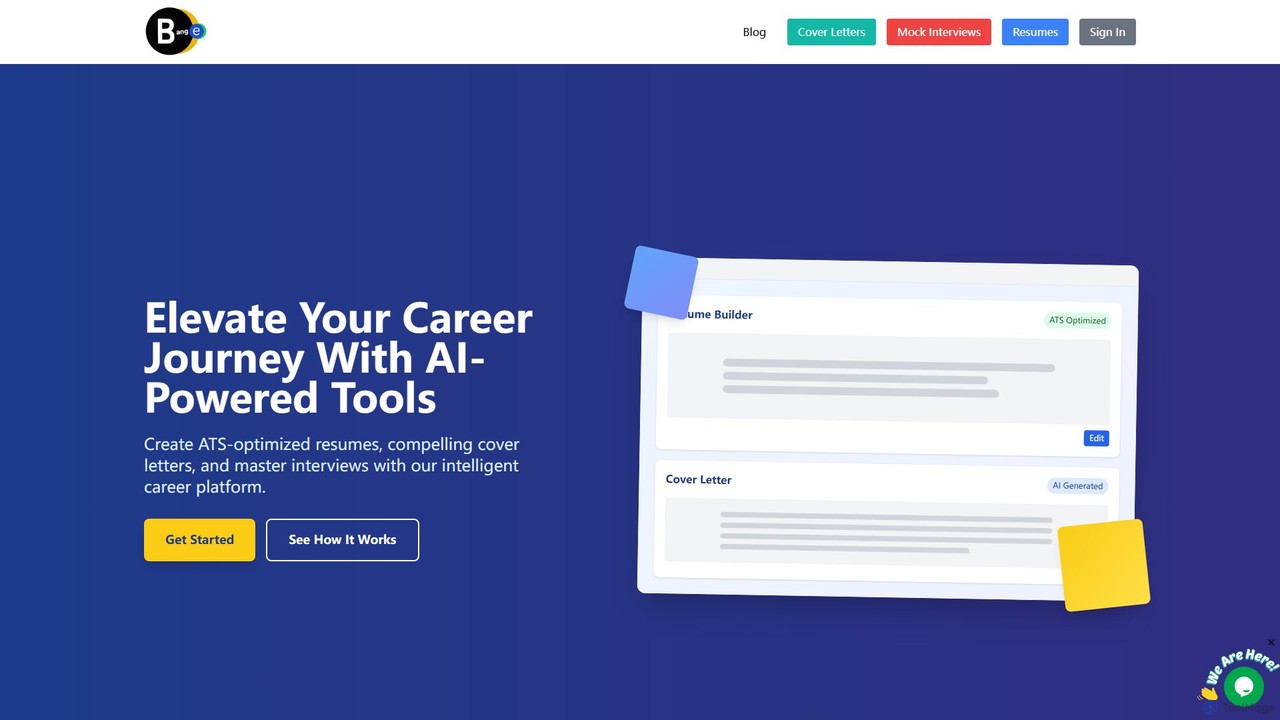
Bange.io is an AI-powered career platform designed to help job seekers elevate their applications. It offers tools to create ATS-optimized resumes, generate compelling cover letters tailored to specific jobs, and practice for interviews with an AI simulator. The platform aims to streamline the job search process and increase the chances of landing interviews and offers.

Cover Letter
Visits 3.4KFavorites 142Likes 147
OfferGenie
Freemium

OfferGenie

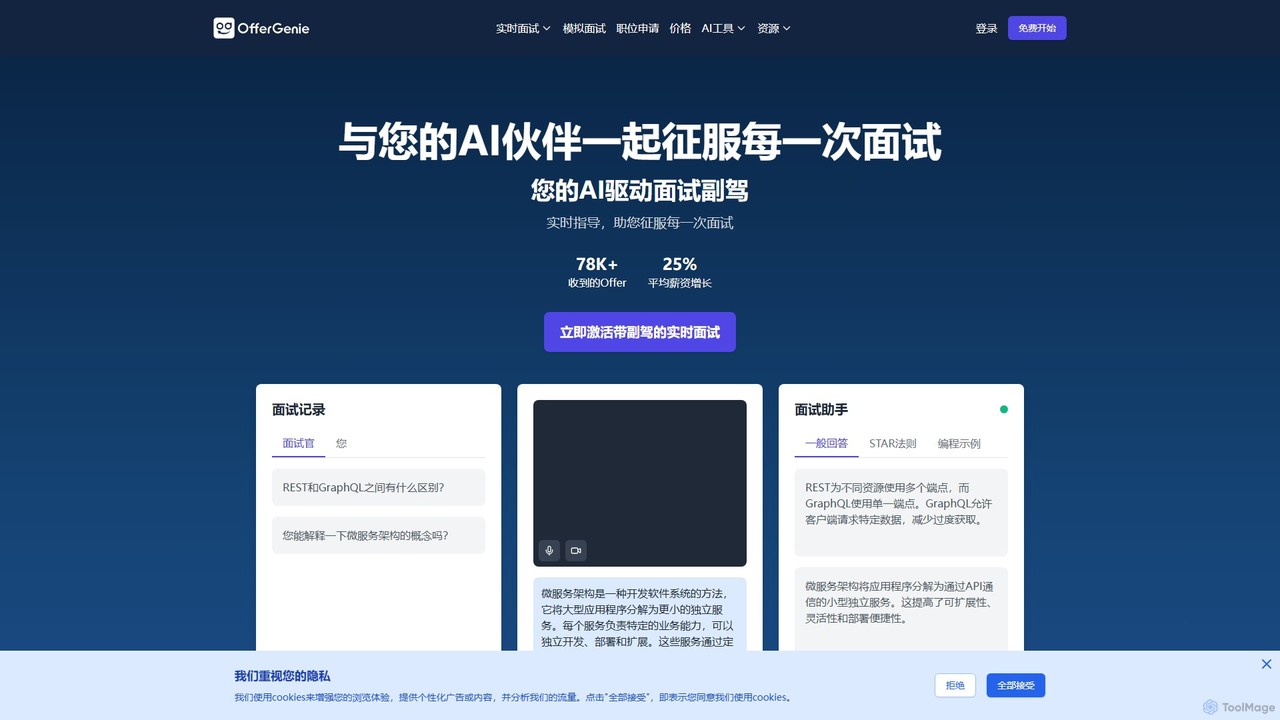
OfferGenie is an AI-powered interview copilot designed to help job seekers succeed in their careers. It provides real-time guidance during interviews, personalized mock interview practice, AI-driven resume optimization, and detailed performance feedback. This all-in-one platform supports various industries and aims to boost user confidence, improve interview skills, and increase salary offers.

Interview
Visits 27.8KFavorites 108Likes 101
Offermore
Freemium

Offermore

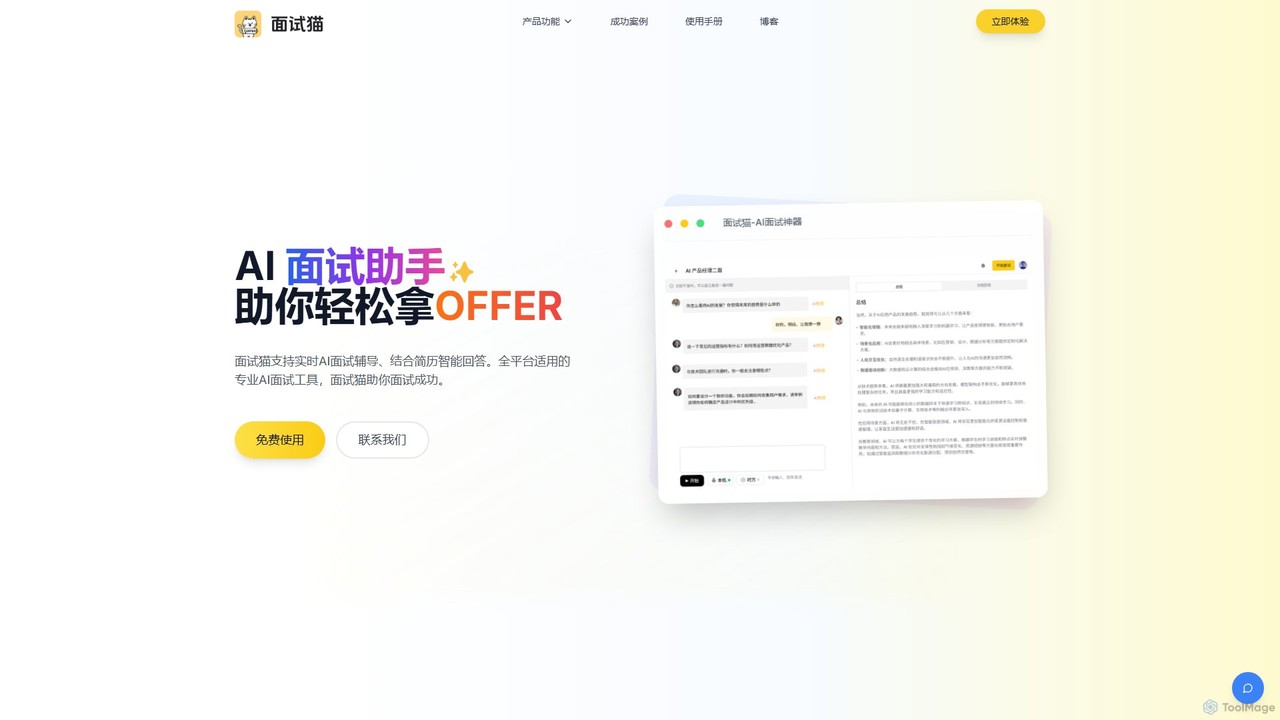
Offermore is an AI-powered interview assistant that provides real-time coaching and smart answer suggestions during online interviews. It supports all major video conferencing platforms and multiple languages, helping job seekers boost their confidence and performance to secure more job offers.

Interview
Visits 16.7KFavorites 135Likes 130

About Interview

Interview AI tools are specialized platforms leveraging artificial intelligence to enhance various aspects of the job interview process. These tools typically employ natural language processing, computer vision, and machine learning to simulate interview scenarios, provide real-time feedback, and analyze candidate performance. Their primary value lies in helping job seekers refine their interviewing skills, enabling recruiters to streamline candidate assessment, and offering insights into communication effectiveness.

Core Features

  • Mock Interview Simulations: AI-powered virtual interviewers conduct realistic practice sessions.
  • Performance Feedback: Analyze speech patterns, body language, eye contact, and content for improvement.
  • Question Generation: Create tailored interview questions based on job descriptions or skill sets.
  • Transcription & Analysis: Convert spoken responses to text and analyze for keywords, clarity, and sentiment.
  • Resume & Job Description Matching: Identify key skills and experiences to highlight during interviews.

Applicable Scenarios

Job seekers preparing for critical interviews can use these tools for extensive practice and personalized feedback. Recruiters and hiring managers utilize them for initial candidate screening, ensuring consistency in assessment, and identifying top talent efficiently. Career coaches also integrate these platforms to provide data-driven guidance to their clients.

How to Choose

When selecting an Interview AI tool, consider the depth of feedback (e.g., verbal, non-verbal, content), the range of interview types supported (e.g., behavioral, technical), integration capabilities with existing ATS, and the accuracy of AI analysis. Evaluate the user interface for ease of use and the availability of customizable practice scenarios to match specific job roles.

Featured tool rankings

Interview use cases

1

Practice for Behavioral Interviews

A recent graduate uses an AI interview tool to practice answering "tell me about a time when..." questions. The AI provides feedback on STAR method application, confidence, and clarity, helping them refine responses for real interviews and improve their storytelling ability.

2

Refine Technical Interview Responses

A software engineer prepares for a coding interview by using an AI tool that simulates technical questions. The tool assesses their problem-solving approach and communication style, offering suggestions for clearer explanations and structured thinking, crucial for complex technical roles.

3

Improve Non-Verbal Communication

A sales professional records mock interviews to analyze their body language, eye contact, and facial expressions. The AI highlights areas for improvement, such as maintaining consistent eye contact and reducing fidgeting, enhancing their professional presence and impact during client interactions.

4

Streamline Candidate Screening for Recruiters

A hiring manager uses an AI interview platform to conduct initial video screenings for high-volume roles. The AI analyzes candidate responses for keywords, communication skills, and cultural fit, providing a ranked shortlist for human review, significantly reducing manual screening time.

5

Personalized Career Coaching

A career coach integrates AI interview tools into their client sessions. They use the AI's detailed performance reports to identify specific areas for improvement, such as reducing filler words or structuring answers more effectively, offering targeted guidance and accelerating client progress.

6

Prepare for International Interviews

An applicant for an overseas position uses an AI tool to practice interviews in a non-native language. The AI provides feedback on pronunciation, fluency, and cultural nuances in communication, boosting their confidence and ensuring effective cross-cultural interaction for global roles.

Interview FAQ

What are AI Interview Tools?

AI Interview Tools are software applications that use artificial intelligence to simulate job interviews, provide performance feedback, and analyze candidate responses. They leverage technologies like natural language processing and computer vision to assess verbal and non-verbal cues, helping users prepare for interviews or assisting recruiters in candidate evaluation.

How do AI Interview Tools provide feedback?

AI Interview Tools analyze various aspects of a user's performance. This includes verbal feedback on clarity, conciseness, use of filler words, and keyword relevance, as well as non-verbal feedback on eye contact, facial expressions, body language, and speech pace. Some tools also offer sentiment analysis of responses to provide a comprehensive assessment.

Who can benefit most from using AI Interview Tools?

Job seekers at all levels, from entry-level to executive, can benefit from practicing and receiving objective feedback to refine their skills. Recruiters and HR professionals use them for efficient initial screening and standardized assessment. Career coaches also find them valuable for providing data-driven insights to their clients, enhancing their guidance.

Are AI Interview Tools accurate in their assessments?

The accuracy of AI Interview Tools varies by platform and the sophistication of their algorithms. While they can provide valuable objective data and identify common areas for improvement, they should be used as a supplementary tool. Human judgment remains crucial for nuanced evaluation, especially for cultural fit and complex problem-solving, offering a balanced perspective.

How do AI Interview Tools differ from traditional mock interviews?

AI Interview Tools offer instant, objective, and consistent feedback without human bias, and they can be accessed anytime, anywhere for unlimited practice. Traditional mock interviews, while offering human interaction and nuanced advice, are often limited by availability, cost, and potential for subjective feedback. AI tools complement human coaching by providing a data-rich foundation for improvement.