ToolMage
Sign in

Best 1 Ai & Machine Learning AI tools for Cloud Computing

Popular Ai & Machine Learning AI tools in Cloud Computing include SiliconFlow, helping you work more efficiently.

SiliconFlow
Freemium

SiliconFlow

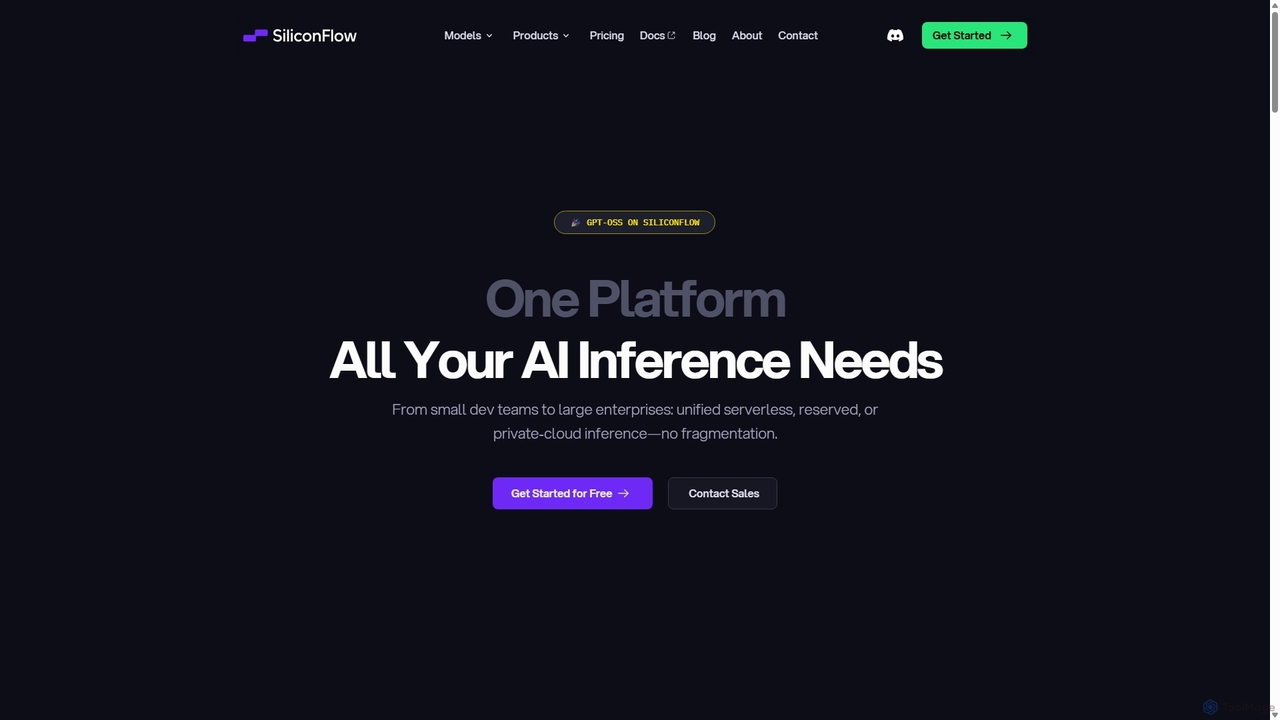
SiliconFlow is a unified AI infrastructure platform designed for high-performance inference of Large Language Models (LLMs) and multimodal models. It provides developers and enterprises with scalable, cost-effective, and flexible deployment options, including serverless APIs, reserved GPUs, and fine-tuning capabilities, all accessible through a single, OpenAI-compatible API.

Ai & Machine Learning
Visits 438.4KFavorites 151Likes 145

About Ai & Machine Learning

AI & Machine Learning (AI/ML) services are cloud-based platforms and tools that enable organizations to build, deploy, and manage intelligent applications and data models. These services leverage advanced algorithms and vast datasets to automate tasks, extract insights, and drive innovation across various industries. By utilizing cloud infrastructure, businesses gain scalable computing power, pre-built models, and managed environments to accelerate their AI/ML initiatives without significant upfront investment.

Core Features

  • Managed ML Platforms: Fully managed environments for the entire machine learning lifecycle, from data preparation to model deployment.
  • Pre-trained AI Services: Ready-to-use APIs for common AI tasks like natural language processing, computer vision, and speech recognition.
  • Scalable Compute & Storage: On-demand access to specialized hardware (GPUs, TPUs) and vast storage for training large models and handling big data.
  • MLOps Tools: Capabilities for automating model deployment, monitoring performance, and managing model versions in production.
  • Data Integration & Analytics: Seamless integration with cloud data lakes and analytics services for robust data pipelines.

Applicable Scenarios

Cloud AI/ML is widely adopted for enhancing customer experiences through personalized recommendations, optimizing operational efficiency with predictive maintenance, and driving scientific discovery through complex data analysis. It empowers developers to embed intelligence into applications and helps data scientists build sophisticated models faster.

How to Choose

When selecting a cloud AI/ML platform, consider the breadth of managed services offered, its integration with your existing cloud ecosystem, the cost structure for compute and storage, and the availability of MLOps tools for production readiness. Evaluate the platform's support for your preferred programming languages and frameworks, as well as its data governance and security features.

Featured tool rankings

Ai & Machine Learning use cases

1

Predictive Maintenance for Industrial Equipment

Manufacturing companies utilize cloud ML services to analyze real-time sensor data from machinery. Data scientists build models that predict potential equipment failures, allowing maintenance teams to perform proactive repairs, minimize downtime, and extend asset lifespan. This reduces operational costs and improves production continuity.

2

Personalized Product Recommendations in E-commerce

E-commerce platforms deploy cloud-based recommendation engines to analyze customer browsing history, purchase patterns, and demographic data. These ML models suggest relevant products to individual users, significantly enhancing the shopping experience, increasing conversion rates, and boosting sales revenue.

3

Automated Customer Service with AI Chatbots

Businesses integrate cloud AI services to power intelligent chatbots and virtual assistants. These AI agents use natural language processing (NLP) to understand customer queries, provide instant answers, and resolve common issues, freeing human agents to focus on more complex problems and improving overall customer satisfaction.

4

Medical Image Analysis for Disease Detection

Healthcare providers leverage cloud ML for advanced medical imaging analysis. Radiologists and researchers use computer vision models to detect anomalies in X-rays, MRIs, and CT scans, aiding in early disease diagnosis, improving diagnostic accuracy, and supporting clinical decision-making.

5

Financial Fraud Detection in Real-time

Financial institutions employ cloud AI/ML platforms to monitor vast volumes of transactions in real-time. Machine learning models identify unusual patterns and suspicious activities indicative of fraud, enabling rapid intervention, protecting customer assets, and minimizing financial losses due to fraudulent transactions.

6

Optimizing Supply Chain Logistics and Demand Forecasting

Logistics and retail companies use cloud ML to analyze historical sales data, market trends, and external factors to forecast demand accurately. These models optimize inventory levels, streamline warehousing operations, and improve delivery routes, leading to reduced costs, faster delivery times, and enhanced supply chain resilience.

Ai & Machine Learning FAQ

What are AI & Machine Learning services in the cloud?

AI & Machine Learning services in the cloud refer to a suite of managed tools and platforms offered by cloud providers that enable users to develop, deploy, and scale AI and ML models. These services provide access to powerful computing resources, pre-built algorithms, and specialized hardware (like GPUs) on demand, abstracting away infrastructure management. They empower businesses to integrate intelligence into their applications and processes without owning and maintaining complex IT infrastructure.

How do I choose a cloud AI/ML platform for my business?

Choosing a cloud AI/ML platform involves considering several factors: your existing cloud infrastructure (for seamless integration), the specific AI/ML tasks you need to perform (e.g., NLP, computer vision, predictive analytics), the level of abstraction desired (managed services vs. granular control), and your budget. Evaluate the platform's ecosystem, including data integration capabilities, MLOps tools, available pre-trained models, and support for open-source frameworks. Also, assess data governance, security, and compliance features relevant to your industry.

What's the difference between cloud AI/ML and traditional data analytics?

While both involve data, cloud AI/ML focuses on building predictive models and intelligent systems that learn from data to make decisions or predictions, often autonomously. Traditional data analytics primarily involves descriptive and diagnostic analysis—understanding past data and identifying trends. Cloud AI/ML goes further by enabling prescriptive and predictive capabilities, automating complex tasks, and continuously improving performance through learning, all powered by scalable cloud resources.

What are the main benefits of using cloud for AI & Machine Learning?

The main benefits of using cloud for AI & Machine Learning include unparalleled scalability, allowing users to rapidly provision vast computing resources for training large models and handling fluctuating workloads. It offers cost-effectiveness by shifting from capital expenditure to operational expenditure, paying only for what's used. Cloud platforms also provide access to a rich ecosystem of managed services, pre-trained models, and MLOps tools, accelerating development and deployment, and reducing the need for specialized in-house infrastructure expertise.

How can businesses get started with AI & Machine Learning on cloud platforms?

Businesses can start by identifying clear use cases with measurable business value, such as automating a specific process or gaining new insights. Next, assess existing data infrastructure and ensure data quality and accessibility. Many cloud providers offer free tiers or introductory programs, allowing teams to experiment with managed AI/ML services and pre-trained APIs. It's often beneficial to begin with simpler, well-defined projects to build internal expertise and demonstrate value before tackling more complex initiatives, leveraging the scalability and flexibility of the cloud.