ToolMage
Sign in

Best 3 Cloud Management AI tools

Popular Cloud Management AI tools include Frugal, TENET, and Cloud1, helping you work more efficiently.

Freemium

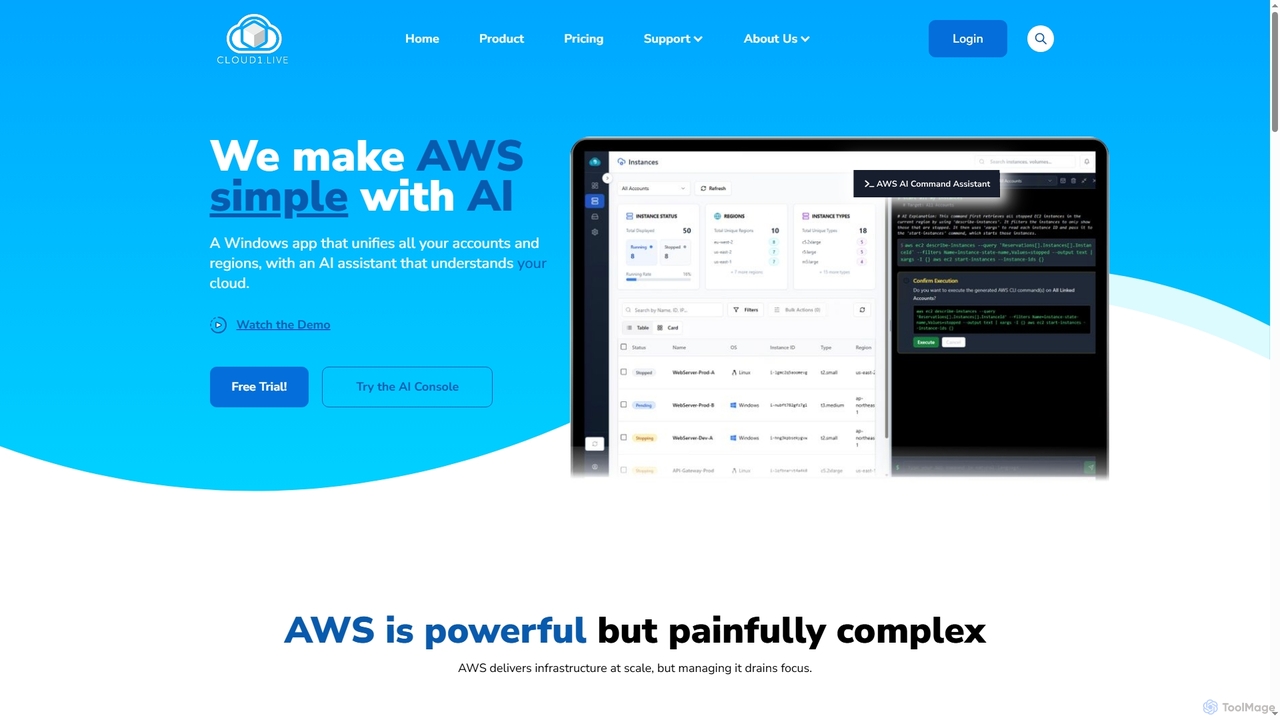
Cloud1

Cloud1 is an AI-powered Windows desktop application designed to simplify AWS EC2 management across multiple accounts and regions. It unifies instances, enables natural language commands via an AI assistant, and offers powerful bulk actions and cost optimization insights.

Aws
Visits 3.4KFavorites 12Likes 8
Paid

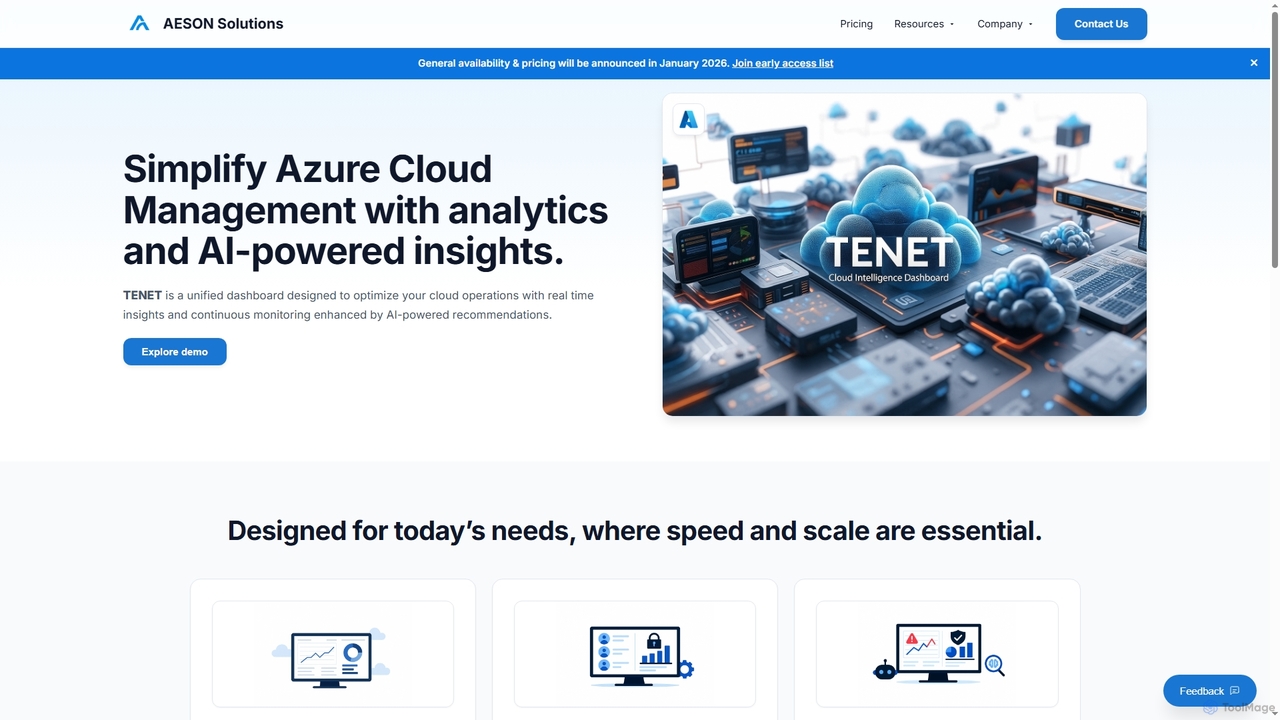
TENET

TENET is an AI-powered Azure Cloud Intelligence Platform by AESON Solutions, designed to simplify cloud management. It provides a unified dashboard with real-time analytics and continuous monitoring, enhanced by AI-driven insights and recommendations to optimize cloud operations, detect anomalies, and strengthen security.

Cloud Operations
Visits 4.6KFavorites 101Likes 105

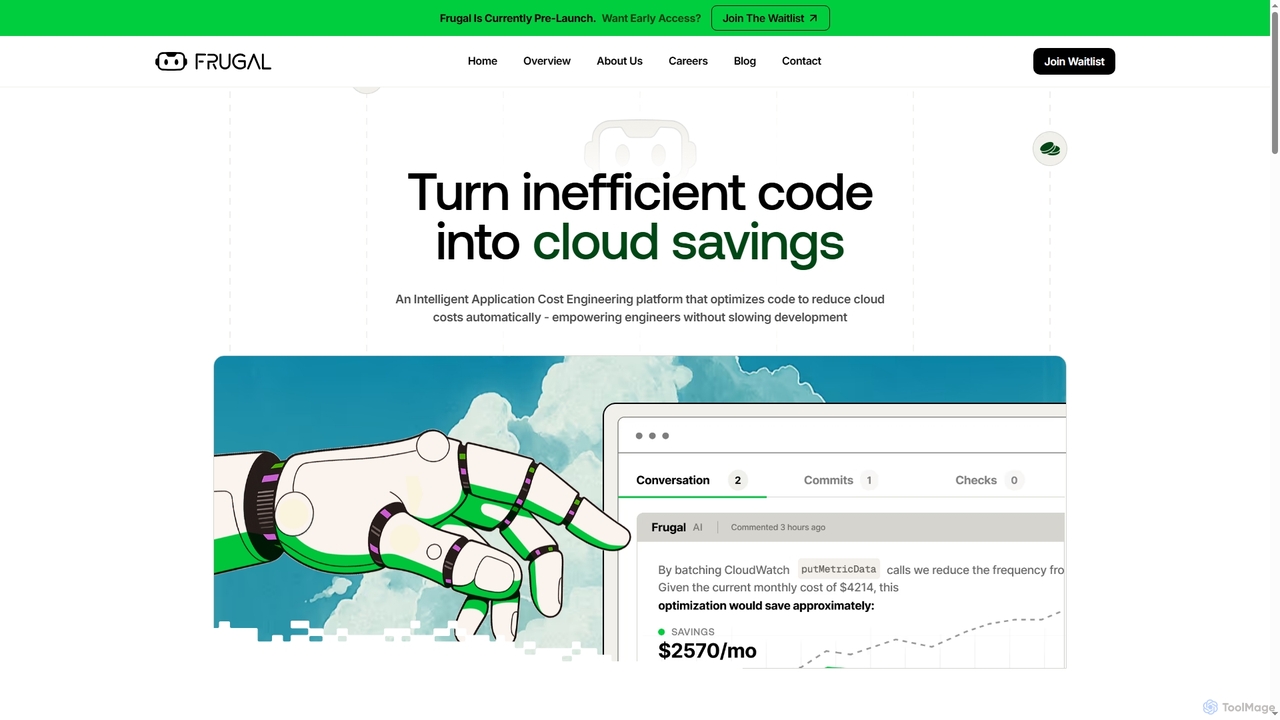
Frugal

Frugal is an intelligent, AI-powered Application Cost Engineering platform designed for engineers to automatically optimize code and reduce cloud costs. It aims to empower developers to eliminate waste at the source without compromising development speed, fostering collaboration between engineering and FinOps teams.

Cost Optimization
Visits 13.1KFavorites 127Likes 143

About Cloud Management

Cloud Management AI tools are a category of advanced software solutions that leverage artificial intelligence to automate, optimize, and secure cloud infrastructure and services. These tools integrate machine learning algorithms to analyze vast amounts of operational data, predict potential issues, and recommend intelligent actions. They empower organizations to enhance operational efficiency, reduce costs, improve resource utilization, and strengthen security postures across multi-cloud and hybrid cloud environments.

Core Features

  • Cost Optimization: AI-driven analysis of cloud spending patterns, identifying waste, and recommending cost-saving adjustments for resources.
  • Performance Monitoring & Optimization: Real-time AI-powered monitoring of cloud resource performance, automatically scaling resources up or down based on demand predictions.
  • Automated Security & Compliance: AI-enabled detection of security vulnerabilities, policy violations, and anomalous activities, with automated remediation actions.
  • Resource Provisioning & Orchestration: Intelligent automation of cloud resource deployment, configuration, and orchestration across complex environments.
  • Anomaly Detection: Machine learning models identify unusual patterns in logs, metrics, and network traffic, signaling potential issues before they impact services.

Applicable Scenarios

Cloud Management AI tools are essential for enterprises managing large-scale cloud deployments, IT operations teams seeking to automate routine tasks, and DevOps engineers aiming for optimized CI/CD pipelines. They are particularly valuable in environments with dynamic workloads, strict compliance requirements, or significant cloud spending, enabling proactive management and strategic decision-making.

How to Choose

When selecting Cloud Management AI tools, consider the breadth of cloud platforms supported (multi-cloud/hybrid), the depth of AI capabilities (e.g., predictive analytics, autonomous actions), integration with existing IT infrastructure, and the clarity of cost optimization recommendations. Evaluate the user interface for ease of use, the vendor's security track record, and the scalability of the solution to meet future growth.

Featured tool rankings

Cloud Management use cases

1

Automated Cloud Cost Optimization

For finance and IT managers, Cloud Management AI tools continuously analyze cloud spending across various services (compute, storage, network). They identify underutilized resources, recommend rightsizing instances, and suggest optimal purchasing options like reserved instances or spot instances, leading to significant cost reductions without manual oversight. This ensures budgets are adhered to and resources are efficiently allocated.

2

Proactive Performance Tuning for Applications

DevOps and SRE teams utilize these tools to monitor application performance in real-time. AI algorithms detect performance bottlenecks, predict future resource needs based on traffic patterns, and automatically adjust scaling policies for virtual machines, containers, or serverless functions. This ensures applications maintain optimal responsiveness and availability, even during peak loads.

3

Enhanced Cloud Security Posture Management

Security operations teams deploy Cloud Management AI to continuously scan cloud environments for misconfigurations, policy violations, and potential threats. The AI identifies anomalous network traffic, unusual access patterns, or unpatched vulnerabilities, providing immediate alerts and often initiating automated remediation actions to maintain a strong security posture and compliance with industry standards.

4

Intelligent Resource Provisioning for Development

Developers and infrastructure teams leverage AI-powered cloud management for intelligent provisioning. When new projects or environments are required, the tools can automatically provision the necessary compute, storage, and network resources based on predefined templates and usage patterns, ensuring consistency, reducing manual errors, and accelerating development cycles.

5

Multi-Cloud Governance and Compliance Enforcement

Enterprise architects and compliance officers use Cloud Management AI to enforce governance policies across diverse multi-cloud environments. The tools automatically audit configurations against regulatory standards (e.g., GDPR, HIPAA), identify non-compliant resources, and generate detailed reports, simplifying compliance audits and ensuring consistent policy application across all cloud providers.

6

Predictive Maintenance for Cloud Infrastructure

IT operations personnel benefit from AI's predictive capabilities to anticipate infrastructure failures or performance degradation. By analyzing historical data and real-time metrics, the AI can forecast potential issues with storage volumes, network components, or virtual machines, allowing teams to perform proactive maintenance or scale out resources before any service disruption occurs.

Cloud Management FAQ

What are Cloud Management AI tools?

Cloud Management AI tools are software solutions that use artificial intelligence, including machine learning and predictive analytics, to automate and optimize the operation, cost, performance, and security of cloud computing resources. They aim to simplify the complexities of managing modern cloud infrastructures, especially in multi-cloud or hybrid environments.

How do Cloud Management AI tools differ from traditional cloud management platforms?

Traditional cloud management platforms primarily offer visibility and manual control over cloud resources. Cloud Management AI tools go a step further by integrating AI to provide predictive insights, automate decision-making, and execute autonomous actions. This includes AI-driven cost optimization, proactive anomaly detection, and intelligent resource scaling, moving beyond reactive management to a more predictive and automated approach.

What are the key benefits of using Cloud Management AI tools?

The primary benefits include significant cost savings through intelligent resource allocation and waste reduction, improved operational efficiency by automating routine tasks, enhanced application performance through proactive scaling, and stronger security postures with AI-driven threat detection and compliance enforcement. They also provide deeper insights into cloud usage and trends.

Who benefits most from implementing Cloud Management AI tools?

Organizations with large or growing cloud footprints, those operating in multi-cloud or hybrid environments, and teams struggling with cloud cost overruns or operational complexities benefit most. This includes IT operations teams, DevOps engineers, finance managers overseeing cloud budgets, and security teams responsible for cloud compliance and threat mitigation.

What should I consider when choosing a Cloud Management AI solution?

Key considerations include the tool's compatibility with your existing cloud providers (AWS, Azure, GCP, etc.), the specific AI capabilities offered (e.g., cost optimization, security, performance), the level of automation and autonomy it provides, its integration capabilities with other IT systems, and the vendor's support and security practices. Also, evaluate the clarity of its reporting and analytics features.