gokyg
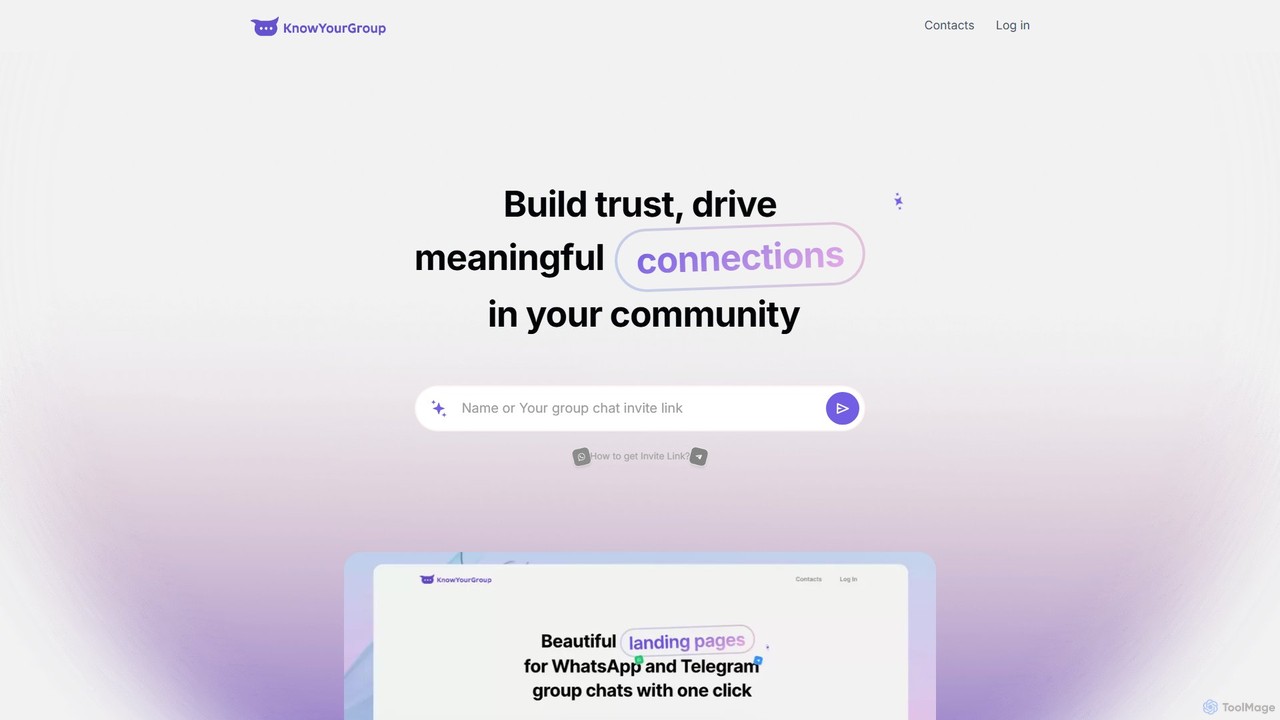
gokyg (Know Your Group) is an AI-powered tool designed to enhance online communities by facilitating member discovery and …
gokyg (Know Your Group) is an AI-powered tool designed to enhance online communities by facilitating member discovery and fostering meaningful connections. It creates a searchable directory of member profiles, allowing users to find others based on skills, interests, and location through a 'magic search' feature, transforming passive groups into active, collaborative networks.
About Member Engagement
Member Engagement tools are AI-powered platforms designed to analyze, stimulate, and increase interaction within online communities. As a specialized subset of Community Management, these tools use behavioral analytics and machine learning to understand member activity, predict churn, and automate personalized outreach. They transform passive communities into vibrant, active ecosystems by fostering loyalty and encouraging user contributions. This data-driven approach allows community managers to move beyond simple moderation to proactively cultivate a thriving environment.
Core Features
- Behavioral Analytics: Automatically tracks user activities like posts, comments, logins, and content consumption to identify active, inactive, and at-risk members.
- Automated Engagement Workflows: Triggers personalized emails, messages, or notifications based on member actions, such as welcoming new users or re-engaging dormant ones.
- Gamification & Rewards: Implements points, badges, and leaderboards to incentivize participation and recognize top contributors.
- Member Segmentation: Groups members into dynamic segments based on their behavior, interests, or contribution level for targeted communication.
- Sentiment Analysis: Monitors the overall mood and key topics of discussion within the community to identify trends and potential issues.
Use Cases
These tools are essential for online course platforms, brand communities, professional associations, and subscription-based services. Community managers, marketers, and customer success teams use them to increase member retention, identify brand advocates, and gather valuable product feedback by maintaining a consistently active user base.
How to Choose
When selecting a Member Engagement tool, evaluate its integration capabilities with your existing community platform (e.g., Discord, Circle, Slack). Assess the depth of its analytics and the flexibility of its automation engine. Consider the sophistication of its gamification features and whether its pricing model scales with your community's growth.
Member EngagementUse Cases
Automate New Member Onboarding
A community manager for a SaaS product's user forum uses a member engagement tool to create an automated onboarding sequence. When a new user joins, the tool automatically triggers a series of actions: a personalized welcome email is sent, a direct message suggests key channels to join, and after three days, it checks if they've made their first post. If not, it sends a gentle nudge with content ideas. This process ensures every new member feels welcomed and guided, increasing the likelihood of their long-term participation from day one without manual intervention.
Re-engage Dormant Community Members
An online course provider notices that 20% of its community members haven't logged in for over 60 days. Using a member engagement tool, they create a segment of these 'dormant' users. An automated workflow is launched, sending a personalized email highlighting the most popular discussions and new content added since their last visit. For those who still don't engage, a second email with a special discount on a future course is sent a week later. This targeted campaign successfully reactivates a significant portion of inactive members, reducing churn and increasing potential revenue.
Implement a Contributor Gamification Program
A brand community for a software product wants to encourage peer-to-peer support. They use an engagement tool to set up a gamification system. Members earn points for posting questions, providing accepted answers, and receiving upvotes. The tool automatically assigns badges like 'Newcomer', 'Problem Solver', and 'Expert' as they reach milestones. A public leaderboard showcases the top contributors each month, who receive exclusive merchandise. This system motivates knowledgeable users to actively help others, reducing the support team's workload and building a more valuable, self-sustaining community.
Identify and Nurture Brand Advocates
A marketing manager for a direct-to-consumer brand uses an engagement tool to monitor their online community for superusers. The tool's analytics dashboard highlights members with the highest activity scores—those who consistently post positive comments, answer other users' questions, and share product links. The manager creates a 'Brand Advocate' segment and invites these members to an exclusive group with early access to new products and direct communication with the product team. This strategy turns enthusiastic customers into a powerful, organic marketing force.
Gather Targeted Product Feedback
A product manager wants to gather feedback on a new feature before its public launch. Using a member engagement tool, they segment their community to find members who have frequently used a related feature in the past. They send a targeted in-app message to this specific segment, inviting them to a private beta testing group. This ensures the feedback comes from the most relevant and experienced users, leading to higher quality insights and a more successful feature launch. The tool helps avoid spamming the entire community with irrelevant requests.
Monitor Community Health with Sentiment Analysis
The manager of a large online gaming community uses an engagement tool's sentiment analysis feature to keep a pulse on player morale. The AI scans thousands of daily posts and comments, flagging conversations with a high concentration of negative keywords like 'bug,' 'frustrating,' or 'unfair.' This allows the community team to proactively jump into these discussions, address concerns before they escalate, and relay critical feedback to the development team. It provides a real-time overview of community health that would be impossible to achieve through manual reading alone.