Control Mapping
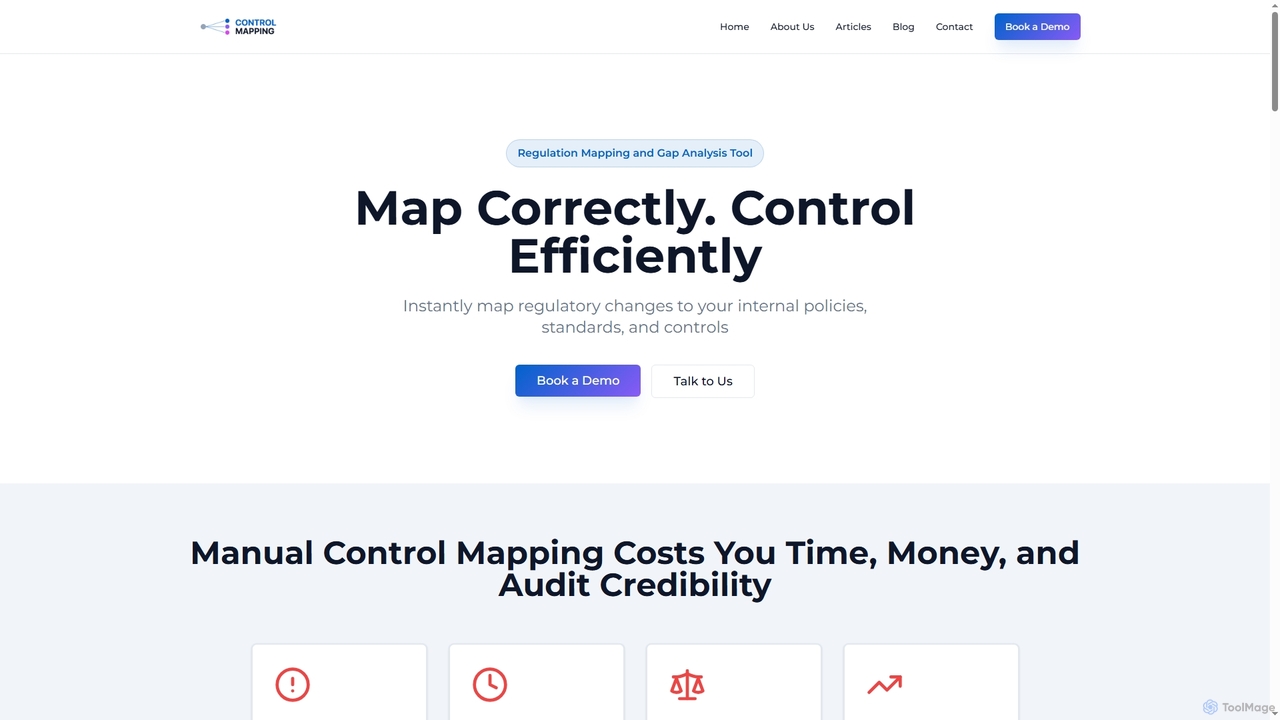
Control Mapping is an AI-powered regulation mapping and gap analysis tool for financial services firms. It automates the …
Control Mapping is an AI-powered regulation mapping and gap analysis tool for financial services firms. It automates the process of linking global regulatory changes to internal policies, standards, and controls, significantly reducing manual effort, audit risk, and transforming compliance into a strategic advantage.
Avoidable Apps
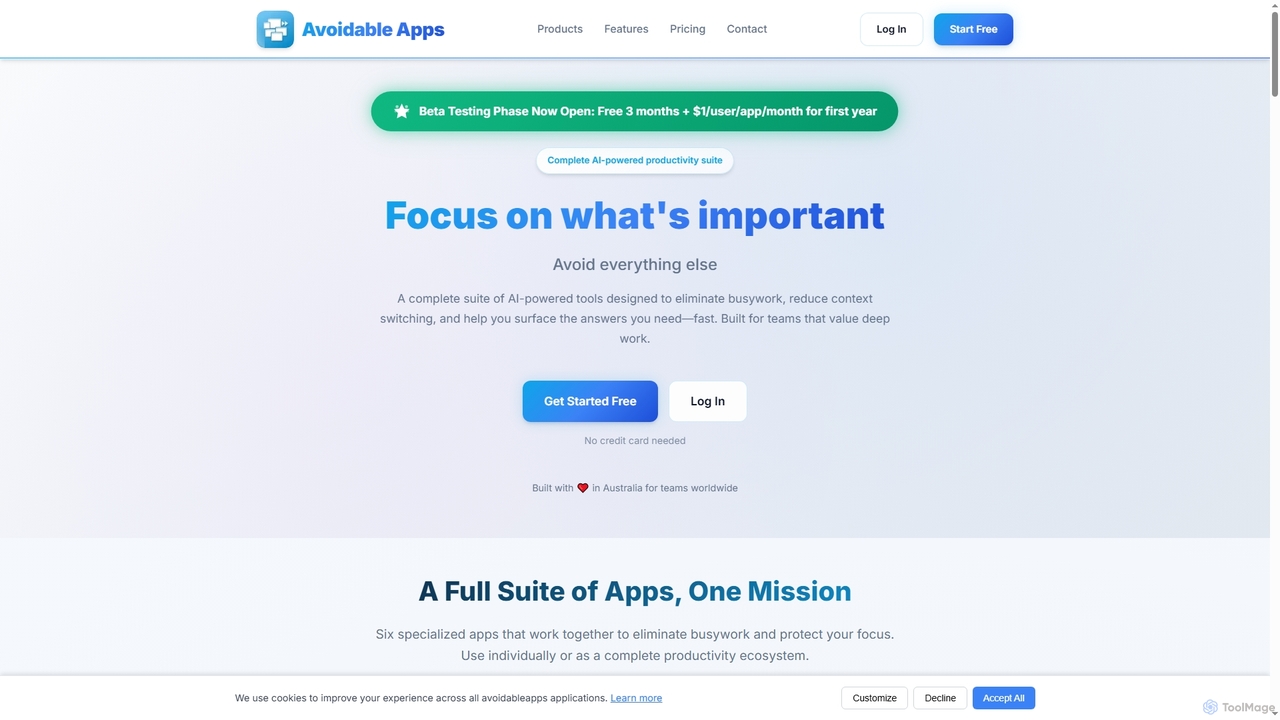
Avoidable Apps is an AI-powered productivity SaaS suite designed to eliminate busywork, reduce context switching, and help teams …
Avoidable Apps is an AI-powered productivity SaaS suite designed to eliminate busywork, reduce context switching, and help teams achieve deep work. It offers a comprehensive ecosystem of six specialized applications that can be used individually or together to streamline workflows and enhance focus.
ComplyDo
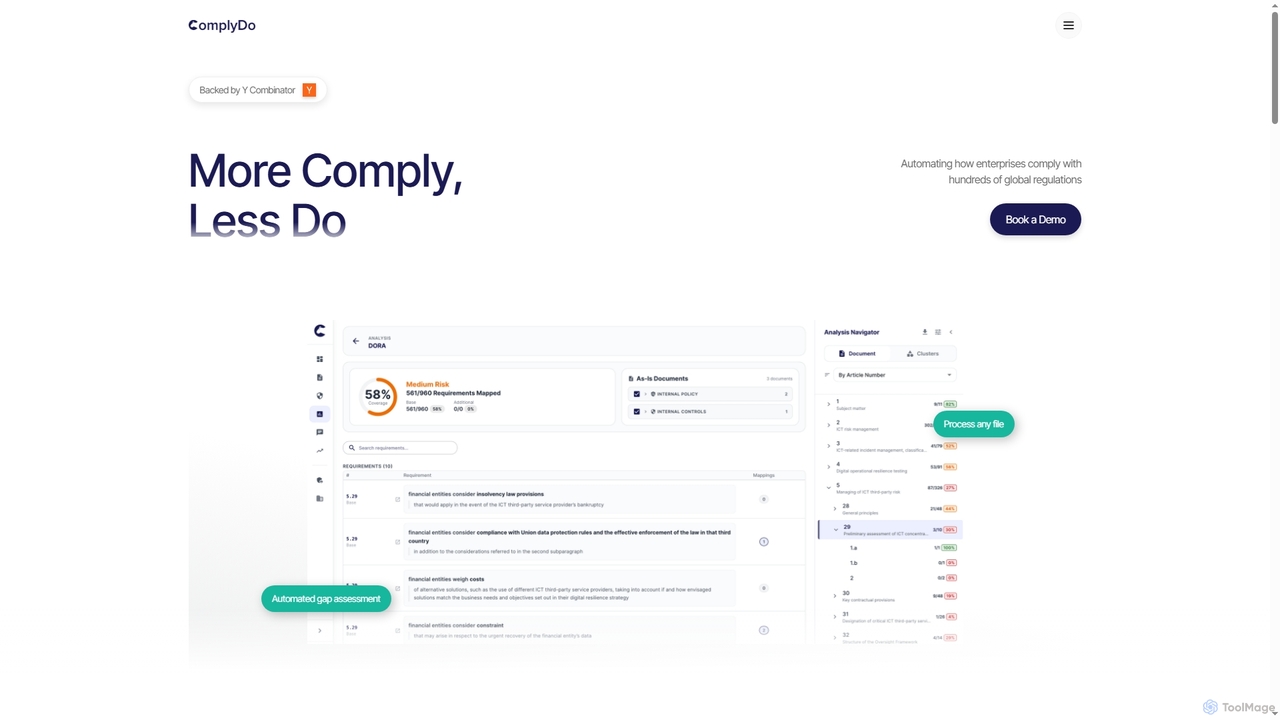
ComplyDo is an AI-powered compliance automation platform designed for enterprises to streamline internal control management, regulatory mapping, gap …
ComplyDo is an AI-powered compliance automation platform designed for enterprises to streamline internal control management, regulatory mapping, gap analysis, and third-party risk management. It transforms complex compliance tasks into efficient, automated processes, saving time and reducing costs for large organizations and mid-market leaders.
About Compliance Management
Compliance Management tools are AI-powered solutions designed to automate, monitor, and manage an organization's adherence to laws, regulations, internal policies, and ethical standards. These tools leverage machine learning, natural language processing, and data analytics to proactively identify risks, streamline processes, and ensure continuous compliance. They help organizations reduce manual effort, minimize human error, and maintain regulatory integrity across complex operational landscapes.
Core Features
- Regulatory Monitoring: Automatically tracks changes in laws, regulations, and industry standards, alerting organizations to relevant updates.
- Risk Assessment & Mitigation: Identifies, evaluates, and prioritizes compliance risks using predictive analytics and data patterns, suggesting mitigation strategies.
- Policy Management: Centralizes internal policies, facilitates distribution, tracks employee acknowledgment, and ensures consistent application.
- Audit & Reporting: Generates comprehensive audit trails and customizable compliance reports, simplifying internal and external audits.
- Anomaly Detection: Flags unusual activities or data patterns that may indicate potential non-compliance or fraudulent behavior.
Applicable Scenarios
Financial institutions use these tools to navigate complex regulatory frameworks like AML and GDPR, ensuring transaction monitoring and data privacy. Healthcare providers leverage them for HIPAA compliance, managing patient data security and access. Large enterprises across various sectors utilize them to enforce internal codes of conduct and manage global regulatory adherence efficiently.
How to Choose
When selecting a Compliance Management tool, consider its regulatory coverage for your specific industry and regions, ensuring it supports all relevant laws. Evaluate its integration capabilities with existing enterprise systems (ERP, CRM, HR) for seamless data flow. Assess the robustness of its reporting and analytics features for actionable insights. Finally, prioritize user-friendliness and scalability to accommodate future growth and evolving regulatory demands.

Compliance ManagementUse Cases
Automated Regulatory Change Tracking
A compliance officer in a financial firm needs to stay updated with constantly evolving financial regulations, such as Basel III or MiFID II. AI Compliance Management tools automatically scan legal databases, news, and official publications, highlighting relevant changes and their potential impact on the organization. This proactive approach allows the firm to adapt internal policies swiftly, reducing the risk of non-compliance fines and saving hundreds of hours of manual research.
Proactive Risk Identification in Transactions
An Anti-Money Laundering (AML) analyst is tasked with detecting suspicious transactions that might indicate money laundering or fraud. AI Compliance Management tools analyze vast amounts of transaction data, identifying subtle patterns and anomalies that human analysts might miss. By cross-referencing with known illicit activities or watchlists, the AI flags high-risk transactions for further investigation, significantly enhancing detection rates and reducing false positives compared to traditional rule-based systems.
Streamlined Employee Policy Adherence
An HR manager in a multinational corporation needs to ensure all employees understand and comply with internal policies, such as the code of conduct or data privacy guidelines. AI-powered platforms distribute policies, track acknowledgment, and provide interactive Q&A for policy clarification, identifying areas of low understanding. This results in improved policy comprehension, reduced policy violations, and simplified audit trails for internal governance, ensuring a consistent compliance culture across diverse teams.
Automated Data Privacy Impact Assessments (DPIA)
A Data Protection Officer (DPO) in a tech company is responsible for conducting Data Privacy Impact Assessments (DPIA) for new products or features to ensure GDPR/CCPA compliance. AI Compliance Management tools guide the DPO through assessment questions, identify potential privacy risks based on data flows, and suggest mitigation strategies. This automation leads to faster, more consistent DPIA processes, ensuring new initiatives are compliant from the design phase and avoiding costly data breaches or regulatory penalties.
Continuous Monitoring of Vendor Compliance
A procurement manager or vendor risk analyst needs to ensure third-party vendors comply with contractual obligations, security standards, and regulatory requirements. AI Compliance Management tools continuously monitor vendor performance, security posture, and public records for compliance red flags, automating risk scoring and due diligence processes. This reduces third-party risk exposure, improves vendor oversight, and provides automated alerts for potential compliance breaches, ensuring a robust supply chain compliance framework.
Efficient Environmental, Social, and Governance (ESG) Reporting
A sustainability officer is tasked with collecting, analyzing, and reporting ESG data to meet investor and regulatory demands. AI Compliance Management tools aggregate data from various internal systems, identify relevant metrics, and generate compliant ESG reports, highlighting areas for improvement. This automation ensures accurate and timely ESG disclosures, enhances corporate reputation, and streamlines reporting processes, allowing the officer to focus on strategic sustainability initiatives rather than manual data compilation.