
ToolMage
Sign in

Best 1 Status Updates AI tools for Communication

Popular Status Updates AI tools in Communication include Avoidable Apps, helping you work more efficiently.

Avoidable Apps
Freemium

Avoidable Apps

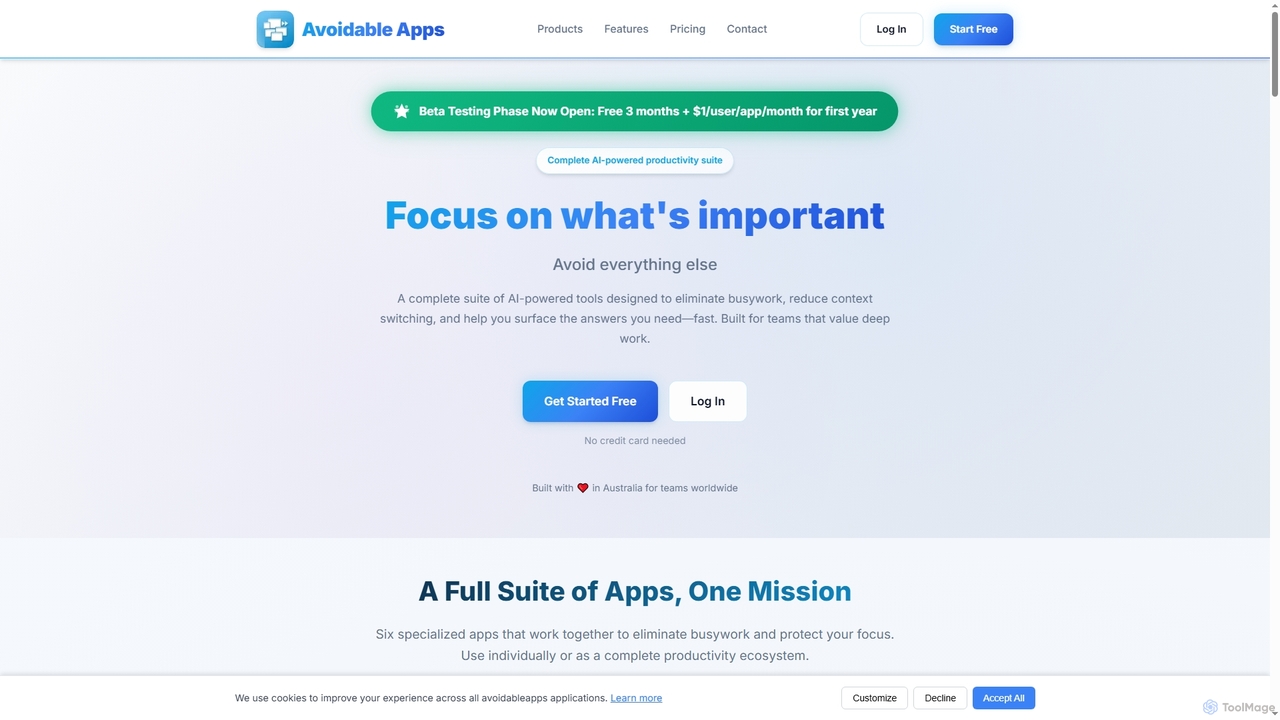
Avoidable Apps is an AI-powered productivity SaaS suite designed to eliminate busywork, reduce context switching, and help teams achieve deep work. It offers a comprehensive ecosystem of six specialized applications that can be used individually or together to streamline workflows and enhance focus.

Status Updates
Visits 4.2KFavorites 100Likes 99

About Status Updates

Status Updates are AI-powered tools designed to automate and enhance the creation, compilation, and dissemination of timely information and progress reports. These tools leverage natural language processing (NLP) and generation (NLG) to summarize complex data, draft concise messages, and tailor communications for specific audiences. They streamline internal and external reporting, ensuring stakeholders are consistently informed without manual effort, thereby significantly improving communication efficiency within the broader context of AI communication solutions.

Core Features

  • Automated Summarization: AI analyzes large volumes of data or project progress to generate brief, coherent summaries for updates.
  • Content Generation: Drafts status reports, project updates, and team announcements based on input data or predefined templates.
  • Audience Customization: Adapts tone, detail level, and format of updates to suit different recipients, from executives to team members.
  • Multi-channel Distribution: Integrates with various platforms (email, chat, project management tools) for seamless update delivery.
  • Sentiment Analysis: Identifies the overall sentiment in project discussions or feedback to inform the tone of status updates.

Applicable Scenarios

Project managers use these tools to automatically compile weekly progress reports from team activity logs and deliver them to stakeholders. Marketing teams leverage AI to generate daily performance summaries for campaigns, highlighting key metrics and insights. Software development teams can automate sprint updates, detailing completed tasks, blockers, and upcoming goals for daily stand-ups or end-of-sprint reviews.

How to Choose

When selecting an AI status update tool, consider its integration capabilities with your existing project management and communication platforms. Evaluate the accuracy and naturalness of its content generation and summarization features, ensuring it aligns with your brand voice. Assess the level of customization offered for different audiences and reporting frequencies, and review its data privacy and security protocols, especially for sensitive project information.

Featured tool rankings

Status Updates use cases

1

Automating Weekly Project Progress Reports

Project managers often spend hours compiling weekly progress reports from various sources. An AI status update tool can automatically gather data from task trackers, communication logs, and code repositories, then generate a concise, executive-ready summary. This saves significant time, ensures consistency, and provides stakeholders with timely, data-driven insights into project health and milestones.

2

Generating Daily Stand-up Summaries for Development Teams

For agile development teams, daily stand-ups are crucial. An AI tool can process individual team members' daily updates (e.g., from Slack or JIRA comments) and synthesize them into a brief summary of completed tasks, current blockers, and next steps. This helps team leads quickly grasp the team's status, identify dependencies, and facilitate more focused discussions during the actual stand-up, improving meeting efficiency.

3

Creating Personalized Client Progress Updates

Agencies or service providers need to keep clients informed about project progress. An AI status update tool can take internal project data and generate tailored updates for each client, adjusting the level of technical detail and focusing on client-specific objectives and deliverables. This ensures clients receive relevant, professional communications without the manual effort of drafting individual reports, enhancing client satisfaction.

4

Summarizing Internal Departmental Performance Metrics

Department heads often need to provide regular performance updates to senior management. An AI tool can integrate with various departmental systems (e.g., sales CRM, marketing analytics, HR platforms) to automatically compile key performance indicators (KPIs) and generate a summary report. This provides a quick, objective overview of departmental health, trends, and achievements, supporting strategic decision-making.

5

Disseminating Crisis Communication Briefs

During critical incidents or crises, rapid and accurate information dissemination is vital. An AI status update tool can quickly process incoming incident data, draft initial crisis communication briefs for internal teams or external stakeholders, and update them in real-time as new information emerges. This ensures consistent messaging and helps manage perceptions effectively during high-pressure situations.

6

Automating Social Media Content Performance Reports

Social media managers regularly track campaign performance. An AI status update tool can connect to social media analytics platforms, automatically pull data on engagement, reach, and conversions, and then generate concise reports. These reports can highlight top-performing content, identify trends, and suggest optimizations, enabling faster, data-driven adjustments to social media strategies.

Status Updates FAQ

What are AI Status Update tools?

AI Status Update tools are applications that use artificial intelligence, primarily natural language processing (NLP) and natural language generation (NLG), to automate the creation, summarization, and distribution of progress reports, project updates, and other timely communications. They analyze data from various sources to generate concise, relevant messages, streamlining the reporting process within organizations.

How do AI Status Update tools differ from general communication tools?

While general communication tools (like Slack or email) facilitate interaction, AI Status Update tools specifically focus on generating and disseminating structured information. They automate the content creation aspect of updates, summarizing data and drafting messages, rather than just providing a platform for human-to-human communication. They act as intelligent assistants for reporting, ensuring consistency and efficiency in information flow.

What are the key benefits of using AI for status updates?

The primary benefits include significant time savings by automating report generation, improved accuracy and consistency in reporting due to data-driven summaries, and enhanced communication efficiency across teams and stakeholders. These tools also allow for greater personalization of updates for different audiences and can provide real-time insights, leading to better decision-making and project transparency.

Can AI Status Update tools integrate with existing project management software?

Yes, most advanced AI Status Update tools are designed to integrate seamlessly with popular project management platforms (e.g., Jira, Asana, Trello), communication apps (e.g., Slack, Microsoft Teams), and CRM systems. This integration allows them to pull relevant data directly from these sources, ensuring updates are based on the latest information and can be distributed through preferred channels.

What should I consider when choosing an AI Status Update tool for my team?

When selecting a tool, evaluate its ability to integrate with your current tech stack, the quality and customization options of its content generation (e.g., tone, detail level), and its support for multi-channel distribution. Also, consider the tool's data security features, scalability for your team's size, and user-friendliness for both report creators and recipients. A free trial can help assess its practical fit.