ToolMage
Sign in

Best 2 Business Messaging AI tools for Communication

Popular Business Messaging AI tools in Communication include OptimumHQ and Peach, helping you work more efficiently.

Peach
Freemium

Peach

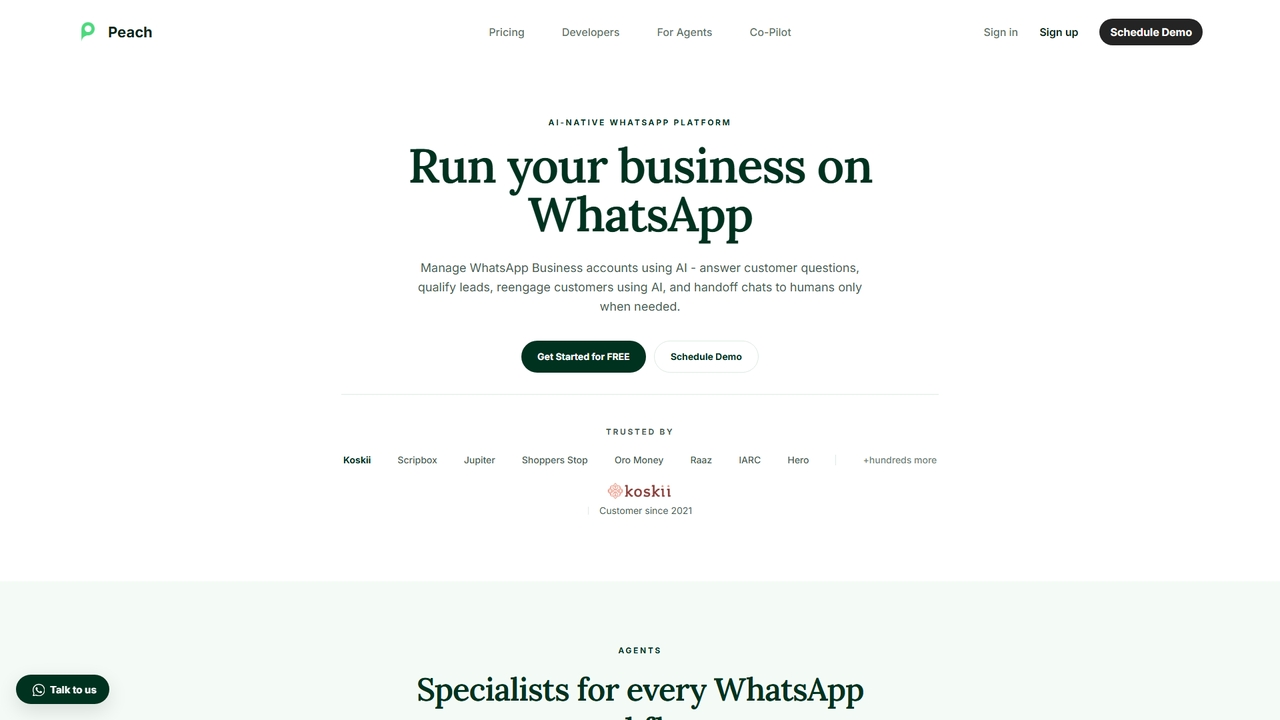
Peach is an AI-native WhatsApp platform for inside sales teams. Deploy focused AI agents to qualify leads, answer support questions, recover abandoned carts, and escalate to humans with full context — all inside WhatsApp.

Business Messaging
Visits 1.3KFavorites 11Likes 12
OptimumHQ
Paid

OptimumHQ

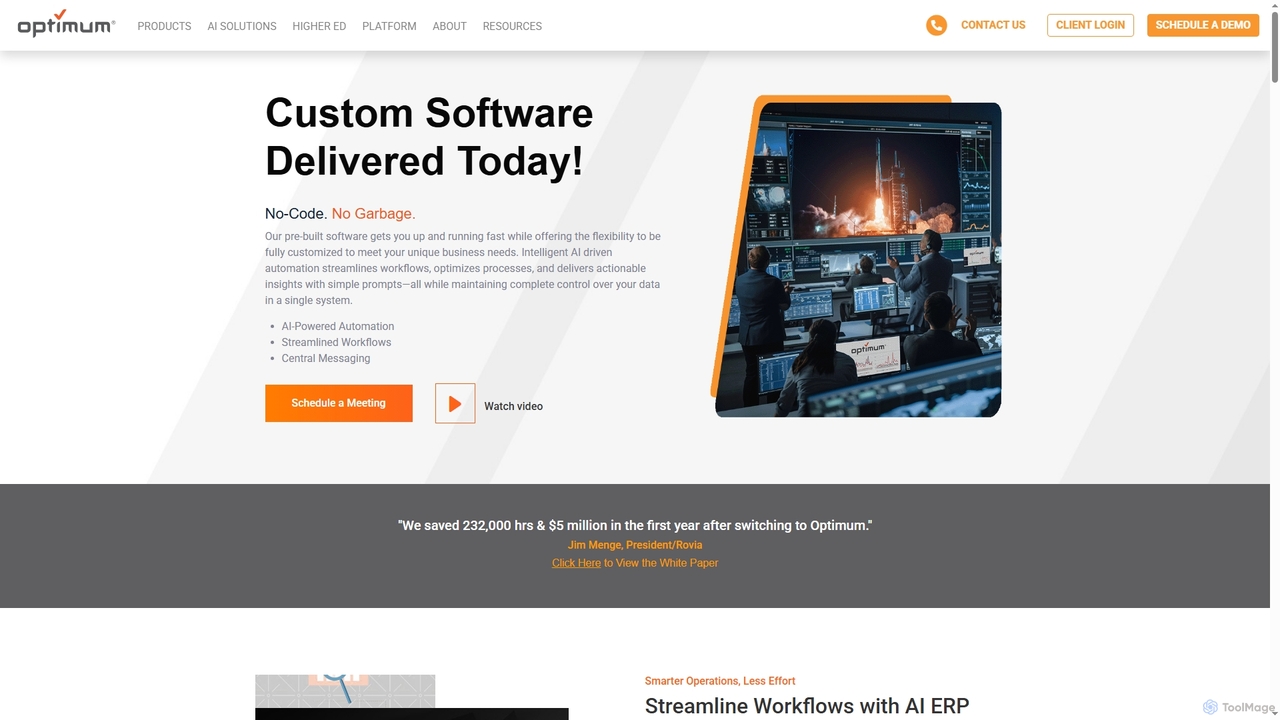
OptimumHQ is a no-code adaptive software platform that empowers businesses to rapidly create custom solutions, leveraging AI-driven automation for streamlined workflows, optimized processes, and actionable insights across ERP, CRM, messaging, and digital forms.

3D
Visits 43.2KFavorites 162Likes 156

About Business Messaging

Business Messaging tools are AI-powered platforms for managing and automating conversations with customers across multiple channels. They leverage natural language processing (NLP) and automation to deliver personalized, scalable communication via SMS, WhatsApp, social media, and web chat. These tools help businesses enhance customer support, streamline sales processes, and execute targeted marketing campaigns. By centralizing interactions and providing rich analytics, they offer a unified view of the customer journey.

Core Features

  • Omnichannel Inbox: Consolidate messages from various platforms like SMS, WhatsApp, and Facebook Messenger into a single dashboard.
  • AI Chatbot Automation: Deploy intelligent bots to answer common questions, qualify leads, and handle requests 24/7.
  • Broadcast Campaigns: Send targeted promotional or informational messages to segmented customer lists.
  • CRM Integration: Automatically sync conversation history and customer data with systems like Salesforce or HubSpot.
  • Performance Analytics: Track key metrics such as response times, resolution rates, and campaign effectiveness.

Use Cases

These tools are widely used in e-commerce for customer support and marketing, in healthcare for appointment reminders, and in B2B sales for lead engagement. Any organization aiming to manage high volumes of customer interactions can benefit from a centralized messaging solution.

How to Choose

When selecting a tool, consider the channels it supports (e.g., WhatsApp, SMS), the sophistication of its AI and automation capabilities, its integration options with your existing CRM or helpdesk software, and its pricing model, which is often based on contacts or message volume.

Business Messaging use cases

1

Automate 24/7 Customer Support

An e-commerce company uses a business messaging platform to deploy an AI chatbot on their website and WhatsApp. This bot handles common customer inquiries such as 'Where is my order?', 'What is your return policy?', and product-specific questions, even outside of business hours. For complex issues, the bot seamlessly transfers the conversation to a human agent, providing the full context. This reduces agent workload by 40% and improves customer satisfaction by providing instant answers around the clock.

2

Proactive Sales Lead Nurturing

A B2B software company integrates its CRM with a business messaging tool. When a lead downloads a whitepaper, an automated workflow triggers a personalized WhatsApp message from a sales representative after 24 hours, asking if they have any questions. This non-intrusive, conversational approach generates higher engagement rates than traditional email follow-ups. The platform allows sales reps to manage multiple conversations efficiently, leading to a 15% increase in qualified demo bookings.

3

Launch Targeted SMS Marketing Campaigns

A retail brand uses a business messaging platform to send an SMS broadcast about a flash sale. They segment their audience based on past purchase history stored in their CRM, sending a specific offer for 'women's shoes' to customers who previously bought footwear. The message includes a direct link to the sale page. The platform's analytics show a 25% click-through rate and a significant spike in sales within hours of the broadcast, demonstrating a much higher ROI compared to email campaigns.

4

Reduce No-Shows with Automated Reminders

A dental clinic uses a business messaging service to automate appointment confirmations and reminders. Once a patient books an appointment, they receive an instant confirmation via SMS. Then, 24 hours before the appointment, an automated reminder is sent with options to 'Confirm' or 'Reschedule'. This simple automation significantly reduces the rate of no-shows, improves the clinic's schedule efficiency, and frees up administrative staff from making manual reminder calls, allowing them to focus on in-person patient care.

5

Centralize Internal Company Announcements

A large corporation with employees across different locations uses a business messaging platform for critical internal communications. For an urgent system maintenance announcement, the HR department sends a broadcast message simultaneously via SMS and the company's internal chat app. This ensures all employees receive the notification instantly, regardless of whether they are at their desk or in the field. The platform's delivery reports confirm receipt, ensuring compliance and company-wide awareness.

6

Qualify Website Leads with AI Chatbots

A real estate agency places an AI chatbot on its property listing pages. The chatbot engages website visitors by asking questions like 'Are you looking to buy or rent?' and 'What is your budget?'. Based on the answers, it qualifies the lead and, if they meet the criteria, offers to book a viewing directly in the agent's calendar. This automates the top of the sales funnel, ensuring that agents only spend time on high-intent, pre-qualified leads, increasing their efficiency and conversion rates.

Business Messaging FAQ

What is AI-powered Business Messaging?

AI-powered Business Messaging refers to platforms that use artificial intelligence to manage and automate conversations between a company and its audience. Unlike simple chat tools, they leverage technologies like Natural Language Processing (NLP) to understand user intent, automate responses, and route complex queries to the right human agent. Key functions include deploying chatbots, sending targeted broadcast campaigns, and integrating with business systems like CRMs, all within a unified, multi-channel environment (e.g., SMS, WhatsApp, web chat).

How do I choose the right Business Messaging platform?

To choose the right platform, evaluate these key factors:

  • Channel Support: Ensure it supports the channels your customers use most, such as WhatsApp, SMS, Facebook Messenger, or Instagram DM.
  • Automation & AI Capabilities: Assess the sophistication of its chatbot builder. Can it handle complex conversations, or is it just for basic FAQs? Look for features like intent recognition and sentiment analysis.
  • Integration Ecosystem: Check for native integrations with your essential tools, especially your CRM (e.g., Salesforce, HubSpot) and e-commerce platform (e.g., Shopify).
  • Scalability and Pricing: Understand the pricing model. Is it based on the number of contacts, messages sent, or agent seats? Choose a plan that can grow with your business needs.
What's the difference between Business Messaging and team chat apps like Slack?

The primary difference lies in their intended use. Team chat apps like Slack or Microsoft Teams are designed for internal communication and collaboration among employees. Their features focus on project management, file sharing, and internal team organization. In contrast, Business Messaging platforms are designed for external communication, primarily between a business and its customers. They focus on managing conversations at scale across public channels (SMS, WhatsApp), automating support with chatbots, running marketing campaigns, and integrating with customer data systems like CRMs.

What are the key features of a Business Messaging tool?

While features vary, most robust Business Messaging tools include:

  • Omnichannel Inbox: A unified dashboard to view and respond to messages from SMS, WhatsApp, web chat, and social media.
  • AI Chatbots: Tools to build and deploy automated conversational agents for support, sales, and lead generation.
  • Broadcast & Campaigns: The ability to send targeted messages to large, segmented audiences for marketing or notifications.
  • CRM & API Integrations: Seamless connection with customer relationship management software and other business tools.
  • Analytics & Reporting: Dashboards to track performance metrics like message volume, response times, and customer satisfaction scores.
Which types of businesses benefit most from Business Messaging?

Virtually any business that communicates with customers can benefit, but they are particularly valuable for:

  • E-commerce & Retail: For order updates, promotional campaigns, and 24/7 customer support.
  • B2B & SaaS Companies: For lead qualification on websites, scheduling demos, and onboarding new users.
  • Healthcare & Wellness: For appointment reminders, confirmations, and sending pre-visit instructions.
  • Real Estate & Hospitality: For answering property inquiries, scheduling viewings, and managing bookings.
  • Large Enterprises: For both external customer service and critical internal communications to a distributed workforce.