ToolMage
Sign in

Best 2 Calling AI tools for Communication

Popular Calling AI tools in Communication include Koncert and Telelingo, helping you work more efficiently.

Koncert
Freemium

Koncert

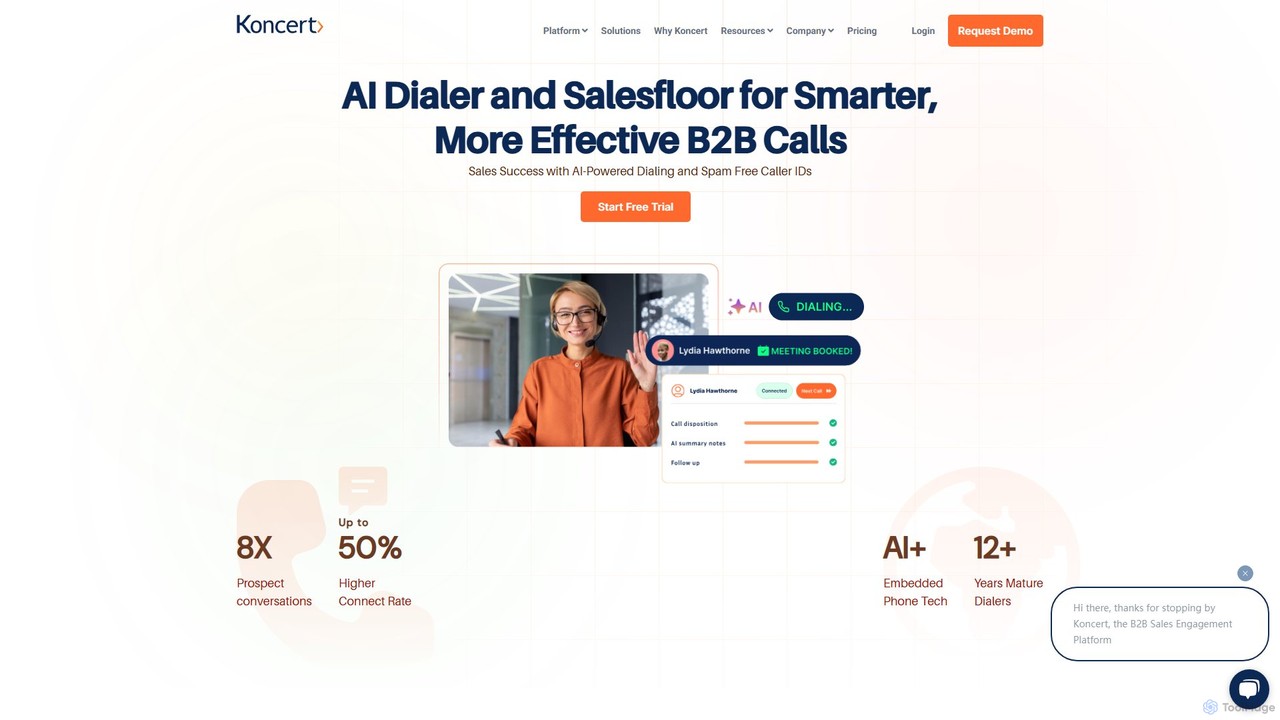
Koncert is an AI-powered sales engagement platform featuring a suite of advanced dialers and a remote salesfloor. It's designed to dramatically increase B2B sales productivity, boost prospect connection rates, and enhance team coaching and collaboration. By leveraging AI, Koncert helps sales teams have more meaningful conversations and close more deals.

Calling
Visits 67.1KFavorites 102Likes 129
Telelingo
Freemium

Telelingo

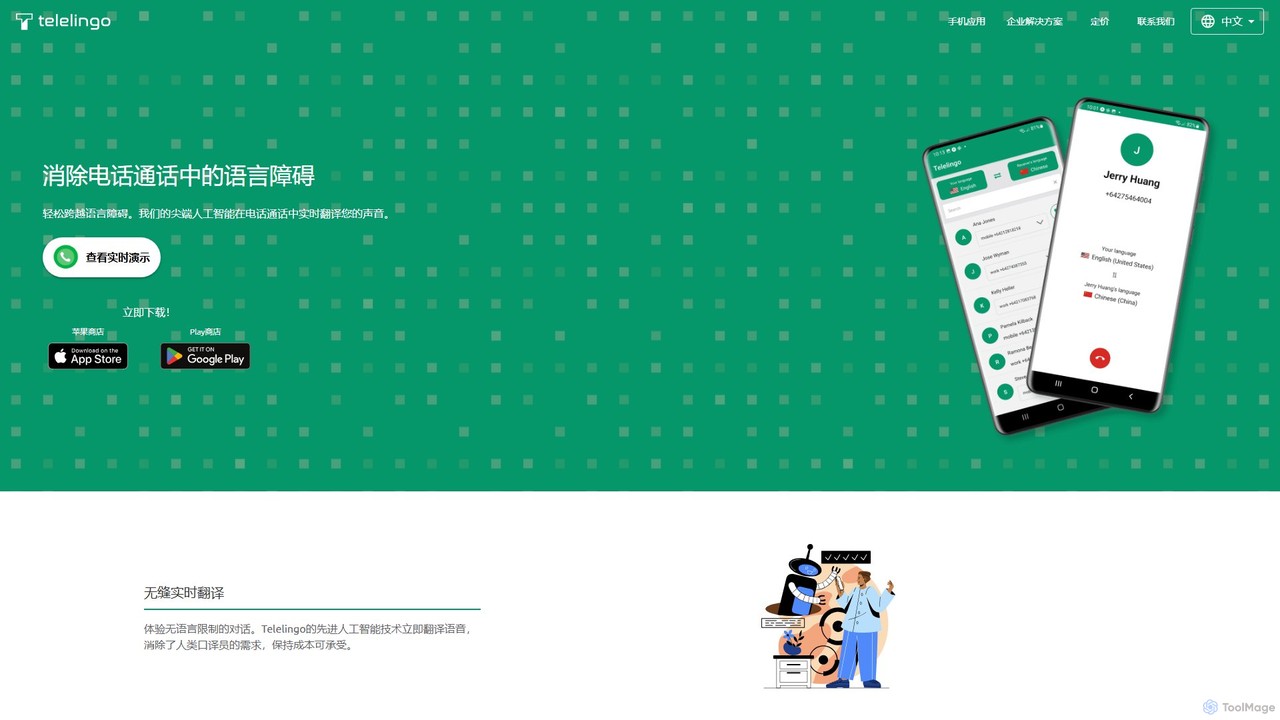
Telelingo is an AI-powered service for real-time phone call translation. It instantly translates your voice during calls, supporting over 80 languages. Available as a mobile app for individuals with pay-as-you-go pricing and as an integrated enterprise solution for businesses.

Customer Support
Visits 7.4KFavorites 115Likes 121

About Calling

AI Calling tools are advanced solutions that leverage artificial intelligence to automate, enhance, and analyze voice-based interactions. These tools integrate natural language processing (NLP), speech-to-text (STT), and text-to-speech (TTS) technologies to understand, generate, and respond to human speech. They are designed to streamline communication workflows, improve customer engagement, and provide actionable insights from call data, significantly boosting operational efficiency and service quality.

Core Features

  • Automated Outbound Calls: Initiate high-volume calls for reminders, notifications, or lead qualification without human intervention.
  • Intelligent Inbound Call Routing: Use AI to understand caller intent and route calls to the most appropriate department or agent.
  • AI-powered Virtual Agents: Deploy conversational AI to handle routine inquiries, provide information, and resolve common issues 24/7.
  • Real-time Call Transcription & Analysis: Convert spoken words into text and analyze conversations for sentiment, keywords, and compliance.
  • Sentiment Analysis & Quality Assurance: Monitor call emotions and identify trends to improve service quality and agent performance.

Use Cases

Businesses across various sectors utilize AI Calling tools to transform their communication strategies. From automating customer support inquiries and sales lead qualification to managing appointment reminders and conducting market research, these tools provide scalable and consistent voice interactions, reducing operational costs and freeing human agents for more complex tasks.

How to Choose

When selecting an AI Calling solution, consider its integration capabilities with existing CRM or communication platforms, its scalability to handle varying call volumes, and the level of customization available for voice, scripts, and conversational flows. Evaluate the robustness of its analytics and reporting features, as well as its support for multiple languages to ensure it meets your specific operational and global needs.

Featured tool rankings

Calling use cases

1

Automated Customer Service Inquiries

Customer service managers can deploy AI calling agents to automatically handle a high volume of routine customer questions, such as order status checks, FAQ answers, or basic troubleshooting. This frees human agents to focus on complex issues, significantly reducing wait times and providing 24/7 support, leading to improved customer satisfaction and operational efficiency.

2

Sales Lead Qualification & Outreach

Sales development representatives (SDRs) leverage AI calling tools to automate initial lead qualification and outreach. The AI agent makes calls, asks predefined qualification questions, and schedules follow-up appointments with genuinely interested prospects. This allows SDRs to focus their efforts on high-potential leads, increasing conversion rates and accelerating the sales cycle.

3

Appointment Reminders & Confirmations

Healthcare clinics, service providers, and event organizers use AI calling systems to send automated reminders and confirmations for appointments or bookings. The system calls patients or clients, confirms attendance, and can even facilitate rescheduling options. This drastically reduces no-show rates, optimizes resource allocation, and streamlines administrative tasks.

4

Market Research & Survey Collection

Market researchers can utilize AI calling agents to conduct large-scale phone surveys efficiently. The AI agent follows a structured script, asks survey questions, and records responses consistently across all participants. This method ensures unbiased data collection, reduces manual effort, and allows for cost-effective gathering of insights from a broad audience.

5

Emergency Notification & Crisis Communication

Public safety officials or business continuity managers can rapidly disseminate urgent information during emergencies using AI calling systems. The system broadcasts pre-recorded or AI-generated messages to specific contact lists, ensuring that critical updates, safety instructions, or crisis alerts reach a large number of recipients quickly and reliably, enhancing public safety and response coordination.

6

Internal Team Communication & Stand-ups

Project managers or team leads in remote or distributed teams can use AI calling tools to streamline daily check-ins or stand-up meetings. An AI agent calls team members to collect brief status updates, progress reports, or blockers, then compiles these into a concise summary. This automates routine reporting, improves remote team coordination, and saves time spent on manual follow-ups.

Calling FAQ

What are AI Calling tools?

AI Calling tools are artificial intelligence-powered solutions designed to automate, enhance, and analyze voice-based communications. They utilize technologies like natural language processing (NLP), speech-to-text (STT), and text-to-speech (TTS) to understand human speech, generate responses, and manage call flows. Their primary purpose is to streamline operations, improve customer interactions, and extract valuable insights from conversations, making communication more efficient and scalable.

How do AI Calling tools differ from traditional call centers?

AI Calling tools primarily differ from traditional call centers in their level of automation and data intelligence. While traditional call centers rely heavily on human agents for every interaction, AI Calling tools automate routine tasks, handle high call volumes, and provide 24/7 availability without human intervention. They also offer advanced analytics, sentiment analysis, and consistent messaging, which can be challenging to achieve at scale with human-only operations, leading to greater efficiency and cost savings.

What are the main benefits of using AI Calling tools?

The main benefits of AI Calling tools include significant cost reduction through automation, 24/7 availability for customer support, and improved consistency in messaging. They enhance customer experience by reducing wait times and providing instant, accurate information. Furthermore, these tools offer valuable data insights through call transcription and sentiment analysis, enabling businesses to optimize strategies, scale operations rapidly, and free human agents for more complex, empathetic tasks.

Who can benefit most from implementing AI Calling solutions?

Businesses with high call volumes, such as customer service departments, sales teams, and marketing agencies, can benefit significantly from AI Calling solutions. Industries like healthcare (for appointment reminders), logistics (for delivery updates), and market research (for surveys) also find immense value. Any organization looking to automate routine voice tasks, improve communication efficiency, gather call insights, or provide scalable, consistent support will find AI Calling tools highly advantageous.

What key features should I look for in an AI Calling platform?

When evaluating an AI Calling platform, look for robust natural language understanding (NLU) capabilities to accurately interpret caller intent. Essential features include customizable voice and script options, seamless integration with existing CRM or business systems, and comprehensive analytics dashboards for performance monitoring. Scalability, multi-language support, and advanced call routing logic are also crucial for handling diverse communication needs and ensuring future growth.