Picterra
Picterra is a GeoAI platform that transforms satellite and aerial imagery into actionable environmental intelligence. It enables sustainability, …
Picterra is a GeoAI platform that transforms satellite and aerial imagery into actionable environmental intelligence. It enables sustainability, agriculture, and compliance teams to monitor global operations, detect risks like deforestation, and verify land use at scale. With its no-code interface, users can build custom AI models to automate analysis and make data-driven decisions for ESG reporting, supply chain management, and climate resilience.
maigon
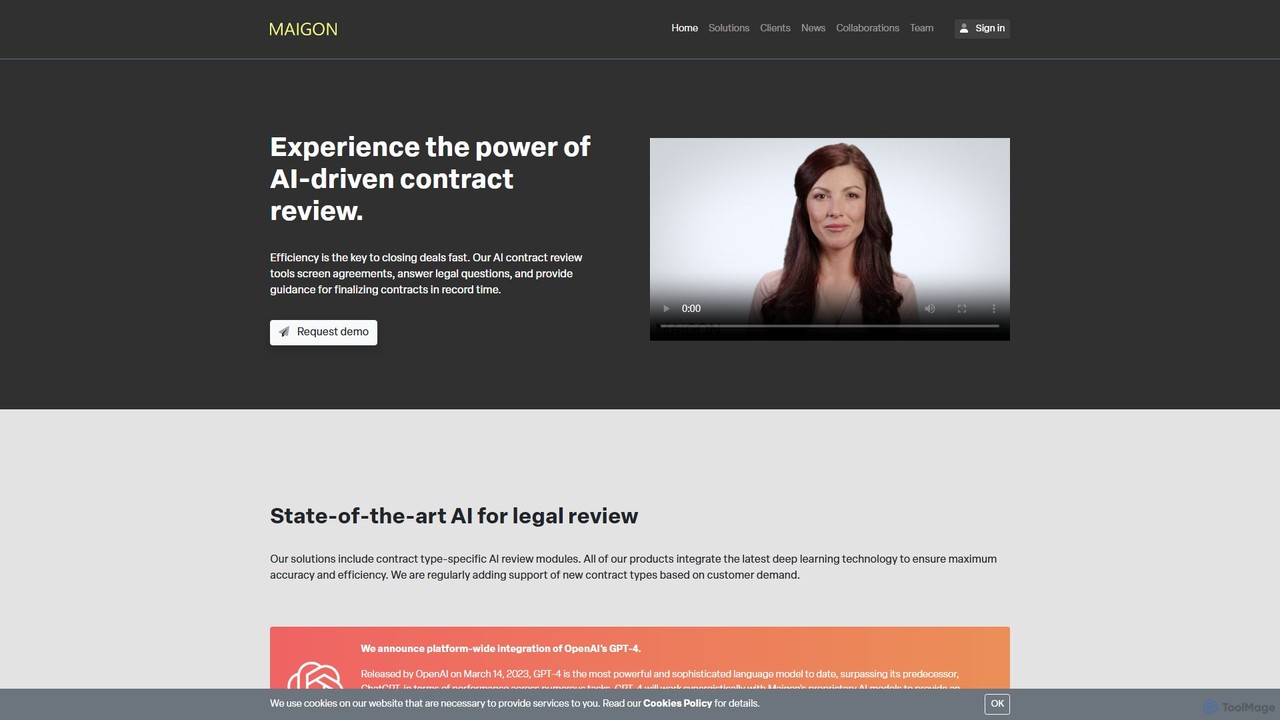
Maigon is a state-of-the-art AI platform designed for rapid and accurate contract review. It leverages proprietary deep learning …
Maigon is a state-of-the-art AI platform designed for rapid and accurate contract review. It leverages proprietary deep learning models and GPT-4 to analyze legal documents, identify risks, and ensure compliance with regulations like GDPR. Ideal for legal teams, law firms, and businesses, Maigon automates repetitive review tasks, saving time and resources.
About Risk Management
AI-powered Risk Management tools are specialized solutions that leverage artificial intelligence to identify, assess, monitor, and mitigate potential risks across various organizational functions. These tools utilize advanced algorithms, machine learning, and predictive analytics to process vast datasets, uncover hidden patterns, and provide proactive insights into financial, operational, cybersecurity, and compliance risks. By automating complex analysis and offering real-time threat detection, they empower businesses to make informed decisions, protect assets, and ensure business continuity within the broader context of compliance.
Core Features
- Predictive Risk Analytics: Forecasts potential future risks and their impact based on historical data and current trends.
- Real-time Anomaly Detection: Identifies unusual patterns or deviations in data that may indicate fraudulent activities or security breaches.
- Automated Compliance Monitoring: Continuously scans transactions and operations against regulatory requirements, flagging potential violations.
- Threat Intelligence Integration: Gathers and analyzes external threat data to provide a comprehensive view of the evolving risk landscape.
- Scenario Modeling & Simulation: Allows users to test the impact of various risk scenarios and evaluate mitigation strategies.
Applicable Scenarios
Financial institutions use these tools for fraud detection and credit risk assessment. Cybersecurity teams deploy them for proactive threat prediction and vulnerability management. Legal and compliance departments leverage AI for regulatory change monitoring and ensuring adherence to internal policies, significantly enhancing an organization's overall compliance posture.
How to Choose
When selecting an AI Risk Management tool, consider its data integration capabilities with existing systems, the explainability of its AI models, its adherence to relevant industry regulations, and its scalability to grow with your organization. Evaluate the level of customization offered and the vendor's support for model training and fine-tuning to ensure it meets your specific risk profiles.

Risk ManagementUse Cases
Proactive Fraud Detection in Financial Transactions
Financial institutions utilize AI risk management tools to analyze millions of transactions in real-time, identifying subtle patterns indicative of fraudulent activity. Machine learning models learn from past fraud cases and flag suspicious transactions, enabling immediate investigation and prevention of financial losses, significantly reducing exposure to financial crime risks.
Automated Regulatory Compliance Monitoring
Compliance officers in regulated industries employ AI tools to continuously monitor operational data and transactions against complex and evolving regulatory frameworks. The AI automatically identifies potential non-compliance issues, generates alerts, and provides audit trails, ensuring the organization adheres to legal requirements and avoids hefty fines and reputational damage.
Predicting Cybersecurity Threats and Vulnerabilities
Cybersecurity teams leverage AI risk management platforms to predict potential cyberattacks and identify system vulnerabilities before they are exploited. By analyzing network traffic, user behavior, and global threat intelligence, AI models can anticipate emerging threats, prioritize patching efforts, and recommend proactive security measures, strengthening the organization's defense posture.
Supply Chain Risk Assessment and Mitigation
Manufacturing and logistics companies use AI to assess and mitigate risks across their global supply chains. The tools analyze data from suppliers, geopolitical events, weather patterns, and market fluctuations to predict disruptions, identify single points of failure, and recommend alternative sourcing or logistics strategies, ensuring supply chain resilience.
Credit Risk Scoring and Loan Portfolio Management
Banks and lending institutions apply AI risk management for more accurate credit scoring and dynamic loan portfolio management. AI models analyze a broader range of applicant data, including non-traditional sources, to assess creditworthiness more precisely, predict default probabilities, and optimize lending decisions, leading to healthier loan portfolios and reduced bad debt.
Project Risk Identification and Management
Project managers deploy AI tools to identify and manage risks throughout the project lifecycle. By analyzing project plans, resource allocation, historical project data, and external factors, AI can predict potential delays, budget overruns, or resource conflicts, allowing managers to implement preventative measures and keep projects on track and within scope.