
ToolMage
Sign in

Best 1 Multimedia Localization AI tools for Content Creation

Popular Multimedia Localization AI tools in Content Creation include Phrase, helping you work more efficiently.

Phrase
Paid

Phrase

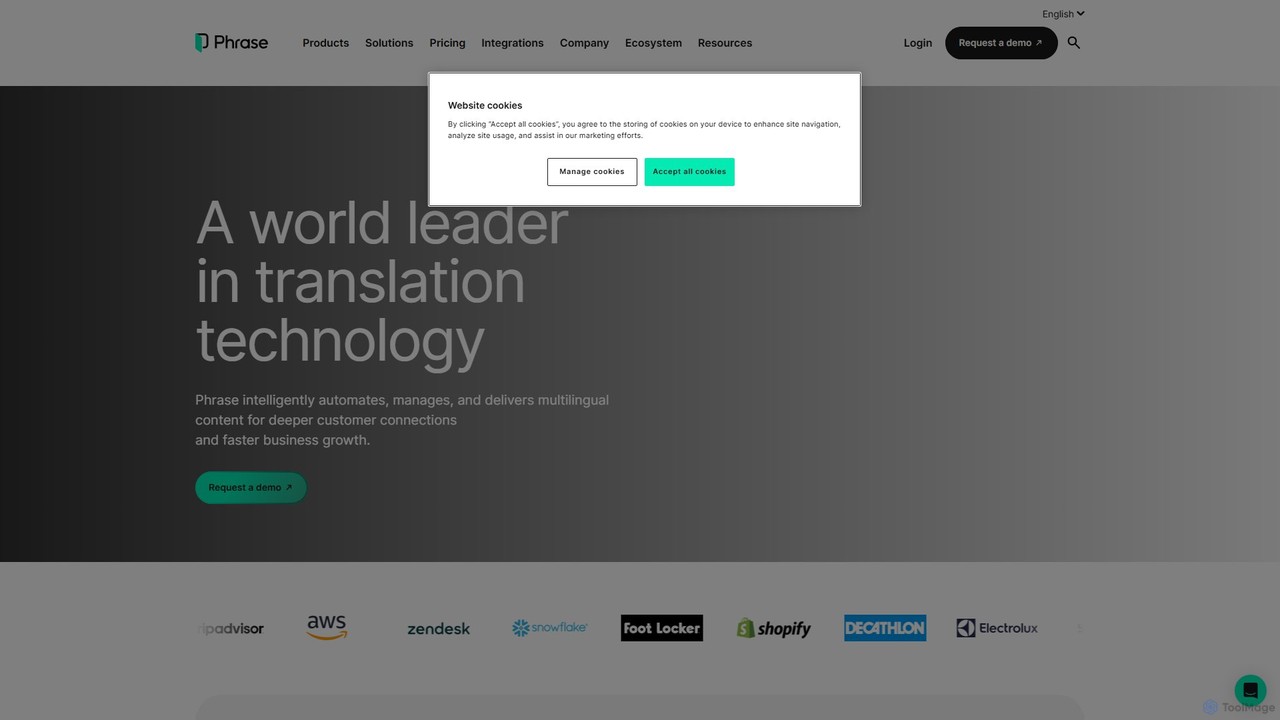
Phrase is an AI-powered Localization Platform designed for enterprises. It automates, manages, and delivers multilingual content, from text to multimedia, to foster deeper customer connections and accelerate global growth. The platform centralizes all localization tasks, integrating seamlessly with over 50 business tools.

Localization
Visits 789.6KFavorites 178Likes 180

About Multimedia Localization

Multimedia Localization tools are AI-powered solutions designed to adapt audio, video, and interactive content for diverse linguistic and cultural markets. These tools leverage advanced AI, including natural language processing, speech recognition, and machine translation, to automate and streamline the complex process of making multimedia content globally accessible. They enable businesses and creators to efficiently reach wider audiences by overcoming language barriers and ensuring cultural relevance.

Core Features

  • AI-powered Translation: Automatically translates spoken dialogue, on-screen text, and subtitles into multiple languages.
  • Automated Dubbing & Voiceover: Generates natural-sounding voiceovers in target languages, often with voice cloning capabilities.
  • Subtitle Generation & Sync: Creates accurate subtitles from audio/video and synchronizes them perfectly with visual content.
  • Cultural Adaptation: Identifies and suggests modifications for culturally sensitive elements, ensuring local relevance.
  • Text-to-Speech & Speech-to-Text: Converts audio to text for transcription and text to natural-sounding speech for new audio tracks.

Applicable Scenarios

Media companies localizing films and series, e-learning platforms adapting courses for international students, and global marketing teams translating video advertisements. These tools significantly reduce manual effort and accelerate time-to-market for localized content.

How to Choose

When selecting a Multimedia Localization tool, consider the range of supported languages, the quality and naturalness of AI-generated voices, the accuracy of subtitle synchronization, and the tool's ability to handle various multimedia formats. Evaluate its integration capabilities with existing content creation workflows and its cultural adaptation features to ensure comprehensive localization.

Multimedia Localization use cases

1

Localize Video Content for Global Streaming Platforms

A global streaming service needs to launch a new series in 10 different languages simultaneously. Using an AI Multimedia Localization tool, the production team uploads the original video, and the AI automatically generates accurate subtitles and dubbing tracks for each target language. This process significantly reduces the time and cost associated with manual translation, voice acting, and synchronization, allowing the service to reach a broader international audience faster.

2

Adapt E-learning Modules for International Students

An educational institution wants to offer its online courses to students worldwide. With AI Multimedia Localization, they can upload video lectures and interactive content. The tool translates the spoken content, generates localized subtitles, and creates new voiceovers in various languages, while also adapting on-screen text and cultural references. This ensures that educational materials are not only linguistically accessible but also culturally relevant, enhancing the learning experience for diverse student populations.

3

Translate Marketing Videos for Global Campaigns

A multinational corporation is launching a new product and needs to adapt its promotional video for markets in Europe, Asia, and Latin America. An AI Multimedia Localization tool allows the marketing team to quickly translate the video script, generate voiceovers with localized accents, and create culturally appropriate on-screen text. This enables rapid deployment of consistent marketing messages across different regions, boosting engagement and brand recognition without extensive manual re-production.

4

Generate Multilingual Voiceovers for Corporate Presentations

A company CEO needs to deliver a key presentation to international stakeholders. Instead of hiring multiple voice actors, the presentation's audio is fed into an AI Multimedia Localization tool. The tool translates the speech and generates natural-sounding voiceovers in several target languages, maintaining the original speaker's tone and style through voice cloning. This ensures clear communication and a professional presentation for all attendees, regardless of their native language.

5

Create Localized Audio Guides for Tourist Attractions

A major museum wants to enhance the visitor experience by offering audio guides in multiple languages. An AI Multimedia Localization tool can take the original audio script, translate it, and generate high-quality voiceovers in languages like Spanish, French, German, and Japanese. This allows the museum to cater to a diverse international tourist base, providing rich, immersive information in their preferred language without the need for extensive human recording sessions.

6

Automate Subtitle and Dubbing for Live Webinars

An organization hosts frequent live webinars for a global audience. An AI Multimedia Localization tool can integrate with the live stream to provide real-time, automatically generated subtitles in multiple languages. For recorded webinars, it can further process the audio to create synchronized dubbing tracks. This ensures that valuable content is immediately accessible to non-native speakers, expanding the reach and impact of live online events.

Multimedia Localization FAQ

What is Multimedia Localization?

Multimedia Localization is the process of adapting audio, video, and interactive content to meet the linguistic, cultural, and technical requirements of a specific target market. AI-powered Multimedia Localization tools automate this process by using artificial intelligence to translate dialogue, generate voiceovers, create subtitles, and adapt visual elements, making content globally accessible and culturally relevant. It goes beyond simple translation to ensure the content resonates with local audiences.

How do AI Multimedia Localization tools work?

AI Multimedia Localization tools typically work by combining several AI technologies. They use speech-to-text for transcribing audio, natural language processing (NLP) for translation, and text-to-speech or voice cloning for generating new voiceovers. Advanced algorithms also handle subtitle synchronization, cultural nuance detection, and even visual text replacement. Users upload their multimedia content, specify target languages, and the AI processes the content to produce localized versions.

What are the main benefits of using AI for Multimedia Localization?

Using AI for Multimedia Localization offers several key benefits: significantly reduced time and cost compared to manual processes, increased scalability for handling large volumes of content, improved consistency across localized versions, and the ability to reach global audiences faster. AI tools also help in maintaining brand voice, ensuring cultural sensitivity, and streamlining complex workflows, making global content distribution more efficient and effective.

How does Multimedia Localization differ from general content translation?

While general content translation focuses on text, Multimedia Localization specifically addresses the unique challenges of adapting audio, video, and interactive media. It involves not just translating words but also synchronizing speech with visuals, generating natural-sounding voiceovers, creating accurate subtitles, and culturally adapting visual elements, on-screen text, and even humor or references. It's a more comprehensive and technically complex process than simple text translation.

What should I consider when choosing an AI Multimedia Localization tool?

When selecting an AI Multimedia Localization tool, consider the range and quality of supported languages, the naturalness and accuracy of its AI voice generation and translation models, and its ability to handle various multimedia formats (video, audio, interactive). Look for features like automatic subtitle synchronization, cultural adaptation suggestions, and integration with your existing content management systems. Also, evaluate pricing models, scalability, and the level of human post-editing required for optimal results.