ToolMage
Sign in

Best 1 Product Description AI tools for Content Generation

Popular Product Description AI tools in Content Generation include PODGenius, helping you work more efficiently.

PODGenius
Freemium

PODGenius

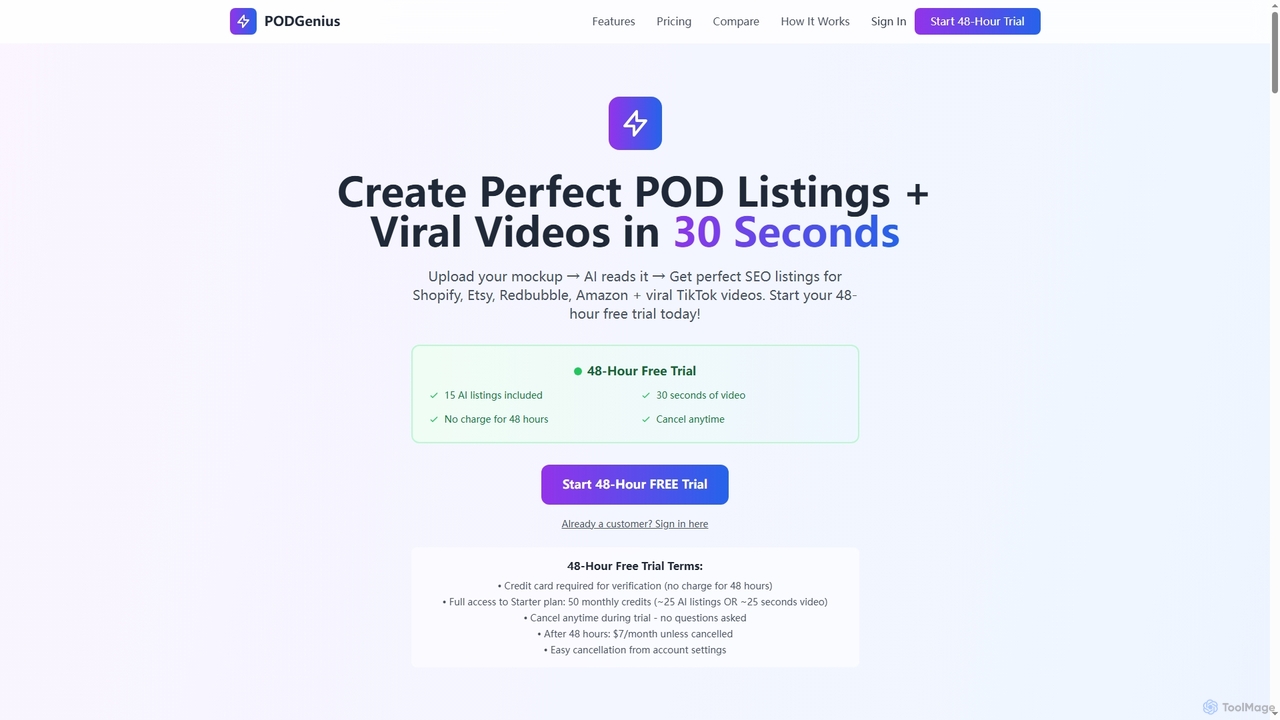
PODGenius is an AI-powered tool designed for print-on-demand sellers to generate SEO-optimized product listings and viral social media videos in seconds. It streamlines content creation for platforms like Shopify, Etsy, Redbubble, and Amazon, while also offering AI-driven business advice to boost sales and efficiency.

Market Research
Visits 4.3KFavorites 114Likes 129

About Product Description

Product Description AI tools are specialized solutions within the broader field of content generation, designed to automatically create compelling and informative descriptions for products. Leveraging advanced natural language generation (NLG) and understanding (NLU) technologies, these tools analyze product attributes, target audience, and desired tone to produce high-quality text. They empower e-commerce businesses, marketers, and content creators to efficiently generate unique, SEO-optimized, and persuasive product descriptions at scale, significantly streamlining the content creation workflow and enhancing online visibility.

Core Features

  • Attribute-based Generation: Automatically crafts descriptions by extracting and utilizing key product features, specifications, and benefits.
  • Tone and Style Customization: Allows users to define the desired voice, such as formal, playful, luxurious, or technical, to match brand identity.
  • SEO Optimization: Integrates relevant keywords and phrases to improve search engine rankings and attract more organic traffic.
  • Multi-variant Generation: Produces multiple description versions for A/B testing or different platforms from a single set of inputs.
  • Multilingual Support: Generates product descriptions in various languages, facilitating global market reach.

Applicable Scenarios

These tools are invaluable for e-commerce retailers needing to populate large catalogs, dropshippers requiring unique content for numerous products, and marketing teams aiming to quickly launch new product lines. They are also beneficial for small businesses without dedicated copywriting resources, enabling them to compete effectively with professional-grade product narratives.

How to Choose

When selecting a Product Description AI tool, consider its ability to customize tone and style, the depth of its SEO features, and its integration capabilities with existing e-commerce platforms. Evaluate the quality of generated output, the range of supported languages, and the flexibility in handling diverse product categories. User interface and pricing models should also align with your team's technical proficiency and budget.

Featured tool rankings

Product Description use cases

1

Generating SEO-Optimized E-commerce Product Descriptions

E-commerce managers often face the challenge of writing unique, keyword-rich descriptions for thousands of products. An AI product description tool allows them to input product specifications and target keywords, instantly generating multiple SEO-optimized descriptions. This automates a time-consuming task, ensuring consistent quality and improving product visibility on search engines, leading to higher organic traffic and sales conversions.

2

Creating Unique Descriptions for Dropshipping Stores

Dropshippers frequently list hundreds of products from various suppliers, often with generic descriptions. Using an AI tool, they can quickly transform basic product data into distinct, engaging narratives. This helps differentiate their store from competitors, avoids duplicate content penalties, and enhances brand perception without the need for extensive manual copywriting for each item.

3

Crafting Multi-Language Product Content for Global Markets

Businesses expanding internationally require product descriptions in multiple languages. AI product description generators can take an English description and translate/localize it into several target languages while maintaining brand voice and cultural nuances. This accelerates market entry, reduces translation costs, and ensures a consistent global brand message across all product listings.

4

A/B Testing Product Description Variants

Marketing teams aim to optimize conversion rates by testing different messaging. An AI tool can rapidly produce several variations of a product description, each with a slightly different tone, focus, or call to action. This enables marketers to efficiently A/B test which description resonates best with their audience, leading to data-driven improvements in product page performance.

5

Automating Product Description Updates for Seasonal Campaigns

Retailers frequently update product descriptions for seasonal promotions, holiday sales, or new feature releases. An AI tool can be used to quickly revise existing descriptions to reflect new offers, themes, or benefits. This ensures that product listings remain fresh and relevant, capturing seasonal interest and driving timely purchases without manual content overhauls.

6

Enhancing Product Discovery on Marketplaces

Sellers on large marketplaces like Amazon or eBay need compelling descriptions that stand out. An AI product description tool helps them generate detailed, benefit-oriented descriptions that highlight unique selling propositions and incorporate relevant long-tail keywords. This improves product discoverability within crowded marketplaces and encourages customer engagement, leading to increased click-through rates and sales.

Product Description FAQ

What are AI Product Description tools?

AI Product Description tools are software applications that utilize artificial intelligence, specifically natural language generation (NLG), to automatically create written descriptions for products. They analyze input data such as product features, specifications, and target audience to generate unique, engaging, and often SEO-optimized text. These tools are designed to streamline content creation for e-commerce, marketing, and retail, significantly reducing the manual effort and time required to write compelling product narratives.

How do AI Product Description tools work?

AI Product Description tools typically work by taking structured input data about a product, such as its name, features, benefits, and target keywords. This data is then processed by advanced AI models, often large language models (LLMs), which have been trained on vast amounts of text. The AI generates human-like text by understanding the context and relationships between the input attributes, crafting a coherent and persuasive description that adheres to specified tones and styles. Some tools also integrate SEO analysis to suggest and incorporate relevant keywords.

What are the main benefits of using AI for product descriptions?

Using AI for product descriptions offers several key benefits. Firstly, it dramatically increases efficiency, allowing businesses to generate hundreds or thousands of descriptions in a fraction of the time it would take manually. Secondly, it ensures consistency in brand voice and quality across all product listings. Thirdly, many tools offer built-in SEO optimization, helping products rank higher in search results. Finally, it enables rapid A/B testing of different descriptions and supports multilingual content creation, facilitating global market expansion.

How do AI Product Description tools differ from general AI content generators?

While both fall under the umbrella of content generation, AI Product Description tools are highly specialized compared to general AI content generators. General tools can produce various content types like blog posts, emails, or social media updates. In contrast, product description tools are specifically trained and optimized for the unique structure, persuasive language, and SEO requirements of product listings. They excel at transforming structured product data into compelling sales copy, often with features like attribute extraction, tone customization, and variant generation tailored for e-commerce.

What should I consider when choosing an AI Product Description tool?

When selecting an AI Product Description tool, consider several factors. Evaluate its ability to handle your specific product categories and the depth of its customization options for tone, style, and length. Look for robust SEO features, including keyword integration and analysis. Check for integration capabilities with your existing e-commerce platforms or content management systems. Assess the quality and originality of the generated output, and consider multilingual support if you operate in global markets. Finally, compare pricing models and user-friendliness to ensure it fits your budget and team's workflow.