Content Generation Best in category 1 results Advanced Writing AI Tool

Popular AI tools in the Advanced Writing field of Content Generation include LLM Hub, etc., helping you quickly improve efficiency.

LLM Hub

LLM Hub

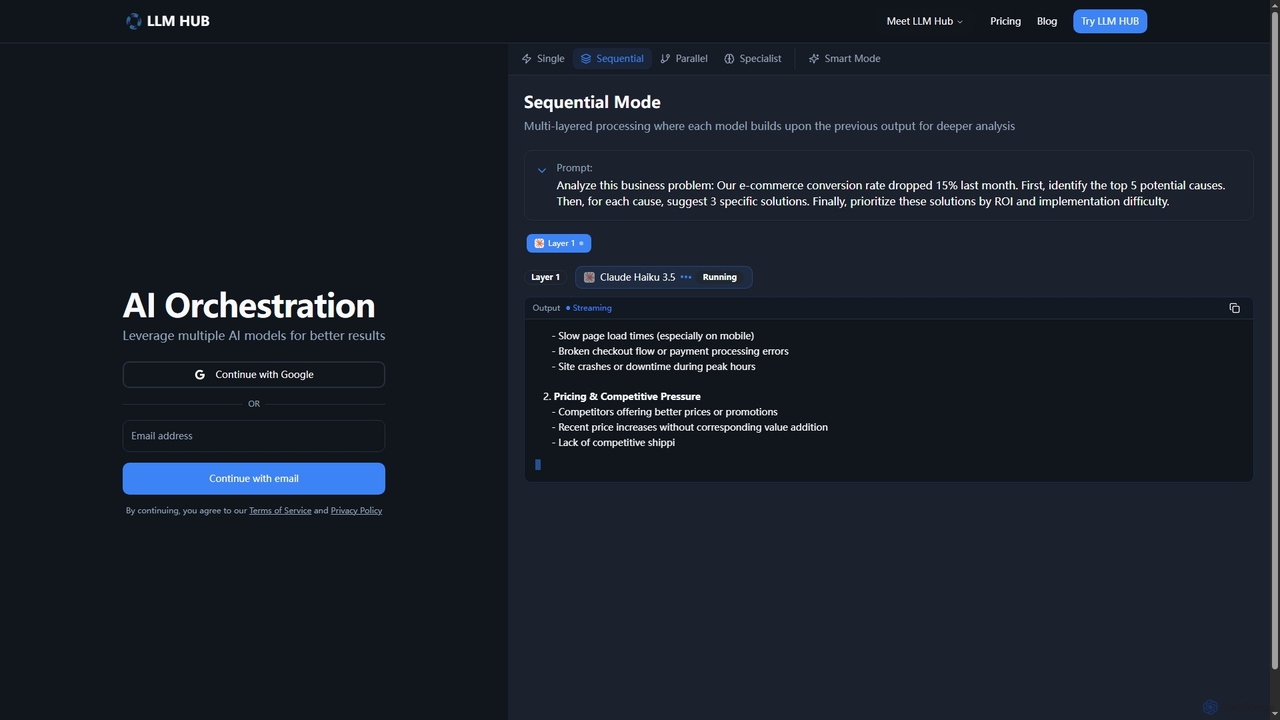
LLM Hub is an advanced multi-model AI orchestration platform designed to leverage the power of 20+ large language …

3.8K

About Advanced Writing

Advanced Writing tools are a specialized class of AI assistants designed for creating complex, nuanced, and professional-grade documents. Unlike general content generators, these tools leverage sophisticated language models to handle specific writing styles, intricate structures, and in-depth analysis. They are invaluable for tasks requiring high accuracy, a formal tone, and structured argumentation, such as academic papers or technical reports. Many also offer features like source citation, stylistic enhancement, and fact-checking to meet rigorous professional standards.

Core Features

  • Stylistic & Tonal Control: Precisely define and maintain specific writing styles, such as academic, technical, persuasive, or legal.
  • Structured Document Generation: Create complete documents with logical structures, including introductions, arguments, and conclusions, based on outlines or prompts.
  • Research & Citation Integration: Connect with academic databases or web sources to find information and automatically generate citations in formats like APA, MLA, or Chicago.
  • Deep Content Refactoring: Go beyond simple paraphrasing to rewrite and restructure entire sections of text to improve clarity, flow, and argumentation.

Use Cases

These tools are primarily used by professionals and academics. For instance, researchers use them to draft literature reviews and structure research papers. Technical writers leverage them to produce clear and consistent user manuals and documentation. Marketing teams create in-depth whitepapers and business reports, while legal professionals can draft initial versions of contracts and briefs.

How to Choose

When selecting an Advanced Writing tool, first consider its specialization—does it excel in academic, business, or creative writing? Evaluate its research and citation capabilities, including the accuracy and range of supported formats. Assess the level of control it offers over style, tone, and structure. Finally, check for integration options with your existing workflow, such as word processors or reference managers.

Advanced WritingUse Cases

1

Drafting an Academic Research Paper

A postgraduate researcher needs to write a literature review for their thesis. Instead of spending days manually searching and summarizing papers, they use an advanced writing tool. They input their research topic and key parameters. The AI scans academic databases like JSTOR and Google Scholar, identifies relevant papers, and generates concise summaries for each. It then helps structure the literature review, grouping papers by theme and creating a coherent narrative. Finally, it automatically formats all citations in APA 7th edition, saving significant time and reducing the risk of citation errors.

2

Creating In-depth Technical Documentation

A technical writer at a software company is tasked with creating a comprehensive user guide for a new complex feature. Using an advanced writing tool, they can input raw developer notes and API specifications. The tool helps structure the guide into logical sections like 'Getting Started', 'Core Concepts', and 'Troubleshooting'. It rewrites technical jargon into user-friendly language while maintaining accuracy, and ensures consistent use of terminology throughout the document. The tool can also generate code examples in multiple programming languages based on a single logic prompt, ensuring the documentation is useful for a wider developer audience.

3

Generating a B2B Marketing Whitepaper

A content marketer needs to produce a persuasive whitepaper to generate leads. They use an advanced writing tool to structure the document, starting with an executive summary, followed by problem analysis, proposed solution, and case studies. The marketer provides the tool with internal data and industry reports. The AI synthesizes this information into compelling arguments, maintains a professional and authoritative tone, and suggests data visualizations. It also helps in crafting a strong call-to-action, ensuring the whitepaper not only informs but also effectively converts readers into potential customers.

4

Drafting Legal Contracts and Briefs

A paralegal is tasked with drafting an initial version of a standard non-disclosure agreement (NDA). Using an advanced writing tool with legal templates, they can quickly generate a structured draft. They input key details like the parties involved and the scope of confidential information. The AI ensures the language used is precise, formal, and legally sound, drawing from a corpus of legal documents. It can also adapt clauses for specific jurisdictions. This process significantly speeds up the initial drafting, allowing the supervising lawyer to focus on review, negotiation, and strategic customization rather than starting from scratch.

5

Structuring a Non-Fiction Book

An author writing a non-fiction book on a historical topic uses an advanced writing tool to manage the complex structure. They upload their research notes, interview transcripts, and primary sources. The AI helps them create a detailed chapter-by-chapter outline, suggesting logical flows and identifying potential gaps in the narrative. As they write, the tool helps maintain a consistent tone and checks facts against the uploaded source materials. It can also rephrase complex historical analysis into more accessible language for a general audience, acting as a tireless developmental editor and research assistant.

6

Refining Grant Proposals for Funding

A research scientist at a university needs to write a compelling grant proposal. They use an advanced writing tool to ensure the proposal is clear, persuasive, and adheres to the funding body's strict guidelines. The tool helps structure the proposal with sections for background, research questions, methodology, and expected outcomes. It analyzes the text for clarity and impact, suggesting stronger verbs and more concise phrasing. It also cross-references the proposal against the submission criteria, flagging any missing elements or sections that don't align with the requirements, thereby increasing the chances of securing funding.

Advanced WritingFrequently Asked Questions