DeepVote
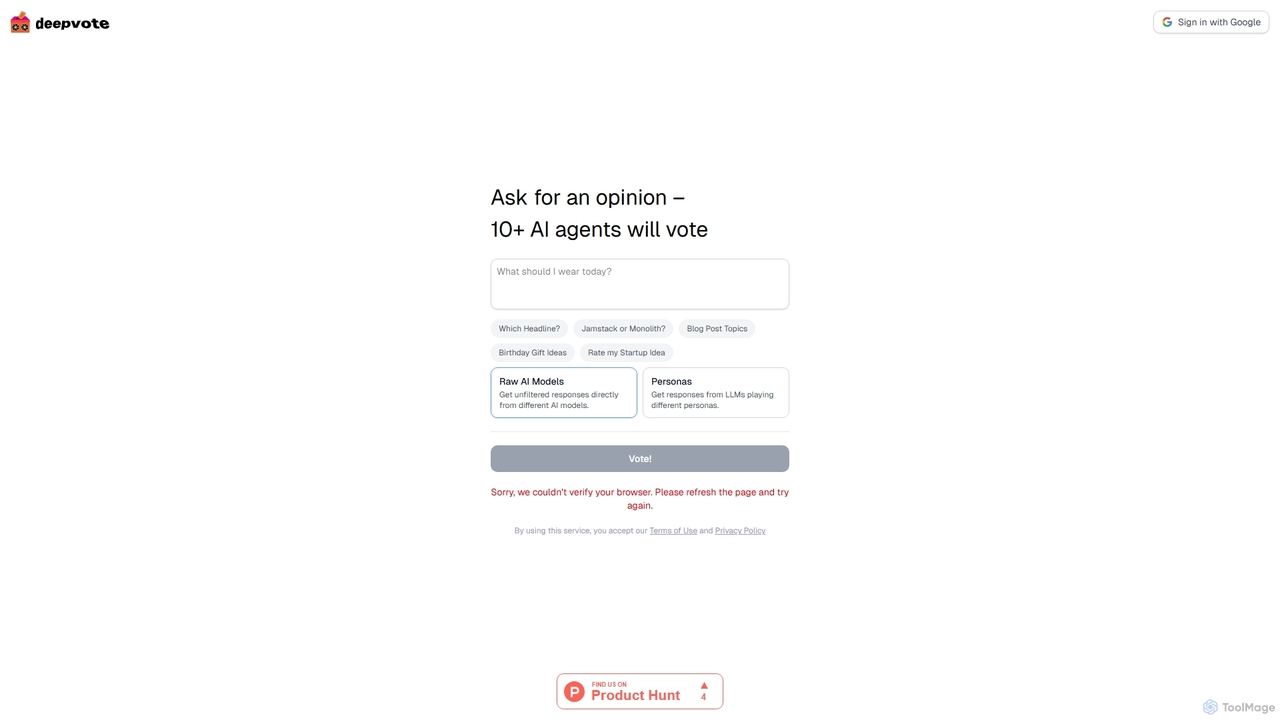
DeepVote is an innovative AI tool that gathers diverse opinions from over 10 AI agents on any given …
DeepVote is an innovative AI tool that gathers diverse opinions from over 10 AI agents on any given question or idea. It helps users make informed decisions, brainstorm ideas, and validate concepts by providing unfiltered, persona-based responses from multiple large language models.
YouTube Creator AI
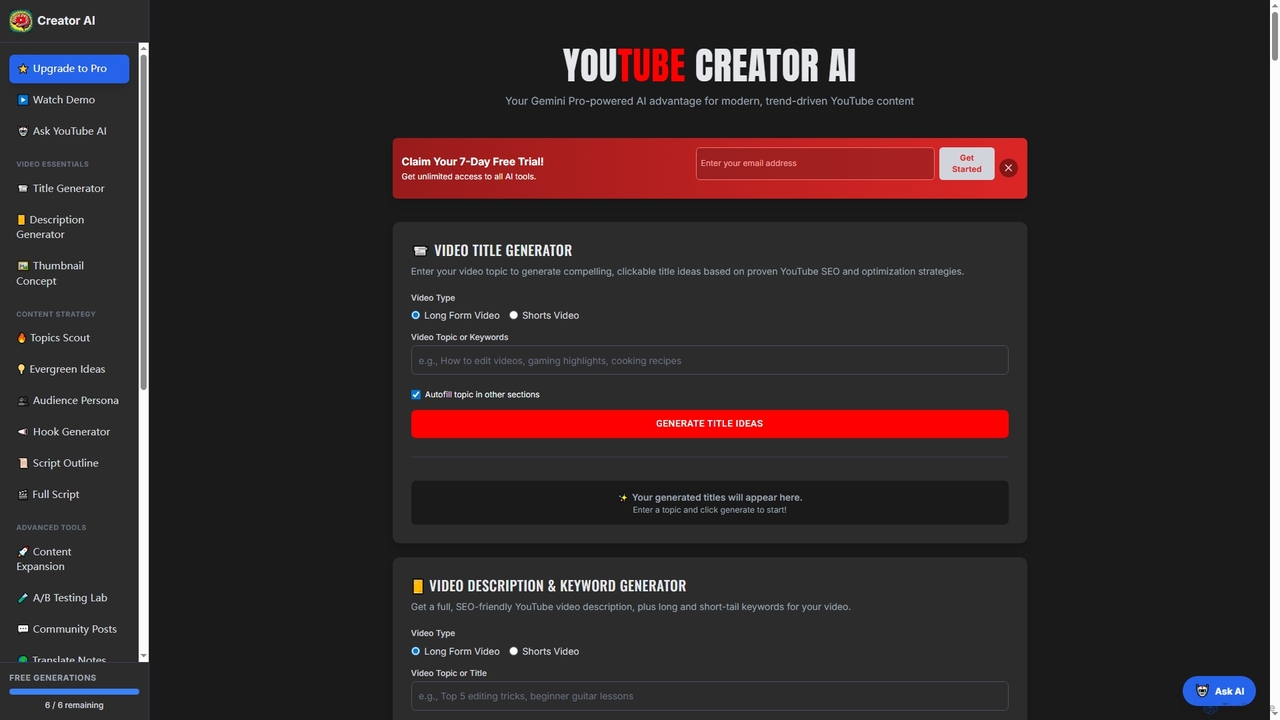
YouTube Creator AI is an AI-powered assistant designed to streamline YouTube content creation. It offers tools for generating …
YouTube Creator AI is an AI-powered assistant designed to streamline YouTube content creation. It offers tools for generating video titles, descriptions, keywords, thumbnail concepts, script outlines, full scripts, and trending topic ideas, all optimized for YouTube SEO and audience engagement.
About Idea Generation
AI Idea Generation tools are specialized applications designed to spark creativity and overcome mental blocks. They leverage large language models and data analysis to process a simple input, such as a keyword or topic, and produce a wide range of creative concepts, titles, outlines, and unique angles. These tools act as a digital brainstorming partner, helping users explore possibilities before the main content creation begins. Their primary value lies in accelerating the initial, often most challenging, phase of any creative or strategic project.
Core Features
- Topic Brainstorming: Generates a list of relevant sub-topics, questions, or content ideas from a single broad keyword.
- Angle and Perspective Discovery: Suggests unique viewpoints or approaches to a familiar subject to make content stand out.
- Keyword-Driven Suggestions: Analyzes related keywords and search trends to propose ideas with high audience interest.
- Outline and Structure Generation: Creates a logical framework or skeleton for an article, script, or presentation.
- Conceptual Association: Connects seemingly unrelated concepts to foster innovative and out-of-the-box thinking.
Use Cases
These tools are widely used by content marketers for planning editorial calendars, bloggers and YouTubers seeking fresh video or article ideas, and authors fighting writer's block. Product managers also use them for brainstorming new features, while entrepreneurs leverage them for generating business names and marketing slogans.
How to Choose
When selecting an Idea Generation tool, consider the diversity and quality of the suggestions it provides. Evaluate its ability to understand context and nuance from your inputs. Also, check for features like trend analysis integration, the ability to save and organize ideas, and compatibility with other content creation tools in your workflow.

Idea GenerationUse Cases
Planning a Quarterly Content Calendar
A content marketing manager needs to fill the editorial calendar for the upcoming quarter. Instead of a time-consuming team brainstorming session, they use an AI idea generator. By inputting core themes like 'B2B SaaS growth' and 'customer retention strategies', the tool instantly produces dozens of relevant blog post titles, webinar topics, and social media campaign ideas. This allows the manager to quickly build a diverse and strategic content plan, ensuring a steady stream of valuable content for their audience and saving hours of manual research.
Overcoming Writer's Block for a Novel
An author is stuck on a crucial plot point in their fantasy novel. They feel creatively drained and can't see a way forward. Using an AI idea generator, they input the current scenario: 'A young mage must retrieve a lost artifact from a sunken city guarded by ancient spirits.' The tool doesn't write the chapter for them, but instead generates a list of potential plot twists, character motivations, and unexpected obstacles. Ideas like 'The spirits are not hostile, but are testing the mage's worth' or 'A rival character is also seeking the artifact for a noble reason' can spark new creative pathways, helping the author break through their block and continue writing.
Brainstorming YouTube Video Series Concepts
A YouTuber focused on DIY home improvement wants to launch a new series but is out of fresh ideas. They use an AI idea tool and input their channel's niche: 'budget-friendly home renovation'. The AI suggests several series concepts, complete with potential episode titles. For example, a series called 'Weekend Warrior Makeovers' with episodes like 'Under $100 Bathroom Refresh' and 'DIY Pallet Wood Accent Wall'. Another concept could be 'Renter-Friendly Upgrades'. This provides a structured set of ideas that can sustain content for months, moving beyond single video concepts to a cohesive series plan.
Generating Startup Names and Taglines
An entrepreneur is launching a new sustainable packaging company but is struggling to find a memorable name. They use an AI idea generator, inputting keywords like 'eco-friendly', 'circular', 'packaging', and 'earth'. The tool generates hundreds of potential names, from literal ones like 'EcoPack Solutions' to more creative options like 'TerraLoop' or 'Verdant Box'. It can also generate corresponding taglines, such as 'Packaging for a Greener Planet'. This process rapidly expands the pool of ideas, helping the founder move past the naming hurdle and focus on other business priorities.
Developing Angles for a News Article
A journalist is tasked with writing a feature story on the rise of remote work. To avoid a generic article, they use an AI idea generator to find unique angles. By inputting 'future of remote work', the tool suggests focusing on specific niches. Ideas generated include: 'The impact on commercial real estate in small towns', 'The psychological effects of permanent WFH on junior employees', or 'How asynchronous work is changing global team collaboration'. These specific, thought-provoking angles provide a strong foundation for in-depth investigative journalism, elevating the story beyond a simple overview.
Creating a Podcast Episode Outline
A podcast host wants to create an episode about 'The ethics of AI in art'. To ensure a well-structured conversation, they use an AI idea generator to build an outline. They input the topic, and the tool suggests key talking points and segments. This might include:
- Introduction: Defining AI art and its current state.
- Segment 1: Copyright and ownership issues.
- Segment 2: The impact on human artists' careers.
- Segment 3: Audience perception and authenticity.
- Conclusion: Future predictions and closing thoughts.