Flick
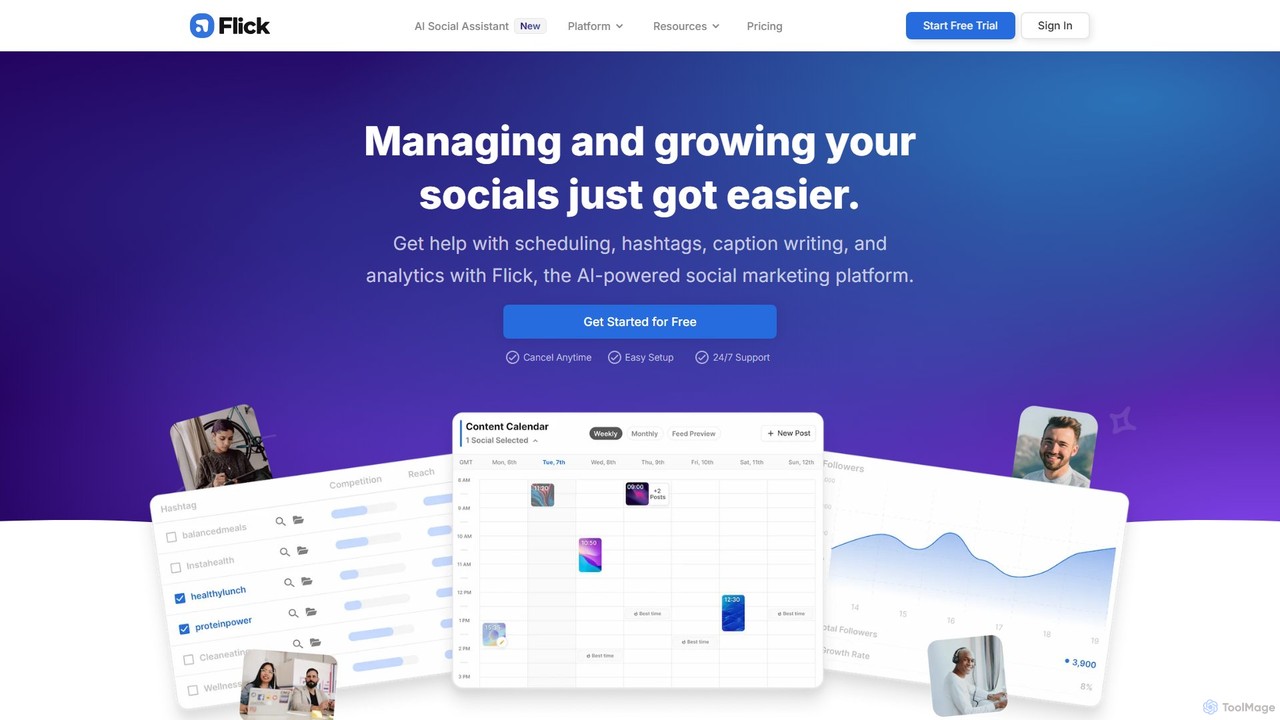
Flick is an all-in-one social media marketing platform designed to help creators, brands, and social media managers save …
Flick is an all-in-one social media marketing platform designed to help creators, brands, and social media managers save time and improve results. It combines an AI-powered content assistant, advanced hashtag research, intuitive post scheduling, and in-depth analytics to streamline your entire social media workflow. From generating content ideas to tracking performance, Flick provides the tools you need to grow your online presence effectively.
Type Prompt
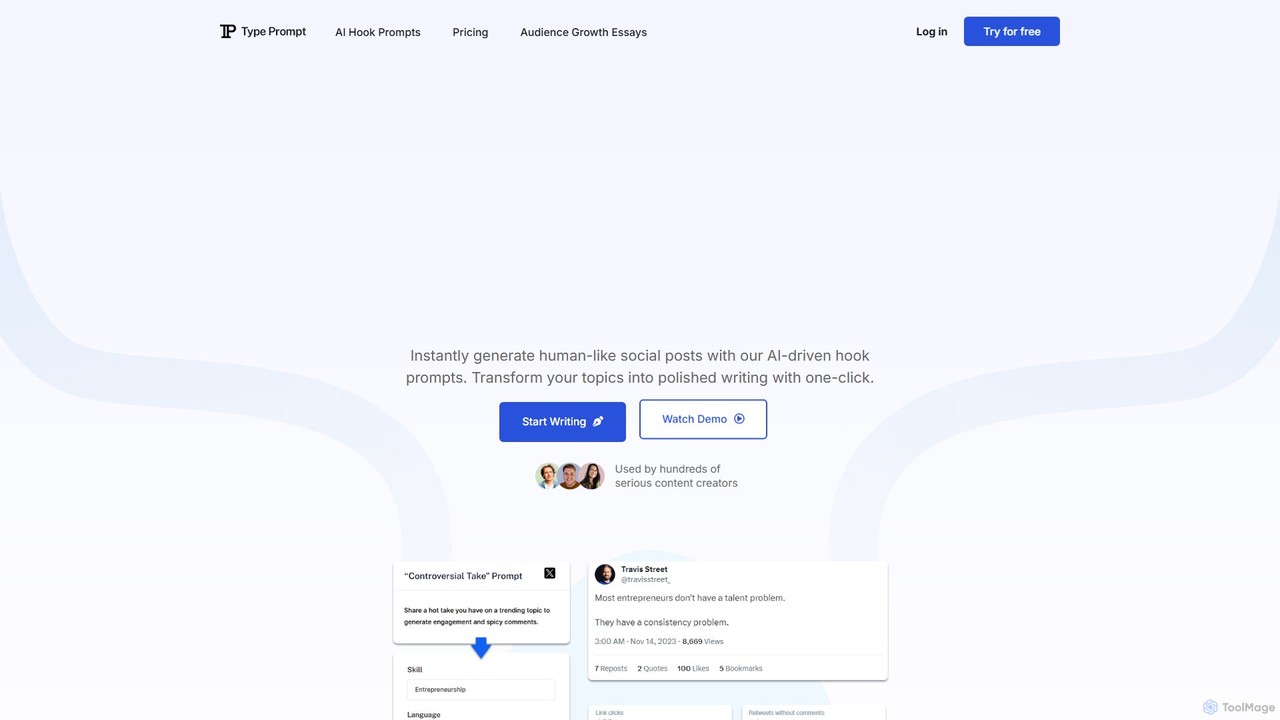
Type Prompt is an AI-powered writing assistant designed for content creators to instantly generate human-like social media posts. …
Type Prompt is an AI-powered writing assistant designed for content creators to instantly generate human-like social media posts. Using a vast library of viral hook prompts inspired by top influencers, it helps you create engaging content for X (Twitter), LinkedIn, newsletters, and blogs. Simply provide a topic and let the AI craft polished, attention-grabbing posts with one click, overcoming writer's block and ensuring consistent content creation.
About Social Media
AI Social Media tools are a specialized category of copywriting assistants designed to generate engaging text content for social platforms. Leveraging advanced natural language generation (NLG) models, these tools create post captions, ad copy, hashtags, and content ideas tailored to specific formats and audience tones. They empower marketers and creators to overcome writer's block, maintain a consistent posting schedule, and efficiently test different messaging styles. Many tools also excel at adapting a core message into multiple variations suitable for different platforms like Instagram, Twitter, or LinkedIn.
Core Features
- Caption Generation: Creates compelling and context-aware text to accompany images and videos.
- Ad Copy Creation: Produces persuasive headlines and body text for social media advertising campaigns.
- Hashtag Suggestion: Recommends relevant, trending, and niche hashtags to increase post visibility and reach.
- Content Idea Brainstorming: Generates prompts, questions, and topics for future social media posts to keep content fresh.
- Tone and Style Adaptation: Modifies and rewrites text to match specific brand voices or platform conventions (e.g., professional for LinkedIn, casual for TikTok).
Use Cases
These tools are widely used by social media managers, digital marketers, small business owners, and content creators. They are particularly valuable for managing multiple client accounts, executing multi-platform marketing campaigns, and ensuring a high-frequency posting schedule without sacrificing quality. Agencies also use them to rapidly prototype ad copy for A/B testing.
How to Choose
When selecting an AI Social Media tool, consider its specific platform support (e.g., Instagram, TikTok, LinkedIn). Evaluate the level of control over tone, style, and language. Assess the variety of content formats it can generate, from simple posts to complex ad campaigns. Finally, check for integration capabilities with social media scheduling or analytics platforms to streamline your workflow.
Social MediaUse Cases
Automating Daily Social Media Post Captions
A social media manager responsible for three different brand accounts needs to publish multiple posts daily. Using an AI Social Media tool, they input a core topic or image description for each post. The AI generates five distinct caption variations in the appropriate brand voice, complete with relevant emojis and calls-to-action. This process reduces the time spent on copywriting from over an hour to just 15 minutes daily, allowing the manager to focus on community engagement and strategy.
Crafting High-Conversion Facebook Ad Copy
A digital marketing agency is launching a new campaign for an e-commerce client. They use an AI tool to generate multiple variations of ad copy based on pain points, benefits, and target audience demographics. The tool produces ten different headlines and five primary text options. By A/B testing these AI-generated variants, the agency quickly identifies the combination that yields the highest click-through rate (CTR), optimizing the ad spend and improving the campaign's overall return on investment (ROI).
Adapting a Blog Post for Multiple Social Platforms
A content creator publishes a detailed 2,000-word blog post. To maximize its reach, they use an AI tool to repurpose the content for social media. They paste the blog post's URL or text into the tool. The AI then generates: a professional, insight-focused summary for LinkedIn; a multi-tweet thread for Twitter breaking down the key points; and an engaging, question-based caption for an Instagram post. This allows the creator to promote their content across all channels in a platform-native way in under 10 minutes.
Generating Engaging Content Ideas for a Niche Brand
The owner of a small business selling handmade pottery struggles with content ideas beyond product photos. They use an AI Social Media tool and input keywords like 'pottery making', 'ceramic art', and 'studio life'. The tool generates a month's worth of content ideas, including 'Meet the Maker' prompts, polls asking followers about their favorite glaze colors, and ideas for short video tutorials. This provides a structured content calendar that diversifies their feed and fosters a stronger community connection.
Optimizing Instagram Posts with Relevant Hashtags
An influencer wants to increase the reach of their travel photos on Instagram. After writing a caption, they use the AI tool's hashtag generator. By providing the caption text and a primary keyword like 'JapanTravel', the tool suggests 20-30 hashtags. It provides a mix of high-volume tags (e.g., travelphotography), niche tags (e.g., ExploreKyoto), and community-specific tags (e.g., VisitJapanJP). This strategic mix helps the post reach both a broad audience and a more engaged, targeted group of followers, leading to higher engagement rates.
Creating a Cohesive Multi-Channel Campaign Narrative
A marketing team is launching a new product. They use an AI tool to ensure consistent messaging across platforms. They input the core campaign message: 'Our new eco-friendly sneaker is made from recycled materials.' The AI then generates platform-specific copy: a professional announcement for LinkedIn highlighting sustainability innovation, a visually-driven caption for Instagram focusing on style and eco-consciousness, and a short, punchy tweet for Twitter announcing the launch. This ensures the brand story is coherent yet perfectly tailored to each audience's context.