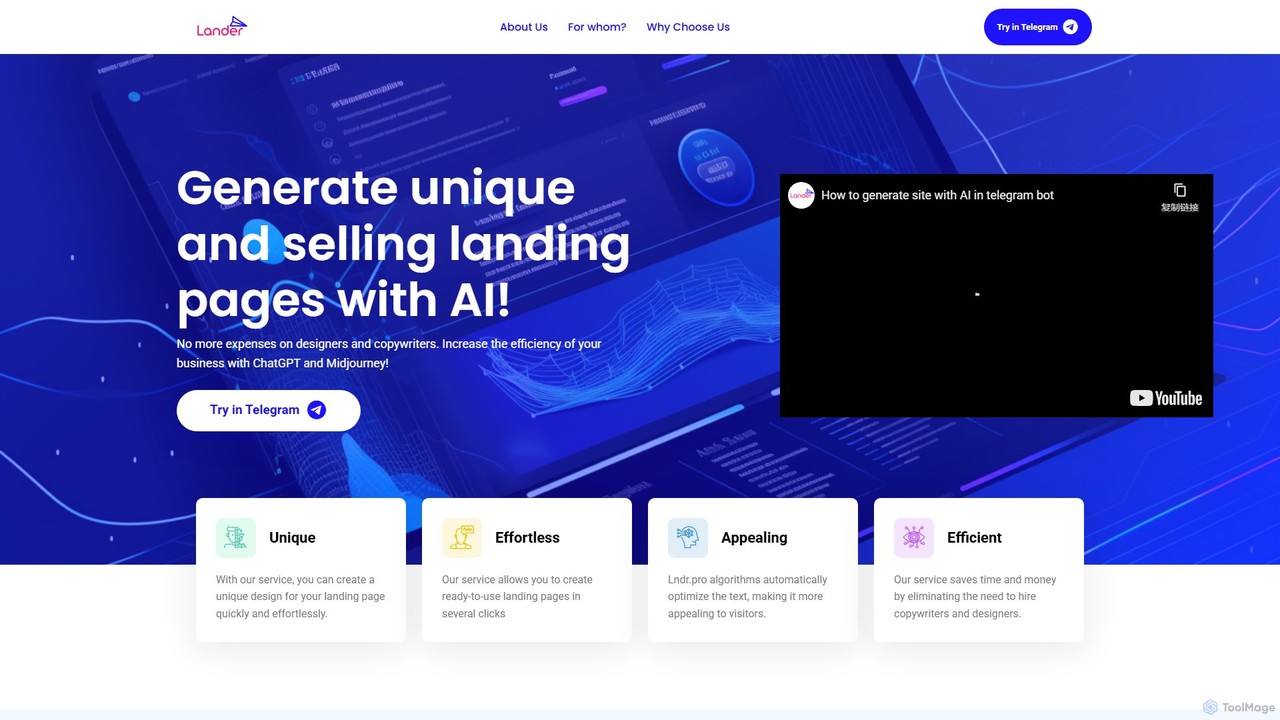
AI Website Copy tools are specialized applications designed to generate persuasive, structured, and SEO-optimized text specifically for web pages. These tools utilize advanced language models trained on high-converting website content to produce everything from compelling headlines and product descriptions to complete landing pages. Their primary value lies in accelerating the content creation process, improving user engagement, and boosting conversion rates by applying proven copywriting frameworks. They differ from general writers by offering templates and features tailored for web-specific elements like CTAs, feature-benefit sections, and meta descriptions.
Core Features
- Page-Specific Templates: Offers structured templates for various web pages like homepages, about us, landing pages, and contact pages.
- SEO Content Optimization: Includes features for keyword integration, meta title/description generation, and creating content that aligns with search intent.
- Conversion-Focused Frameworks: Employs models like AIDA (Attention, Interest, Desire, Action) and PAS (Problem, Agitate, Solve) to craft persuasive copy.
- Brand Voice Consistency: Allows users to define a brand tone (e.g., professional, witty, friendly) to ensure all generated copy is consistent.
- A/B Testing Variants: Quickly generates multiple versions of headlines, subheadings, or calls-to-action for performance testing.
Use Cases
These tools are ideal for digital marketers, startup founders, e-commerce managers, and web developers. They are frequently used when launching a new website, redesigning a landing page for a marketing campaign, writing compelling product descriptions for an online store, or refreshing outdated corporate website content to improve SEO and user experience.
How to Choose
When selecting an AI Website Copy tool, consider the quality and variety of its page-specific templates. Evaluate the depth of its SEO features and its ability to adapt to your specific brand voice. Also, check for integrations with content management systems (CMS) like WordPress or Shopify, and assess the user interface for ease of use. Finally, review the pricing model to ensure it aligns with your content production needs.